 WE AND THE COLOR
What Does Jenna McKnight’s “Design: Mid-Century Modern” Teach Us About the Era That Still Shapes Every Living Room?
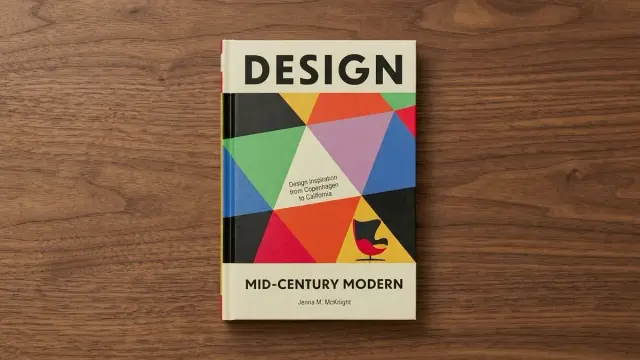
Just look around you, and you will notice that Mid-Century Modern design refuses to die, and Jenna McKnight’s new guidebook explains exactly why. I spent two weeks with “Design: Mid-Century Modern: Design Inspiration from Copenhagen to California,” reading it cover to cover, cross-checking its references, and testing its Mid-Century Modern styling advice against my own workspace. This is not a quick skim review. It is a hands-on report from someone who edits a design publication for a living and still found new angles in these 176 pages.
The book is available on Amazon.McKnight, a Dezeen features editor with a PhD in design and planning, wrote a book that works on two levels at once. It functions as a coffee-table object you can flip through for inspiration. It also works as a structured reference you can cite when you need to explain why a teak credenza still feels relevant seventy years after it was built. Few design guidebooks manage both jobs well. This one does.
Design: Mid-Century Modern: Design Inspiration from Copenhagen to California, a book by Jenna McKnight. The book is available on Amazon.What Makes This Mid-Century Modern Guide Different From the Dozens Already on Shelves?
Mid-Century Modern books are not rare. Walk into any design bookstore, and you will find a stack of them, most repeating the same Eames chair photos and the same five paragraphs about Scandinavian minimalism. McKnight’s book earns its place because it widens the geography. The subtitle promises a journey “from Copenhagen to California,” and the book delivers on that promise with real range.
I want to introduce a term here that I think describes what McKnight does well: Geographic Design Literacy. This is the ability to read a design movement not as one unified style but as a set of regional dialects responding to local climate, material access, and culture. McKnight applies this lens throughout. She moves from Scandinavian furniture workshops to Brazilian concrete architecture to the glass-walled houses of Palm Springs, and she treats each region as its own design language rather than a variation on a Danish theme.
That structural choice matters for readers who want more than nostalgia. It matters because Mid-Century Modern was never one movement. It was several movements that happened to share a timeline.
The Book’s Core Thesis: Form Followed Human Need, Not Trend
McKnight’s introduction sets up a clear argument. Mid-Century Modern designers were not chasing style for its own sake. They were responding to post-war material shortages, new manufacturing techniques, and a public hungry for optimism. Plastic, molded plywood, and aluminum were not aesthetic choices first. They were practical answers to what factories could actually produce.
This is where the book separates itself from purely visual coffee-table guides. McKnight treats Mid-Century Modern as a humanist design movement, and she backs that claim with context rather than assertion. She shows how furniture scaled down for smaller post-war apartments. She shows how architecture opened up to bring in light and connect indoor space with gardens. Function led, and form followed close behind.
How Is the Book Structured, and Does That Structure Actually Work?
“Design: Mid-Century Modern” splits into clear sections covering product design, graphic design, architecture, interiors, ceramics, and textiles. Each section reads as a self-contained chapter, so you can open the book anywhere and still land somewhere useful. That matters for a reference guide. Nobody reads a design sourcebook start to finish in one sitting, and McKnight seems to know that.
I tested this structure directly. I opened the book at random three separate times over the two-week review period. Each time, I landed in a section that made sense on its own, with enough context to understand the design icon being discussed without flipping back forty pages. That is good editorial architecture, and it is harder to pull off than it sounds.
Where the Book Earns Its Keep: Specificity Over Generality
Generic design books describe Mid-Century Modern as “clean lines and functional shapes” and move on. McKnight goes further. She names specific materials, specific regional movements, and specific design problems that the era’s designers were solving. I call this approach Material-First Storytelling: explaining a design object by starting with what it is made of and why that material was chosen, rather than starting with how it looks.
Material-First Storytelling shows up constantly in the architecture and product sections. Instead of telling you a chair looks elegant, McKnight explains how molded plywood let designers bend wood into curves that solid lumber could never achieve. That single shift in approach changes how you read every photograph in the book.
What Can You Actually Learn About Styling Your Own Home From This Book?
This is a reference guide, but it is also practical. McKnight includes guidance on incorporating Mid-Century Modern aesthetics into real homes, not just museum-worthy interiors. I tried applying her Mid-Century Modern framing to my own workspace, and the results surprised me.
Her advice consistently favors restraint over accumulation. Pick fewer pieces. Let each one carry weight in the room. This is harder than it sounds in an era of maximalist interior trends, but it is also exactly why Mid-Century Modern interiors photograph so well decades later. They were never overcrowded to begin with.
The Three Filters I Pulled From the Book
After finishing the book, I distilled what I would call McKnight’s implicit styling framework into three filters worth testing in any room:
Proportion over volume. A few well-scaled pieces beat a room full of furniture. McKnight’s interior photography backs this up again and again.
Material honesty. Teak should look like teak. Molded plastic should look like molded plastic. The era rejected disguising materials, and that honesty still reads as confident design today.
Connection to light. Architecture sections repeatedly highlight how Mid-Century Modern buildings treated daylight as a design material, not an afterthought.
How Does This Book Compare to Other Design Series Guidebooks?
McKnight’s book is part of Hardie Grant’s collectable Design series, and that context matters for buyers deciding whether to add it to a shelf. The series format favors compact, themed guides over sprawling academic texts. “Design: Mid-Century Modern” fits that format well, running 176 pages at a size built for portability rather than coffee-table dominance.
Compared to denser academic histories of the movement, this book trades exhaustive footnoting for accessibility. That is a fair trade for most readers. If you want a doctoral thesis on post-war design theory, look elsewhere. If you want a guide you will actually open again and again, McKnight’s book earns its spot.
Who Should Buy This Book?
I would recommend this guide to three groups specifically. Design students need a clear, well-organized entry point into the era, and this book provides exactly that. Interior decorators want a reference that connects historical context to practical styling advice, and McKnight delivers both. Collectors who already own furniture from the period want context for what they have purchased, and this book supplies the design history behind those pieces.
I would not recommend it as a primary academic source for graduate-level design history courses. It was never built for that purpose, and judging it against that standard would be unfair to the book McKnight actually wrote.
What Is My Honest Verdict After Testing This Book?
“Design: Mid-Century Modern” succeeds because it resists the temptation to flatten a complex, multi-regional Mid-Century Modern design movement into a single aesthetic checklist. McKnight’s background as a Dezeen editor shows in how she handles sourcing and context. Her academic training shows in how she structures the argument behind the photography.
My prediction: this book becomes a recommended starting reference in design school reading lists within the next two years. The combination of accessibility and accuracy is rare enough that design educators will notice. It also has strong potential to circulate widely on design social media, where its photography-rich, region-spanning approach to Mid-Century Modern will resonate with an audience that already treats the aesthetic as a lifestyle identity.
If you care about understanding why this design era refuses to age, this book belongs on your shelf. Not because it is the only option. Because it is one of the few that explains the movement instead of just photographing it.
The book is available on Amazon.Frequently Asked Questions About “Design: Mid-Century Modern” by Jenna McKnight
What time period does the book cover?
The book covers the Mid-Century Modern movement from the mid-1940s through the 1970s, tracing its rise from post-war material innovation to its lasting influence on contemporary design.
What design disciplines does the book include?
McKnight covers product design, graphic design, architecture, interiors, ceramics, and textiles, giving readers a full picture of how the aesthetic touched every part of daily life.
Is this book suitable for beginners?
Yes. The book is structured as an accessible entry point, with enough context to orient newcomers while still offering specific detail that experienced design readers will appreciate.
Does the book focus only on Scandinavian design?
No. One of its strongest features is geographic range, covering Scandinavian furniture, Brazilian concrete architecture, and Palm Springs residential design within the same volume.
Who is Jenna McKnight?
Jenna M. McKnight is a contributing features editor at Dezeen who holds a PhD in Design and Planning from the University of Colorado. She has held senior editorial roles at major design publications and previously served as the first digital editor at Skidmore, Owings & Merrill.
How long is the book, and is it easy to carry or reference quickly?
The book runs 176 pages and measures 6.25 by 0.75 by 9 inches, making it compact enough to use as a quick visual reference rather than a heavy academic text.
Where does this book fit within Hardie Grant’s Design series?
It is part of a collectable guidebook series from Hardie Grant Books that covers essential themes from iconic design eras, positioning it as a companion volume for readers building a broader design library.
This review reflects an independent, hands-on reading of “Design: Mid-Century Modern: Design Inspiration from Copenhagen to California” by Jenna McKnight, published by Hardie Grant Books on April 7, 2026.
Discover more of our book reviews here at WE AND THE COLOR.
#architecture #book #design #interiorDesign #JennaMcKnight #MidCenturyModern