I’m trying to work out whether to renew my Institute of Physics membership:

• It’s a UK-based learned society and I’m not UK-based.
• Their magazine PhysicsWorld is great but they won’t post the printed version abroad anymore, even though I take it to my work coffee room where it reaches dozens of people.
• I gain nothing directly from the membership (no networking, grants or training opportunities) so it’s essentially a donation to further the cause of physics, mostly in the UK.
• I’m also a member of the Finnish Physical Society and through them, the European Physical Society. So if it’s a sense of professional belonging I’m after then I can get that from them.

So is 47 euros worth it for that? Will I feel like I’ve given something important up?

#physics #InstituteOfPhysics #academicChatter

Autumn Repeats

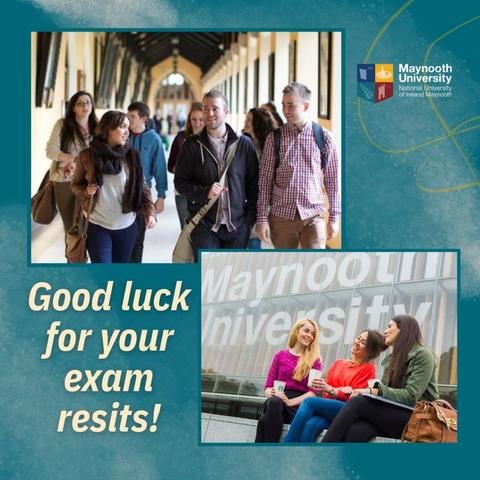
As I mentioned yesterday, it is almost time for the repeat examination period to begin once again. In fact the first papers are due tomorrow (6th August). A couple of years ago, Maynooth University produced this nice good luck message for those resitting so I’ll repeat it here:

I was a bit surprised when I first arrived here in Ireland that the August repeat examinations are called the Autumn Repeats. After all, they happen in August which is generally regarded as summer rather than Autumn. The term is, I think, a relic of the old Celtic calendar in which the start of Autumn coincides with the start of harvesting, the old festival of Lúnasa being when people celebrated the Celtic deity Lugh, who would bring a good harvest or who, if not satisfied, could bring his wrath to bear in storms that would mess everything up. Lúnasa is the name for August in modern Irish; Lá Lúnasa is 1st August, and the first Monday in August (Lá Saoire i mí Lúnasa) (yesterday) is a Bank Holiday.

Anyway, the repeat examinations start tomorrow and go on for ten days or so, I will have four different papers to grade, though I’m expecting only one candidate each for three of them.

Every year at this time I mention the difference between the system of repeats in Maynooth compared to other institutions with which I am familiar, especially in the UK. Elsewhere, students generally take resits when, because they have failed one or more examinations the previous May, they have not accumulated sufficient credits to proceed to the next year of their course. Passing the resit allows them to retrieve lost credit, but their mark is generally capped at a bare pass (usually 40%). That means the student gets the credit they need for their degree but their average (which determines whether they get 1st, 2nd or 3rd class Honours) is affected. This is the case unless a student has extenuating circumstances affecting the earlier examination, such as bad health or family emergency, in which case they take the resit as a `sit’, i.e. for the first time with an uncapped mark.

Here in Maynooth, however, the mark obtained in a repeat examination is usually not capped. Indeed, some students – though not many – elect to take the repeat examination even if they passed earlier in the summer, in order to increase their average mark.

Some people don’t like the idea of uncapped repeats because they feel that it would lead to many students playing games, i.e. deliberately not taking exams in May with the intention of spreading some of their examination  load into August. The Institute of Physics has decided to impose capped resits as part of its accreditation requirements. Some people here seem to think IOP accreditation is worth having so we’re being pushed into that requirement. I find it heavy-handed and unhelpful. It is also unimportant unless you want to do postgraduate study in physics in the UK. It doesn’t matter at all anywhere else.

If you think students have an unfair advantage if they don’t take a full diet of examinations in May, then the logical conclusion is that part-time students have an unfair advantage as do students taking micro-credentials consisting of just one or two modules. It’s the essence of the modular system that each module result should be considered on its own merit, not in relation to other modules a student may or may not have taken at the same time. One can of course argue whether the modular system is good or not, but if you have it then you should act consistently in accordance with it. You wouldn’t penalize students who have to work to support their study relative to those who don’t, would you?

And there’s no real evidence of students actually playing the system in the way the IOP thinks they do anyway. For one thing the results from the repeat examination period are not confirmed until early September so that students that deploy this strategy do not know whether they are going to be able to start their course until just a couple of weeks before term. That could cause lots of problems securing accommodation, etc, so it doesn’t seem to me to be a good ploy. Finallists adopting this strategy will not be able to graduate with the rest of their cohort and may miss several months of potential employment. I think most of our students are smart enough to realize that it’s a risky strategy.

Anyway, I’d welcome comments for or against whether resits/repeats should be capped/uncapped and on what practice is adopted in your institution.

#Autumn #InstituteOfPhysics #LáLúnasa #Lúnasa #MaynoothUniversity #RepeatExaminations

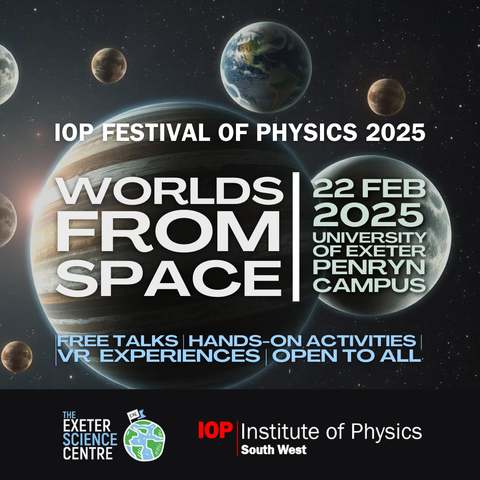
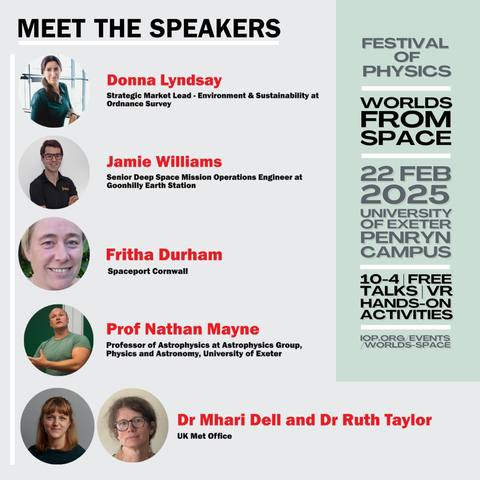
After months of planning, preparation, and postponement, the annual #InstituteOfPhysics IOP South West #FestivalOfPhysics is tomorrow! And for the first time it will be taking place in #Cornwall at the University of Exeter’s #Penryn campus.

I'm genuinely so proud that we've managed to pull this together and finally bring this event down to Cornwall, while celebrating the Cornish #SpaceScience industry and local talent. It promises to be an incredible day!

When I wrote last week’s update on papers published at the Open Journal of Astrophysics, I was a little surprised that our publishing activity had not tailed off because of the summer vacations. Well, it has now because we haven’t publish any papers this week! Rather than not post an update at all, however, I thought I’d point out a few interesting things that have happened in the world of open access.

First. I draw your attention to an article in C&EN (Chemical & Engineering News) reflecting on the fact that the Gates Foundation (one of the largest research charities in the world) announced in March 2024 that, starting from Jan. 1, 2025, it would no longer cover publishing costs. I actually wrote about this decision here. The article is largely about the threat this poses to the Gold Open Access model, which in my opinion thoroughly deserves to be threatened. It does, however, talk briefly about Diamond Open Access which commercial publishers don’t like as it removes – or should do – their source of profits:

Another alternative model is diamond OA, in which all research papers and their associated peer-reviewed reports are published without fees for the author or the reader and are also freely available to read and reuse. 

It goes on to say:

Under diamond OA, publishers are no longer gatekeepers of research. Instead, they become service providers that handle manuscript submissions, typesetting, and copyediting. This is in contrast to the current publishing system, in which the publisher controls everything from the copyright to the production process.

I don’t really agree with even the limited role of “service providers” mentioned here, as much of what that role entails just involves a decent reviewing platform. Elsewhere the article says that moving to Diamond OA would entail a significant cost. That may be but, as I’ve said over and over again, the actual cost of online publishing is low compared to the level of profit extracted by commercial publishers. The cost to academia of moving to Diamond OA would be much less than not moving to Diamond OA.

The second item I’d like to draw your attention is called Choosing a publisher? It’s not all about the impact factor and is by Antigoni Messaritaki, a senior publisher at IOP Publishing,  When I saw the title I thought that it might be about the uselessness of Journal Impact Factors and a commitment by IOP Publishing to stop using them. Sadly it’s nothing of the sort. It tries to entice authors to look beyond journal impact factors when choosing a publisher, pushing Open Access as an important factor to consider. It admits that APCs are expensive, but never even mentions Diamond OA. It’s an entirely self-serving piece. I find the IOP’s stance on publishing, and the disingenuous way they try to excuse their own profiteering, unethical and unacceptable. That’s why I resigned my fellowship of the IOP.

Last, and by all means least, I should draw your attention that the 32nd General Assembly of the International Astronomical Union takes place next week in Cape Town. I’m not attending in person – I’ve done enough travelling this year! – but I have accepted an invitation to give a remote talk at a side event called Open Access Encounters on Wednesday 7th August:

https://telescoper.blog/2024/08/03/open-access-updates-announcements/

#DiamondOpenAccess #IAU #IAUGeneralAssembly #InstituteOfPhysics

Four New Publications at the Open Journal of Astrophysics

Papers published in OJAp have now garnered over 2500 citations between them.

In the Dark

Applications are now open for the Bell Burnell Graduate Scholarship Fund for full/part-time graduates wishing to study towards a doctorate in physics from groups that are currently under-represented in physics. Find out more about the fund: https://www.iop.org/about/news/bell-burnell-scholarship-fund-open-for-2023-24-applications

#Physics #Scholarship #InstituteOfPhysics #IOP #JocelynBellBurnell #DiversityInPhysics

Bugging me that it's taken me over a month to finish editing this stream for YouTube (and still 39 mins long even though I cut loads out!)

But done is better than perfect, and it's an important message.

I guess it's either a long video or a short podcast 😛

📼: https://youtu.be/QBWcuhPwZDg

#BinTheBoffin #InstituteOfPhysics #Physics #Science #Newspaper #Media #Campaign #Podcast #JustChatting #Opinion

Should we bin the term "boffin"? The Institute of Physics thinks so...

YouTube
Has anyone here ever given a talk to an #IOP #InstituteOfPhysics group? How did you pitch your talk? I am giving one at the #LitAndPhil soon and need to work out how best to go about it.