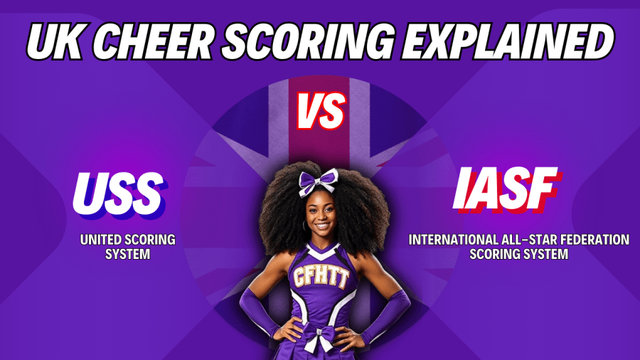
How do you score points in cheerleading: UK cheer scoring explained
Cheerleading in the UK is evolving faster than ever, and with it comes a major challenge understanding how different scoring systems shape competition results. Whether you’re a coach preparing for Worlds, an athlete aiming for the highest scores, or a program director strategising for the season ahead, knowing the difference between the United Scoring System (USS) and the International All Star Federation (IASF) scoring system is crucial. With the latest updates to the SCUK Age Grid, these scoring systems are more relevant than ever. In this article, we break down the key differences, how they impact British cheerleading, and what you need to do to stay ahead of the game.
The world of British cheerleading is evolving, and one of the most significant changes affecting teams and coaches is the adoption of different scoring systems. The United Scoring System( USS) and the International All Star Federation (IASF) scoring system play pivotal roles in determining how teams are judged at competitions. With the release of the SportCheer UK (SCUK) Age Grid for the 2024-2025 season, it is essential to understand how these scoring systems impact divisions, performance evaluations, and competition outcomes.
Before I you read understanding the Impact of Scoring Systems on the SCUK Age Grid let me introduce myself.
Cheer From Head To Toe (CFHTT) was born out of a need to address the inadequate representation of the UK cheer community online. Over the years, our platform has transformed into a comprehensive resource dedicated to empowering and educating athletes, cheer dancers, coaches, cheer parents, and anyone eager to accelerate their learning and excel in this dynamic sport. If you want to learn more about UK cheerleading make sure you subscribe to a newsletter
Subscribe
Join happy subscribers to unlock the secrets to becoming a cheerleading expert! Don’t miss out on exclusive tips, tricks, and insider knowledge. Subscribe now and enhance your cheerleading skills today!
Type your email…
Subscribe
United Scoring System
The United Scoring System was developed by Varsity Spirit to provide a universal scoresheet, ensuring consistency across various event producers (these are the cheerleading competition organisers, but they call themselves event producers). This system is widely used in British cheerleading competitions and aims to promote fairness and objectivity.
- Standardised Evaluation – Every team is judged based on a set of predetermined skill requirements.
- Difficulty Assessment – Teams must execute a specific number of skills to reach a designated difficulty range. For example, in the pyramid section, judges assign scores in tenths, with set criteria guiding the evaluation.
- Execution-Based Scoring – Teams start with the maximum possible execution score, and deductions are applied based on widespread mistakes. This approach ensures an objective assessment of performance.
IASF Scoring System
IASF, the governing body for international all-star cheerleading (this is the governing body the UK cheerleading community follows), uses a broader scoring range that allows for a more comparative judging approach. Many international competitions, including those heading to Worlds, Summit and international competitions follow this model.
- Flexible Scoring Ranges – Unlike the United Scoring System, which has fixed scoring ranges, IASF judges can award scores within a broad spectrum. For instance, pyramid difficulty ranges from 6.0 to 10.0 points, giving 41 possible difficulty scores.
- Comparative Judging – Teams are scored in relation to other competitors at the same event rather than strictly against a fixed rubric. This can lead to variations in scores depending on the overall skill level of competing teams. CFHTT struggles with this because you can no longer create routines with certainty about the scores you will receive, which can cause coaches to second-guess themselves. Furthermore, comparative judging can put certain divisions at a disadvantage because they may not always have adequate competition. As a result, teams might score highly at UK competitions, but when they compete at events like Worlds (the Olympics of cheerleading), their scoresheet does not reflect the high marks they received in the UK. This is often because they were previously competing against teams that did not meet the requirements for an international standard.
- Global Standardisation – IASF scoring aligns with international competitions, ensuring British teams competing abroad are judged by a system familiar to them.
CFHTT believes the IASF scoring system was created to support the development and accessibility of cheerleading in Europe and the rest of the world. Cheerleading was first established in the USA in 1882, with All-Star Cheer emerging in the 1980s. However, the sport only began gaining traction in the rest of the world in the early 2000s, and for some countries, not until the mid-2010s. As a result, the development of cheerleading outside the USA has had to progress rapidly, which has impacted the overall quality and standard of the sport over the years.
CFHTT believes this scoring system was designed to provide the rest of the world with the time and opportunity to develop their skill sets while still recognizing the talent, dedication, and ambition these countries have to excel in the sport.
The SCUK Age Grid 2024-2025: A Shift Towards IASF Alignment
SportCheer UK has made strategic adjustments to its age grid, bringing it closer to international standards while still considering the needs of British teams.
Key Changes in the 2024-2025 Age Grid
- Integration of IASF Divisions – SCUK has incorporated IASF divisions into its structure, particularly at higher competitive levels.
- Introduction of U14 Division – This category has been introduced as a transitional phase to help teams adjust to the new format.
- Age Determination Differences:
- For All Star Cheer, All Star Dance, Prep Cheer, and related divisions – Athlete age is determined as of August 31, 2024.
- For IASF Cheer and Dance divisions – Athlete age is determined based on the competitor’s age during the 2025 calendar year.
How Scoring Impacts Teams Under the New Age Grid
1. Division Eligibility and Competition Readiness
With the SCUK adopting IASF divisions, teams must ensure they are prepared for potential differences in scoring methodology. The United Scoring System remains dominant in the UK, but teams competing in IASF divisions should anticipate broader scoring ranges and comparative evaluations.
2. Performance Expectations
- United Scoring System – Teams must meet predefined difficulty criteria to maximize their scores. Clean execution and meeting required skill elements are critical.
- IASF Scoring System – While difficulty matters, judges have more discretion in awarding points based on the relative difficulty of performances at an event.
3. Strategic Preparation for UK Competitions
British teams should consider:
- Pre-Season Preparation – When planning your next cheer season, it is important to evaluate your team’s objectives. If your goal is to attend Worlds, Summit, or other international events, it is beneficial to attend competitions where you will be scored in alignment with those rulings.
- Event-Specific Rules – Checking which scoring system will be used before a competition is vital for tailoring routines effectively. Please bear in mind that although the United Scoring System and IASF are the predominant scoring systems, competition providers still create event-specific rules and score sheets. Never assume—always check.
- CFHTT Pro-Tip – Make sure you subscribe to our mailing list because CFHTT will soon be releasing a list of all the cheerleading competitions in the UK and which scoring systems they will be following.
- Routine Structuring – A routine that maximises difficulty under one scoring system may not score as highly under another. Understanding what judges prioritise ensures teams are set up for success. Furthermore, assess whether your team can cope with attending various competitions where the scoring system differs.
Final Thoughts: Navigating the Future of British Cheerleading
The SCUK Age Grid’s alignment with IASF scoring represents a move towards international standardisation, which can only benefit our sport. If we want the UK cheerleading community to elevate its level of excellence and take its rightful place on the world stage, understanding these scoring systems is crucial.
However, the continued use of the United Scoring System means teams must be adaptable. It is imperative that coaches understand how each system influences and affects scoring.
If you found this article helpful, Please share this information with coaches who need to have a better understanding of the fundamentals of the scoring systems in the UK cheer community. Share this article with your coaching friends who need help just like you did.
And if you have any other useful tips, comment below—let’s support each other!
Now that you’ve read this guide, let’s take it a step further and work together
This guide is just the tip of the iceberg. Imagine what we could accomplish with a one-on-one session tailored specifically to your team’s needs. From attracting your ideal athletes and planning your cheer season to optimising your social media and website presence, I can help you build a stronger, more successful program.
If you’re ready to elevate your coaching game, contact us at [email protected] to arrange a consultation. Let’s make your team stand out!
Want more expert coaching advice? Subscribe to our challenge and let CFHTT help you excel in this sport we all love!
Subscribe
Join happy subscribers to unlock the secrets to becoming a cheerleading expert! Don’t miss out on exclusive tips, tricks, and insider knowledge. Subscribe now and enhance your cheerleading skills today!
Type your email…
Subscribe
#Cfhtt #AllstarCheerleading #britishCheerleading #cheer #cheerleadingBlog #CheerleadingScoringSystem #ComparativeJudging #football #IASF #IASFScoringSystem #News #portCheerUKSCUKAgeGridForThe20242025Season #ScukAgeGrid #soccer #sports #TheUnitedScoringSystemUSS #ukcheer #understandingCheerleadingScoring SciPost Physics
 The UK's number one Cheerleading Blog