 In-Sight Publishing
How the Peace School is Redefining Education: Dr. Nasser Yousefi and Baran Yousefi on Love, Democracy, and Learning in 2025
Scott Douglas Jacobsen (Email: [email protected])
Publisher, In-Sight Publishing
Fort Langley, British Columbia, Canada
Received: November 18, 2025
Accepted: December 15, 2025
Published: December 15, 2025
Abstract
This year-end conversation with Dr. Nasser Yousefi and Baran Yousefi—creators of the Peace School, a Canadian humanistic lab school—examines the school’s 2025 growth and its educational philosophy. The Yousefis describe increased enrolment, the addition of childcare, and new baby-and-parent workshops, alongside expanding partnerships with libraries, community centres, universities, and community organizations spanning nutrition, sport, music, and gardening. They also discuss how a public “call” has attracted support from notable philosophers and inclusive-education scholars, strengthening the Peace School’s visibility within academic and professional networks. Substantively, the interview critiques behaviourist, test-driven schooling and its cultural incentives toward competition, ranking, and narrow instructional priorities. The Yousefis argue that such systems erode empathy, democratic participation, and peace-oriented social development, while limiting families’ real educational choice. They propose educational diversity as a democratic necessity and advocate for child-centred learning grounded in emotional intelligence, relational development, and love as an explicit educational value. The conversation frames the Peace School as both a local community institution and an emerging node in a wider international network of progressive educators focused on inclusive, humane learning for children and families.
Keywords
Academic Partnerships, Child-Centred Education, Community Partnerships, Democratic Education, Educational Diversity, Emotional Intelligence, Holistic Development, Humanistic Education, Inclusive Education, Lab School, Love in Education, Peace Education
Introduction
The Peace School is a Canadian lab school created by Dr. Nasser Yousefi and Baran Yousefi to test and model a humanistic, child-centred approach to education. Rather than organizing schooling around grades, rankings, and performance incentives, the Peace School foregrounds relationships, values, and critical thinking as central features of childhood development. The Yousefis’ work sits in tension with dominant behaviourist and test-driven frameworks that treat learning as measurable output and motivation as an engineering problem—reward, punishment, repeat.
In this year-end conversation, Scott Douglas Jacobsen speaks with the Yousefis about the Peace School’s 2025 developments and the philosophical commitments underlying them. They report expanded enrolment, the launch of baby-and-parent programming, and growing ties with community infrastructure such as libraries and community centres. They also describe emerging collaborations with universities and specialized organizations in areas including nutrition, sport, music, and gardening. A public “call” associated with the school has drawn interest from scholars and public intellectuals—support that the Yousefis frame less as marketing muscle than as reputational and academic leverage for building legitimacy and networks.
Beyond updates, the discussion confronts a deeper question: what kind of citizens do schools quietly manufacture? The Yousefis argue that early conditioning through competition, comparison, and ranking cultivates a zero-sum worldview that can scale into social conflict. In response, they advocate educational diversity as a democratic principle—families should have meaningful choices among genuinely different pedagogical models—and they make an unusually explicit claim for contemporary education: that love, emotional intelligence, and holistic development should be treated not as sentimental extras, but as foundational educational aims.
Main Text (Interview)
Title: How the Peace School Is Redefining Education: Dr. Nasser Yousefi and Baran Yousefi on Love, Democracy, and Learning in 2025
Interviewer: Scott Douglas Jacobsen
Interviewees: Nasser Yousefi and Baran Yousefi
Dr. Nasser Yousefi and Baran Yousefi are the creators of the Peace School, a Canadian lab school dedicated to humanistic, child-centred education. Drawing on backgrounds in psychology, pedagogy, and community work, they design environments where children explore relationships, values, and critical thinking rather than merely perform for grades or rankings. Their work challenges behaviourist, test-driven schooling by foregrounding emotional intelligence, democratic participation, and love as core educational principles. Through collaborations with universities, community partners, and international scholars, they aim to build a global network of progressive educators committed to inclusive, peace-oriented learning for children and families worldwide today and tomorrow.
In this year-end conversation, Scott Douglas Jacobsen speaks with Nasser and Baran about the Peace School’s 2025 developments. They describe expanding enrollment, launching baby-and-parent programs, and building partnerships with libraries, community centres, and universities. A public “call” has attracted notable supporters, including philosophers and inclusive-education scholars, strengthening the school’s reputation as a humanistic lab school. The Yousefis critique behaviourist, test-focused education and argue that competition, rankings, and narrow literacy-math priorities undermine peace, empathy, and democracy. They envision schools grounded in love, emotional intelligence, and educational diversity, where all children develop holistically within caring, democratic, global communities everywhere.
Scott Douglas Jacobsen: Here we are once again for our year-end review with Nasser and Baran, to talk about the Peace School. For 2025, what is the latest update for the Peace School?
Dr. Nasser Yousefi and Baran Yousefi: We had more students, first of all. We have started adding the child-care program. We are offering baby-and-mommy or baby-and-daddy workshops. We are also connecting with community-based groups, including the library and community centers. We have been connecting with academic institutions, including universities, as well as organizations that focus on subjects such as nutrition, sports, music, and gardening. These specialized organizations have been drawn to the school and are very interested.
We also had interviews with local newspapers in Newmarket. We are working on the philosophy academically while also connecting with the community. But we still have a long way to go in reaching people in local communities because we do not yet know how to get them effectively or how to market the school.
Developing and sharing the call—the document—helped us become more recognized by specialized individuals. Many of them have reached out. They want to learn more about the school and explore how we can collaborate in different ways. These are people we previously only read about in books. They are supporting the school and the idea behind it, and they want their names on the list. It is encouraging because many people now recognize that education needs to change so we can better support children, and that we need to bring more living values and humanist values into education.
One of those people is Dr. Christopher DiCarlo, a Canadian philosopher, educator, and author known for his work on critical thinking. After he read the document—the call—he reached out himself and asked to have his name on the list. Another is Dr. Ferris, a British philosopher with anarchist leanings who advocates for distributing power in education so that no single actor holds sole authority. She is also on the list. There is also Dr. Frank J. Müller from Germany, a leading figure in inclusive education at the University of Bremen, and Richard Fransham.
I can take the names of those documents. We also want to mention Bria Bloom, Aron Borger, Je’anna Clements, Kenneth Danford, Georga Dowling, Theresa Dunn, Jackie Eldridge, Hannah Fisher, Henning Graner, Gabriel Groiss, Vida Heidari, Iman Ibrahim, Shalie Jelenic, Terence Lovat, Arash Mansouri, Earl Albert Mentor, Charlie Moreno-Romero, Alex O’Neill, Simon Parcher, Nick Quartey, Chap Rosoff, Judy Sebba, Jo Symes, and Yuko Uesugi.
Jacobsen: So you have built a list of reputable figures doing important work in their specific disciplines, industries, or areas of specialization. How do you leverage that as a lab school to attract more students, improve education, and build an international network around humanistic education so it becomes a household name, like Montessori or others?
Yousefis: We can rely on their help and support and draw on their knowledge, expertise, and resources within the principles and vision—but not in the practical promotion of the school.
Jacobsen: So you are not going to see someone like Chris DiCarlo or Lloyd Robertson serving as a substitute teacher.
Yousefis: No. Or as people who bring more students.
Jacobsen: Sure. Can you leverage them for advising, networking, and webinars?
Yousefis: Yes, or for helping us become more nationally or internationally recognized.
Jacobsen: So it is reputational leverage.
Yousefis: Yes. Most of them are professors at universities or academic professionals. They can classify our documents and resources and share them in educational environments. They can help us become more recognized among students in education programs. They can help spread the idea of the school among students, professors, and academic communities.
We also had some conservative individuals who, after reading the document, were concerned and hesitant to support it. They see it as the opposite of the behaviourist approach— the complete opposite. But we are trying to explain that it is not the opposite; it is another approach. We are not saying the behaviourist approach should not exist or that this is the best one. We are saying the behaviourist method works for some, and this one can work for others.
We want to help communities discuss educational diversity beyond the mainstream, classical approach. Families should be able to decide where to send their children. Having diversity in the educational system is, in a sense, a democratic way of thinking. You cannot call a country democratic if there is only one type of school or one method. One of the main principles of democratic ideology is inclusivity and diversity.
There are many schools with different names, but they only differ in name; they still promote the same approach. Montessori schools are great, but they are not fundamentally different from behaviourist schools. In the end, most schools encourage competition and comparison among children, and this mindset begins early— the mentality of competition, comparison, and ultimately conflict.
When you teach children and encourage them to compete with other students, they eventually internalize competition as a worldview. As they grow up, that mindset can lead them into forms of conflict. Schools that promote rewards—raising one student higher because they perform better on tests—can create patterns where those children later seek rewards in ways that may not always be ethical.
Some education specialists even say we should not teach children to think about others’ well-being. They argue that children should focus solely on themselves and on their own success. They claim that thinking about others comes from sociological ideologies.
But thinking about others—their needs, how we can support them—is part of being human.
Jacobsen: There is an African concept, Ubuntu: “I am because you are.”
I follow what you are saying. If you build competition on comparisons and classroom rankings, children eventually graduate with the mindset they formed when their brains were most malleable. As adults, they continue comparing themselves socioeconomically and otherwise. It creates a vertical mindset.
They enter a kind of zero-sum competition in society, shaped by early comparisons and competitive conditioning. And that competition mindset—when people collide in that way—does not create peace; it creates conflict.
You do not only mean physical war—Kalashnikovs and drones. You mean conflict, zero-sum thinking, and limited resources. And, as you point out, it begins in the educational system. It is very subtle.
Yousefis: When he was researching education departments in Canadian universities, 18 out of 20 professors specialized in literacy, mathematics, or science. No professors or researchers were working on progressive education in any meaningful way.
Jacobsen: That matches international priorities around PISA testing—reading, writing, arithmetic. And this is considered education internationally.
Yousefis: No one was teaching about diversity within education. Or emotional intelligence. Or holistic development. But education is not only reading, writing, math, and science. This ideology deceived or misled families.
Jacobsen: If it is built into the system, much of it can operate unconsciously.
Yousefis: A family does not know it. They do not know. They rely on specialists, who end up misleading them. They show them the wrong path, and they limit children and students. And with the technology we have now, including AI, it is incorrect to restrict students to the boundaries that teachers decide.
Limiting them to set amounts of information is not enough. We need to help children gain experience, meet people, and form friendships. It is strange to him that, even today, schools in Canada are afraid to talk about love. They teach sex education, but they do not teach love. He does not understand it. You have to teach love first.
The rest can be taught at appropriate times as needed. And this is not just in Canada; it is the same in Europe and in many Asian countries. People say that if children learn about love, they will become spoiled. He believes the opposite: that if they learn about love, they will become softer and kinder.
A student who learns about love will learn to love people, nature, animals—everything. Children will learn that others have come to love the world as well. When someone loves something, they naturally seek information about it. If a child loves something, they will go and learn about it. He cannot say this everywhere because he will be judged. Some people ask why we should teach love, claiming it is not necessary.
But one day, schools around the world will become places where love is the foundation of teaching. Schools will become loving places for students. This future is not close, but eventually it will come.
Jacobsen: Thank you for the opportunity and your time, Nasser and Baran.
Discussion
The Yousefis present the Peace School as both a practical institution and a philosophical intervention: a working demonstration that education can be organized around relational development, emotional intelligence, and democratic participation rather than behavioural compliance and test performance. Their 2025 updates—expanded enrolment, childcare, baby-and-parent workshops, and partnerships with libraries, community centres, universities, and specialized community organizations—signal a school attempting to embed itself in the civic ecosystem rather than exist as an isolated alternative. The emphasis on community integration also underscores a recurring tension in progressive education: building credibility and reach without flattening the model into a brand exercise.
A notable development is the role of the school’s public “call” in attracting scholarly and professional supporters. The Yousefis describe this as reputational leverage rather than direct recruitment: academics and specialists can circulate the Peace School’s ideas through education programs, professional networks, and public discourse, helping the project gain recognition nationally and internationally. This points to a plausible strategy for lab schools: legitimacy often travels through institutions of knowledge production before it reaches mass family decision-making. At the same time, their remarks reveal a persistent operational challenge—local visibility and marketing—suggesting that ideas can gain elite recognition while remaining obscure in the communities that could most immediately benefit.
The interview’s most substantive critique targets the competitive architecture of mainstream schooling. The Yousefis argue that early ranking, reward-based motivation, and narrow curricular priorities can normalize comparison and scarcity-thinking, shaping children toward a “vertical” worldview that later expresses itself in social conflict and ethical corner-cutting. In their account, the issue is not only academic outcomes but moral and civic formation: competition-as-default undermines empathy and peace, and it narrows the meaning of education to what can be measured. Their observation that university education departments overwhelmingly prioritize literacy, mathematics, and science research—while giving little attention to progressive education, educational diversity, or emotional intelligence—extends the critique upward, implying that teacher training and policy ecosystems reproduce the same limited definition of schooling.
Finally, the Yousefis’ insistence on teaching love—explicitly, seriously, and early—functions as both the conversation’s most provocative claim and its unifying thesis. They argue that love is not indulgence but a developmental foundation that strengthens kindness, care for nature and others, intrinsic curiosity, and the motivation to learn. In a world where schools can deliver sex education while treating love as unprofessional or taboo, their stance reframes “values” education as a central, not peripheral, task. Whether or not one accepts every element of their diagnosis, the Peace School is presented here as a deliberate counter-model: an attempt to make peace-oriented, inclusive, humanistic education concrete, scalable through networks, and credible as a legitimate option within a genuinely democratic landscape of schooling.
Methods
The interview was conducted via typed questions—with explicit consent—for review, and curation. This process complied with applicable data protection laws, including the California Consumer Privacy Act (CCPA), Canada’s Personal Information Protection and Electronic Documents Act (PIPEDA), and Europe’s General Data Protection Regulation (GDPR), i.e., recordings if any were stored securely, retained only as needed, and deleted upon request, as well in accordance with Federal Trade Commission (FTC) and Advertising Standards Canada guidelines.
Data Availability
No datasets were generated or analyzed during the current article. All interview content remains the intellectual property of the interviewer and interviewee.
References
(No external academic sources were cited for this interview.)
Journal & Article Details
Publisher: In-Sight Publishing
Publisher Founding: March 1, 2014
Web Domain: http://www.in-sightpublishing.com
Location: Fort Langley, Township of Langley, British Columbia, Canada
Journal: In-Sight: Interviews
Journal Founding: August 2, 2012
Frequency: Four Times Per Year
Review Status: Non-Peer-Reviewed
Access: Electronic/Digital & Open Access
Fees: None (Free)
Volume Numbering: 13
Issue Numbering: 4
Section: A
Theme Type: Discipline
Theme Premise: Humanistic Education
Theme Part: None.
Formal Sub-Theme: None.
Individual Publication Date: December 15, 2025
Issue Publication Date: January 1, 2026
Author(s): Scott Douglas Jacobsen
Word Count: 1,626
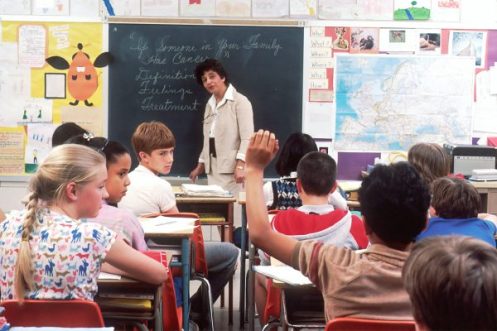
Image Credits: Photo by National Cancer Institute on Unsplash
ISSN (International Standard Serial Number): 2369-6885
Acknowledgements
The author acknowledges Nasser Yousefi and Baran Yousefi for their time, expertise, and valuable contributions. His thoughtful insights and detailed explanations have greatly enhanced the quality and depth of this work, providing a solid foundation for the discussion presented herein.
Author Contributions
S.D.J. conceived the subject matter, conducted the interview, transcribed and edited the conversation, and prepared the manuscript.
Competing Interests
The author declares no competing interests.
License & Copyright
In-Sight Publishing by Scott Douglas Jacobsen is licensed under a Creative Commons Attribution-NonCommercial-NoDerivatives 4.0 International License.
© Scott Douglas Jacobsen and In-Sight Publishing 2012–Present.
Unauthorized use or duplication of material without express permission from Scott Douglas Jacobsen is strictly prohibited. Excerpts and links must use full credit to Scott Douglas Jacobsen and In-Sight Publishing with direction to the original content.
Supplementary Information
Below are various citation formats for How the Peace School Is Redefining Education: Dr. Nasser Yousefi and Baran Yousefi on Love, Democracy, and Learning in 2025 (Scott Douglas Jacobsen, December 15, 2025).
American Medical Association (AMA 11th Edition)
Jacobsen SD. How the Peace School Is Redefining Education: Dr. Nasser Yousefi and Baran Yousefi on Love, Democracy, and Learning in 2025. In-Sight: Interviews. 2025;13(4). Published December 15, 2025. http://www.in-sightpublishing.com/how-peace-school-redefining-education
American Psychological Association (APA 7th Edition)
Jacobsen, S. D. (2025, December 15). How the Peace School is Redefining Education: Dr. Nasser Yousefi and Baran Yousefi on Love, Democracy, and Learning in 2025. In-Sight: Interviews, 13(4). In-Sight Publishing. http://www.in-sightpublishing.com/how-peace-school-redefining-education
Brazilian National Standards (ABNT)
JACOBSEN, Scott Douglas. How the Peace School Is Redefining Education: Dr. Nasser Yousefi and Baran Yousefi on Love, Democracy, and Learning in 2025. In-Sight: Interviews, Fort Langley, v. 13, n. 4, 15 dez. 2025. Disponível em: http://www.in-sightpublishing.com/how-peace-school-redefining-education
Chicago/Turabian, Author-Date (17th Edition)
Jacobsen, Scott Douglas. 2025. “How the Peace School Is Redefining Education: Dr. Nasser Yousefi and Baran Yousefi on Love, Democracy, and Learning in 2025.” In-Sight: Interviews 13 (4). http://www.in-sightpublishing.com/how-peace-school-redefining-education.
Chicago/Turabian, Notes & Bibliography (17th Edition)
Jacobsen, Scott Douglas. “How the Peace School Is Redefining Education: Dr. Nasser Yousefi and Baran Yousefi on Love, Democracy, and Learning in 2025.” In-Sight: Interviews 13, no. 4 (December 15, 2025). http://www.in-sightpublishing.com/how-peace-school-redefining-education.
Harvard
Jacobsen, S.D. (2025) ‘How the Peace School Is Redefining Education: Dr. Nasser Yousefi and Baran Yousefi on Love, Democracy, and Learning in 2025’, In-Sight: Interviews, 13(4), 15 December. Available at: http://www.in-sightpublishing.com/how-peace-school-redefining-education.
Harvard (Australian)
Jacobsen, SD 2025, ‘How the Peace School Is Redefining Education: Dr. Nasser Yousefi and Baran Yousefi on Love, Democracy, and Learning in 2025’, In-Sight: Interviews, vol. 13, no. 4, 15 December, viewed 15 December 2025, http://www.in-sightpublishing.com/how-peace-school-redefining-education.
Modern Language Association (MLA, 9th Edition)
Jacobsen, Scott Douglas. “How the Peace School Is Redefining Education: Dr. Nasser Yousefi and Baran Yousefi on Love, Democracy, and Learning in 2025.” In-Sight: Interviews, vol. 13, no. 4, 2025, http://www.in-sightpublishing.com/how-peace-school-redefining-education.
Vancouver/ICMJE
Jacobsen SD. How the Peace School Is Redefining Education: Dr. Nasser Yousefi and Baran Yousefi on Love, Democracy, and Learning in 2025 [Internet]. 2025 Dec 15;13(4). Available from: http://www.in-sightpublishing.com/how-peace-school-redefining-education
Note on Formatting
This document follows an adapted Nature research-article format tailored for an interview. Traditional sections such as Methods, Results, and Discussion are replaced with clearly defined parts: Abstract, Keywords, Introduction, Main Text (Interview), and a concluding Discussion, along with supplementary sections detailing Data Availability, References, and Author Contributions. This structure maintains scholarly rigor while effectively accommodating narrative content.
#AcademicPartnerships #ChildCentredEducation #communityPartnerships #DemocraticEducation #EducationalDiversity #EmotionalIntelligence #HolisticDevelopment #HumanisticEducation #inclusiveEducation #LabSchool #LoveInEducation #PeaceEducation
 Steve Dustcircle 🌹