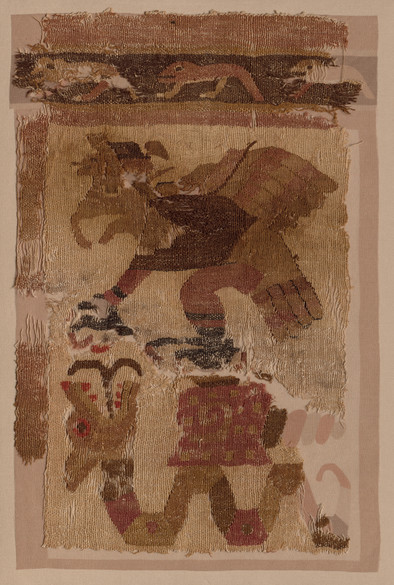
Delve into the mystery of Moche culture at #ClevelandMuseumofArt: these rare textile fragments, now enigmatic symbols of the past, showcase serpents, snails, and a raptorial bird. Could these ancient motifs hide secrets about their creators?
#MocheCulture #TextileArt #ClevelandArt #HistoryInThreads
https://clevelandart.org/art/2007.2

Textile Fragments | Cleveland Museum of Art
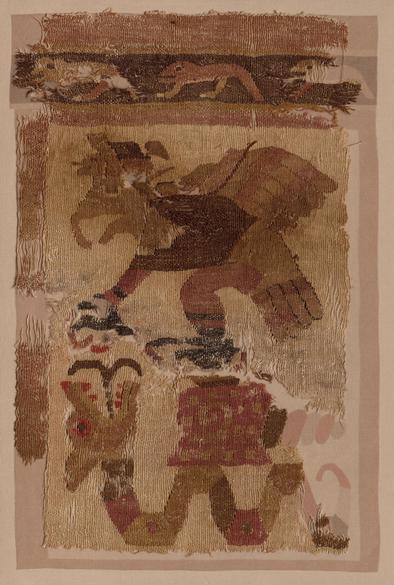
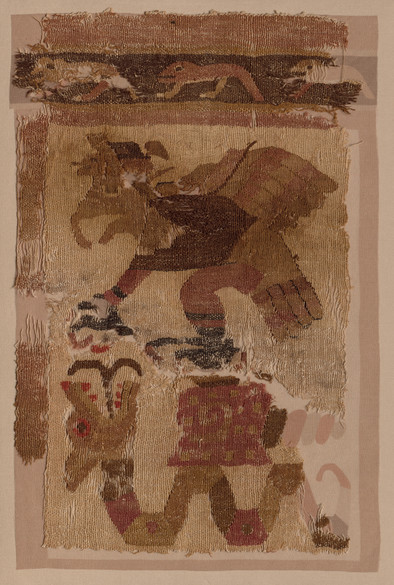
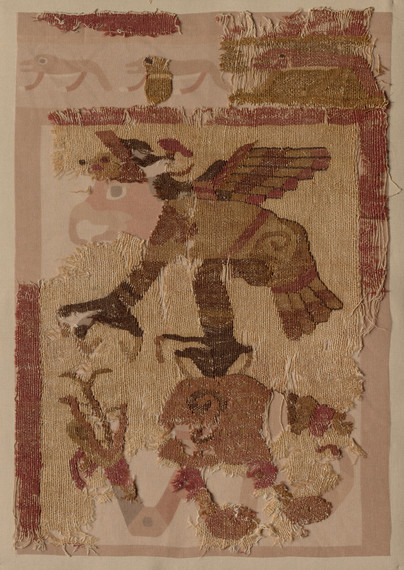
These fragments are rare survivors of catastrophic rains that destroyed much of the Moche textile legacy and may have helped to bring about the decline of Moche culture. Each depicts a serpent and a snail beneath a hovering raptorial bird—perhaps a snail kite, a type of hawk named after its favored food. The size of the motifs implies that the original textile was large; a mantle (a shawl-like garment) or a hanging are among the possibilities.
Immerse in history at
#ClevelandMuseumofArt with their Textile Fragment. A literal fragment of the past, woven tales awaiting your interpretation. Can you guess the yarn's tale?
#ArtLovers #MuseumExplorers #HistoryInThreadshttps://clevelandart.org/art/2007.2.1Textile Fragment | Cleveland Museum of Art
This fragment, one of several in the collection, is a rare survivor of catastrophic rains that destroyed much of the Moche textile legacy and may have helped to bring about the decline of Moche culture. It depicts a serpent and a snail beneath a hovering raptorial bird—perhaps a snail kite, a type of hawk named after its favored food. The size of the motifs implies that the original textile was large; a mantle (a shawl-like garment) or a hanging are among the possibilities.
Exploring the deep crimson velvet and intricate needlework of the Priest's Red Cope at
#ClevelandMuseumofArt. A religious artifact or a timeless piece of art?
#ArtAppreciation #HistoryInThreads #WhatDoYouThinkhttps://clevelandart.org/art/1995.106
Priest's Red Cope, Orphrey and Hood | Cleveland Museum of Art
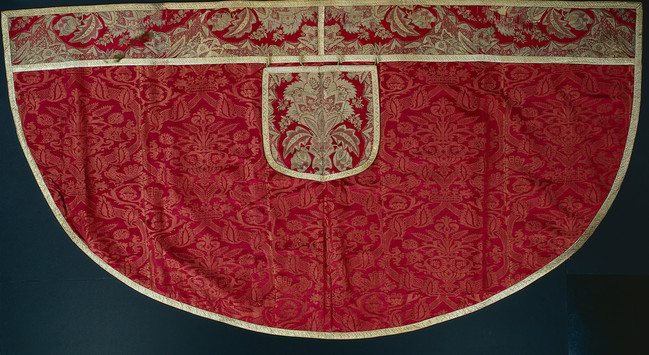
Liturgical copes are used for processions especially by those who assist the celebrant. They evolved from a secular outer garment with a hood to protect the wearer from wind and rain. Hoods remained although they became decorative and nonfunctional. This Italian silk damask features large symmetrical bouquets in urns within curved lattices bearing crowns flanked by birds. The French orphrey band, or ornamental border, along the front edges and hood incorporates small ornament associated with prestigious lace amid the formal foliate design.
Marvel at the intricate details in the Textile Fragment at #ClevelandMuseumofArt! Each thread tells a captivating story reflecting history. Can you imagine the skilled hands that might’ve crafted this? #ArtLovers #HistoryInThreads #ClevelandArt
Remember, every fragment tells a story! Your thoughts? #EngageWithArt #YourThoughts
https://clevelandart.org/art/2007.2.5

Textile Fragment | Cleveland Museum of Art
This fragment, one of several in the collection, is a rare survivor of catastrophic rains that destroyed much of the Moche textile legacy and may have helped to bring about the decline of Moche culture. It depicts a serpent and a snail beneath a hovering raptorial bird—perhaps a snail kite, a type of hawk named after its favored food. The size of the motifs implies that the original textile was large; a mantle (a shawl-like garment) or a hanging are among the possibilities.
Exploring #ClevelandMuseumofArt's exquisite Rank Badge (buzi) – A visual symphony of intricate stitchwork, vivid colors, and cultural heritage. Makes one ponder, "Which century do you think the buzis hail from?”
#ArtLovers #HistoryInThreads #ClevelandArt
https://clevelandart.org/art/1916.1329
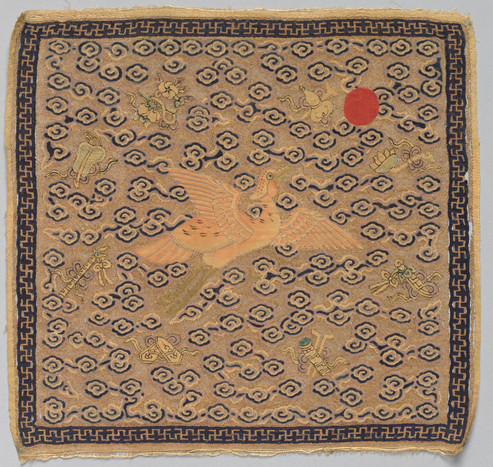

Rank Badge (buzi) China, Qing dynasty (1644-1911) | Cleveland Museum of Art
Rank badges (also called rank insignia or Mandarin squares) were used in China during the Ming (1368–1644) and Qing (1644–1911) dynasties to demonstrate the wearer’s rank. In 1391 new clothing regulations directed court officials to wear decorative squares indicating their rank—birds for civil officials and animals for military officials. During the Qing dynasty rank badge design was regulated, and certain creatures were associated with specific ranks. Qing badges depict a representation of the universe with a landscape and a central creature, surrounded by clouds and facing the sun. The sun represented the emperor and this composition showed the official’s loyalty to him. An official’s wife wore rank badges that mirrored her husband’s. Most of the examples in CMA’s collection depict creatures facing a sun on the left. Attached to the front and back of a ceremonial robe, rank badges were woven in pairs with identical imagery. One was divided vertically up the center to attach to the front of a robe with a center opening. Rank badges are generally square or rectangular, although round examples exist. They are typically satin weave or slit tapestry weave (<em>kesi</em>) silk. Satin weave badges often have dark backgrounds with silk and/or metal thread embroidery. Some badges incorporate peacock feathers or beads. Late in the Qing dynasty appliqué replaced embroidery to allow for quicker production and a change in rank.
Immerse yourself in the tapestry of history with the breathtaking Textile Fragment at #ClevelandMuseumofArt. Each thread tells a story. Are you ready to unravel the mysteries it holds?
#ArtInCleveland #HistoryInThreads #MysteryInArt
https://clevelandart.org/art/2007.2.1
Textile Fragment | Cleveland Museum of Art
This fragment, one of several in the collection, is a rare survivor of catastrophic rains that destroyed much of the Moche textile legacy and may have helped to bring about the decline of Moche culture. It depicts a serpent and a snail beneath a hovering raptorial bird—perhaps a snail kite, a type of hawk named after its favored food. The size of the motifs implies that the original textile was large; a mantle (a shawl-like garment) or a hanging are among the possibilities.
 Hidden Gems