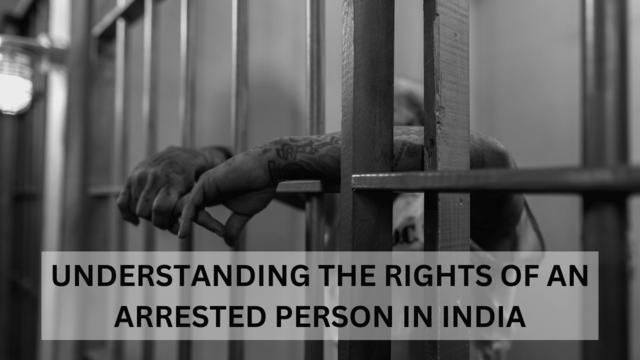
Arrest is a crucial step in the criminal justice system, aimed at ensuring public safety and upholding the rule of law. In India, the rights of an arrested person are enshrined in the Constitution and various legal provisions to prevent abuse of power and safeguard individual liberties.
https://aggarwallawchambers.com/understanding-the-rights-of-an-arrested-person-in-india/

#rights #arrested #person #india #law #freelegaladvice #free #legal #advice #aggarwal #law #chambers #aggarwallawchambers #legalservices

Understanding the Rights of an Arrested Person in India -

Introduction Arrest is a crucial step in the criminal justice system, aimed at ensuring public safety and upholding the rule of law. In India, the rights of an arrested person are enshrined in the Constitution and various legal provisions to prevent abuse of power and safeguard individual liberties. These rights are vital to maintaining a … Understanding the Rights of an Arrested Person in India Read More »

The Online Safety Bill has sparked a heated debate, with accusations flying about its fairness and legality. Critics worry it might breach privacy rights, particularly concerning encrypted messages. To understand the issue, let’s first clarify what encryption is and why it matters.

Imagine sending a secret letter to a friend, written in a special code only you two understand. You then lock this letter in a box to which only you and your friend have the key. Even if intercepted, the letter remains unreadable without the key. This analogy mirrors how end-to-end encryption works in messaging apps like WhatsApp. Messages are encrypted, ensuring only the sender and recipient can read them, not even the app provider.

The crux of the Online Safety Bill is its requirement for tech platforms to report illegal content within messages sent via their services. This mandate clashes with the principle of end-to-end encryption, which prevents these platforms from scanning messages. If companies are held responsible and fined for not complying, they might be forced to break encryption to scan messages, undermining user privacy.

The Bill aims to balance privacy with safety. On one hand, encrypted messages protect user privacy from potential government surveillance. On the other, encryption can shield criminal activities, such as child exploitation, from detection. Law-abiding citizens would want authorities to have the necessary evidence to prosecute such crimes, but this evidence often lies within encrypted messages.

WhatsApp, for instance, reports apparent child exploitation cases to relevant authorities, but end-to-end encryption limits their ability to comply fully with such requests. The Bill, therefore, faces criticism for potentially forcing technology that doesn’t exist—scanning encrypted messages without breaking encryption.

The dilemma is clear: ensuring privacy versus enabling crime detection. The Bill’s critics argue that legislating technology into existence is unrealistic and could lead to unintended consequences. The debate hinges on whether we prioritise privacy or safety, and finding a middle ground remains elusive.

As the Bill awaits Royal Assent, the discussion continues. The question is: do we value our encrypted privacy more, or do we support measures that might compromise it for the sake of safety? The conversation is ongoing, and public opinion is divided. Let us know where you stand on this critical issue.

https://teasmith.au/resource/online-safety-bill-the-big-debate/

#BlackBeltBarrister #barrister #freeLegalAdvice #freeLegalGuidance #lawyer

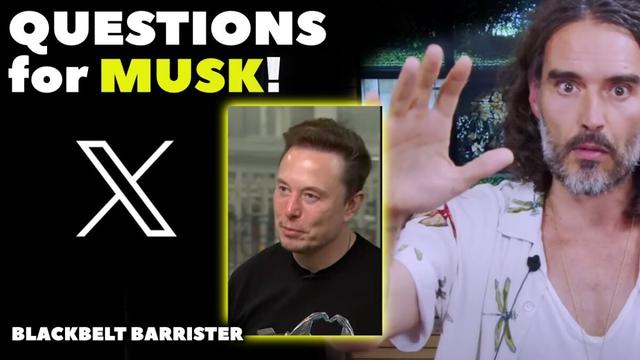
The unfolding saga surrounding Russell Brand is evolving at a remarkable pace, making it challenging to keep up. Brand’s preemptive publication against recent allegations, which he posted before they hit the press, drew a notable response from Elon Musk. Musk commented, “Of course they don’t like competition,” in reply to Brand’s video.

In a direct reaction to Musk’s comment, the Culture, Media, and Sport Committee of the House of Commons issued a letter to X Corp (formerly Twitter). This letter, dated yesterday, raises concerns about Brand’s use of social media, particularly on X, where he has 11.3 million followers. The committee is already scrutinising broadcasters and production companies that previously employed Brand to examine industry culture and whether it has changed.

The committee’s letter to X Corp queries whether Brand monetises his content on the platform and asks if X intends to suspend his ability to earn money, similar to YouTube. This move is contentious, as the allegations against Brand are not yet proven. The committee’s intervention, asking private companies to suspend monetisation, is a severe step that raises questions about the information driving these decisions.

The letter also references Musk’s response to Brand’s tweet, probing whether Musk has personally influenced any decisions regarding Brand’s status on X. The committee seeks to understand what measures X is taking to ensure creators do not use the platform to undermine the welfare of victims of inappropriate and potentially illegal behaviour.

This direct approach by a government committee to a private company, particularly quoting a tweet, is unprecedented. The origins of Brand’s YouTube channel and its rapid growth are also under scrutiny. The BBC reports that Brand’s channel saw a significant increase in views and followers starting in early 2021, coinciding with a shift in the tone of his videos. His audience grew sharply, from around 100,000 views per video to nearly five million by the end of 2021.

The BBC suggests that Brand’s content, which often involves discussing the “Great Reset” and other controversial topics, has contributed to his channel’s growth. This new fan base, sceptical of mainstream media, has been supportive of Brand. Dr Carol Jasper, a social psychologist, notes that leaders like Brand are often created by their followers, who encourage and motivate them, potentially driven by financial incentives.

While the BBC report does not directly link the growth of Brand’s YouTube channel to the current media investigation, the timing suggests a possible connection. Brand’s narrative against mainstream media and the subsequent reports by these media entities indicate a correlation, though not necessarily causation.

Ultimately, there appears to be more behind the scenes that we do not yet know. It is likely that additional information will emerge over time, providing further clarity on this complex situation. In the meantime, the public is left to speculate and await further developments.

https://teasmith.au/resource/committee-writes-to-x-corp-about-russell-brand/

#BlackBeltBarrister #barrister #freeLegalAdvice #freeLegalGuidance #lawyer

FLAC (Free Legal Advice Centres) & PILA (Public Interest Law Alliance) host a legal information clinic on 23 Sept for Ukrainian nationals living in Ireland.

The clinic will cover topics: immigration, family law, housing and social welfare law.

For more info see poster below and to register visit: https://forms.office.com/pages/responsepage.aspx?id=E-HrFR14nUGueM6xb4yr-q7XAsq48Q1BhgC7519aHi9UNjA3MkJWNVRPRUtCOEFRU01HM0pRWU04Wi4u

(via FLAC, from elsewhere)

FLAC https://www.flac.ie/
PILA https://www.pila.ie/

#Ukraine #Ireland #MastoDapine #AccessToJustice #FreeLegalAdvice #PublicInterestLaw

Microsoft Forms

@denise 'kbacon' on TikTok.
Not who you think 😁.
Her catchphrase is "What's shakin' bacon?" Her main shtick is interesting and maybe amusing little science facts.
This one is from October, and not science, but is perfect for you.
#RPHuntTok #catchphrase #freelegaladvice
https://www.tiktok.com/@kbacon/video/7156696340888571179