#FairyTaleTuesday #Celtic: `In a remote part of West Munster, a widow named Guare and her beautiful daughter, Nora, live in poverty and near starvation. Their plight appears to improve when Nora is courted by and marries ‘a strange horseman’ known as the Brown Man, who promises to make his new wife ‘a lady, with servants at her call, and all manner of fine things about her’.
But on arrival at her new husband’s home, Nora finds that the Brown Man’s ‘estate’ is a ‘wild bog’ and his palace a ‘clay hovel’, while the only food available is ‘a handful of raw white eyes and a little salt’. The bride trembles at the sight of the marital bed, ‘a little straw in a corner’, but worse is yet to come.
That night, and the next, the Brown Man leaves the cabin, returning to bed ‘cold as ice’ half an hour later. On the third night, he leaves again, and this time Nora secretly follows him, ‘winding through a lane of frost-nipped sallow trees’.
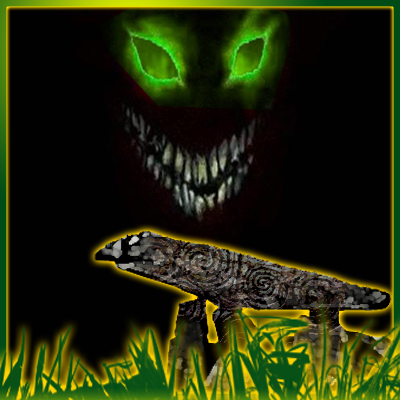
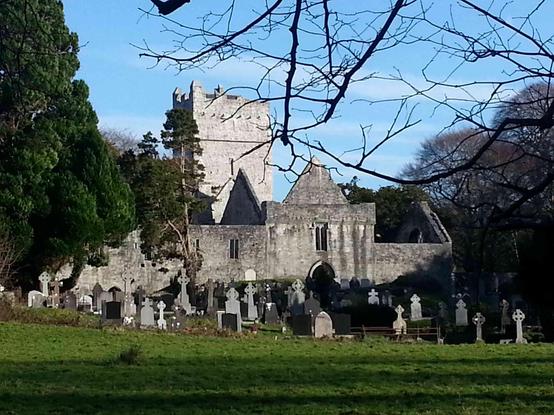
To her horror, she sees her new husband, his horse, and his dog in the graveyard of Muckross Abbey, ‘seated by an open grave, eating something; and glancing their brown, fiery eyes about in every direction’.
The next day, a terrified Nora pleads to be allowed to visit her mother; the Brown Man refuses, ‘I didn’t marry you to be keeping you gadding’, but offers to fetch the widow himself.
In due course, the widow appears, and Nora confides in her the horrifying sight she has witnessed:
‘My husband by the grave, and the horse… Turn your head aside, mother, for your breath is very hot… and the dog, they’re eating.’— ‘Ah, you’re not my mother!’ shrieks the miserable girl, as the Brown Man flings off his disguise, and stands before her, grinning worse than a blacksmith’s face through a horse collar. He just looks at her one moment, then darts his long fingers into her bosom, from which the red blood spouts in so many streams. She was very soon out of all pain, and a merry supper the horse, the dog, and the Brown Man had that night, by all accounts.`
Source:
https://irishgothicjournal.net/wp-content/uploads/2018/03/sevenc2a0devils.pdf  Astrobach
 David Castleton (Author)
 1. Neu-Kelte 🌻💙💛🌻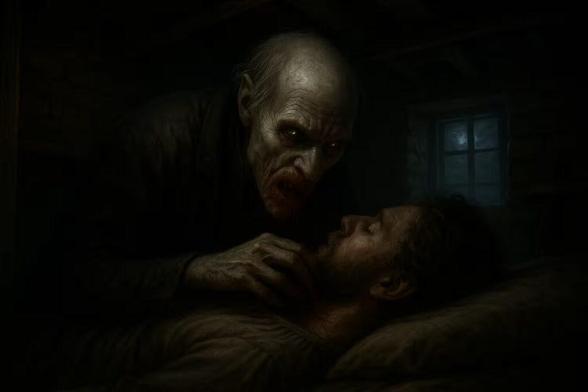
 The Godyssey Podcast
 The Godyssey Podcast