#TEI#ElementoftheWeek: <binary> (binary value) represents the value part of a feature-value specification which can contain either of exactly two possible values. - https://buff.ly/4aPOwGV
#TEI#ElementoftheWeek: <extent> (extent) describes the approximate size of a text stored on some carrier medium or of some other object, digital or non-digital, specified in any convenient units. - https://buff.ly/4ab3DKN
#TEI#ElementoftheWeek: <fw> (forme work) contains a running head (e.g. a header, footer), catchword, or similar material appearing on the current page. - https://buff.ly/3Wi0a9D
#TEI#ElementoftheWeek: <domain> (domain of use) describes the most important social context in which the text was realized or for which it is intended, for example private vs. public, education, religion, etc. - https://buff.ly/3Wi8wym
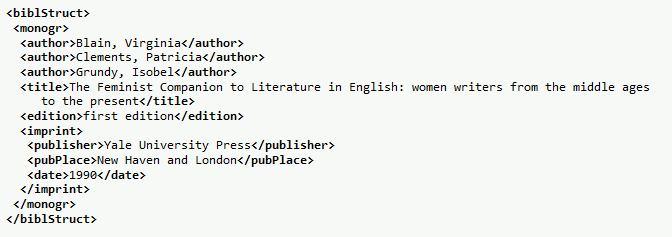
#TEI#ElementoftheWeek:<biblStruct> (structured bibliographic citation) contains a structured bibliographic citation, in which only bibliographic sub-elements appear and in a specified order. - https://buff.ly/4b9DDQH
TEI element biblStruct (structured bibliographic citation)
#TEI#ElementoftheWeek:<ellipsis> (deliberately marked omission) indicates a purposeful marking in the source document signalling that content has been omitted, and may also supply or describe the omitted content. - https://buff.ly/49UzajJ
TEI element adminInfo (administrative information)
#TEI#ElementoftheWeek:<ellipsis> (deliberately marked omission) indicates a purposeful marking in the source document signalling that content has been omitted, and may also supply or describe the omitted content. - https://buff.ly/3VFSBcA
TEI element ellipsis (deliberately marked omission)
 TEI Consortium