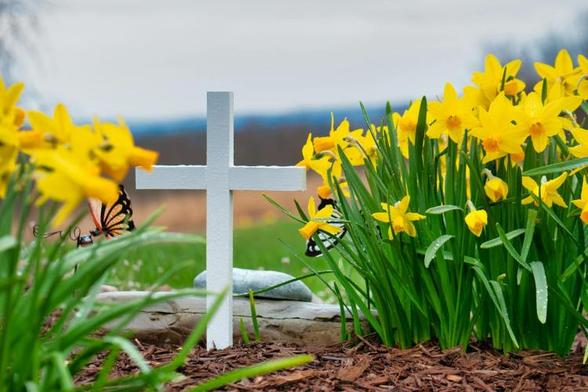
When Pride Blocks the Door

Receiving What You Cannot Earn
On Second Thought

There is a quiet tension that lives within the human heart—a tension between wanting to be helped and wanting to remain self-sufficient. It is subtle, often hidden beneath the surface, but it reveals itself most clearly when grace is offered. The Scripture reminds us in Titus 3:4–7: “But when the kindness and the love of God our Savior toward man appeared, not by works of righteousness which we have done, but according to His mercy He saved us…” That phrase “not by works” confronts something deeply ingrained within us. We are conditioned to earn, to achieve, to prove. Yet grace (charis in Greek) stands entirely outside that system. It is not wages; it is gift. And that is where many struggle.

The writer of Proverbs declares, “Surely He scorns the scornful, but gives grace to the humble” (Proverbs 3:34). The Hebrew word for humble, ʿānāw, carries the idea of one who is bowed low—not in defeat, but in recognition of dependence. Pride resists that posture. Pride insists on standing upright, even when it is weak. It is not always loud or arrogant; sometimes it appears as quiet self-reliance. It whispers, “I can handle this,” even when the soul is weary. And when grace is extended, pride often recoils. It does not want to receive what it cannot repay.

If we are honest, we have all experienced this in ordinary life. Someone offers help, and instead of relief, we feel discomfort. There is something in us that resists being seen as needy. We would rather struggle quietly than accept assistance openly. That same instinct carries into our spiritual lives. We try to “earn” God’s approval through behavior, discipline, or moral effort. But the gospel dismantles that entire approach. It tells us there is nothing we can do to secure what God has already chosen to give.

This is where Easter speaks with clarity. The cross is not a response to human effort; it is the answer to human inability. “God demonstrates His own love toward us, in that while we were still sinners, Christ died for us” (Romans 5:8). The word “demonstrates” (synistēsin) means to prove or establish beyond doubt. God did not wait for us to improve before offering grace. He gave it in the midst of our insufficiency. As Martin Luther once wrote, “Grace is given not because we have done good works, but in order that we may be able to do them.” That insight reshapes everything. Grace is not the reward for transformation; it is the starting point of it.

And this connects directly to our theme of becoming who God wants us to be through love. The fruit of the Spirit begins with love (agapē), but that love cannot grow in a heart still governed by pride. Pride builds walls; grace opens doors. Pride isolates; grace invites. When Paul describes love in 1 Corinthians 13:4–5, he says, “love does not parade itself, is not puffed up.” The Greek word for “puffed up,” physioō, paints the picture of something inflated beyond its true substance. Pride inflates; grace humbles. And only in humility can love take root.

There is also a deeper theological truth at work here. The inability to receive grace is not merely a behavioral issue; it is a spiritual condition. It reflects a misunderstanding of who God is. If we see Him as a distant evaluator, we will try to perform. But if we see Him as a loving Father, we will learn to receive. As A.W. Tozer observed, “What comes into our minds when we think about God is the most important thing about us.” If we believe His love must be earned, we will live in constant striving. But if we understand that His love is given, we can begin to rest.

Yet even knowing this, the struggle remains. Pride does not easily release its grip. It is subtle, persistent, and often disguised as responsibility or discipline. But grace calls us to something different. It calls us to lay down our attempts to justify ourselves and to receive what has already been accomplished. It invites us to trust that what God has provided is sufficient.

On Second Thought

There is a paradox here that is easy to overlook. We often assume that receiving grace is the easiest part of the Christian life. After all, it requires no effort, no achievement, no qualification. Yet in practice, it may be one of the hardest things we are asked to do. Why? Because receiving grace requires us to admit what we spend most of our lives trying to conceal—that we are not enough on our own. It asks us to surrender the very thing we have been taught to protect: our independence.

But consider this carefully. What if the very thing we cling to—our ability to stand on our own—is the very thing keeping us from standing in God’s grace? What if pride is not strength, but resistance to the only power that can truly transform us? The kingdom of God often works in reversals. Strength is found in weakness. Exaltation comes through humility. Life emerges from death. And grace is received not by those who have achieved, but by those who have surrendered.

In that light, humility is not humiliation; it is alignment with truth. It is the recognition that we were never designed to carry the weight of our own salvation. The more we insist on doing so, the heavier the burden becomes. But when we release that burden, something unexpected happens. We do not become less; we become free. Free to love, free to serve, free to grow into the very image God intended.

So perhaps the question is not whether grace is available—it is. The question is whether we are willing to receive it. And that may require us to let go of something we have held onto for a long time.

FEEL FREE TO COMMENT, SUBSCRIBE, AND REPOST, SO OTHERS MAY KNOW


#EasterDevotion #graceVsPride #humilityInTheBible #salvationByGrace #Titus347Meaning

Strengthened in the Shadows

The Kind of Friend Love Produces
The Bible in a Year

There is something sacred about walking through the quieter passages of Scripture, where the noise of crowds fades and the deeper work of God emerges in hidden places. In 1 Samuel 23:16, we find such a moment: “And Jonathan, Saul’s son, arose and went to David into the wood, and strengthened his hand in God.” David is no longer standing before Goliath in public victory; he is hiding in the wilderness, pursued, weary, and uncertain. Yet it is in this place of vulnerability that one of the clearest pictures of godly friendship appears. Jonathan steps into the shadows, not to draw attention, but to strengthen a man whose calling was under attack.

The text begins with a quiet but powerful phrase: “Jonathan arose.” The Hebrew root qum carries the sense of rising up with purpose, often against prevailing circumstances. Jonathan’s character is revealed not merely in what he believes, but in what he chooses when it costs him something. As the son of King Saul, he had everything to gain by aligning with his father’s agenda. Yet he chose righteousness over convenience. This is the first mark of true friendship—character that is not swayed by pressure or proximity to power. In our own lives, we are constantly surrounded by voices and influences that shape our decisions. But the kind of love described in 1 Corinthians 13:7“bears all things, believes all things, hopes all things, endures all things”—requires a foundation of integrity. Without character, friendship becomes fragile.

Jonathan’s consistency is equally striking. The text says he “went to David into the wood.” He did not wait for David to return to prominence; he pursued him in his lowest moment. This is where many friendships falter. It is easy to stand beside someone when they are celebrated, but it takes covenantal love to walk with them when they are hidden. The Hebrew concept of covenant loyalty, often expressed through ḥesed, reflects a steadfast love that does not waver with circumstances. As theologian Dietrich Bonhoeffer once observed, “The person who loves their dream of community will destroy community, but the person who loves those around them will create community.” Jonathan loved David, not the idea of David. And in doing so, he modeled a love that mirrors the heart of God.

The passage then tells us that Jonathan “strengthened his hand.” This is the language of contribution. Friendship, in its truest form, is not passive; it is active, intentional, and sacrificial. The phrase suggests giving courage, reinforcing resolve, and lifting another’s capacity to endure. How often do we measure friendship by what we receive rather than what we give? Yet Jesus Himself said, “It is more blessed to give than to receive” (Acts 20:35). In the context of our Easter focus, we see this most clearly at the cross. God did not withhold; He gave. And that giving becomes the pattern for our relationships. Love, as described in Galatians 5:22, is not self-seeking but others-centered. It strengthens rather than drains.

But perhaps the most important detail is how Jonathan strengthened David: “in God.” This is the mark of consecration. Jonathan did not merely offer encouragement; he pointed David back to the source of his strength. The best friends are those who help us see God more clearly when our vision is clouded. They remind us of His promises when fear begins to speak louder than faith. The Hebrew understanding of strengthening in God involves anchoring one’s trust in His covenant faithfulness. It is not shallow reassurance but spiritual recalibration. As Matthew Henry wrote, “Those are best friends who encourage us in our duty and confirm our dependence on God.”

As I reflect on this passage within the larger journey of Scripture, I cannot help but see how it aligns with the life of Jesus. He is the ultimate Jonathan—the One who comes to us in our wilderness, who strengthens us not just with words but with His very presence. At Easter, we see that love does not remain distant from suffering; it enters into it. Jesus meets us in our hiding places, our fears, and our uncertainties, and He speaks life into our weary souls. “Greater love has no one than this, than to lay down one’s life for his friends” (John 15:13). That is not simply a statement; it is a lived reality in Christ.

So as we continue our journey through the Bible this year, we are invited to examine not only the friends we choose, but the friend we are becoming. Are we rising above the pressures around us? Are we consistent in both good times and difficult seasons? Are we contributing strength or merely consuming support? And most importantly, are we pointing others back to God?

For further study, consider this resource: https://www.biblegateway.com/resources/commentaries/IVP-NT/Rom/Friendship-Covenant-Love

FEEL FREE TO COMMENT, SUBSCRIBE, AND REPOST, SO OTHERS MAY KNOW


#1Samuel2316Meaning #biblicalFriendshipQualities #covenantFriendshipInTheBible #EasterDevotion #fruitOfTheSpiritLove

When Love Holds Nothing Back

Walking in the Gift of the Cross
A Day in the Life

There are moments in the Gospels when I try to place myself beside Jesus—not as a distant observer, but as one walking closely enough to feel the weight of what He carried. As Easter approaches, I find myself lingering near the cross, not rushing past it. I imagine standing there, watching the One who spoke peace to storms now giving Himself without resistance. And in that moment, the words of Romans 8:32 begin to settle into my heart: “He who did not spare His own Son, but delivered Him up for us all…” The Greek word for “spared” here is pheidomai, meaning to withhold or refrain from giving. God did not hold back. He did not protect His Son from suffering. Instead, He gave Him fully, completely, and without reservation.

As I walk with Jesus through this day, I begin to understand something that reshapes my entire view of God. If the Father did not withhold His most precious treasure, then there is nothing in His heart that is reluctant toward me. Too often, I have approached God as though He were hesitant—measuring my prayers, weighing my worthiness, wondering if I am asking too much. But Paul dismantles that thinking. The cross becomes God’s definitive statement: there is no greater gift left to give. As Charles Spurgeon once said, “He who gave us Christ will not deny us anything that is truly good for us.” That insight reframes prayer, not as a negotiation, but as a relationship rooted in trust.

I think about how Jesus lived this reality. He walked in complete confidence in the Father’s love. Even in the Garden of Gethsemane, where the weight of the cross pressed heavily upon Him, He prayed with surrender: “Not my will, but Yours, be done” (Luke 22:42). His confidence was not in the absence of suffering but in the presence of the Father. That same confidence is extended to us. “Let us therefore come boldly unto the throne of grace…” (Hebrews 4:16). The word “boldly” comes from the Greek parrēsia, meaning freedom of speech, openness, and assurance. It is the picture of a child approaching a loving parent without fear.

This is where the connection to love becomes unmistakable. Our theme this week—“Becoming Who God Wants Me to Be: Love”—is not about striving to produce love through effort. It is about responding to the love already given. “We love because He first loved us” (1 John 4:19). The cross is not only the demonstration of God’s love; it is the source from which our love flows. When Paul speaks of the fruit of the Spirit in Galatians 5:22, the first and foundational fruit is agapē—a love that gives without expecting return. That kind of love is not manufactured; it is received and then reflected.

As I continue walking with Jesus in this reflection, I realize how often I have underestimated what God is willing to do in my life. If He has already given His Son, then why do I hesitate to believe that He will provide what I need today? Jesus Himself said, “I came that they may have life, and have it abundantly” (John 10:10). The word “abundantly” (perissos) speaks of something overflowing, exceeding what is necessary. God’s desire is not merely to sustain us but to fill our lives with His presence, His peace, and His purpose.

There is a quiet but powerful shift that happens when this truth takes hold. I no longer pray as though I am trying to convince God to act; I pray knowing that His heart is already inclined toward me. As A.W. Tozer wrote, “The goodness of God is the drive behind all the blessings He daily bestows upon us.” That means every answered prayer, every moment of grace, every provision in my life flows from a heart that has already proven its love beyond question.

So today, I choose to walk in that confidence. I choose to live not as one who is uncertain of God’s care, but as one who has seen the evidence of it at the cross. The resurrection confirms that love did not end in sacrifice—it triumphed in victory. Easter stands as the eternal declaration that nothing can separate us from the love of God in Christ Jesus (Romans 8:39).

For further study, consider this resource: https://www.desiringgod.org/articles/he-who-did-not-spare-his-own-son

FEEL FREE TO COMMENT, SUBSCRIBE, AND REPOST, SO OTHERS MAY KNOW


#confidenceInPrayer #EasterDevotion #fruitOfTheSpiritLove #GodSLoveDemonstratedAtTheCross #Romans832Meaning

Accepted Before You Perform

Living in the Love That Chose You First
As the Day Begins

“He made us accepted in the Beloved.”Ephesians 1:6

There is something deeply human about wanting to belong. From childhood playgrounds to adult circles, we learn quickly that acceptance often comes with conditions. We must perform, achieve, or conform. Yet when we open Scripture, we encounter a radically different reality. The Apostle Paul, writing to the church at Ephesus, uses the phrase “accepted” from the Greek word charitoō—meaning “to be highly favored, to be graced.” This is not earned favor but bestowed favor. It is the language of gift, not transaction. In Christ—the “Beloved” (agapēmenos)—we are brought into God’s presence not because we qualified, but because He chose.

This truth rests at the heart of Easter. The resurrection is not simply a declaration of Christ’s victory over death; it is the Father’s affirmation that the work of redemption is complete. “It is finished” (tetelestai) was not a cry of defeat but a proclamation of fulfillment. Because of this, acceptance is no longer something we strive toward; it is something we stand within. Just as a child does not earn their place at the family table, so we do not earn our place in God’s kingdom. We receive it by faith. As theologian John Stott once wrote, “Grace is love that cares and stoops and rescues.” That is precisely what we see in Christ.

This acceptance becomes the soil from which love grows. As we move into this week’s focus—“Becoming Who God Wants Me to Be: Love”—we must understand that love is not the entry requirement into God’s family; it is the fruit that grows once we realize we already belong. “But the fruit of the Spirit is love…” (Galatians 5:22). The Greek word for love here, agapē, describes a self-giving, sacrificial love—the very love demonstrated at the cross. When we know we are accepted, we are freed from striving and released into loving. Like a tree rooted in rich soil, the fruit appears naturally when the roots are secure.


Triune Prayer

Heavenly Father, I come to You this morning with gratitude that my place in Your family is not fragile or uncertain. You have called me accepted, not because of my works, but because of Your grace. Help me to live today from that place of security, not striving for approval but resting in Your love. Teach me to see others through the same lens of grace You have given me, and let my heart reflect Your welcoming spirit in every interaction.

Jesus the Son, I thank You that through Your death and resurrection, You made a way for me to be brought near. You are the Beloved, and in You I am accepted. When I am tempted to measure my worth by my failures or successes, remind me that my identity is anchored in You. Let Your love shape my responses today so that I may love as You have loved—patiently, sacrificially, and without condition.

Holy Spirit, dwell within me and cultivate the fruit of love in my life. Remove the insecurity that causes me to compare or compete, and replace it with a steady confidence in God’s acceptance. Guide my thoughts, my words, and my actions so that they reflect the love of Christ. Empower me to extend grace freely, just as I have received it, and to walk in step with You throughout this day.

Thought for the Day:
Live today not trying to be accepted, but because you already are. Let that truth free you to love without fear, serve without striving, and rest without guilt.

For further reflection, consider this article: https://www.gotquestions.org/accepted-in-the-Beloved.html

FEEL FREE TO COMMENT, SUBSCRIBE, AND REPOST, SO OTHERS MAY KNOW


#acceptanceInChrist #EasterDevotion #Ephesians16Meaning #fruitOfTheSpiritLove #GodSLoveAndGrace #identityInChrist