Convert old IR remote controls into presentation clickers using an RP2040 USB board and open-source TTVKTR firmware
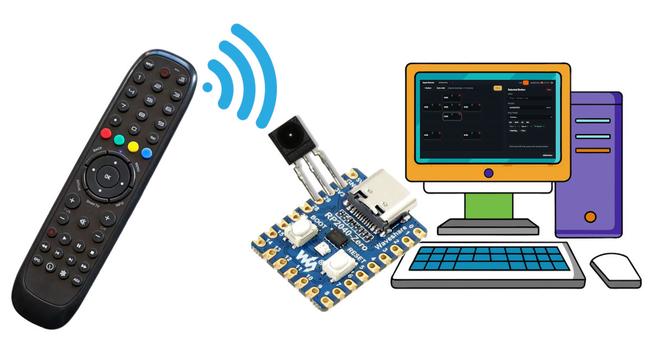
Brisk4t's "Tossed The TV — Kept The Remote" (TTVKTR) is an open-source firmware project for Raspberry Pi RP2040 USB boards that aims to reduce electronics waste by converting old IR remote controls into presentation clickers. Most Raspberry Pi RP2040 boards with USB ports should work, but the project highlights the Waveshare RP2040-Zero combined with a standard 38 kHz infrared receiver due to its small size and low price ($4-5). The project also relies on the built-in RGB LED for layer color feedback. That's about it for the hardware. It just required some basic soldering of the IR receiver to GPIO 28 (OUT), 5V or 3.3V, and GND pins. Nothing too hard. The WS2812 RGB LED is already connected to GPIO 16. I tried to look for RP2040 USB boards with a built-in IR receiver, but I could not find any. The firmware receives IR codes from a standard 38
Forlinx launches Rockchip RK3572 system-on-module (SoM) and development board with Linux 6.12 BSP
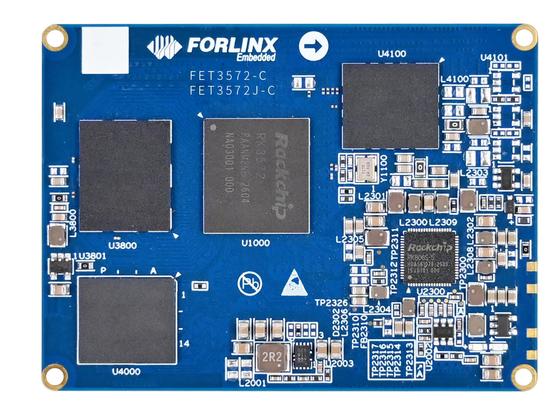
We noticed the Rockchip RK3572 mid-range HMI SoC a couple of months ago, and Forlinx has launched the first system-on-module (FET3572-C SoM) based on the processor, along with a development board (OK3572-C) and BSP (Board Support Package) with a fairly recent Linux 6.12 kernel. The octa-core Cortex-A73/A53 processor features a 4 TOPS NPU (the same as in the RK3588) and targets HMI applications leveraging Edge AI for consumer electronics, industrial control, edge computing, smart security, and in-vehicle terminals. Forlinx FET3572-C Rockchip RK3572 system-on-module Specifications: SoC - Rockchip RK3572 or RK3572J Octa-core CPU - 2x Arm Cortex-A73 @ up to 2.2 GHz+ 2x Arm Cortex-A53 @ up to 2.1 GHz + 4x Arm Cortex-A53 @ up to 2.1 GHz GPU - Arm Mali-G310V2 MC1 with support for OpenGL ES 1.1/2.0/3.2, OpenCL 3.0, and Vulkan 1.4 VPU Hardware Encoding -H.264, H265, 4K @ 60fps Hardware Decoding - H.264, H.265, VP9, AV1, AVS2,
Nuvoton NuMaker-GestureAI-M55M1 module combines Cortex-M55 MCU with GC0308 camera for AI gesture control
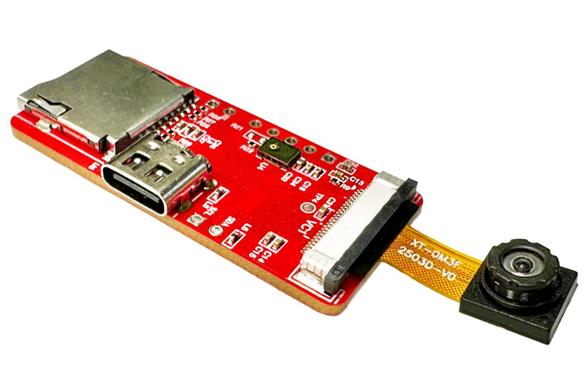
Back in November last year, we covered the launch of the NuMicro M55M1 MCU from Nuvoton, which combines an Arm Cortex-M55 core with an Ethos-U55 microNPU for on-device AI and gesture control. Now, they have released the NuMaker-GestureAI-M55M1, a development module based on that MCU for AI vision-related applications. This new board integrates the M55M1 MCU with a GC0308 CMOS image sensor, a digital microphone, and a microSD card slot for storing AI models. It is designed for applications such as gesture control, basic vision systems, and touchless interfaces. NuMaker-GestureAI-M55M1 specifications: MCU – Nuvoton NuMicro M55M1R2LJAE CPU - Cortex-M55 MCU @ 220 MHz Memory - 1.5 MB SRAM Storage - 2 MB Flash AI Accelerator - Arm Ethos-U55 micro-NPU @ 220 MHz Storage – MicroSD card slot (located on the back) for storing AI model files Camera – Integrated VGA GC0308 CMOS image sensor Audio – On-board digital microphone (DMIC) USB –
Radxa’s 2026 Qualcomm hardware: Dragon Q8B and Q5E SBCs, DragonStation and DragonBay NAS systems
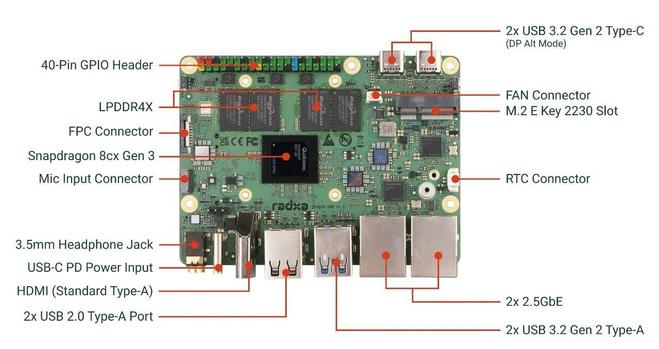
Radxa started its partnership with Qualcomm last with the Dragon Q6A SBC, but it turns out it was just the start, and the company showcased more Qualcomm SBCs and NAS systems at a Radxa + Qualcomm developer day on May 30, 2026. The Radxa Q8B SBC will be based on a Qualcomm Snapdragon 8cx Gen3 octa-core SoC, the Q5E SBC on a Dragonwing QCS6690 octa-core Kryo SoC, and the company also teased DragonStation and DragonBay NAS systems, and a 2026 roadmap features a total of 22 Qualcomm systems made by Radxa. Radxa Dragon Q8B Dragon Q8B specifications: SoC – Qualcomm Snapdragon 8cx Gen 3 compute platform Octa-core CPU – 4x 3.0 GHz Kryo Prime cores, 4x 2.4 GHz Kryo Efficiency Cores GPU – Adreno 690 GPU with DirectX 12 (DX12) API support DSP – Qualcomm Hexagon Processor, Qualcomm Sensing Hub AI – Qualcomm Neural Processing Engine SDK support for AI
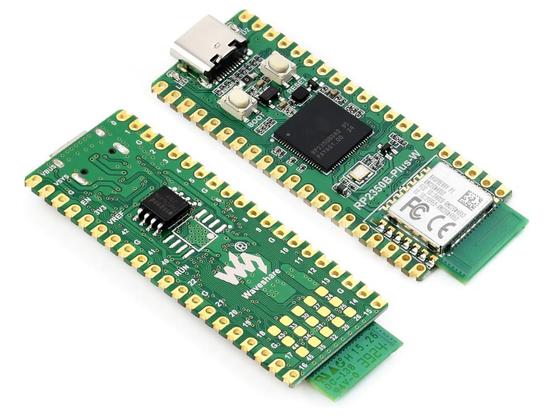
Waveshare RP2350B-Plus-W – A Raspberry Pi Pico 2 W-sized board with 41 GPIOs, 16MB flash, USB-C port
Waveshare RP2350B-Plus-W is a development board that follows the Raspberry Pi Pico 2 W form factor, but offers 41 GPIOs thanks to the RP2350B MCU, integrates 16 MB of flash, and includes a USB-C port. So, in several ways, it's an upgrade over the RP2350A-based official board, which offers only 26 GPIOs via two 13-pin GPIO headers, 4MB of flash, and a micro USB port. Since it's the same size, where do the extra GPIOs come from? Answer: The company simply added 15 pads to the bottom of the board, not quite as convenient since it's requires soldering, but it does the job. Waveshare RP2350B-Plus-W specifications: SoC – Raspberry Pi RP2350B CPU Dual-core Arm Cortex-M33 @ 150 MHz with Arm Trustzone Dual-core RISC-V Hazard3 @ 150 MHz Only two cores can be used at any given time Memory – 520 KB on-chip SRAM Package – QFN-80 Memory - Footprint
Microchip dsPIC33CK low-cost motor control MCU sells for $0.51 and up
Microchip has expanded its dsPIC33 lineup with the dsPIC33CK Value Line family, a new series of low-cost 16-bit digital signal controllers (DSCs) designed for motor control applications. The devices deliver up to 100 MIPS of deterministic performance and integrate high-resolution PWM and a 12-bit ADC, making them suitable for motor Field-Oriented Control (FOC) and precision sensing tasks. These DSCs are designed to bridge the gap between basic microcontrollers and higher-end dsPIC33A devices. It offers flash memory from 32 KB to 256 KB, supports function consolidation to reduce component count and BOM cost, and is available in automotive-grade (AEC-Q100 Grade 1) versions with secure boot. Microchip dsPIC33CK specifications: MCU Core – 16-Bit dsPIC33CK CPU operating up to 100 MHz / 100 MIPS and DSP with 40-bit wide accumulators Memory & Storage 8 KB to 16 KB Data RAM 32 KB to 256 KB Program Flash with Error Correction Code (ECC) 384
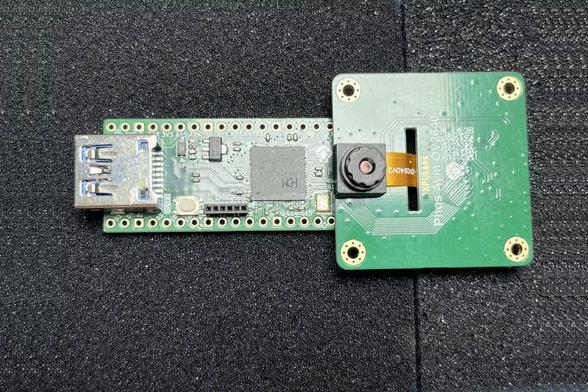
Petros CH32H417M Alef – A Raspberry Pi Pico-sized RISC-V USB 3.0 camera board
XPU Labs' Petros CH32H417M Alef is a Raspberry Pi Pico-sized board based on the WCH CH32H417W RISC-V USB 3.0 microcontroller and taking a 2MP OV2640 camera module through the MCU's digital image interface (DVP). The board comes with 896KB SRAM and 960KB Flash from the WCH microcontroller, two 20-pin GPIO headers following the Raspberry Pi Pico's pinout, a 6-pin SWD and UART6 header for debugging, and a Reset button. Petros CH32H417M Alef specifications: MCU – WCH CH32H417MEQ6 MCU QingKe RISC-V5F up to 400 MHz QinKe RISC-V3F up to 144 MHz GPU – Graphics Processing Hardware Accelerator GPHA Memory – 896KB SRAM Storage – 960KB Flash Camera I/F - 40-pin B2B connector with DVP @ 144MHz, SPI, I2C and ADC interfaces for 2MP Phos Ayin OV2640 camera module USB - 1x USB 3.0 Type-A port (5Gbps, tested up to 430 MB/s) for data, power, and firmware flashing Debugging – 6-pin SWD and
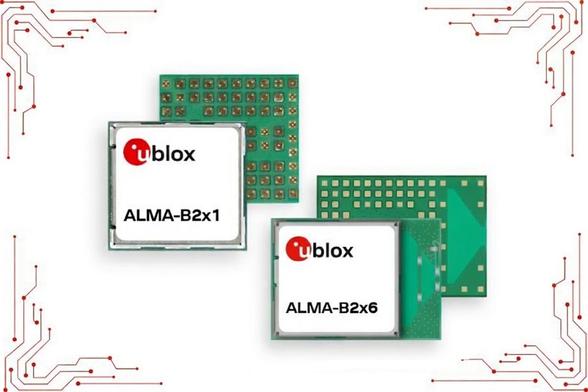
u-blox ALMA-B2 Bluetooth 6.0 and 802.15.4 module features Nordic nRF54LM20 Edge AI wireless MCU
u-blox has recently announced the ALMA-B2 standalone BLE 6.0 and 802.15.4 module family built around the Nordic Semi nRF54LM20 Cortex-M33 wireless microcontroller with a dedicated NPU for low-latency Edge AI applications. There are four specific product variants in the u-blox ALMA-B2 series: ALMA-B201, ALMA-B206, ALMA-B211, and ALMA-B216, all of which support Bluetooth 6.0 and Bluetooth Channel Sounding for distance measurement. They also support IEEE 802.15.4, including Thread, Zigbee, and Matter, as well as Nordic’s proprietary 2.4 GHz protocol and NFC. The company also mentions that the nRF54LM20B-based ALMA-B211 and ALMA-B216 variants include an Axon NPU that performs machine learning tasks up to 15 times faster and with greater energy efficiency than running the same tasks on the main processor alone. u-blox ALMA-B2 Series Specifications: Wireless SoC - Nordic Semiconductor nRF54LM20A (for ALMA-B201 and B206) or nRF54LM20B (for ALMA-B211 and B216) CPU Arm Cortex-M33 application processor clocked at up to 128 MHz RISC-V
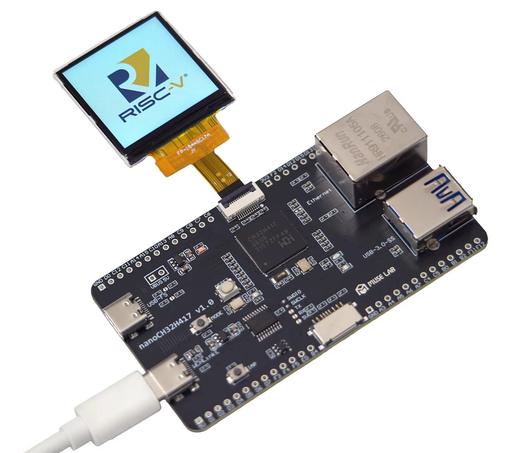
MuseLab nanoCH32H417 – A $17 WCH CH32H417 RISC-V MCU development board with USB 3.0, Fast Ethernet
Designed by MuseLab, the nanoCH32H417 is a development board for the WCH CH32H417 dual-core RISC-V MCU, which we covered earlier this year for its USB 3.0 (5 Gbps), UHS, and Fast Ethernet support. At that time, only the official CH32H417 development board was available, but this board adds a third-party option. The board exposes various features of the MCU, including one USB 3.0 port, two USB Type-C ports, a 100Mbps Ethernet interface, and a MicroSD card slot. It also simplifies the prototyping workflow by integrating a WCHLink-E debugger directly onto the board, meaning you won't need to wire up an external programmer to flash the MCU or view serial output. MuseLab nanoCH32H417 specifications: MCU – WCH CH32H417QEU6 MCU QingKe RISC-V5F up to 400 MHz QinKe RISC-V3F up to 144 MHz GPU – Graphics Processing Hardware Accelerator GPHA Memory – 896KB SRAM Storage - 960KB Flash Storage – MicroSD card slot Display
Optimizing the OK3588 Development Board: PREEMPT_RT Patch & Performance Testing - Blog - Forlinx Embedded Technology Co., Ltd.
Discover how to apply the PREEMPT_RT patch to the OK3588 Development Board using Buildroot. Reduce Linux scheduling latency for industrial edge computing and control.
 cnx-software.com [Unofficial]