1961! Lucky we survived this long through worse and worse degradation of institutions...

> ... the relation of education to later life should be a dialectical and critical one. If, however, one result of going to college is to become alienated from work per se and defeatist about the possibility of altering one’s relation to it, then it seems to me one ought to re-examine academic institutions themselves and see whether anything in them, or in one’s own attitudes, or in both might be changed.
https://www.theatlantic.com/magazine/archive/1961/04/where-is-the-college-generation-headed/658181/
#DavidRiesman #UniversityVisions

Where Is the College Generation Headed?

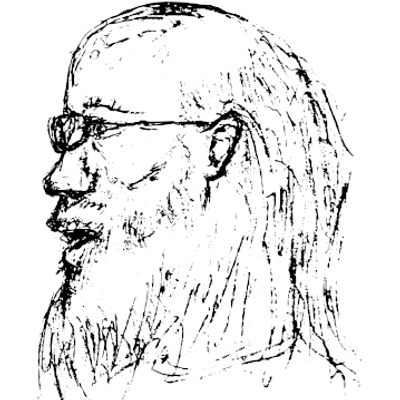
<em>After teaching and practicing law,</em> DAVID RIESMAN <em>became in 1946 a member of the staff of the College of Social Science at the University of Chicago, and thereafter a member of the Committee on Human Development and of the Department of Sociology. In 1958 he was appointed the Henry Ford II Professor of the Social Sciences at Harvard University, his alma mater. With a grant from the Carnegie Corporation, Dr. Riesman investigated the problems of higher education discussed in this article; his observations originally appeared in the</em> CHICAGO REVIEW <em>for January, 1958, and have since been amplified and brought up to date for the</em> ATLANTIC.

The Atlantic
> a .. social pattern.. individuals, hesitant to reveal feelings they have scarcely voiced to themselves, are misled about what.. could be done if they expressed themselves.. discovering others who.. share their views. (Sociologists refer to this.. as “#PluralisticIgnorance.”) Leadership.. in politics or.. other affairs, often serves to help a group change its.. mood to conform to.. repressed views, but leadership also.. frequently does, serve to continue.. repression.
#DavidRiesman

> There is another result as well; namely, that we often end up in doubt as to what we ourselves think. We come to believe what we say to others and thus become “more sincere” in the subjective sense, but at the price of becoming still more confused as to what is actually so: we are the first victims of our own propaganda.

@bsmall2
#DavidRiesman on #PR #Propaganda #Sincerity

.> Leadership, of course, whether in politics or in other affairs, often serves to help a group change its apparent mood to conform to its actual or potential but repressed views, but leadership also may, and frequently does, serve to continue enforcing the repression. Even in a large organization, radical and what were previously regarded as “impossible” changes come about almost instantaneously once people discover that views they had previously regarded as unacceptable or idiosyncratic are in fact widely shared. #DavidRiesman on #Leadership #OrganizationalChange

I saw this piece in an edition of Toward Liberal Educatioxn and wanted to remember a few sentences from it...

.> I believe that college students are now beginning to find new ways to become active politically, and hence responsible humanly.> I do not think it is the primary task of education to prepare students for their later occupational roles, or, indeed, any narrowly specialized roles, nor to teach them to enjoy work regardless of its quality and meaning. Rather, the relation of education to later life should be a dialectical and critical one. If, however, one result of going to college is to become alienated from work per se and defeatist about the possibility of altering one’s relation to it, then it seems to me one ought to re-examine academic institutions themselves and see whether anything in them, or in one’s own attitudes, or in both might be changed..> ... the very emphasis on family life, which is one of the striking and, in so many ways, attractive qualities of young people today, is an implicit rejection of large organization. The suburban family, with its garden, its barbecue, its lack of privacy in the open-plan house, is itself a manifesto of decentralization, even though it makes use of centralized services such as television, clinics, chain stores, and House Beautiful. .> ... the fact that much work is meaningless per se, save as a source of income, prestige, and sociability, but it also indicates, as I have already implied, that people too readily accept their work as it comes, without the hope of making it more meaningful..> ... the conception that work in organizations requires surrender of independence of judgment, if not of integrity... one can find hucksterism (often hypocritically veiled) among academic people in search of reputations, grants, and promotions, as well as among market researchers and other businessmen..> ... Sometimes students complain about the prerequisites of a department, which serve its monopolistic aims or protect its mediocre teachers from boycott rather than serve any defensible pedagogic aims..> ... students, they have often told me that it doesn’t pay to be too interested in anything, because then one is tempted to spend too much time on it, at the expense of that optimal distribution of effort which will produce the best grades... I am convinced that grades contaminate education — they are a kind of currency which, like money, gets in the way of students’ discovering their intellectual interests
-
The Atlantic Monthly: 1961

#DavidRiesman in #TowardLiberalEducation on #College #CollegeGeneration #EducationAims #AimsOfEducation in a society of #BullshitJobs and #DisciplinedMinds in #Academia
#Grades and #Grading

Where Is the College Generation Headed?

<em>After teaching and practicing law,</em> DAVID RIESMAN <em>became in 1946 a member of the staff of the College of Social Science at the University of Chicago, and thereafter a member of the Committee on Human Development and of the Department of Sociology. In 1958 he was appointed the Henry Ford II Professor of the Social Sciences at Harvard University, his alma mater. With a grant from the Carnegie Corporation, Dr. Riesman investigated the problems of higher education discussed in this article; his observations originally appeared in the</em> CHICAGO REVIEW <em>for January, 1958, and have since been amplified and brought up to date for the</em> ATLANTIC.

The Atlantic