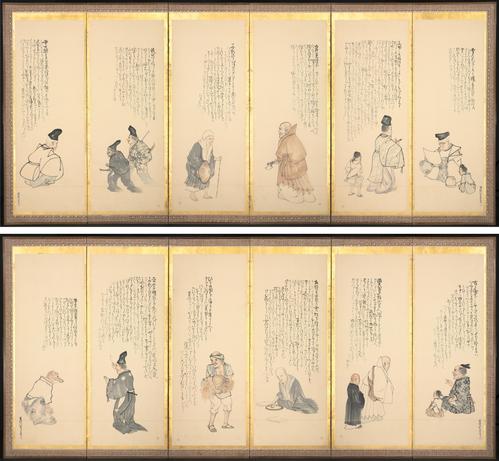
Marvel at Matsumura Goshun's exquisite screens that blend elegant imagery and profound Buddhist wisdom. Each panel invites reflection on life's nuances. How do art and literature intertwine to deepen our understanding of culture?
#EdoArt #ClevelandArt #CulturalIntersectionhttps://clevelandart.org/art/1971.43Uncover layers of history at
#ClevelandMuseumofArt: Ghatotkacha chasing Bhagadatta in "Book of Wars". A tale from the Mahabharata captured in Persian allure by Naqib Khan. How does art transcend cultures for you?
#ArtAppreciation #CulturalIntersection #MahabharatainArthttps://clevelandart.org/art/2013.321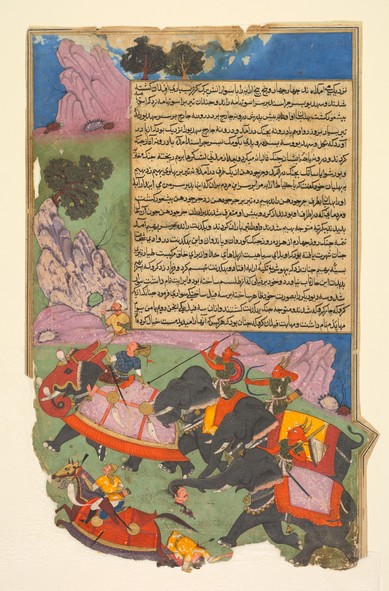

Ghatotkacha and three demons in his company chase Bhagadatta, from Bhishma-parva (volume six) of a Razm-nama (Book of Wars) adapted from the Sanskrit Mahabharata and translated into Persian by Mir Ghiyath al-Din Ali Qazvini, known as Naqib Khan (Persian, d. 1614) | Cleveland Museum of Art
The red demons riding elephants were magically generated in multiples by Ghatotkacha, the son of one of the protagonists of <em>Book of Wars</em>. Though created by magic, the elephant-riding demons still caused problems for their adversaries and forced them to retreat. This scene took place on the fourth of 18 days of heated battle. <br>The Mughal emperor Akbar (reigned 1556–1605) commissioned a translation of the ancient Sanskrit epic <em>Mahabharata</em> into the Mughal court language of Persian and distributed copies to members of his court. He believed that the epic provided insight into how to rule the people of India. The chief minister to both Akbar and his successor, Jahangir, commissioned his own lavishly illustrated copy, from which this page has come.
 Hidden Gems