 BEGATS AND BEQUEATHALS
Thomas Leonard (1752-1832) and Hannah James (1752-1842): Children Robert, Thomas, John, Hezekiah, Samuel, Griffith, Colin, and Hannah
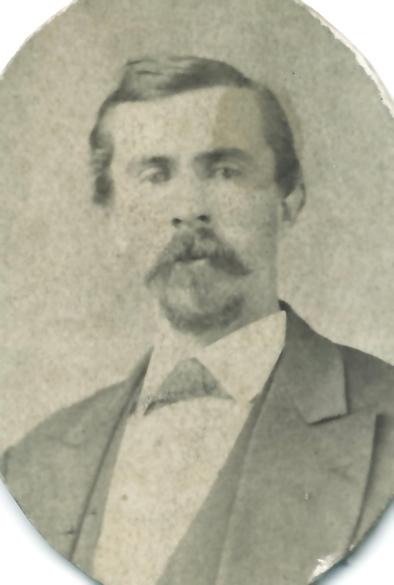
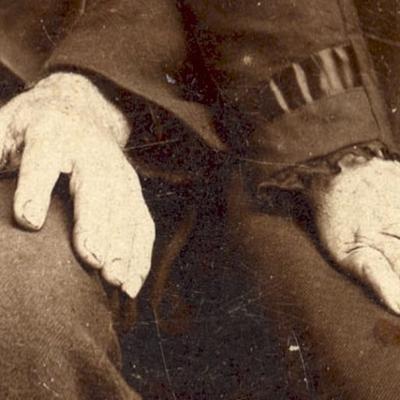
Griffith James Leonard, photo uploaded to Ancestry tree “Leonard/ Leonard/McLeod/Miller Family Tree,” maintained by dawnleonard818Or, Subtitled: “Saw Lincoln County when it was a cane brake infested with bear, wolves, deer and many other wild animals”
In three previous postings, I discussed the life of Thomas Leonard (1752-1832), son of Robert Leonard and Honor Pritchard. I began with a look at the documents that chronicle his early years in Maryland, where he was born in the part of Frederick County that became Washington County in 1776, and where Thomas married Hannah, daughter of Griffith James, about 1775. I then looked at Thomas’ years in Pendleton District, South Carolina, to which he, his siblings, and their widowed mother Honor moved from Maryland by early 1786. I ended with an examination of documents following Thomas’ life in Lincoln (later Marshall) County, Tennessee, from 1808 up to his death in 1832. (Please click the numeral 2 below to read the continuation of this posting.)
In this posting, I’m going to provide a brief overview of the children of Thomas Leonard and Hannah James. My goal is to document salient facts about each of these children, e.g., dates and places of birth, marriage, and death. There’s much more information to be found about each child. The following accounts of the children of Thomas and Hannah James Leonard are not exhaustive:
1. Robert Leonard, the first child of Thomas Leonard and Hannah James, was born 14 February 1777 in Washington County, Maryland, and died 4 August 1844 at Rusk in Cherokee County, Texas. On 17 March 1807 in Abbeville County, South Carolina, Robert married Rachel Dunlap. These dates of birth, marriage, and death are provided by Robert and Rachel’s son Thomas Dunlap Leonard in his record of the family of Thomas Leonard and Hannah James written in 1883. This document, entitled “Biography of the Leonards,” has been discussed in previous postings (and here) noting that its present whereabouts are not known and that it has circulated among Leonard descendants as a typescript.
Thomas Dunlap Leonard records the following about his parents Robert Leonard and Rachel Dunlap:[1]
Robert was the oldest child, born in Maryland the 14th of Feb., 1777. Married Rachel, dau of Wm. Dunlap in Abbeville District of So Carolina on 17 Mar 1807. He moved with his father to Lincoln Co Tn and settled on Cane Creek half a mile above Petersburg. Subsequently moved to middle Alabama, settled in Perry Co where he lived from 1818 to 1824, lived there until 1840, then to Texas, settled in Cherokee Co. where he died on 4 Aug. 1844 in the 67th year of his age. He was a hatter by trade, also a farmer. His life was spent in usefulness to his neighbors, his country and his family, teaching his children the importance of industry, honesty, and truthfulness. At all times with his wife taught their children the importance of the Christian religion which all had embraced before their death, but two and they embraced since the death of their parents. Robert was truly a good man, good husband, good father, good citizen; he was my father and his wife Rachel, my mother. Language will fail me in attempting to portray her excellencies. She was brought up in the faith and membership of the Presbyterian Church and strictly adhered to their discipline in the government of her family, teaching them to observe the commandments of our Saviour.
She ruled her children in love and impressed on their minds at their earliest age those principles of love to God and love of His services, and to search his words of truth for their guide through life. She became convinced of the importance of immersion as baptism, when she was about 40 years of age, when she and her husband were buried with Christ in baptism in Flint River, Madison Co. Ala. She lived to see all of her children members of the Baptist Church, but two and they followed in her footsteps after her death. She died in Cherokee Co, Tx in the year 1862 in the 62nd year of her life and was buried by the side of her husband in the town of Rusk, Cherokee Co. Tx. after having spent a long life of usefulness, to her family, neighbors, and church. Thus ended the life of a God loving woman.
A previous posting explains why I think it’s likely that, following Thomas Leonard’s marriage to Hannah James about 1775, this couple lived at Sharpsburg in Washington County, where Hannah’s father Griffith James lived. If I’m correct in deducing this, then Thomas and Hannah’s son Robert and the three (or possibly four: see the notes below on Samuel) brothers born after him in Washington County were probably all born in Sharpsburg.
A biography of Robert’s son William R. Leonard (1822-1905) in Memorial and Biographical History of McLennan, Falls, Bell and Coryell Counties, Texas states that his father Robert Leonard was a soldier of the War of 1812 and served under Andrew Jackson at the battle of Horseshoe Bend.[2] His service papers show him serving under Colonel Robert Dyer in the Cavalry and Mounted Gunmen of Tennessee Volunteers.[3]
The biography of William R. Leonard also indicates that his father Robert Leonard moved about 1824 to Madison County, Alabama, where he lived on the Flint River nine miles east of Huntsville.[4] He then moved to Texas about 1840, according to this source, settling first in Nacogdoches County and then in Cherokee County, where he died in 1844, aged 67. A certificate for a Texas headright grant that Robert Leonard received on 4 March 1844 states that he arrived in Texas on 3 April 1840.[5] As a previous posting notes, Robert’s brother Thomas moved from Limestone County, Alabama, to Nacogdoches County, Texas, in June 1839, receiving a headright grant that fell into Cherokee County at that county’s formation in July 1845. In moving to this part of Texas in 1840, Robert Leonard was following in the footsteps of his brother Thomas.
At her “Leonard/Kellum/Hughes Family Tree” at Ancestry, Peggy Strickland states,[6]
According to old hand written Leonard Family history, Rachel [Dunlap]’s Father brought Rachel and her two sisters from Ireland, their mother having died in Ireland when Rachel was three years old. Her Father had previously been to America and fought in the Revolutionary War, in which he lost one leg.
The 1850 federal census for Cherokee County, Texas, on which the widowed Rachel is shown living at Rusk, reports her birthplace as Ireland.[7] A previous posting talks briefly about a Limestone County, Alabama, court case that ensued after Robert Leonard’s brother Thomas sold his homeplace in that county to their brother John Leonard in 1839 as Thomas prepared to move to Texas. The court case, James Birdwell, assignee, vs. John Linard, revolved around a promissory note for $500 that James Birdwell, who married Thomas Leonard’s daughter Aletha, claimed Thomas assigned to him when John paid him for his land. James alleged that the promissory note was given to Rachel, wife of Robert Leonard, for safekeeping. Robert and wife Rachel moved to Texas soon after Thomas moved his family there. John Leonard died in 1846 and James, who then died in 1849, claimed that Rachel had never delivered John’s $500 promissory note to Thomas Leonard to him.
As the first-born son of Thomas Leonard and Hannah James (and their first child), I think it’s likely Robert Leonard was given the name Robert after his paternal grandfather Robert Leonard.
2. Thomas Lewis Leonard, the second child of Thomas Leonard and Hannah James, was born in 1781 in Washington County, Maryland, and died in October 1870 in Cherokee County, Texas. About 1800 in Pendleton District, South Carolina, he married Sarah M. Lauderdale, daughter of John Lauderdale and Milbury Mauldin. Sarah’s name is consistently written in documents with the middle initial M.; I suspect her full name was Sarah Mauldin Lauderdale, and that she was named for her grandmother Sarah, wife of John Mauldin.
Thomas is my direct ancestor, and I’ve provided extensive documentation in previous postings about his life in Maryland, South Carolina and Tennessee, then about his years in Limestone County, Alabama (and here), and finally about his final years in Cherokee County, Texas.
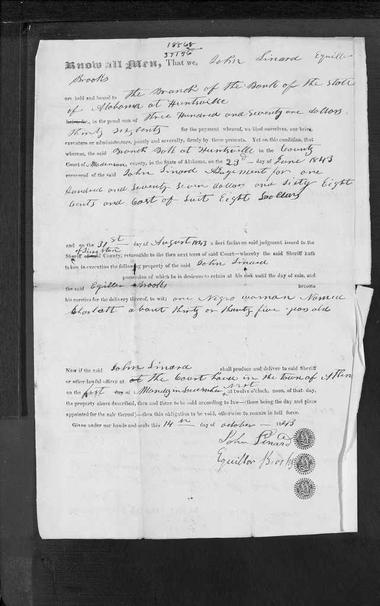
John Leonard’s signature on a 14 October 1843 promissory note in Madison County, Alabama, Circuit Court Case File, Brooks, Linard 18433. John Leonard, the third child of Thomas Leonard and Hannah James, was born between 1781 and 1784 in Washington County, Maryland, and died 14 November 1846 in Limestone County, Alabama. In 1806 in Pendleton District, South Carolina, he married Hannah Fowler, daughter of Joshua and Elizabeth Fowler.[8]
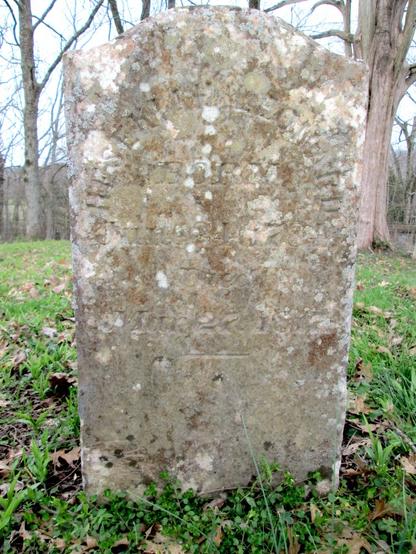
My reason for assigning John a birthdate of 1781-4 is as follows: in his discussion of the children of Thomas Leonard and Hannah James, Thomas Dunlap Leonard indicates that John was the third child of Thomas and Hannah, born after his brother Thomas and prior to his brother Hezekiah. We know that Thomas Lewis Leonard was born in 1781, and as I’ll discuss below, the tombstone of Hezekiah Leonard shows his date of birth as 24 June 1784. So John was born between 1781 and June 1784. The 1830 and 1840 federal censuses confirm that he was born between 1780 and 1789.[9]
Thomas Dunlap Leonard states the following about John Leonard:
John Leonard married Hannah Fowler, daughter of Joshua Fowler of So Carolina about 1806, moved to Madison Co., Ala, where he lived until 1838, when he moved to Limestone Co., Al, where he lived until death, which occurred about 1847 or 1848. Hannah, his wife, died in Madison Co. about 1828 or 1829. Their children were born near Madison Cross Roads in Madison Co. John lived through life as he had been reared up by his parents, a lover of all the ennobling virtues that constitute good child, a good husband, father and citizen. I was intimately acquainted with him, the last 20 years of his life. He was governed in all his actions through life from the noble principles of Christian spirit, truth and honesty was his motto. When I look back at the character of old acquaintances, John Leonard stands side by side with the best of citizens of old Madison Co. When I look back from my old age, my heart swells within me of love and admiration for the excellence of John Leonard. Aunt Hannah was truly his peer in all of the excellencies of wife, companion, mother and citizen. The character of her daughters prove the excellencies of the early training of the mother. Their deportment gives a better comment on the life and character of their mother than I can give.
In the War of 1812, John Leonard served in the 16th Regiment of Burrus’ Mississippi Militia.[10] Lieutenant-Colonel Charles Burrus’ regiment was comprised for the most part of men living in or near Madison County, Mississippi Territory (later Alabama), which bordered on Lincoln County, Tennessee.[11] Also serving in Burrus’ militia was Robert Leonard’s first cousin Samuel Dean, son of Robert’s aunt Gwendolyn James and husband Samuel Dean, and Moses Birdwell, father of James Birdwell who married John Leonard’s niece Aletha, daughter of Thomas Lewis Leonard. Moses also had a daughter whose given name I haven’t found, who married a Lamb, and Alfred L. Lamb, a son of that couple, married John Leonard’s daughter Hannah A.E. Leonard.
John Leonard’s date of death is stated in a will book of Limestone County, Alabama, according to his descendant Jackie Leonard of Athens, Alabama.[12]Minutes of the Limestone County circuit court case James Birdwell assignee vs. George W. Fisher admr. of John Linard dec’d. state on 2 December 1846 that “the said John Linard hath departed this life intestate as we are informed” and that George W. Fisher was estate administrator.[13] Fisher was granted administration on 6 December 1846.[14]
Tombstone of Hezekiah Leonard, photo by Jimmy Trout — see Find a Grave memorial page of Hezekiah Leonard, Leonard cemetery, Marshall County, Tennessee, created by Donna B., maintained by Prairie Mary4. Hezekiah Leonard, the fourth child of Thomas Leonard and Hannah James, was born 24 June 1784 in Washington County, Maryland, and died 27 March 1817 in Lincoln County, Tennessee. These dates of birth and death are inscribed on his tombstone in the Leonard family cemetery at the old Thomas Leonard homestead just north of Petersburg, Marshall County, Tennessee.[15]
Thomas Dunlap Leonard says this about Hezekiah:
Hezekiah, a son of Thomas and Hannah Leonard died at the home of his parents in Lincoln Tenn. about the year 1816. He was grown not married.
Hezekiah left a nuncupative will in Lincoln County dated 27 March 1817.[16] The will, which was probated 5 May 1817, states that Hezekiah was in “his last sickness” and bequeaths Hezekiah’s property to his brother Griffith. It was witnessed by his brother Robert and cousin George, son of William Leonard.
5. Samuel Leonard, the fifth child of Thomas Leonard and Hannah James, was born about 1786 in either Washington County, Maryland, or Pendleton District, South Carolina. He died about 1817 in Lincoln County, Tennessee. I estimate Samuel’s birthdate as about 1786 because Thomas Dunlap Leonard places him between his brother Hezekiah, who was born 24 June 1784, and his brother Griffith, who was born 26 September 1787. Since his parents moved from Maryland to Pendleton District, South Carolina, late in 1785 or early in 1786, I think he may have been born in either Maryland or South Carolina.
After having noted that Hezekiah Leonard died at the home of his parents in Lincoln County, Tennessee, in about 1816, Thomas Dunlap Leonard states:
Samuel at, and near the same time, he was just about grown.
I think it’s likely that Samuel is buried in the Leonard family cemetery, but I haven’t seen any transcription of a tombstone for him.
6. Griffith James Leonard, the sixth child of Thomas Leonard and Hannah James, was born 26 September 1787 in Pendleton District, South Carolina, and died 1 September 1864 in Marshall County, Tennessee. On 7 April 1836 in Lincoln County, Tennessee, he married Nancy Emmett Porter, daughter of Stephen and Mary Porter.
Griffith’s dates of birth and death are recorded on his tombstone in the family cemetery on Thomas Leonard’s old homestead just north of Petersburg, Tennessee.[17] Griffith’s date of death is also stated in an affidavit given by John Cowden and the widow Nancy in Marshall County on 22 August 1868; the affidavit is found in his War of 1812 pension and bounty land application file.[18] John Cowden was the husband of Mary Hannah Leonard, daughter of Griffith and Nancy Leonard. John and his mother-in-law Nancy state that Griffith was aged 73 when he died on 1 September 1864. Their affidavit also says that he refused to vote for secession in the vote held in Tennessee on 8 June 1861 and was consistently loyal to the Union though his son Samuel was a Confederate soldier.
Thomas Dunlap Leonard offers a fulsome remembrance of his uncle Griffith James Leonard and Griffith’s wife Nancy:
Griffith J. Leonard remained with his parents until their death bestowing that care on them that was essential to their happiness is old age. Having by inheritance and cultivation obtained those hightoned traits of character that fitly qualified him for the practical duties of life as a good citizen, husband and father. His neighbors can all testify to his excellencies of character with pleasure. His children proved the excellencies of their parents. Griffith Leonard was a superior order of intellect, had no opportunities of school la early life to improve his intellect. He was a self made man and had acquired a fine degree of practical and useful knowledge. A man of high toned moral principles not capable of condescending to any low degrading act under any circumstances. He was a true patriot through life, he fell from an unerring rifle shot of an Indian warrior on the furious battlefield of Talledega, Ala. in the year 1812. It pierced his neck and passed through, from which wound he recovered and lived to marry his [wife?] and bring up an excellent family. He also accumulated a good home, a good large tract of Tennessee best land for his amiable widow and children.
He leaves them as his parents left him viz, with high toned sense of moral training to qualify them for usefulness to society, themselves and their God. He died 1a the year 1864, being In the 77th year of his age. Thus ended the long and useful life of Griffith J. Leonard, leaving his amiable wife with a large family to care for at the end of a cruel war that had devastated nearly every ordinary contort of life, and in the midst of a helpless people as herself. Yet she by inheritance and education had a good stock of industry and economies to draw from. That she has brought up her excellent family is credit to herself and to her departed husband. She has demonstrated these excellent traits of character inherited from her parents end by education that so fitly qualified her for her duties as mother to her children and her labor has been crowned with success.
Nancy Porter was a daughter of Stephen and Sary Porter, born Jan. 10, 1818. They were the best of citizens, Iived up to those excellent rules of discipline that so eminently qualified them for usefulness in life to themselves, families, neighbors and their God. Stephen Porter’s excellent example will be remembered by his acquaintances with pleasure as long as their lives last. It affords me pleasure now to look back over half a century when Stephen Porter assembled his family and visiting neighbors around the family altar for prayer night and morning. His Godly influence was felt by his neighbors during life, and after death he was missed by all. He has gone to his reward of a good man. May his posterity emulate his worthy example.
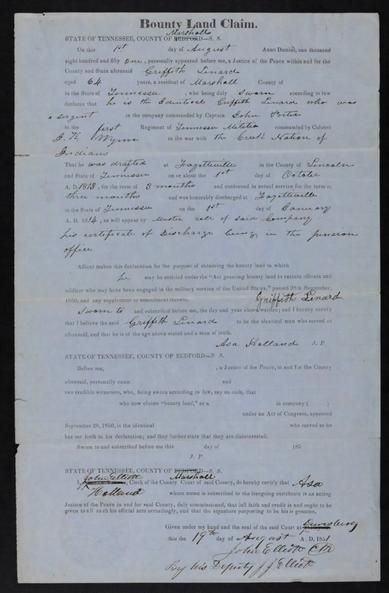
1 August 1851 bounty land claim of Griffith J. Leonard, in NARA, War of 1812 Pension and Bounty Land Warrant Application Files, compiled ca. 1871 – ca. 1900, documenting the period 1812 – ca. 1900, RG 15, file of Griffith J. Lenard, WC 15252, widow Nancy E., WO 25978, available digitally at Fold3Griffith’s War of 1812 pension and bounty land file contains further detailed information about his service and injuries during that war. On 1 August 1851, Griffith filed a bounty land claim in Marshall County that is preserved in this file. This document states that Griffith was aged 64 and living in Marshall County. It also notes he was a sergeant in Captain John Porter’s 1st Regiment of the Tennessee Militia under Col. J.K Wynn in the Creek War. He was drafted at Fayetteville, Tennessee, on 1 October 1813 and discharged at Fayetteville on 1 January 1814. The affidavit was signed by Griffith.
Another affidavit Griffith gave in Marshall County on 2 June 1855 is in the pension and bounty land file. This gives his age as 69 and states that he was a resident of Marshall County. It further indicates that he was a 1st sergeant under Colonel John Porter in the 1st regiment of Col. John K. Wynn in the War with Great Britain and the Creek Indians of 1812-1815. He had made a bounty-land application for this service on 28 September 1850. Again, this document is signed Griffith Lenard.
A 4 July 1871 affidavit of Nancy Leonard in Marshall County found in the pension and bounty land file attests to her husband’s service. Nancy notes that Griffith was severely wounded on 8 November 1813 at Talladega, Alabama. She signs the affidavit Nancy E. Lenard.
An affidavit provided by James Luna, an ensign in Griffith’s unit, on 4 September 1845 in Marshall County says that Griffith J. Leonard was a 1st sergeant in John Porter’s Company of West Tennessee Militia and served in the action against the Creeks from October 1813 to January 1814. He received a severe wound in his neck in the battle of Talladega on 9 November 1813, Luna states.
A biography of Griffith’s grandson Dr. John Norris Cowden also speaks of his grandfather Griffith J. Leonard’s War of 1812 service.[19] Noting that John Norris Cowden was the son of Dr. John Cowden and Mary Hannah Leonard and was born in Marshall County, the biography states:
James Griffith Leonard, the father of Mrs. Cowden, was an intimate friend of General Andrew Jackson, under whom he served throughout the War of 1812, participating in the battle of Tishomingo [sic].
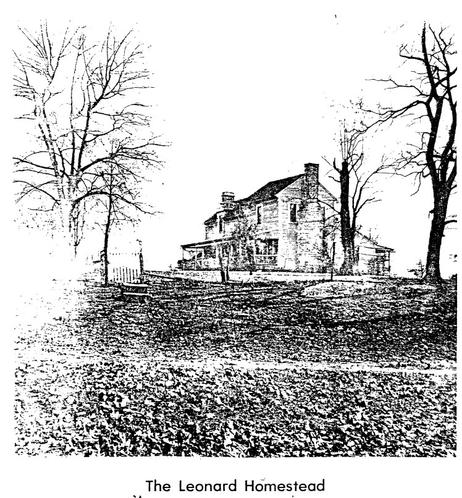
As Thomas Dunlap Leonard’s biography of his uncle Griffith notes, Griffith was the son who remained at home with his parents Thomas and Hannah Leonard up to their deaths, and for this reason, his father willed the family homeplace and land to his son Griffith. Thomas Leonard’s will is transcribed and discussed in a previous posting noting that the will stipulates that Griffith was to care for his mother Hannah up to her death. Griffith and wife Nancy continued living in the old Leonard house up to their deaths, with Griffith leaving the homeplace to his son William Stephen (Bud) Leonard.
In an article published in the Fayetteville Observer in August 1908, John Bright speaks of a number of early settlers of Lincoln County, Tennessee, including Griffith James Leonard.[20] Bright notes that Griffith, whose wife was Nancy Porter, came to Lincoln County at an early date, settling north of Petersburg and leaving “a character of good citizenship, worthy of imitation by his posterity.”
Nancy Porter Leonard, seated, right, with granddaughter Josie Cowden Bliss behind her, photo uploaded to Ancestry tree “Leonard/ Leonard/McLeod/Miller Family Tree,” maintained by dawnleonard818 Samuel James Leonard, seated front middle, and family, photo uploaded to Ancestry tree “Leonard/ Leonard/McLeod/Miller Family Tree,” maintained by dawnleonard818Griffith James Leonard was named for his maternal grandfather Griffith James, who moved from Washington County, Maryland, to Pendleton District, South Carolina, following his children who had settled there in the 1780s. Photos of Griffith James Leonard, his wife Nancy, and their son Samuel with Samuel’s family are found at the Ancestry tree of Dawn Leonard, “Leonard/ Leonard/McLeod/Miller Family Tree.”[21] The photo of Griffith is found at the head of this posting.
7. Colin Campbell Leonard, the seventh child of Thomas Leonard and Hannah James, was born about 1791 in Pendleton District, South Carolina, and died between 16 June 1856 and 29 November 1859 in Jackson County, Arkansas. About 1817 in Lincoln County, Tennessee, Colin married Jean Williams. As Thomas Dunlap Leonard’s brief biography of his uncle Colin states, Colin’s wife Jean died and he then married a second time. Thomas D. Leonard appears not to have known the name of Colin’s second wife.
Thomas D. Leonard states the following about Colin Campbell Leonard:
Collin Campbell Leonard son of Thos, and Hannah Leonard was born in Maryland, brought up in South Carolina, married Miss Jean Williams of Tennessee about the year 1817. I have no knowledge of the Williams family. They had only two children, a daughter and a son. I am under the impression both children are dead. Aunt Jean died and Uncle Collin moved from Lincoln County to McNairy County West Tenn. He married the second time, had seven children by her. I met with two sons on the battle field of Perryville, Ky. I have no further knowledge of his family.
Uncle Collin was dissipated (drank) in early life. He was a good soldier in the Indian war of 1812 to 14. He was a true friend to friends and bitter enemy to his enemies. He possessed noble generous principles. His latter life was a steady habits. He became a member of the Methodist church and a preacher before death. His sons informed us that their father was dead. Nothing further is known of his family.
The 1850 federal census shows Colin with a woman in his household whose name is given by the census taker as Mary A.L. (or S.?) Collins, aged 28, born in Virginia.[22] The census lists Colin as a farmer aged 59 who was born in Tennessee. Also in the household are children Colin C., 12, Thomas C., 8, William R., 6, and Levi W., aged 1, all born in Tennessee.
It appears to me that Mary is Colin’s wife, and that the census taker has inadvertently assigned her the surname Collins because her husband is named Colin C. Leonard. At some point after this census enumeration was made, the family moved to Jackson County, Arkansas, where on 20 June 1855, a circuit course case of debt, Atrides Crow v. Collin C. Leonard, was filed.[23] On 16 June 1856, Colin’s property was attached by the sheriff due to a judgment in this case.[24]
On 29 November 1859, Mary Leonard married Cyrus Black in Jackson County, Arkansas.[25] The marriage record gives Mary’s age as 37, indicating an 1822 birth year. This matches the birth year of the Mary who is found in Colin Campbell’s household on the 1850 federal census and who appears to be mother of his sons Colin C., Thomas C., William R., and Levi W.
The federal census shows Cyrus and Mary Black living at Cache in Jackson County, Jacksonport post office.[26] Mary is aged 37 and born in Virginia — a match to the Mary found in Colin C. Leonard’s household in 1850. Also in the household are Thomas, William, and Levi from Colin’s household on the 1850 census, all now with the surname Black, and daughters Nancy and Alfy Black, aged 8 and 4, who are likely also children of Colin C. Leonard. Nancy was born in Tennessee and Alfy (who is likely Alpha) in Arkansas.
Colin Campbell Leonard was named for his uncle Colin Campbell, who married Mary Ann Leonard, sister of Thomas Leonard. For a discussion of documents showing Colin Campbell Leonard receiving permission to keep an ordinary at his father’s house in Lincoln County, Tennessee, and being charged in that county with assault and battery, see this previous posting.
Hannah Leonard and William Depriest Moore — see Amy Edmiston, “The Moore Homestead,” Pretty Old Places8. Hannah Leonard, the eighth child and only daughter of Thomas Leonard and Hannah James, was born 10 January 1795 in Pendleton District, South Carolina, and died 11 December 1886 at Petersburg in Marshall County, Tennessee. On 1 July 1817 in Lincoln County, Tennessee, she married William Depriest Moore, son of David Dower Moore and Jane Depriest.
These dates were inscribed on Hannah’s tombstone in the Moore family cemetery outside Petersburg.[27] The stone is now broken into pieces, though William D. Moore’s stone remains intact and legible.
The War of 1812 pension and bounty land application file of William Depriest Moore and wife Hannah contains a 23 May 1878 document stating that Hannah was aged 82, née Leonard, living near Petersburg, and had married William D. Moore on 1 July 1817 in Lincoln County, Tennessee.[28] William, who was a Virginia native, served during this war as a private in Captain David Elliott’s Company, Kentucky Militia.
Thomas Dunlap Leonard offers an extensive reminiscence of his aunt Hannah and her husband William D. Moore:
Hannah Leonard married William D. Moore of Kentucky in the year 1827. He was a house painter and cabinet workman, equal to any of his day. He was a man of superior genius of mind, his natural endowments were above the average. He cultivated it to a general usefulness in practical science. He was a good farmer, fine judge of stock, which he had a fine taste for and cultivated successfully. He was truthful, honest, and reliable in every sense of the term. He accumulated a good living, raised a family of six children, viz Angeline, Thomas D., Alpha, Alitha, William C., Margaret, and Amanda. He died in November in 1855, leaving Hannah with a competency and with her most amiable of children to take care of her in old age, which duty they here performed, to credit to themselves and satisfaction to their aged mother, who still survives and is now 89 years of age, now living with her son-in-law and daughter, Jo. J. S. and Angelina Gill.
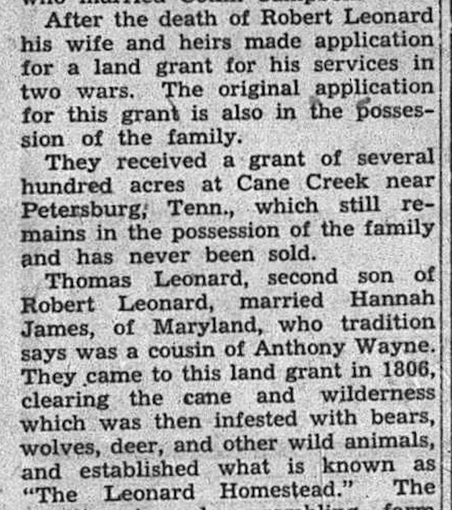
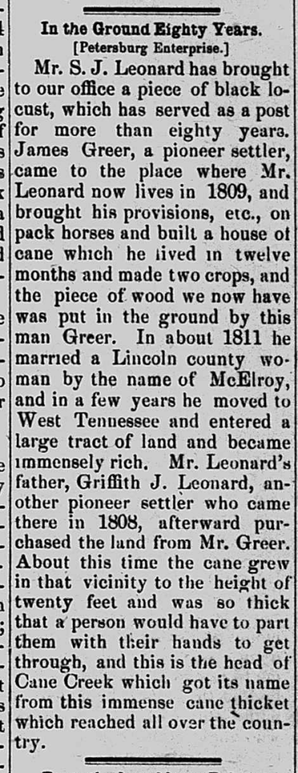
Hannah was the only daughter of Thomas and Hannah Leonard. Language fails me to portray the excellencies of this good woman neither can her neighbors or children do her justice. She has lived for seventy five years near where she now Ilves. Saw Lincoln County when it was a cane brake infested with bear, wolves, deer and many other wild animals. Right around Petersburg and cane Creek all of her age have gone across the river. She is left as a lone tree of the forest but must soon fall, and go to join her loved ones that have gone before and must follow after. She has an Inheritance awaiting her that is far better than anything she has ever realised on earth. I rejoice to know that kindred blood course my veins, that I can say she is my aunt, my father’s sister. I rejoice to know she has left such a noble posterity that acted well their parts in life. I rejoice to know that I as their biographers of William D. and Hannah Moore gives me such pleasure to speak of their merits without a stain on their character. I rejoice to know that the hand and heart of their daughter[s] have been sought by the noblest sons of Tenn., also that their sons sought and obtained their equals in the daughters of Tennessee.
William D. Moore farm May 2025, ibid. William D. Moore house, ibid. Original front downstairs room, William D. Moore house, ibid. Daughters of William D. Moore and Hannah Leonard — Angelina, Amanda, Aletha, Margaret, ibid.A portrait-photograph of Hannah Leonard and William Depriest Moore appears in a number of published sources and has recently been published online as their old Marshall County homeplace and farm have gone on the market for sale.[29] The portrait is featured along with photos of the farm and the Moore house in Amy Edmiston’s Pretty Old Places blog.[30]
[1] Thomas Dunlap Leonard, “Biography of the Leonards” (1883 manuscript now circulated as typescript; present whereabouts are not known). The 14 February 1777 date of birth is also stated in a lineage provided by Sarah Johnson Berliner to DAR: See NSDAR Lineage Book, vol. 93 (1912) p. 83; and Mary Smith Fay, War of 1812 Veterans in Texas (New Orleans, 1979; repr. Greenville, South Carolina: Southern Historical Press, 1994), apparently citing records filed by U.S. Daughters of 1812 Descendants.
[2] Memorial and Biographical History of McLennan, Falls, Bell and Coryell Counties, Texas (Chicago: Lewis, 1893), pp. 721-3. This biography gives William’s middle name as Rinualdi. The “Anderson-Monroe Family Tree” at Ancestry maintained by weblady173 has a digital image of a page from a bible that appears to have belonged to one of William R. Leonard’s children, giving his middle name as Roden. This Ancestry tree also has a copy of an undated autobiography written by William R. Leonard near the end of his life, which appears not to have been finished and was transcribed by one of his children.
[3] NARA, Indexes to the Carded Records of Soldiers Who Served in Volunteer Organizations During the War of 1812, compiled 1899 – 1927, documenting the period 1812 – 1815 RG 94, file of Robert Lenard, available digitally at Fold3. Fay, War of 1812 Veterans in Texas, states that Robert served in Captain Edwin S. Moore’s Company of Tennessee Volunteers.
[4] Memorial and Biographical History of McLennan, Falls, Bell and Coryell Counties, Texas, pp. 721-3.
[5] Nacogdoches District Court Returns, files 54 and 58, available digitally at the website of Texas General Land Office.
[6] PeggyStrickland55, “Leonard/Kellum/Hughes Family Tree,” Ancestry.
[7] 1850 federal census, Cherokee County, Texas, town of Rusk, p. 61 (dwelling/family 412, 31 October).
[8] The marriage is indexed in Ancestry’s database entitled South Carolina Marriage Index, 1641-1965, compiled by Hunting For Bears (2005). A specific date of marriage is not given in this database; this entry appears to be citing Georgia Genealogical Magazine, no. 60-61 (spring-summer 1976). Thomas Dunlap Leonard’s “Biography of the Leonards” also states that John Leonard married Hannah Fowler “about 1806.”
[9] 1830 federal census, Madison County, Alabama, p. 72A, showing John aged 40-49 (the surname is Linard here); and 1840 federal census, Limestone County, Alabama, p. 151A, showing John aged 50-59.
[10] NARA, Indexes to the Carded Records of Soldiers Who Served in Volunteer Organizations During the War of 1812, compiled 1899 – 1927, documenting the period 1812 – 1815, RG 94, file of John Lenard, available digitally at Fold3.
[11] See “16th Regiment, Mississippi Militia, War of 1812,” at WikiTree.
[12] Jackie Leonard is citing Limestone County, Alabama, Will Bk. 7, p. 333, which states that John Leonard was “dec’d. 14 Nov. 1846.” Because this will book is under lock and key in the digital files available at the FamilySearch site, I haven’t been able to access the original and obtain further information about this document.
[13] Limestone County, Alabama, Circuit Court Minutes Bk. 1847-1857, p. 136.
[14] Limestone County, Alabama, County Court Record Bk. 1830-1849, p. 422 mistakenly writing the year as 1847 and not as 1846.
[15] See Find a Grave memorial page of Hezekiah Leonard, Leonard cemetery, Marshall County, Tennessee, created by Donna B., maintained by Prairie Mary, with a tombstone photo by Jimmy Trout.
[16] Lincoln County, Tennessee, Will Bk. 1, p. 156-7. See also Frances T. Ingmire, Lincoln County, Tennessee, Wills, Inventories, and Miscellaneous, March 1809 – April 1824 (St. Louis, 1984), p. 8; and Helen C. and Timothy R. Marsh, Wills and Inventories of Lincoln County, Tennessee (Easley, South Carolina: Southern Historical Press, 1989), p. 8.
[17] See Find a Grave memorial page of Griffith J. Leonard, Leonard cemetery, Marshall County, Tennessee, created by Louise Jenkins, with a tombstone photo by Jimmy Trout.
[18] NARA, War of 1812 Pension and Bounty Land Warrant Application Files, compiled ca. 1871 – ca. 1900, documenting the period 1812 – ca. 1900, RG 15, file of Griffith J. Lenard, WC 15252, widow Nancy E., WO 25978, available digitally at Fold3. Nancy’s widow’s brief has a cover page stating that her maiden name was Nancy E. Porter and that she received certificate 15252 and bounty land warrants 56760-40-50 and 79828-12055. This cover pages also says that Griffith J. Leonard and Nancy Porter married in Lincoln County, Tennessee, on 7 April 1836, and that Nancy died 18 April 1910 at Petersburg, Tennessee.
[19] John Trotwood Moore and Austin P. Foster, Tennessee, the Volunteer State, 1769-1923, vol. 3 (Chicago: S.S. Clarke, 1923), pp. 238-241. See also this previous posting about Dr. John Norris Cowden.
[20] Fayetteville Observer (27 August 1908).
[21] Ancestry tree “Leonard/ Leonard/McLeod/Miller Family Tree, maintained by dawnleonard818. Photo of Griffith, of wife Nancy, and of son Samuel James Leonard with his family.
[22] 1850 federal census, Rutherford County, Tennessee, Gambrill district, p. 184 (dwelling/family 483, 30 September).
[23] Jackson County, Arkansas, Circuit Court Minutes Bk. B, pp. 544-5, 561.
[24] Jackson County, Arkansas, Deed Bk. G, pp. 32-5.
[25] Jackson County, Arkansas, Marriage Bk. I.
[26] 1850 federal census, Jackson County, Arkansas, Cache, Jacksonport post office, p. 610B (dwelling/family 1069; 7 August). Cyrus Black appears to have died by 17 December 1866, when Mary E.L. Black married Ephraim L. Hughey, a South Carolinian who came to Arkansas from Fayette County, Alabama, in Jackson County. Ephraim died in Jackson County on 4 May 1874 and the 1880 federal census for Jackson County shows Mary as the widow Hughey with her son Levi W. Leonard (this is his surname now, not Black) living next to her with his wife Mary Catherine Narrimore and their children.
[27] See Helen C. Marsh, Timothy R. Marsh, and Ralph D. Whitsell, Cemetery Records of Marshall County, Tennessee (Shelbyville, Tennessee: Marsh Historical Publishing, 1981), p. 253. The 10 January 1795 birthdate for Hannah also appears in Jane Wallace Alford, Revolutionary War Patriots of Marshall County, Tennessee (Lewisburg, Tennessee: Webb, 1976); in Gail Gill Sanders, “Joseph Jonathan S. and Angelina (Moore) Gill,” in Heritage of Lincoln County, Tennessee, ed. Lincoln Co. Heritage Committee (Waynesville, NC: Walsworth, 2005), p. 321; and in Adelaide Moore Moss, “William Depriest Moore,” in ibid., p. 517. This birthdate for Hannah Leonard is also stated in DAR lineage reports submitted by Nancy Alford of the Robert Lewis chapter of Tennessee (DAR no. 537116) and of Mary Aletha Hathaway Dorsey of the Chief John Ross chapter (DAR no. 537605), both entering DAR as descendants of David Moore, father of William Depriest Moore.
[28] NARA, War of 1812 Pension and Bounty Land Warrant Application Files, compiled ca. 1871 – ca. 1900, documenting the period 1812 – ca. 1900, RG 15, file of William D. Moore, , WC pension 17127 and WO pension 31237, available digitally at Fold3.
[29] See J. Lester Wolfe, “Thomas Leonard,” in Heritage of Lincoln County, Tennessee, ed. Lincoln County Heritage Committee (Waynesville, North Carolina: County Heritage, 2005), p. 414; and Adelaide Moore Moss, “William DePriest Moore,” in ibid., p. 517, noting that Moss notes that William DePriest Moore and Hannah Leonard belonged to Union Grove Presbyterian church in Marshall County.
[30] Amy Edmiston, “The Moore Homestead,” Pretty Old Places.
#AbbevilleDistSouthCarolina #AlethaLeonard #AlfredLLamb #AlphaLeonard #AmandaLeonard #ancestry #AndrewJackson #AngelinaLeonard #AtridesCrow #BattleOfTalladega #CacheJacksonCoArkansas #CharlesBurrus #CherokeeCoTexas #ColinCampbell #ColinCampbellLeonard #CyrusBlack #DavidDowerMoore #DavidElliott #familyHistory #FayettevilleLincolnCoTennessee #FlintRiver #genealogy #GeorgeLeonard #GeorgeWFisher #GriffithJames #GriffithJamesLeonard #GwendolynJames #HannahAELeonard #HannahFowler #HannahJames #HannahLeonard #HezekiahLeonard #history #JacksonCoArkansas #JacksonportJacksonCoArkansas #JamesGBirdwell #JaneDepriest #JeanWilliams #JohnCowden #JohnKWynn #JohnLauderdale #JohnLeonard #JohnMauldin #JoshuaFowler #LeviWLeonard #LimestoneCoAlabama #LincolnCoTennessee #MadisonCoAlabama #MadisonCoMississippiTerritory #MadisonCrossroadsMadisonCoAlabama #MargaretLeonard #MarshallCoTennessee #MaryAnnLeonard #MaryHannahLeonard #McNairyCoTennessee #MilburyMauldin #MosesBirdwell #NacogdochesCoTexas #NancyEmmettPorter #NancyLeonard #PendletonDistSouthCarolina #PerryCoAlabama #PetersburgMarshallCoTennessee #RachelDunlap #RobertLeonard #RuskCherokeeCoTexas #SamuelDean #SamuelJamesLeonard #SamuelLeonard #SarahMLauderdale #SharpsburgWashingtonCoMaryland #StephenPorter #ThomasCLeonard #ThomasDunlapLeonard #ThomasLeonard #ThomasLewisLeonard #WashingtonCoMaryland #WilliamDepriestMoore #WilliamDunlap #WilliamRLeonard #WilliamRinualdiLeonard #WilliamRodenLeonard