Alexander von Zemlinsky – Der Zwerg: opera about our failure to respect the Other
The National Opera opened the new season 2021-22 on 4 September with Alexander von Zemlinsky’s little-performed opera Der Zwerg (The Dwarf) from 1922. The libretto is based on the short story The Birthday of the Infant by Oscar Wilde, and has a wry personal component. Now that theatres have closed once more because of a new Covid-19 lockdown the opera house offers Der Zwerg as a free stream.
Alexander von Zemlinsky (1871-1942) initially enjoyed great success as a composer, but as a Jew was forced to leave Berlin and return to his native Austria in 1933. When, five years later, the Nazis also took over power there, he fled to America, where he made a meagre living composing occasional works.
Zemlinksy is mainly remembered as a celebrity acquaintance. He is often described as a protégé of Brahms, who was so impressed by his early works that he recommended him to his publisher Simrock.
We also know him as the conductor of the amateur orchestra Polyhymnia, in which Arnold Schoenberg played a rickety cello towards the end of the nineteenth century. Zemlinsky would also be Schoenberg’s first and only music teacher, and became his brother-in-law when Schoenberg married his sister Mathilde.
MODERN BUT NOT ATONAL
Born in Vienna in 1871 to a Catholic convert to Judaism and a Sephardic-Islamic mother, Zemlinsky proved exceptionally musical at the age of four. He studied piano, composition and music theory at the Vienna Conservatory.
Although he became friends with Schönberg and was closely involved in his transition to atonality, he never completely abandoned tonality in his own compositions. Over the years, this even became an increasing bone of contention between the two, even though as a conductor Zemlinsky remained a staunch advocate of Schönberg’s music.
When Austria joined Nazi Germany in 1938, Zemlinsky fled to the United States. His music was performed less and less and he led an unremarkable and disillusioned existence; he died in 1942. The New York Times devoted an obituary to his demise, which, remained largely unnoticed in Europe. It was only in the 1960s that his music was sparsely rediscovered, in the wake of Mahler’s.
UNFULFILLED LONGING
This was mainly due to the similarities between Mahler’s Das Lied von der Erde and the Zemlinksy’s Lyrical Symphony that also features two vocal soloists. They perform verses by the Bengali poet Rabindranath Tagore, whom Zemlinsky knew personally. Where Mahler sings of his lost youth, Zemlinsky describes a love that is doomed to fail; both compositions are permeated with unfulfilled longing.
A recurring motif in the Lyric Symphony is a yearning quarter leap upwards, followed by a descending second, which recalls Wagner’s Tristan und Isolde. This seems to be an implicit reference to Zemlinsky’s tragic affair with his composition student Alma Schindler. Although she loved him passionately, she mockingly called him ‘the dwarf’ because of his small stature.
As fate would have it, she rejected him for Gustav Mahler, who had premiered his opera Es war einmal (Once upon a time) at the Vienna Court Opera in 1899. Salient detail: Alma had met Mahler through Zemlinsky, and married him in 1902. – After which, incidentally, her own compositional development was cut short, which some may consider a deserved twist of fate.
Alexander von Zemlinsky (c) Neale Osborne
BROKEN HEART
That Zemlinsky saw opera material in Oscar Wilde’s story The Birthday of the Infanta is very understandable from the point of view of his failed relationship with Alma. For her twelfth birthday, the Spanish princess royal receives a hunchbacked dwarf as a present. He dances exuberantly for her and the guests, unaware of his stature and the immense hilarity he causes.
When the girl gives him a white rose, he takes this as a sign of her love. – Until he sees his reflection in the mirror, realises that he has been laughed at all along and dies on the spot of a broken heart. The princess is furious and angrily demands that future birthday presents ‘please have no heart!’
VULNERABLE ARTIST
Dutch film and theatre director Nanouk Leopold made her opera debut with Der Zwerg. In her staging she zooms in on the question of whether, in a world of outward show, we are capable of respecting the Other in their Otherness. At the same time she addresses the vulnerability of the artist in our society.
By dressing up the dwarf as a colourful bird, while the princess and her entourage are all clad in candyfloss pink attire she makes it clear the true ugliness is not in the dwarf, but in their inability to think outside the box of their own limited view of humanity.
Zemlinsky wrote scintillating music for Der Zwerg. Neoclassical and late-Romantic passages contrast with vehement expressionism, especially in the title role. This is sung by the American dramatic tenor Clay Hilley; the soprano Lenneke Ruiten sings the role of the princess. Clay Hilley made a lasting impression with his impassioned portrayal of the dwarf, whose ecstatic love and broken pride he made keenly palpable.
With this production the Italian conductor Lorenzo Viotti at once proved his prowess as the new chief conductor of Dutch National Opera.
#AlexanderVanZemlinsky #AlmaMahler #ArnoldSchönberg #ClayHilley #DerZwerg
 DAS OPERNMAGAZIN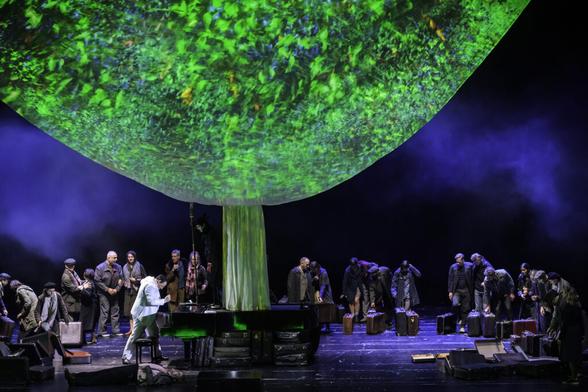

 Contemporary Classical - Thea Derks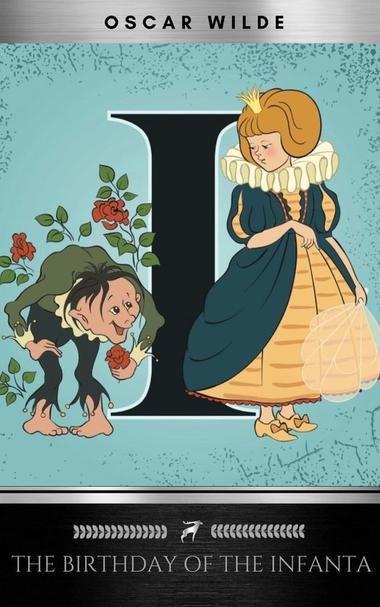


 shōchi @Fischkopp