 Railpage
€600+ million for rail in new CEF round, but passengers could benefit most http://dlvr.it/TTCS2W #CEF #CINEA #ConnectingEuropeFacility #EU
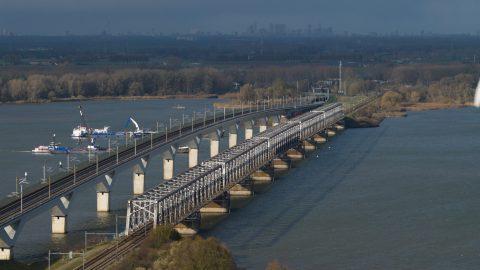

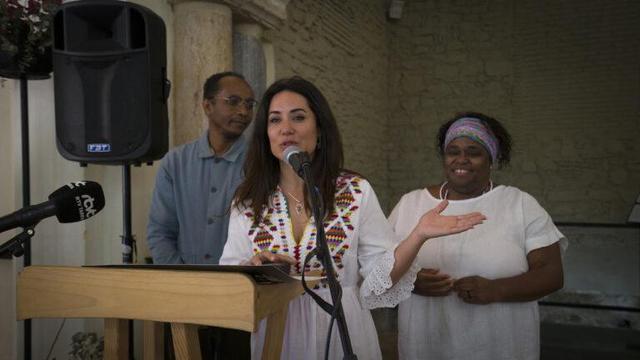
🚀 Our #nextGEMS overview paper is out!
After three years of intense collaboration, we’re thrilled to share a comprehensive look at what the nextGEMS project has achieved: a milestone for #ClimateModelling 🌐
For the first time ever, nextGEMS has produced multidecadal #climate simulations with kilometer-scale resolution across the ocean, land, and atmosphere, using the ICON and IFS-FESOM Earth system models. 🌍
🔹 The project unfolded over four development cycles, each releasing new configurations of ICON and IFS-FESOM.
🔹 These were rigorously evaluated at our hackathons, bringing together climate scientists, software engineers, HPC experts, and users from sectors like energy and agriculture.
🔹 By the end of the fourth cycle, we successfully ran 30-year simulations (2020–2049) at an impressive ~500 simulated days per day on the Levante supercomputer at German Climate Computing Center | DKRZ |.
🔹 Simulations reached ~5 km resolution in the ocean and ~10 km on land and in the atmosphere, offering unprecedented detail.
Furthermore, the simulations form a core building block for the Climate Change Adaptation Digital Twin in the Destination Earth (DestinE) initiative. In other words, nextGEMS' work paves the way for the next generation of European climate research. 🇪🇺
👉 Read the full overview paper here: https://gmd.copernicus.org/articles/18/7735/2025/
#HPC #EarthSystemScience #DestinationEarth #ClimateResearch #SciCom
#CINEA _EU

Abstract. The Next Generation of Earth Modeling Systems (nextGEMS) project aimed to produce multidecadal climate simulations, for the first time, with resolved kilometer-scale (km-scale) processes in the ocean, land, and atmosphere. In only 3 years, nextGEMS achieved this milestone with the two km-scale Earth system models, ICOsahedral Non-hydrostatic model (ICON) and Integrated Forecasting System coupled to the Finite-volumE Sea ice-Ocean Model (IFS-FESOM). nextGEMS was based on three cornerstones: (1) developing km-scale Earth system models with small errors in the energy and water balance, (2) performing km-scale climate simulations with a throughput greater than 1 simulated year per day, and (3) facilitating new workflows for an efficient analysis of the large simulations with common data structures and output variables. These cornerstones shaped the timeline of nextGEMS, divided into four cycles. Each cycle marked the release of a new configuration of ICON and IFS-FESOM, which were evaluated at hackathons. The hackathon participants included experts from climate science, software engineering, and high-performance computing as well as users from the energy and agricultural sectors. The continuous efforts over the four cycles allowed us to produce 30-year simulations with ICON and IFS-FESOM, spanning the period 2020–2049 under the SSP3-7.0 scenario. The throughput was about 500 simulated days per day on the Levante supercomputer of the German Climate Computing Center (DKRZ). The simulations employed a horizontal grid of about 5 km resolution in the ocean and 10 km resolution in the atmosphere and land. Aside from this technical achievement, the simulations allowed us to gain new insights into the realism of ICON and IFS-FESOM. Beyond its time frame, nextGEMS builds the foundation of the Climate Change Adaptation Digital Twin developed in the Destination Earth initiative and paves the way for future European research on climate change.
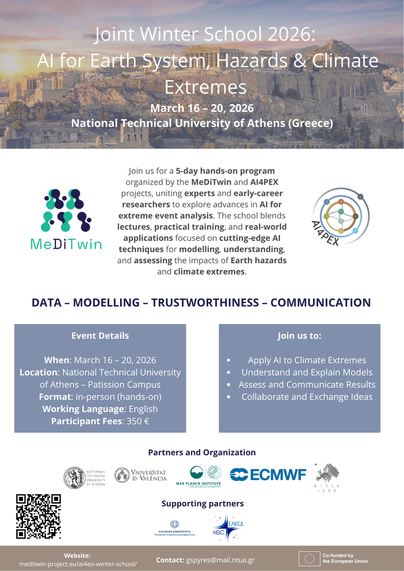
📣 Exciting update — registration is now OPEN for the Joint Winter School “AI for Earth System, Hazards & Climate Extremes”!
📅 March 16 – 20 2026
📍 Venue, NTUA, Athens, Greece
🔗 Further Information and Registration: https://ai4pex.org/Training/School2026/
Join early-career researchers, data scientists, and climate experts to explore how AI is transforming our understanding of Earth hazards and climate extremes. Spots are limited — secure yours today!
🧠 How Hackathons Build Better #ClimateResearch Communities – A New #PolicyBrief
Our final #nextGEMS Policy Brief is here—and it brings a fresh perspective: “Building User Communities around Next-Generation Earth System Models.”
While our first brief focused on bridging science and society, this one looks inward: How do we design research projects that foster #collaboration, creativity, and real-world #impact
Drawing on experiences from the series of nextGEMS #hackathons, the brief shows how these spaces:
- Enable peer learning across disciplines and expertise levels
- Spark new scientific collaborations and networks
- Offer #CoCreation formats that build trust and shared ownership of climate model development
🏛️ Aimed at the EU’s research and innovation community—especially those who design, fund, or manage large projects—this brief offers practical recommendations:
- Embed collaborative events into project design
- Create intentional structures that support long-term #community-building
- Focus on the societal relevance of scientific outputs from day one
These insights go beyond nextGEMS: they speak to the future of climate research itself.
📥 Read and download both briefs from the media library now.
#SciencePolicy #ResearchInnovation #ClimateAction #CommunityScience #H2020 #Cinea

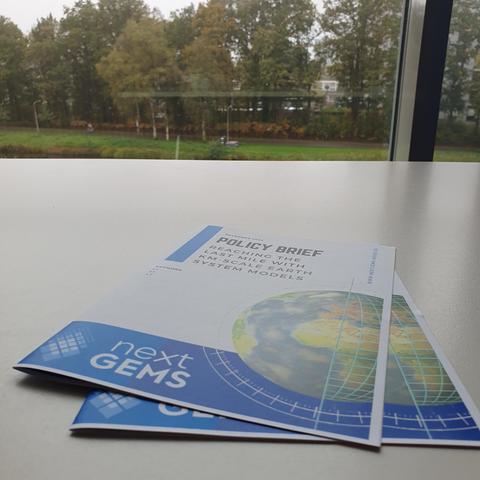
📢 News from #nextGEMS: Our latest #PolicyBrief is out—“Reaching the Last Mile with Km-Scale #EarthSystemModels.”
It highlights how km-scale models deliver sharper #climate insights, especially on extreme weather and regional projections. But better data ≠ better #policy—yet.
🔑 Key proposals:
Support transdisciplinary #collaboration
Remove barriers to data access
Recognise & retain early-career talent
Build public-private partnerships for future-ready infrastructure
We call on policy-makers and funders to help ensure this cutting-edge science reaches its societal potential.
📥 Read the brief via our Media Library
👀 A second brief is coming soon—stay tuned!
Il #film di oggi è il #thriller #politico #dimenticarepalermo del maestro #francescorosi scritto da #gorevidal e #toninoguerra con #jamesbelushi #philippenoiret #vittoriogassman #mimirogers #carolinarosi #unofil #cinea #unocinema #recensioni
https://www.valeriotagliaferri.it/dimenticare-palermo-di-francesco-rosi/
ascolta gratis la #recensione sul #podcast #lafogliadacanto anche su #podcloud e #castopod
https://open.spotify.com/episode/2R4Kr5phkUsQYBtX5k1N50?si=tLo1o7VUSTileFXPu929nA
 Vibewire Magazine
 Komisja Europejska we Wrocławi
 Afroféminas se ha mudado
 Eye For Film
 nextGEMS
 AI4PEX
 Valtagliaferri