 Headlines Africa
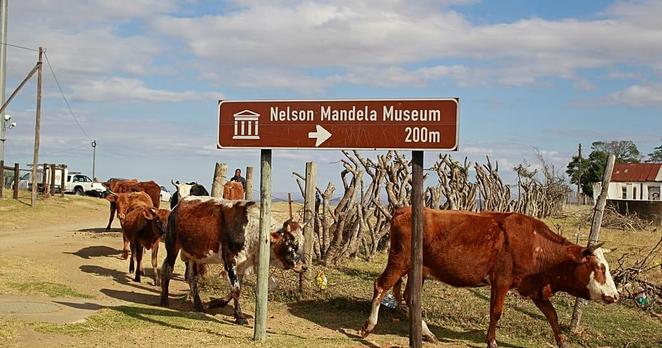
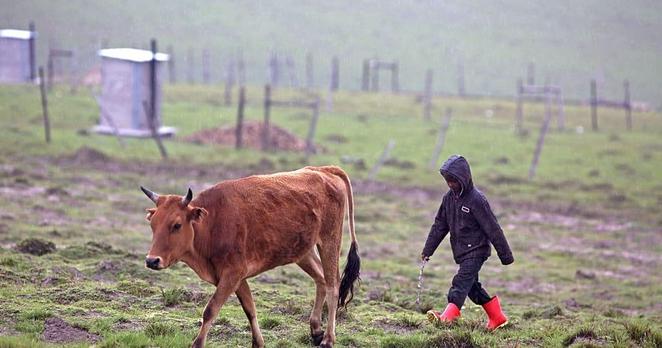
South Africa starts extensive vaccine campagin against FMD in cattle http://newsfeed.facilit8.network/TQz3Dx #SouthAfrica #VaccineCampaign #FMD #CattleHealth #AnimalHealth
'Development and validation of a real-time SYBR green PCR method for the detection and differentiation of Babesia and Theileria species (Apicomplexa: Piroplasmida) in hard ticks and cattle blood from Thailand' - an article published in #ParasiteJournal by @EDPSciences on #ScienceOpen 📄🔓🔎 https://www.scienceopen.com/document?vid=a9841067-8274-494f-a08a-2140865bdd21

<p xmlns:xsi="http://www.w3.org/2001/XMLSchema-instance" class="first" dir="auto" id="d4506037e283">Tick-borne pathogens, particularly <i>Babesia</i> and <i>Theileria</i> species, are major threats to cattle production, causing economically significant diseases such as babesiosis and theileriosis. In this study, a real-time SYBR Green PCR assay was developed to detect <i>Babesia</i> and <i>Theileria</i> species in hard ticks ( <i>N</i> = 65) and cattle blood samples ( <i>N</i> = 143) from Thailand. Using primers targeting the mitochondrial cytochrome b gene for <i>Babesia</i> and the nuclear 18S rRNA gene for <i>Theileria</i>, the assay measured specific melting temperatures (Tm) for each species. The results showed distinct Tm values for <i>Babesia bigemina</i> (74.38 ± 0.04 °C), <i>Babesia bovis</i> (75.7 ± 0.06 °C), <i>Theileria orientalis</i> (74.61 ± 0.03 °C), <i>Theileria sinensis</i> (75.84 ± 0.03 °C), and <i>Theileria annulata</i> (74.06 ± 0.03 °C). The assay demonstrated high specificity, with a cutoff cycle threshold of < 35 cycles and a minimum detectable concentration of 10 copies/μL. Significant species differences in melting curves were confirmed using Tukey’s HSD test ( <i>p</i> < 0.05). <i>Theileria orientalis</i> was detected in 8.4% of cattle blood samples, while <i>T. sinensis</i> was found in 25.9%, and <i>B. bigemina</i> in 0.7%. <i>Theileria orientalis</i> was also detected in 7.7% of tick samples, <i>T. sinensis</i> in 16.9%, and <i>B. bigemina</i> in 6.1%. The assay returned negative results for all non-target blood and tissue pathogens tested for specificity. This robust, high-throughput assay is highly effective for monitoring <i>Babesia</i> and <i>Theileria</i> infections, facilitating close surveillance and intervention efforts against tick-borne diseases in cattle. </p><p xmlns:xsi="http://www.w3.org/2001/XMLSchema-instance" class="first" dir="auto" id="d4506037e355">Les agents pathogènes transmis par les tiques, en particulier les espèces de <i>Babesia</i> et de <i>Theileria</i>, constituent une menace majeure pour la production bovine, provoquant des maladies économiquement importantes telles que la babésiose et la theilériose. Dans cette étude, un test de PCR SYBR Green en temps réel a été développé pour détecter les espèces de <i>Babesia</i> et de <i>Theileria</i> dans des tiques dures ( <i>N</i> = 65) et des échantillons de sang de bovins ( <i>N</i> = 143) en Thaïlande. À l’aide d’amorces ciblant le gène du cytochrome b mitochondrial pour <i>Babesia</i> et le gène de l’ARNr 18S nucléaire pour <i>Theileria</i>, le test a mesuré les températures de fusion (Tm) spécifiques de chaque espèce. Les résultats ont montré des valeurs de Tm distinctes pour <i>Babesia bigemina</i> (74,38 ± 0,04 °C), <i>Babesia bovis</i> (75,7 ± 0,06 °C), <i>Theileria orientalis</i> (74,61 ± 0,03 °C), <i>Theileria sinensis</i> (75,84 ± 0,03 °C) et <i>Theileria annulata</i> (74,06 ± 0,03 °C). Le test a démontré une spécificité élevée, avec un seuil de cycle de coupure < 35 cycles et une concentration minimale détectable de 10 copies/μL. Les différences significatives entre les espèces dans les courbes de fusion ont été confirmées à l’aide du test HSD de Tukey ( <i>p</i> < 0,05). <i>Theileria orientalis</i> a été détecté dans 8,4 % des échantillons de sang de bovins, tandis que <i>T. sinensis</i> a été trouvé dans 25,9 % et <i>B. bigemina</i> dans 0,7 %. <i>Theileria orientalis</i> a également été détectée dans 7,7 % des échantillons de tiques, <i>T. sinensis</i> dans 16,9 % et <i>B. bigemina</i> dans 6,1 %. Le test a donné des résultats négatifs pour tous les agents pathogènes sanguins et tissulaires non ciblés testés pour la spécificité. Ce test robuste et à haut débit est très efficace pour le suivi des infections à <i>Babesia</i> et <i>Theileria</i>, facilitant ainsi la surveillance étroite et les interventions contre les maladies transmises par les tiques chez les bovins. </p>
 ScienceOpen
 The-14