 Беларуская Вікіпедыя
🖼️ Выява дня: Манастыр кармелітаў босых, Бярдзічаў, Украіна.
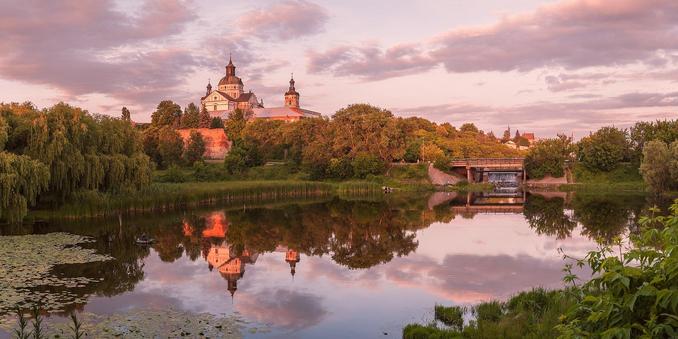
🖼️ Выява дня: Манастыр кармелітаў босых, Бярдзічаў, Украіна.
Quote of the day, 15 May: Elias Friedman, O.C.D.
In 1990, the Teresianum journal published Fr. Elias Friedman’s first-hand account of the internal Arab refugees who found shelter with the Discalced Carmelite friars during the 1948 war in Haifa. As violence spread and the city’s Christian population dwindled, Stella Maris Monastery became a refuge of peace and prayer.
Father Elias writes:
“On 29 November 1947, the General Assembly of the United Nations adopted a resolution recommending the partition of Palestine into an Arab state, a Jewish state and a corpus separatum for Jerusalem. The immediate effect was to aggravate the military tension between Jews and Arabs as the two parties jostled for position in view of the approaching termination of the British Mandate.“
The Port of Haifa, January 1948. Dmitri Kessel, photographer, LIFE Photo Archive, © Time Inc. For personal non-commercial use only.Photos from the LIFE magazine archives illustrate Fr. Elias Friedman’s documentation.
Father Elias carefully noted that:
In 1944, Haifa’s population was 128,000:
After the violence in 1948:
By the time Father Elias wrote in 1990:
Beginning in January 1948, Catholics in Haifa began seeking refuge at the Monastery of the Carmelite Fathers—today known as Stella Maris—on the promontory of Mount Carmel.
The first to arrive were four religious from the Christian Brothers school. Father Elias writes:
“On the 10 January 1948, a car-bomb, planted by Arabs, exploded in the town. In consequence, four religious from the Christian Brothers school sought refuge in the monastery, feeling their lives to be in danger.“
Soon they were followed by Arab families—“desperately in search of shelter.”
Responding to the dramatic circumstances of the time, Fr. Thomas, O.C.D., the monastery’s vicar, convoked a conventual chapter. The friars resolved to open the monastery to internal refugees from strife-torn Haifa. Fr. Elias recounts:
“It was question of giving them temporary permission to occupy the first floor, which had once served to lodge pilgrims; the upper floor would be reserved for the religious. The refugees then began to settle into the rooms and corridors of the space allotted to them, the overflow spilling into the grounds around the monastery.“
Fr. John, O.C.D., a Maltese friar, was appointed to oversee the care of the refugees. He remained in that role until April, when he was replaced by Fr. Clemente Casinelli, O.C.D.
“Fr. Clemente was to display rare qualities of initiative and decision.“
When he arrived, he found the first floor of the monastery filled with men, women, and children. The majority were Catholics, along with a few Greek-Orthodox families and one Muslim family—the Sabas. The overflow, as Fr. Elias noted, spilled into the monastery grounds.
British soldier sitting guard on a rooftop, Port of Haifa, 1948. Dmitri Kessel, photographer, LIFE Photo Archive, © Time Inc. For personal non-commercial use only. | Accessed via The Palestine Project / MediumFr. Clemente had only recently arrived from El-Muhraqa, the site of Elijah’s sacrifice, where he had been serving as Superior. In 1948 he assumed the role of Procurator in Haifa, taking over from Fr. John. With his arrival, the administration of the monastery’s refugee program began to change.
“Fr. Clemente discovered the first floor of the monastery to be filled with men, women and children. They were mostly Catholics, some three or four families were Greek-Orthodox, and one family was Muslim (the Sabas). The overflow spilled into the grounds of the monastery.“
But with so many people arriving daily, space quickly ran out. Fr. Clemente made a decision that drew strong opposition from within the Carmelite community: he housed several families in the cemetery across from the monastery.
“To their dismay the refugees found themselves passing the cold nights in the empty niches designed for the internment of the religious. They lamented to him, not without bitterness, how, only the night before they had slept in warm beds in their own homes, whereas now they were obliged to pass their nights in the company of the dead.”
Some friars were scandalized. They objected to what they viewed as a desecration of holy ground and demanded that the refugees be removed. The Vicar of the community issued the order for them to leave.
But Fr. Clemente refused.
“He defied him, protesting that under the circumstances, the law of charity should prevail over all other considerations.”
Fr. James, O.C.D., the Procurator General of the Order, happened to be visiting from Rome at the time. He confirmed Fr. Clemente’s decision.
Palestinian refugee waiting on the dock to leave Haifa, 1948. John Phillips, photographer, LIFE Photo Archive, © Time Inc. For personal non-commercial use only. | Accessed via The Palestine Project / MediumDespite the overcrowding and stress, the rhythm of Catholic life did not disappear within the monastery walls. On the contrary, it deepened.
“The refugees assisted regularly at Sunday Mass. Victor and Fred Khayat set a good example by first putting their contributions into the plate and taking it around the congregation at the Offertory.”
Devotions to the Blessed Virgin Mary became a daily practice.
“During the month of May, the refugees assembled for the daily prayers in honour of the Blessed Virgin Mary, at 7 o’clock each evening to recite the Rosary together and attend the Benediction of the Blessed Sacrament.”
Amid fear, displacement, and scarcity, the cloister on Mount Carmel became for the refugees what it had always claimed to be: a place of prayer, refuge, and fidelity to Our Lady.
The centerpiece of Stella Maris Church on the promontory of Mount Carmel is the miraculous statue of the Blessed Virgin Mary, Queen and Beauty of Carmel. The statue of the Virgin Mary and Infant Jesus enthroned, placed at the center of the main altar, standing on a pedestal carved from a cedar of Lebanon, is devoutly venerated by the local Christians. | Photo: Curia Generalizia Carmelitani Scalzi / Facebook (Used by permission)Postscript
Though many Christian families fled Haifa in 1948, some remained and rebuilt their lives in the city. Among them were the Khayat and Swidan families. The Khayats, once known for their orchard and their generosity to the Carmelites, left a lasting mark on the religious and civic landscape of Mount Carmel. Their Bostan, a walled garden in Wadi Siah, was gifted to the Carmelites in 1943 and later passed to the city. Even in ruins, it remains a powerful witness to the family’s faith and legacy. The Swidans, longtime grocers, continue to serve the Wadi Nisnas neighborhood through their family deli—a gathering place for the community and a quiet reminder of endurance.
Friedman, Elias. “Internal Arab refugees at the monastery of the Carmelite Fathers, Mount Carmel, Haifa (Israel).” Teresianum: Ephemerides Carmeliticae, vol. 41, no. 1, 1990, pp. 261-274.
Project, The Palestine. LIFE Magazine: Palestine 1948 — rare photo collection. medium.com, 16 May 2018, https://medium.com/@thepalestineproject/life-magazine-rare-photos-of-palestine-1948-d80e83d4929. Accessed 15 May 2019.
Wikimedia Commons has photo collections concerning historical images of Haifa, the statue of Our Lady of Chile that stands across from the monastery, and several historic images in the Stella Maris Monastery collection. Nanyang Technological University has information about accessing the LIFE Photo Archives. Our featured image comes from the LIFE Photo Archives; photographer Dmitri Kessel captures an image of the Port of Haifa in January 1948. © Time Inc. For personal non-commercial use only.
#19471949PalestineWar #CarmeliteMonastery #EliasFriedmanOCD_ #Haifa #Muslims #refugees #StellaMaris
 Carmelite Quotes