 Markus Falk
#ClimateChange week 20
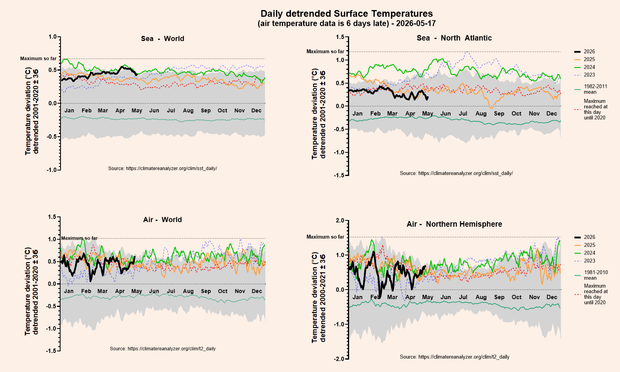
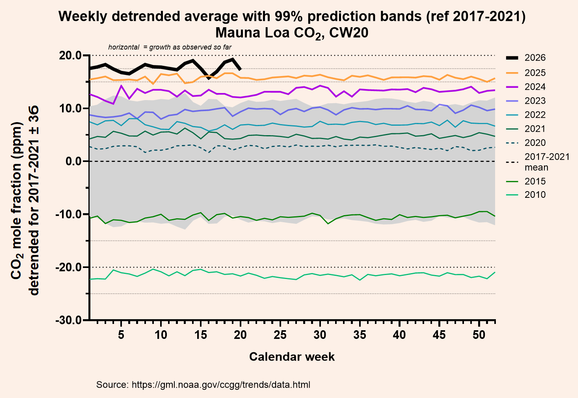
Our population is growing and we need more land, but our soils are losing their fertility.
Our planet consists of only about 29% land (the rest is water) so a time has come when we need to think very carefully about our requirements and how we use that land.
As individuals we can make a contribution to how that land needs to be used. In fact we have a responsibility to do that.
"New study estimates NHS England spends 3% of its primary and secondary care budget on the health impacts of temperature" (2025)
https://www.ox.ac.uk/news/2025-12-23-new-study-estimates-nhs-england-spends-3-its-primary-and-secondary-care-budget
Commentary on this paper:
"Quantifying the health-care burden of temperature in the National Health Service in England: an economic analysis of resource use and costs", Fahr et al. 2025 (open access at The Lancet)
https://www.thelancet.com/journals/lanplh/article/PIIS2542-5196(25)00251-7/fulltext
A new University of Oxford-led study, published in The Lancet Planetary Health, is the first to link daily temperature data to health-care use and costs across primary and secondary care in England. Analysis of 4.37 million patient records in England has found resources asymmetrically impacted by winter cold and summer heat, with about 64% linked to common cold days while very hot days drive sharp same-day demand surges.
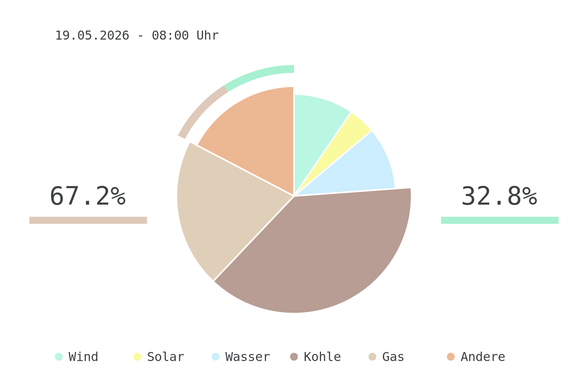
So it seems the winter court lost the balance with the summer court.
UK temperatures expected to rise over the bank holiday weekend
📰 Original title: Is there a late spring heatwave on the way?
🤖 IA: It's not clickbait ✅
👥 Users: It's not clickbait ✅
View full AI summary: https://en.killbait.com/uk-temperatures-expected-to-rise-over-the-bank-holiday-weekend.html?utm_source=mastodon_social&utm_medium=social&utm_campaign=killbait_uk.mastodon_social
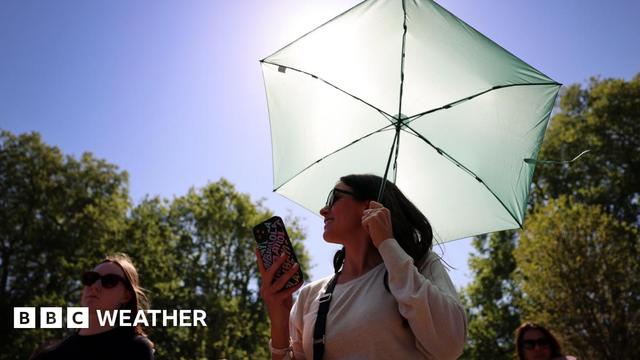
Parts of the United Kingdom are anticipating warmer weather as temperatures are forecast to rise ahead of the bank holiday weekend. Following an unusually cold spell last week, temperatures are expected to return to near-average levels before climbing further. By Wednesday, temperatures could reach around 21°C, with Thursday and Friday potentially seeing highs of 28°C in south-eastern England, marking the warmest weather of the year so far. The shift in conditions is attributed to a change in wind direction, with south-westerly winds from the Atlantic replacing the cold northern winds from last week. A UK heatwave is officially defined by the Met Office as three consecutive days with daily maximum temperatures exceeding a county-specific threshold, and some areas, such as Herefordshire and Worcestershire, may meet this criteria during Friday to Sunday. Over the long weekend, most regions can expect temperatures between 20°C and 26°C, although showers are possible, particularly in Scotland, Wales, and western England on Saturday, with southern England potentially seeing rain on Sunday. Monday looks generally dry, though an easterly wind may keep North Sea coastal areas cooler. Weather conditions remain subject to change, and residents are advised to stay updated through the BBC Weather app and weekly forecasts.

 seymourh
 CBC Ottawa
 Albert Cardona
 Christine Brösenhuber
 The Conversation Climate News
 Energymix Bot
 Gamy
Gamy KillBait UK 🇬🇧