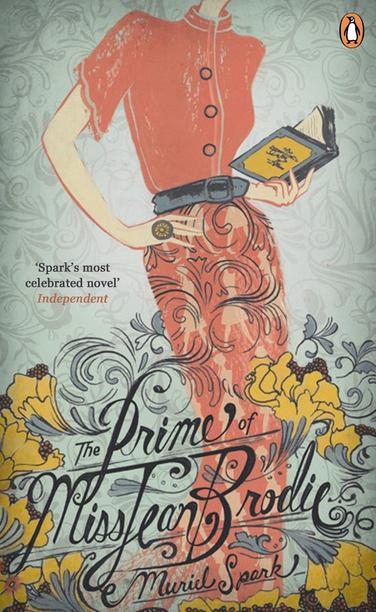
Original, intriguing, beautiful characters, but strangely unengaging.

The Prime of Miss Jean Brodie, Muriel Spark

6/10

#BritishLiterature #murielspark #britishbooks #bookstodon

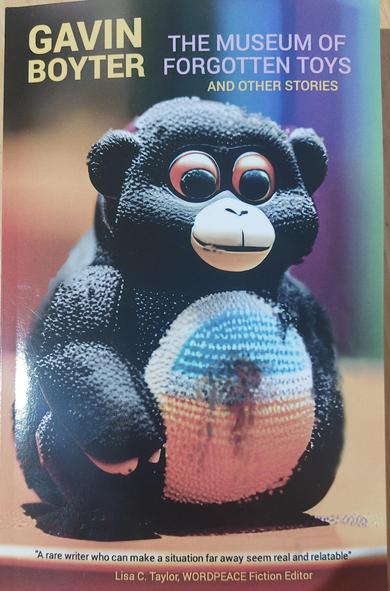
A jumble of sci-fi, ordinary lives, historical pastiche, mystery, and experimental stuff.
It mostly feels like a series of (48) drafts, simplistic and unedited.
A few brilliant exceptions, a few really bad stories, but overall dull and forgettable.

The Museum of Forgotten Toys,
Gavin Boyter

6/10

#shortstories #britishbooks #boyter #bookstodon

Engrossing book, great characters, thought-provoking, thoroughly enjoyable.
There are a few stereotypes, and it is a bit dated, but still great.

The Constant Gardener, John le Carre'

8/10

#bookstodon #lecarre #britishbooks

China Miéville says we shouldn't blame science fiction for its bad readers

https://feddit.uk/post/26630999

China Miéville says we shouldn't blame science fiction for its bad readers - Feddit UK

>It’s been 25 years since China Miéville stepped into the literary spotlight with his novel “Perdido Street Station.” > >Combining elements of science fiction, fantasy, and horror, the novel introduced readers to the fantastically complex city of New Crobuzon, filled with insect-headed khepri, cactus-shaped cactacae, and terrifying slake moths that feed on their victims’ dreams. It also sparked broader interest in what became known as the “new weird.” > > After “Perdido”’s success (commemorated this year with a quickly-sold-out collector’s edition from The Folio Society), Miéville continued to meld genres in novels like “The City and the City” and “Embassytown.” But he stopped publishing fiction for nearly a decade, only to reemerge last year with The New York Times bestseller “The Book of Elsewhere,” co-written with Keanu Reeves. (Yes, that Keanu Reeves.) > >Miéville is also a compelling observer and critic — of politics, of cities, of science fiction and fantasy. So while we started our conversation by discussing his breakthrough book, I also took the opportunity to ask about the relationship between science fiction and the real world, particularly what seems to be a growing tendency among tech billionaires to treat the science fiction they grew up reading as a blueprint for their future plans. > >To Miéville, it’s a mistake to read science fiction as if it’s really about the future: “It’s always about now. It’s always a reflection. It’s a kind of fever dream, and it’s always about its own sociological context.” > >He added that there’s a “societal and personal derangement” at work when the rich and powerful “are more interested in settling Mars than sorting out the world” — but ultimately, it’s not science fiction that’s responsible. > >“Let’s not blame science fiction for this,” he said. “It’s not science fiction that’s causing this kind of sociopathy.” > > … > > Getting back to your own writing, I know there have been whispers about a big new book coming from you. It sounds like it’s going to be out next year? > >Yes, it will be out. I don’t know the exact date, but it will be out before the end of next year. I’m just doing the last bits on it now. > > Is there anything you can say about it? > >I will just say that I’ve been working on it for 20 years, and that’s not an exaggeration. I’ve been working on this book for considerably more than half of my adult life, and it is a very big deal for me, for it to be coming out. I’m very excited for it.

Across the Galaxy, Looking for God – Planetfall (2015) by Emma Newman

https://lemm.ee/post/59527357

Across the Galaxy, Looking for God – Planetfall (2015) by Emma Newman - lemm.ee

Lemmy

Scouse Republic by David Swift review – does Liverpool walk alone?

https://feddit.uk/post/25783846

Scouse Republic by David Swift review – does Liverpool walk alone? - Feddit UK

cross-posted from: https://feddit.uk/post/25783845 [https://feddit.uk/post/25783845] > > I read David Swift’s Scouse Republic alongside Michael Heseltine’s breezily optimistic account of urban regeneration, From Acorns to Oaks. It’s impossible to deny that the city has brilliantly swerved the abyss of “managed decline”. It’s now a hen-night destination, a regular stop-off for luxury cruises, a seat of learning. The Georgian Quarter, with its cobbled streets shining under Narnian lamp-posts, is one of the most popular filming locations in the country. But Swift’s account of that voyage from chaotic sailor town to imperial port, from the Beatles to the Toxteth uprising, does not look away from the dark and stormy passages. If you ever feel tempted to flirt with trickle-down economics, remind yourself that in 1841, when the city was the premier port of the empire after London, life expectancy in Liverpool was 26. Seventy-five per cent of the lads who volunteered for army service were rejected for being unfit. > > > > This is a highly personal book. Swift’s Israeli in-laws provide the story with a baffled chorus. He has a terrific eye for the telling detail. I will forever be quoting his story about how, in 1904, trumpet-tongued Jim Larkin – hero of the Belfast dock strike – buried a letter “to the future socialist society” in a biscuit tin underneath the foundation stone of the Anglican cathedral. There are chapters on the origin of the scouse accent, a short history of Eric’s nightclub, observations on the significance of Jürgen Klopp’s Christianity and a long overdue analysis of that weird cocktail of truth, disinformation and racism – the legend of Purple Aki, an intimidatingly large body builder of Nigerian origin whose possibly harmless but unnerving kink is asking young men if he can feel their muscles. A lot of people think he’s an urban myth. > > > > … > > > > The title – Scouse Republic – nods towards Liverpool exceptionalism of the “scouse not English” type. But if Liverpool is so exceptional, why should a non-scouser want to read this? For one thing, because scouse exceptionalism – the idea that the city is too different, too socialist – is a myth that Swift takes to pieces in a chapter called Good Rioters, Bad Socialists. Liverpool is different. It experienced large-scale immigration long before most of the country. It experienced the loss of empire more directly. In David Goodhart’s world of Somewheres v Anywheres, scousers – myself included – are definitely Somewheres.

Bill Bryson: Too many people publishing their own books

https://feddit.uk/post/25411452

Bill Bryson: Too many people publishing their own books - Feddit UK

> Bill Bryson has said the self-publishing world has become too big with far too many books about “some anonymous person’s life”. > >Bryson said too many people now wrote because they “think it suddenly makes you a writer”. He added that the growth in the number of books published annually in the UK — which has increased from about 120,000 ten years ago to an estimated 200,000 now — meant there were “more books than you could possibly read”. > >The growth in the number of self-published books, which are mainly distributed through Amazon platforms, has previously led to fears that it is harder for “good” self-publishing authors to be noticed by publishers and bookshops. > >It is thought that about 90 per cent of self-published books sell fewer than 100 copies, although some self-publishing writers have become successful, notably Colleen Hoover. > > Bryson, who spoke to The Times last week after judging this year’s Nero Gold book of the year award, said: “I’m not sure that self-publishing is a healthy development. I think it is great if you self-publish because you want a book to pass on to your kids and tell them about your life, but not if you are doing it because you think it suddenly makes you a writer and you can bother people for quotes for the book. > >“I get sent a lot of self-published books and most of the time it is just some anonymous person’s life and it is of no interest.”

China Miéville's Perdido Street Station to receive lavish Folio Society hardcover

https://feddit.uk/post/25268116

China Miéville's Perdido Street Station to receive lavish Folio Society hardcover - Feddit UK

> China Miéville’s Perdido Street Station is easily one of the most critically acclaimed fantasy novels of the past several decades, as well as a seminal entry in the “weird fiction” subgenre. That makes the book a natural fit for The Folio Society’s ever-growing library of deluxe hardcovers. > > Just in time for the book’s 25th anniversary, The Folio Society will publish a massive 707-page hardcover edition of Perdido Street Station. The book includes a new afterword by Miéville and a new series of illustrations by artist Doug Bell. Bell’s artwork includes 8 black and white chapter opening images, 12 full-color illustrations, and a detailed map of the city of New Crobuzon. > > … > > This edition of Perdido Street Station is limited to 500 copies worldwide and will be released on Tuesday, March 18 on The Folio Society website.

'Consider Phlebas' series set at Amazon from Charles Yu & Chloé Zhao

https://feddit.uk/post/24829892

'Consider Phlebas' series set at Amazon from Charles Yu & Chloé Zhao - Feddit UK

cross-posted from: https://feddit.uk/post/24829890 [https://feddit.uk/post/24829890] > > Amazon MGM Studios is developing science fiction TV series Consider Phlebas. It is an adaptation of the novel by Iain M Banks, the first in the late Scottish author’s classic 10-book Culture book series about an interstellar post-scarcity society. > > > > Interior Chinatown creator Charles Yu is writing and executive producing. The potential series also is executive produced by Nomadland Oscar winner Chloé Zhao through her production company Books of Shadows, Dede Gardner and Jeremy Kleiner for Plan B Entertainment as well as Adele Banks. > > > > In Consider Phlebas, while war rages between the utopian Culture and the Idiran Empire, a Culture Ship AI “Mind” takes refuge on a forbidden planet. Both Horza, a shape-shifting mercenary working for the Idirans, and Balveda, a “Special Circumstances” Culture agent, have been tasked with retrieving it to tip the balance in a galaxy-spanning conflict. Consider Phlebas pits sentience against AI in an epic and bloody quest across the cosmos. > > > > Amazon first teamed with Plan B to adapt Consider Phlebas six years ago as Prime Video was just getting into genre/sci-fi series in a major way with the mega rights deal for The Lord of the Rings TV series. A couple of months after setting Consider Phlebas for development with Utopia creator Dennis Kelly as writer, the streamer rescued canceled Syfy drama The Expanse, which was followed by the green light for shows like The Wheel of Time, The Boys, The Peripheral and Fallout. That initial Consider Phlebas TV incarnation ultimately didn’t go forward.

Rereading the best science fiction writers of all time: Iain M. Banks

https://feddit.uk/post/22841392

Rereading the best science fiction writers of all time: Iain M. Banks - Feddit UK

> Iain M. Banks died more than 11 years ago, but remains a titan of modern science fiction. He wrote “literary” works under the name Iain Banks, but added the “M” for his 14 sci-fi offerings, which are known for an audacious, ground-breaking take on the space opera that transformed the genre. > >If you have never read any of these books but love “hard” sci-fi, is it worth diving in now? > >Short answer: yes. Longer answer: Banks’s sci-fi, at its best, is staggeringly inventive, beautifully written, dramatic and often very funny. His stories are packed with ideas, warships with minds very much of their own, alien races, charismatic drones and intergalactic politics. > > That said, time is a stern judge. I have read celebrated “classics” of sci-fi and found them startlingly misogynistic, homophobic and racist – even for their time. There is nothing so serious to worry about here, but Banks’s novels haven’t aged perfectly. I reread five for this column, and even as a dyed-in-the-wool fan, I couldn’t avoid the fact that, for books set in a future where men and women are meant to be equal, they don’t always read that way. Archive [https://archive.ph/31nX1]