🌾
#FunProd (
#BiodivHealth) finds high-intensity farming raises yields but harms biodiversity. Bees boost rape pollination & yields, but predator-driven pest control is less clear. Ecological intensification needs tailored approaches.
https://doi.org/10.1007/s10980-025-02117-w
Land-use impacts on crop yield: direct and indirect roles of arthropods and associated ecosystem services in European farmland - Landscape Ecology
Context Land-use intensification to increase yields is often detrimental to biodiversity undermining the provision of ecosystem services. However, it is questionable if ecosystem service providers contribute to ecological intensification by achieving the same or higher yields than conventional high-intensity agriculture. Objectives In this study, we aimed to disentangle the effects of local and landscape-scale land-use intensification on arthropod communities and their contribution to ecosystem services and crop yield. A set of meta-analytic structural equation models allowed us to assess direct and indirect relationships in the cascade from land use to yield. Methods We selected 37 datasets containing information on land use, community composition, levels of pollination and natural pest control services, and crop yield. We quantified functional diversity of communities by collecting trait information for three exemplary groups of service-providers: bees, ground beetles, and spiders. Results Local land-use intensification reduced the abundance of all arthropod groups. Spiders were the only group whose species richness was negatively related to a higher percentage of arable land in the landscape. High abundance of bees related positively to oilseed rape pollination and crop yields. In the models for the two predator groups, crop yield was strongly determined by land use, independent of the pest control services provided by natural enemies. Conclusions Our results suggest a potential for ecological intensification mediated by land-use change in crops where pollination benefits yield, but suggest more nuanced effects for pest control. Our study also calls for experiments on multiple taxonomic groups and ecosystem services that apply comparable methods at similar scales.
🦟
#DIMOC (
#BiodivHealth) study in Camargue, France, shows Culex pipiens mosquitoes prefer feeding on Passeriformes, like pigeons & sparrows, along a land-use gradient. Key birds may drive West Nile & Usutu virus spread.
https://doi.org/10.1111/mve.12802🌊 Spanish Mediterranean MPAs: only 7% highly protected. Partial protection varies, with inconsistent fishing gear rules. Better regulation needed for effective conservation. With
#MOVE (
#BiodivProtect) and
#METRODIVER (
#BiodivHealth)
https://doi.org/10.1016/j.marpol.2025.106686🦟 Birds vs. mosquito virus: Of the importance of balanced species distribution!
#DIMOC (
#BiodivHealth) shows higher bird diversity and abundance can raise USUV risk in mosquitoes if species evenness is low.
https://doi.org/10.1111/zph.13213🐀 Rodents are Toxoplasma gondii reservoirs.
#BioRodDis (
#BiodivHealth) found 8.9% seroprevalence in Polish rodents via serological tests, despite no DNA via PCR. This shows serology's value & the need for more bio-monitoring in small mammals.
https://doi.org/10.26444/aaem/184723
Identification of <i>Toxoplasma gondii</i> in wild rodents in Poland by molecular and serological techniques
Rodents are recognized as reservoirs for Toxoplasma gondii , playing a crucial role in maintaining the parasite’s presence in the environment. Biomonitoring was conducted to assess the role of sylvatic rodents in maintaining T. gondii , and to analyse the prevalence and seroprevalence of the...
🌊 EU MPAs: Regulations are patchy!
#MOVE (
#BiodivProtect) and
#METRODIVER (
#BiodivHealth) show major data gaps, with most activities regulated in <40% of MPA area. We need better data & coordination for effective marine protection.
https://doi.org/10.1038/s44183-025-00104-x🌱 It's
#WorldSoilDay!
What better time to spotlight
#SuppressSoil, a project we featured at our recent
#BiodivHealth conference? Check out this short presentation of their results:
https://youtu.be/sxUo0JSJvlA?si=yy4rwVH45jC-n-Se
SuppressSoil Project Presentation
Yvan Moënne-Locoz presented the SuppressSoil project at the BiodivHealth Final Conference. SuppressSoil investigated soil biodiversity and the soil's ability...
#Biodiversity & #Health ?
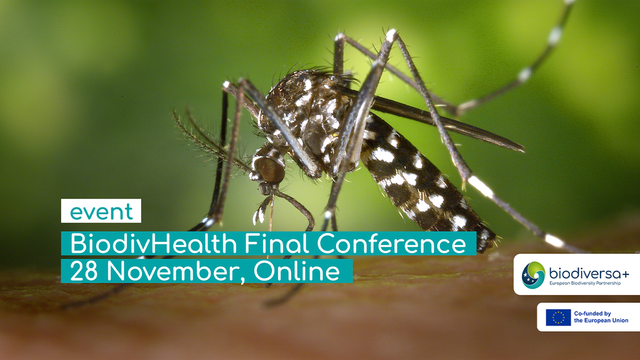
📢 Don't miss the #BiodivHealth Final Conference!
Engage with scientists, discover impactful research, and learn how science bridges to policy.
🗓️ 28 Nov. 2024, 09:00-13:00 CET
📍Free access online
👉 Register: https://biodiversa.eu/2024/10/24/register-now-biodivhealth-final-conference-28-november/
 Biodiversa+