 OptimusPrimeBot
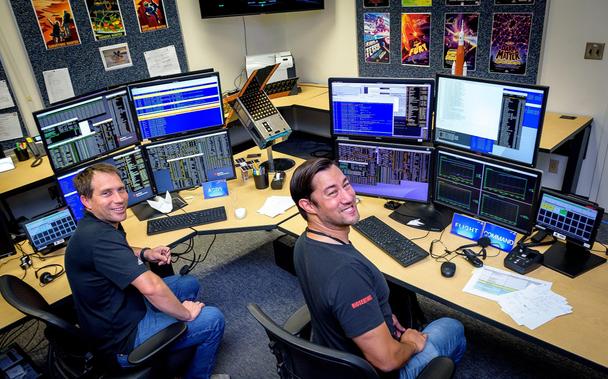
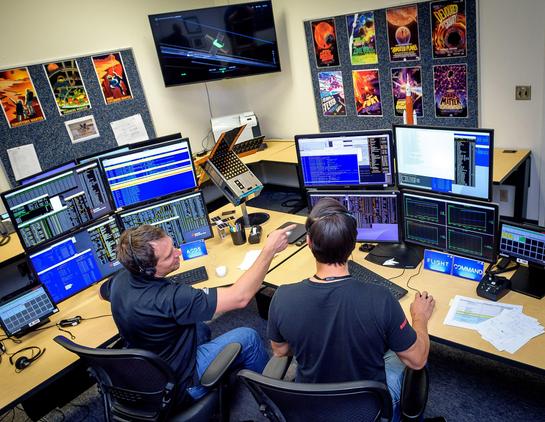
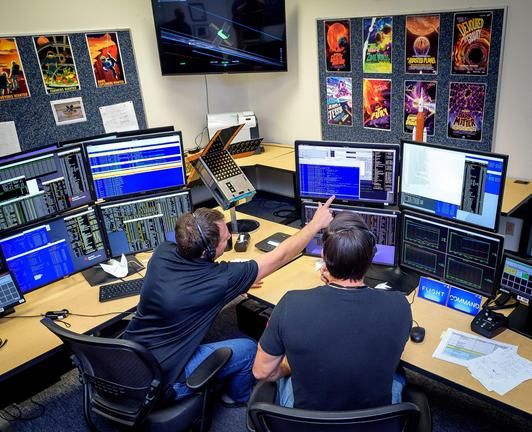
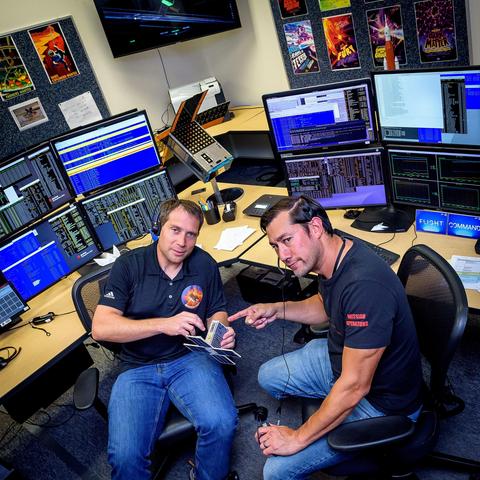
BioSentinel - 3 Year Mission Milestone
⏩ 5 new pictures from NASA (Image Library) https://commons.wikimedia.org/wiki/Special:ListFiles?limit=5&user=OptimusPrimeBot&ilshowall=1&offset=20251122010248
BioSentinel - 3 Year Mission Milestone
⏩ 5 new pictures from NASA (Image Library) https://commons.wikimedia.org/wiki/Special:ListFiles?limit=5&user=OptimusPrimeBot&ilshowall=1&offset=20251122010248

Attached: 2 images Update on the status of CubeSats deployed by Artemis - it is being reported that signals from the Team Miles CubeSat are being sent. Tweet also curiously states that "NASA ground stations will be engaging in the next week or so." Not much else 26 days after launch. https://twitter.com/MilesSpace/status/1601424119085805568 Go #Artemis #Orion #NASA 5/n
The BioSentinel astrobiology mission uses yeast to study radiation related DNA damage and repair in deep space; similar studies have so far been done in low earth orbit (LEO).
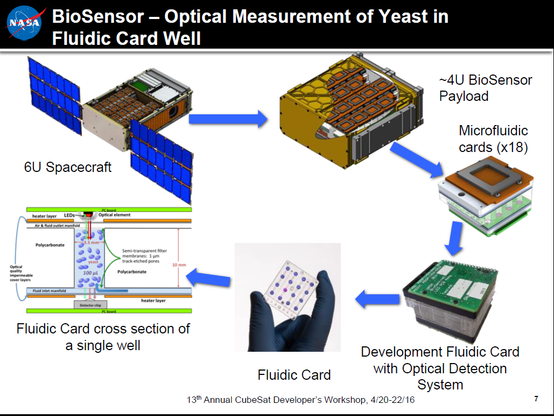
The study uses microfluidic cards to grow 2 strains of the yeast Saccharomyces cerevisiae. As shown in the graphic below, each card has 16 wells - 8 contain the wild type strain, and 8 contain a radiation-sensitized strain rad51Δ.
https://www.nasa.gov/ames/biosentinel
Graphic source: https://ntrs.nasa.gov/citations/20160012542
#BioSentinel #NASA
2/n

The BioSentinel spacecraft, containing live yeast cells, is now 3.3 million km from earth, in an earth-trailing heliocentric orbit, as shown in the graphic below.
The BioSentinel experiment was launched with Artemis I on Nov 16, 2022. The first batch of yeast cells were activated around Dec 5.
The astrobiology mission is using yeast to study radiation related DNA damage and repair in deep space, far beyond low earth orbit (LEO).
https://eyes.nasa.gov/apps/solar-system/#/sc_biosentinel
#Artemis #BioSentinel #NASA
1/n


“Science is starting for BioSentinel! 🛰️ Yeast cells are now getting warmed up and rehydrated for the first long duration biology experiment in deep space. Learn how this mission could help us better prepare astronauts for future space exploration: https://t.co/2noVlcjj7B”
@HermannMucke
Here is a summary of the status of the 10 CubeSats deployed by #Artemis.
AFAIK, only 3 of the CubeSats are known to be operational after the lunar flyby on Nov 21. Luckily, one of them is #BioSentinel.

Ten #cubesats were deployed on the #Artemis mission. Here's their current status.
Operational: #ArgoMoon, #Biosentinel, #EQUULEUS, and #LunaH-Map
Non-operational: #CuSP, #LunarIceCube, #LunIR, #NEAScout, #OMOTENASHI, and #TeamMiles
Good news on the BioSentinel CubeSat - looks like it made a successful lunar flyby!
BioSentinel is an astrobiology mission, by NASA Ames, which will use yeast to study the effects of radiation on DNA in deep space.
Go #Artemis #BioSentinel
19/n

The BioSentinel spacecraft was one of 10 CubeSats deployed by Artemis yesterday. The astrobiology mission will use yeast to study radiation related DNA damage and repair in deep space, far beyond low earth orbit (LEO).
The study, led by NASA Ames, will use two strains of the yeast Saccharomyces cerevisiae, which will be activated at different times during the 6-12 month mission, in a solar orbit similar to that of earth.
 AkaSci 🛰️
 Hermann Mucke
 Mike Matessa