 Izaille
 El Pregoner del Metall
ASHBRINGER (Estats Units) presenta nou àlbum: "Subglacial" #Ashbringer #AtmosphericBlackMetal #Febrer2026 #EstatsUnits #NouÀlbum #Metall #Metal #MúsicaMetal #MetalMusic
 Angry Metal Guy
Ashbringer – Subglacial Review
By Lavender Larcenist
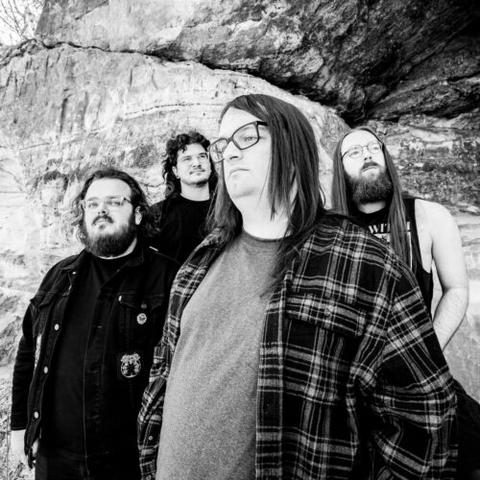
We here at AMG are impossible to please. Minnesota’s atmo-black four-piece Ashbringer have learned this the hard way. While we lavished praise across their discography, those who giveth can also taketh away. Ashbringer’s previous outing, We Came Here to Grieve, originally received glowing remarks. Unfortunately for them, resident shark and Ashbringer connoisseur, Carcharodon, decided, upon further reflection, that the clean singing on their previous outing brought the album to a screeching halt after time and distance brought clarity. So, as if in response, Ashbringer has returned with Subglacial, and there isn’t an ounce of clean singing to be found on the album, as it provides an incredibly stripped-back sound in comparison to their previous outings. I welcome artistic experimentation, but I frown upon the wholesale rejection of ideas due to criticism. So, does Subglacial herald a return to form? Creative stagnation? Or something in between altogether for these purveyors of atmospheric and heartfelt black metal?
For starters, Ashbringer went about creating Subglacial in a way I can wholeheartedly commend. Singer Nick Stanger and drummer Andy Meyer rented a house, brought the band in, and wrote, played, and recorded the entire album there. In Stanger’s own words, Ashbringer wanted to create a record that sounded as “us” as they possibly could while doing it in-house and spending no money; an admirable goal if I have ever heard one, and one that is apparent throughout the album. Subglacial is lean, especially compared to We Came Here to Grieve, but even in contrast to their earlier work. Scraping in at just under forty minutes, it makes for an incredibly tight piece that wastes no time. Stanger sticks to his trademark rasping growl, drumming is significantly less jazzy than on Absolution, and overall, it is heavier, hookier, and surprisingly free of auditory left-turns. Stanger and Jackson Catton’s guitarwork sticks to black metal staples: blistering tremolo riffs, cutting hooks, and atmospheric tangents. Subglacial is a no-frills, concise record where every element feels honed to be heavy, hooky, and emotive.
Subglacial is surprisingly predictable, with “Waning Conviction” being the only track that feels like it has shades of previous experimentation. Opening with ponderous acoustic strumming and laid-back drums, it builds for a while before lurching into a massive lead riff. Still, even this track feels tame (experimentally) compared to anything on We Came Here to Grieve. I agree that Stanger’s clean vocals needed work, but I don’t think the band should have thrown them out completely. Subglacial will likely be seen as a return to form for many, but I can’t help but lament what could have been. This is a record that feels incredibly safe for a band known for throwing out the rulebook. That isn’t to say Subglacial is bad; in fact, it is hard to find anything to complain about otherwise. The production is perfectly raw, keeping Stanger’s vocals fantastically legible while allowing for that atmo-black fuzz to creep in. It just shows you don’t need an expensive studio to record an album with wonderful sound. Every track feels essential, and this is a tight record in every sense of the word.
Subglacial is so concisely put together and so expertly played that it is hard to find flaws when looking at the whole. The opening track, “My Flesh Shows Its Weakness,” features everything you want from an Ashbringer song: atmospherics, a massive final riff, and the emotionality that the band is famous for. The guitar work on Subglacial is a standout, and every track has memorable riffs, monolithic hooks, or ass-kicking speed. Album standout “Send Him to the Lake” is an anthem, as Stanger screams “SEND HIM TO THE LAKE,” you can’t help but feel the conviction. The track features an ascending riff as a throughline, building and building, to an absolutely crushing crescendo, the atmo-black equivalent of an orgasm. Album closer “Vessels” mixes heaviness with the dreamy, ethereal sound of blackgaze alongside some head-spinning drumming from Meyer.
So, time for the part where I make you all upset. I loved the raw emotion, vulnerability, and sincerity of We Came Here to Grieve but Subglacial is too safe a step back. While the album is well-rounded, expertly played, and emotive, it lacks the audacity of their previous work. Ashbringer’s latest is no slouch, though, and while I thoroughly enjoyed their latest record, it didn’t quite blow me away like their previous work. Subglacial is as solid as ice, but time may chip at this berg to reveal something unremarkable when compared to Ashbringer’s larger output.
Rating: Very Good
DR: 11 | Format Reviewed: 320 kbps mp3
Label: Bölverk Collective
Websites: ashbringermusic.com | instagram.com/ashbringermusic
Releases Worldwide: February 13th, 2026

 🤘 The Metal Dog 🤘
#TheMetalDogArticleList
#MetalInjection
ASHBRINGER Streams Self-Affirming Black Metal Banger 'Vessels'
#ASHBRINGER #StreamsSelf #AffirmingBlackMetalBanger #blackmetal #MetalInjection #metal #music
#TheMetalDogArticleList
#MetalInjection
ASHBRINGER Streams Self-Affirming Black Metal Banger 'Vessels'
https://metalinjection.net/video/ashbringer-streams-self-affirming-black-metal-banger-vessels
#ASHBRINGER #StreamsSelf #AffirmingBlackMetalBanger #blackmetal #MetalInjection #metal #music

 MONTREAL Ask A Punk
Ashbringer, Mistwalker, Murtenscythe
La Sotterenea, Monday, June 2 at 07:00 PM EDT
Viridian Cult Productions presents:
Minnesota false black metal band Ashbringer will be trekking to Montreal, hot off the heels of their performance at Prepare the Ground this year, for a show at La Sotterenea on Monday, June 2nd!
They will be joined by blackened speed rippers Mistwalker, and progressive death wizards Murtenscythe!
Monday, June 2nd, 2025
@ La Sotterenea
Doors @ 7:00 PM
Show @ 8:00 PM
$15
18+
Ashbringer:
https://ashbringermusic.bandcamp.com/.../we-came-here-to...
Mistwalker:
https://mistwalker.bandcamp.com/album/oceanic-heritage
Murtenscythe:
https://murtenscythe.bandcamp.com/album/vodyanoy
https://montreal.askapunk.net/event/ashbringer-mistwalker-murtenscythe
Contrite Metal Guy: It’s Beginning to Look a Lot Like Wrongness, Volume the Second
By Cherd
The life of the unpaid, overworked metal reviewer is not an easy one. Cascading promos, unreasonable deadlines, draconian editors, and the unwashed metal mobs – it makes for a swirling maelstrom of music and madness. In all that tumult, errors are bound to happen and sometimes our initial impression of an album may not be completely accurate. With time and distance comes wisdom, and so we’ve decided to pull back the confessional curtain and reveal our biggest blunders, missteps, oversights and ratings face-plants. Consider this our sincere AMGea culpa. Redemption is retroactive, forgiveness is mandatory.
As those of us who follow the Gregorian calendar and partake in Judeo/Christian cultural traditions prepare to face the final bosses of the holiday season, we experience a wide range of feelings. Anticipation, at the prospect of gorging on holiday treats as we shuffle from one party to another thrown by family and friends. Nostalgia, of course, as we uphold our traditions and reflect on the celebrations of yesteryear. And, for those who write music reviews for a non-living, contrition. Intense embarrassment and remorse as we prepare for Listurnalia, revisiting records we thought we had judicated accurately only to discover the depth of our wrongheadedness. Sometimes our self-reproach has nothing to do with impending lists. Sometimes, shortly after writing a review, an ember of doubt will ignite, smoldering just under our calm exteriors, growing until we want to shriek “Dissemble no more! I admit the deed! — tear up the planks! — here, here! — it is the beating of his hideous heart!” It’s been over three years since the last time we unloaded our disgrace onto you, the unsuspecting reader, so expect this to be a long self-flagellation session.
– Cherd
Carcharodon
Verses in contrition
Earlier this year, I described Hulder’s Verses in Oath as spellbinding, going on to ward it a lofty 4.5. I’ve taken a fair amount of stick for that in the months since, both in the comments and round the staffroom feeding trough. And while that’s fine—you’ve all been wrong before and I have absolutely no doubt you’ll all be wrong again—it’s only fair that such consistent criticism should cause me to reflect a little. And reflect I have. Now, it’s true that, as I said in my review, Verses in Oath is dark and vicious, but also haunting and ethereal. But it’s also true that, although well executed, it lacks true originality and I got carried away. It happens. I loved all the constituent elements of the record and I still think that they are woven together with skill and good songcraft. However, it’s not an album I’ve returned to as much as I thought I would and (spoilers!) it’s not going to make my year end list. Which makes it rather hard to defend the 4.5 any longer. So I won’t. It’s a very good album but no more than that.
Original score: 4.5
Adjusted score: 3.5
We came here to apologize
Minnesota’s Ashbringer has always been a band of shades, shifting between atmo-black, shoegaze, post-metal, and more. On last year’s We Came Here to Grieve, they added heavily fuzzed blues melodies and languid Incubus-esque post-rock, which I lapped up. Looking, and of course listening, back, there’s still a lot to like about the album but—and it’s a big but—I wince at those clean vocals. I suggested in my review that, while the cleans were not great, there was a sort of vulnerable authenticity to Nick Stanger’s voice that meant he just about got away with it. I can only think I was in a very vulnerable place at the time because he absolutely does not get away with it, nor should he be allowed to. Much as I enjoy Stanger’s harsh post-hardcore vox, his cleans are outright bad in places, which should have placed a very hard ceiling on the score that the album could achieve. Somehow, We Came Here to Grieve shattered that ceiling. It must now be repaired.
Original score: 4.0
Adjusted score: 3.0
Glare of the Noise
To more recent errors: in September, I did an injustice to Glare of the Sun’s TAL. I’m ashamed to say it but I went into that review looking for flaws—and I did find a couple—because I’d already done what you would all see next: Kanonenfieber. I didn’t lightly award that 5.0 and I stand by it but I was painfully conscious of it sitting there, on the assembly line and that affected my assessment of Glare of the Sun. While I think TAL could, and probably should, have been shorter and that there were a couple of less impactful songs (“Leaving Towards Spring,” for example), there are no real missteps here and it’s a great album. I stand by the words in my review but not the score, which should have been a 4.0.
Original score: 3.5
Adjusted score: 4.0
Noisy remorse
I can keep this brief because I’ve already publicly admitted to underscoring Leiþa’s Reue. I gave it a 3.5 but knew at the time that it deserved a 4.0, something duly confirmed by AMG Himself, when he awarded it Record o’ the Month for January 2023, hinting that he might even have supported a 4.5. I think that might be going a touch far but, when I look back at my review, it reads like a 4.0 and it should’ve been a 4.0. The only reason it wasn’t, was that Noise (of Kanonenfieber, Leiþa and Non Est Deus) just makes too much damned good black metal, much of which I’d already gushed about. Ironically, given it was also a Noise project that led to me shortchanging Glare of the Sun, here his excellence also caused me to underrate his own album. Fool.
Original score: 3.5
Adjusted score: 4.0
Dear Hollow
Iconic in a different universe
Rarely do I bestow 4.0s out of spite, but that’s exactly what happened with Fractal Generator. While I have liked their follow-up Convergence much more for its punishingly dense palette, I simply could not find any distinct fault with Macrocosmos. In hindsight, the album’s inhuman technicality and dissonance doesn’t play nice with the organicity and warmth the production offers, but more glaringly, I never returned to the album. Sure, some tracks really stand out and rip a hole in the space-time continuum (“Aeon,” “Chaosphere,” “Shadows of Infinity”), but for all its experimentalism and alien dissonance paired with deathgrind, Fractal Generator’s debut was simply unmemorable. Deathgrind bruisers like Knoll and Vermin Womb simply do it better, as the Italians never quite cut loose in the same way deathgrind ought to. What’s left is largely a pale imitation of Misery Index with an added shot of Portal’s IONian dissonance. It’s still good and improved with Convergence, but it is not the cosmos wrecker I thought it was.
Original score: 4.0
Adjusted score: 2.5
Cold ‘n’ what?
I have a bad habit of pretense, and Calligram’s The Eye is the First Circle was one hell of a pretense. Bestowing the same honor to Position | Momentum seemed like an open-and-shut case, but like Fractal Generator, I never returned to it and it never made any appearances on any year-end lists. It boasts more icy punk-infused black metal that would be sure to get the, like, four fans of Darkthrone’s Circle the Wagons or the underground cult of the gone-but-unforgotten Young and In the Way going, but it more exemplified the way-too-safe crash back to earth after The Eye. The experimental focus is still there with melancholic jazz (“Ostranenie”) and post-rock crescendos (“Seminari Dieci”), and the blackened punk is still a barnstormer (“Sul Dolore,” “Tebe”), but the absence of the two-ton sludge that weighted The Eye is felt – as if Calligram got blown away in a blizzard. In many ways, Position | Momentum is the Italian act’s more kvlt offering, but it alienates its widespread appeal with its now-limited audience. Great for some, less for others.
Original score: 4.0
Adjusted score: 3.0
TAKE ME TO FUCKIN’ CHURCH
Reverend Kristin Michael Hayter’s past in Lingua Ignota is certainly noteworthy, but when she dispels all the bells and whistles, we’re left with the horror of SAVED! It’s stripped to the bone, deceptively straightforward, with only some experimental tricks to make the subtle shift from Jesus lover to Jesus hater. Likely the most returned-to album I’ve ever reviewed,1 vicious and jaded sardonicism (“All My Friends Are Going to Hell”), hymns crashing into uncanny valley (“There is Power in the Blood,” “Nothing But the Blood”), and ominous dirges (“Idumea,” “The Poor Wayfaring Stranger”) all collide in a subtle yet earth-shaking affair that I have yet to shake. This is not even mentioning some of the most punishing sounds to shake Appalachia with Pentecostal and blasphemous fury: truly, the dissonant swell of “I Will Be With You Always” and Hayter’s tortured screaming and glossolalia in “How Can I Keep From Singing” have never left me. While the sentiment of a 3.5 is certainly merited in its divisive approach, the impact of SAVED! cannot be understated.
Original score: 3.5
Adjusted score: 4.5
Thus Spoke
Meditations on contrition
In my first year as a newly promoted writer, I let the chill vibes of a summer holiday get to my head with Bong-Ra’s Meditations. It’s a good album, that much is still true. It is, as I pointed out at the time, immersive and engaging despite being totally instrumental. It’s also undeniably unique thanks to Bong-Ra’s choice to combine saxophone and oud with piano and guitar, and the striking way that volume is used to build tension. I do think I over-emphasized this novelty and strength, but it’s there regardless. Have I revisited it since 2022? The answer is no, and it is mainly for this reason that I concede I overrated it.
Original score: Excellent
Adjusted score: Very Good
Between the scores of right and wrong
I think I must have been in an exceptionally bad mood the week I wrote my review of Between the Worlds of Life and Death. Yes, Vale of Pnath disappointed a little with a turn in the direction of deathcore, but the result is hardly itself disappointing. My first inkling I’d done Between the Worlds of Life and Death a disservice was when I realized I’d been listening to it in the gym an awful lot, several months after giving my official score. I gestured towards anticlimactic song structures and distracting theatricality, and while I still think Vale of Pnath could have refined their templates, these compositions have stood the test of time, and of leg day. It may take them one more record to solidify their new sound, but this was a cracking record I was evidently in the wrong mindset to appreciate when it first landed in my hands.
Original score: Good
Adjusted score: Very Good
Cutting the throat of an incorrect score
When my review of Cutting the Throat of God went live, I noticed several questions in the comments to the effect of “where’d the ‘Iconic’ get lost?” Well, here I am, barely six months later, to set things right. After spending the best part of that time listening and relistening daily; after seeing the band live this October and falling in love all over again; after running through the band’s back catalogue and confirming that I do indeed like this one best, I can no longer deny what I knew from the start. Call me over-eager, fawning, blinded by infatuation. I don’t care. Ulcerate are the undisputed masters of their craft and this is an album I’ll be listening to for the next ten years at least. My only regret is not doing this the first time around.
Original score: Excellent
Adjusted score: Iconic
Sparagmos (of my original rating)
In line with my habit of taking the least linear route possible into a subgenre, I became enamored with what I now know to be basically ‘diSEMBOWELMENT-core’ before ever listening to diSEMBOWELMENT themself. Think Worm, Tomb Mold, and the current subject, Spectral Voice. Without the obvious reference point, the undeniably crushing, cavernous might of Sparagmos stunned me perhaps more than it had any right to. Make no mistake, Sparagmos remains a behemoth of intensely frightening doom death, one that’s fully capable of dragging me into its abyssal depths. And its ability to immerse in spite of its length and creeping pace still impresses me. But now that the ritual haze has lifted a little, I can recognize that it’s not quite the pinnacle of perfection I was fooled into believing it was.
Original score: Excellent
Adjusted score: Great
Score of unreason
I’m not sure exactly what held me back from awarding a higher score to Age of Unreason, especially considering that a quick look at my average would show I’m not usually one for restraint. Whatever the reason, I deemed ColdCell to have taken a slight step down from their previous effort, The Greater Evil, but with the benefit of hindsight, I see I had this entirely the wrong way around. Age of Unreason is emotionally poignant and refreshingly vulnerable, and it’s delivered in a unique, compelling black metal package. Dark and somewhat mysterious, like all of ColdCell’s output, it has the benefit of being much sharper, and more skilfully edited, which makes it endlessly relistenable. I recognize now that this is, in fact, ColdCell’s best album.
Original score: Very Good
Adjusted score: Great
Dolphin Revisioner
Premature coagulation
It’s not that Coagulated Bliss doesn’t contain any great music. Between the heavier bright and fiery noise rock cuts (“Half Life Changelings”), martial stomps (“Doors to Mental Agony”), and Discordance Axis powergrind (“Vomiting Glass”) it represents among the best stretches of Full of Hell offerings. Coagulated Bliss also boasts a fantastic soundstage. As a rhythmically interesting band with more to say than simple blast beats and hammer shows, Full of Hell brings it with the powerviolence escalations (“Transmuting Chemical Burns”) and sliding grooves (“Schizoid Rapture”) in a clear and punchy manner for which I’d always hoped. But as time marched on and I continued to revel in these many reasons to celebrate Full of Hell, I came too to find a distaste for the most pandering and unnecessary tracks—cameo performances that rob the luster of Full of Hell’s raw energy. Does it feel silly to say that a twenty-five-minute album runs almost five minutes too long? No, not at all when that five minutes of completely avoidable downtime kills a historic run. As such, I’m left to remember Coagulated Bliss more for its near greatness, its finish line stumble— yet, I long for where this puts Full of Hell next.
Original score: 4.0
Adjusted score: 3.5
Third eye open
Emergent is unbelievably dense for an album that lets shrill, alien leads dance about the spaciousness of a booming, metallic floor—a bass-rich, industrial pulse that has allowed Autarkh’s sophomore strike to rattle with an upward energy. An album doesn’t always lend itself well to the constraint of a review cycle, especially when its biggest boom rests in amplification, loudness, and feeling. While I try to cycle everything I review through a number of listening platforms, a extra abandon on extended commutes allows cranked tones to work their wonders. And in Emergent’s meticulous design I’ve continued to discover swirling and diving synth chirps, buzzing and scuzzing low-end traps, all of which frame their eerie and jazzy progressive howl with unshakable, unrelenting rhythms. Intention lives in every panning channel hum, emotion lives in every broken-voiced, discordant cry, and exploration lives both in the bulge of every swell and spread of every break. Though Emergent received two scores in its initial stand, it would seem that neither I nor Kenfren had the proper perspective to grant Autarkh the right score. But time settles all debts, and with nothing in the metalverse sounding quite like Autarkh, Emergent holds an esteemed and flourishing spot in my rotation.
Original score: Very Good.
Adjusted score: Great!
Mystikus Hugebeard
Traverse the regret
I have made no secret of my contrition over Sgaile’s Traverse the Bealach (my regret was even deep enough to mention it on the 15 year anniversary piece). Both commenters and staff alike recognized my underrating, but the miserable truth is I knew it before even they did. In my review, I allowed every perceived flaw to become a glaring boil out of some misguided belief that I had to be hypercritical of something I loved lest I not be taken seriously as a Super Important Music Reviewer. I do think Traverse the Bealach’s second half isn’t quite as strong as the first half, but it’s nowhere near as damaging as I’d initially tried to convince myself. Sgaile’s Traverse the Bealach is never anything less than a delightful listen with some of the most cohesive, satisfying songwriting from any band I’ve heard, and is just as enjoyable a year later as it was on release. Tune in to next year’s Contrite Metal Guy when I adjust the score even higher, but for now just call me Mystikus Absolvedbeard.
Original Score: 3.5
Adjusted Score: 4.0
#2024 #AgeOfUnreason #Ashbringer #Autarkh #BetweenTheWorldsOfLifeAndDeath #BongRa #Calligram #CoagulatedBliss #ColdCell #ContriteMetalGuy #Convergence #CuttingTheThroatOfGod #Emergent #FractalGenerator #FullOfHell #GlareOfTheSun #Hulder #Leitha #Meditations #Reue #ReverendKristinMichaelHayter #Saved_ #Sgaile #TAL #TheEyeIsTheFirstCircle #TraverseTheBealach #Ulcerate #ValeOfPnath #VersesInOath #WeCameHereToGrieve

Weep – The Constant Strain of Life Review
By Cherd
My schooling and professional experience is in the making and teaching of visual fine art, and every once in a while this music reviewing gig reveals close parallels to consider. As I listen to Minneapolis-based one-man blackgaze project Weep and his debut full-length The Constant Strain of Life, I’m reminded of the differences between drawing and painting. Most artists who paint, draw, and vice versa value each medium for different reasons. Painting is a somewhat major production with lots of moving parts. There are layers. If you don’t like a mark, you paint over it, and it becomes part of a nearly invisible self-contained history. Painting builds or obfuscates spatial illusion in a push-and-pull process. Color theory has to be considered. Drawing is much more immediate. It can be detailed and meticulous, but it’s comparatively uncomplicated. There’s the hand, the tool, and the mark on the surface. It’s like seeing someone think out loud. Musical equivalents are like this: progressive death metal is painting. Raw black metal is drawing. Big band jazz is painting, but John Coltrane going on long improvised tangents on his sax is drawing.
The Constant Strain of Life is, in our dichotomy, drawing. Weep’s lone member, Cerastes, runs post-punk and shoegaze through a raw black metal filter but without the raw part. Comparisons can be made to fellow Minnesota bands Ashbringer or Wishfield, but this is a much more stripped-down, straightforward affair. How stripped down? If you had told me this was a demo, I wouldn’t have batted an eye. There are a few points of stylistic variation, like “Coffin Varnish,” which leans into doom tempos and solemnity, while “Desaturated Soul,” commits completely to shoegaze. One gets the idea that Cerastes has listened to a fair bit of screamo, but thankfully that influence on Weep is more residual than overt. The Constant Strain of Life spends the vast majority of its time squarely in that “post-black” space.
Cerastes’ “just the facts, ma’am” style contributes to both the album’s charm and its weaknesses. Production-wise, each instrument sits side by side with the others rather than combines with them. One can almost see every note played floating in space. This works fine on songs like the two that open the album. “Late Autumn” and “Must We Continue” both rely on buoyant indie rock guitar lines played over blackened rhythms to give them an immediate hook. When heft and urgency are needed, however, that space between elements becomes an issue. Take the title track. Once the song kicks into third gear and the chugging guitar riff starts at the 1:30 mark, it’s all too sparse a sound to convey the weight Weep is going for. It doesn’t do enough to raise the intensity, so the breakdown that follows also fails to land. This happens again with “The Sour Scent of Ozone,” as the chugging riff over the programmed drum d-beat comes off as flat-footed rather than energetic. More experimentation with the guitar tone could have potentially helped this. The tone, and indeed the riff, feel too stock-standard.
The issue of seemingly stock riffs emerges elsewhere, from “Late Autumn” to “Coffin Varnish” and “This is the End,” adding to the demo-like quality mentioned above. There are plenty of times listening to The Constant Strain of Life when I wonder why Cerates didn’t just commit to true raw black metal. It wouldn’t fix some of the writing issues, but it would imbue texture and atmosphere that the record could seriously benefit from. The Constant Strain of Life is best when it splits the poles between stark post-punk and black metal. “Must We Continue” is an early highlight and an example of the simple riffs coming off as effortless rather than uninspired. The strongest run starts with the one true shoegaze song “Desaturated Soul” and ends with another post-punk leaning song in album closer “Choosing to Live.” The clean vocals on “Desaturated Soul” are pitch-perfect for the style and I wish Weep would incorporate them more often for contrast and variety.
The Constant Strain of Life may be drawing in our drawing/painting dichotomy, but it alternates between drawing-as-finished-piece and sketchbook entries. Stark, blackened post-punk suits Cerates wonderfully, but more layers and color are needed when Weep reaches for bigger emotional payoffs, or when raging speed is required. There’s some good playlist material here, but as a full-length album, it could use some more time on the easel.
Rating: 2.5/5.0
DR: 8 | Format Reviewed: 320 kbps mp3
Label: Liminal Dread Productions
Website: weep.bandcamp.com
Releases Worldwide: October 25th, 2024
#25 #2024 #AmericanMetal #Ashbringer #BlackMetal #Blackgaze #LiminalDreadProductions #Oct24 #Review #Reviews #TheConstantStrainOfLife #Weep #Wishfield


 River J. Hopkins