 Martin Nutty
 lumpenproletariat
an gorta mór
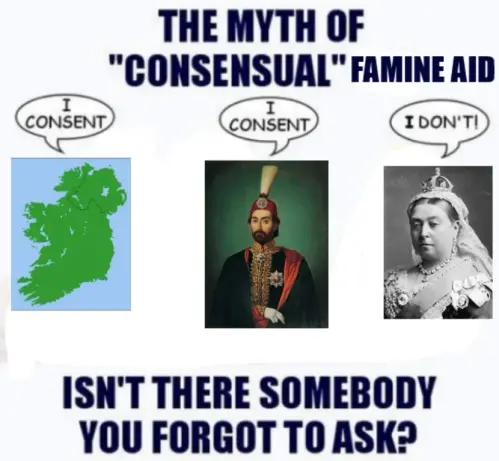
Context: During the Irish Great Famine (potato famine), the Ottomans wanted to send £10,000 in aid. The British denied it as the Queen had only sent £2,000 and didn’t want her to be upstaged - so the Ottomans reduced it down to £1,000.
I liked this episode a lot, I thought it captured the multi-factored deterioration of the language playing out over a couple of hundred years.
While #AnGortaMór / #IrishFamine is one of the pivotal events behind the collapse of the language, it is far from the only factor
an gorta mór
Context: During the Irish Great Famine (potato famine), the Ottomans wanted to send £10,000 in aid. The British denied it as the Queen had only sent £2,000 and didn’t want her to be upstaged - so the Ottomans reduced it down to £1,000.
I'll end this here at the bombed out St Lukes Church, home to the official #liverpool #AnGortaMór memorial.
The memorial remembers the millions who died or were forced to flee Ireland. This site honours their memory and acknowledges Liverpool’s role.


Helping took many forms, including the fight for workers' rights. Born in Liverpool to Irish parents, James Larkin took the resilience of the docks and the navvies and forged it into a global labor movement. James Larkin represents the shift from the Irish being a community that needed help, to a community that led the charge for justice and equality for all workers.

The survival of the Irish in Liverpool wasn't just down to luck; it was due to the tireless work of reformers. Kitty Wilkinson, the "Saint of the Slums" from Derry, pioneered public washhouses to fight the cholera that thrived in cellar dwellings. Agnes Jones arrived later to reform the brutal workhouse infirmary, bringing nursing care and dignity to the city's most vulnerable.


Sadly, for many the escape from #Ireland presented different horrors of hunger, illness and poverty that were still too much to escape from.
Those who died in the Workhouse or the slums with nothing were often buried in unmarked communal pits. This plaque stands as a late but necessary recognition of their existence—ensuring that those who were nameless in death are finally remembered.
Ar dheis dé go raibh a n-anamacha

Many brought their faith with them. Ireland was still strongly catholic.
The 1850s marked a shift from survival to visibility. Following the Catholic Emancipation and the restoration of the hierarchy in England (1850), the Irish community began to assert its presence.
This is St Patrixks church and predates the emancipation as the oldest catholic church in Liverpool, built in 1822.
For many, they weren’t so lucky. Poverty, hunger and destitution were rampant. It's no surprise that during the Famine, Liverpool had the largest workhouse in the world. Thousands of Irish families were forced here, enduring institutionalised hardship and the intentional breaking up of families just to receive a bed and a meager meal. It was a site of immense suffering on an industrial scale.
There was then also education and learning. This is Pleasant Street School built in 1818 for the growing city needs.
Those lucky enough found work, but it wasn't easy, Thousands found work as "navvies," performing the back-breaking manual labour required to dig canals and build the railways.
 Kevin
Kevin