π—ͺπ—œπ—žπ—œπ—£π—˜π——π—œπ—”'𝗦 π—™π—˜π—”π—§π—¨π—₯π—˜π—— 𝗔π—₯π—§π—œπ—–π—Ÿπ—˜

✧ Al-Muti' ✧

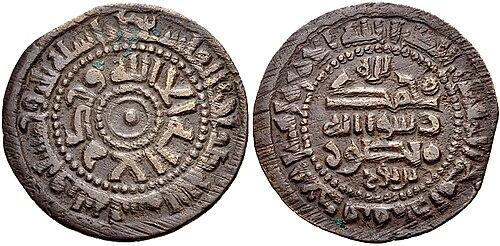
Al-Muti' was the Abbasid caliph in Baghdad from 946 to 974, ruling under the tutelage of the Buyid emirs. Al-Muti's reign represented the nadir of the Abbasid Caliphate's power and authority. In previous decades, the secular authority of the caliphs had shrunk to Iraq, and even there had been curtailed by powerful warlords; with the Buyid conque...

#AbbasidCaliphate #Abbasid #Baghdad #Buyid #Iraq #Wikipedia
https://en.wikipedia.org/wiki/Al-Muti%27

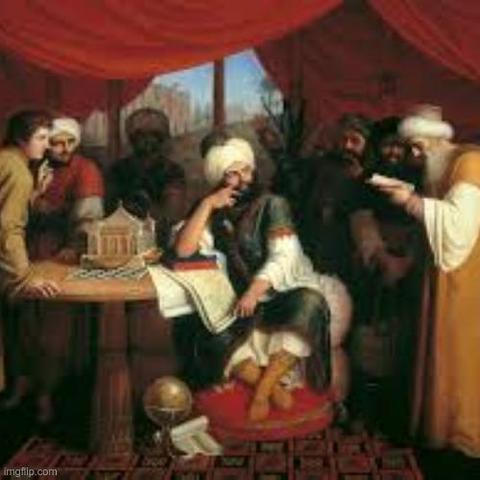
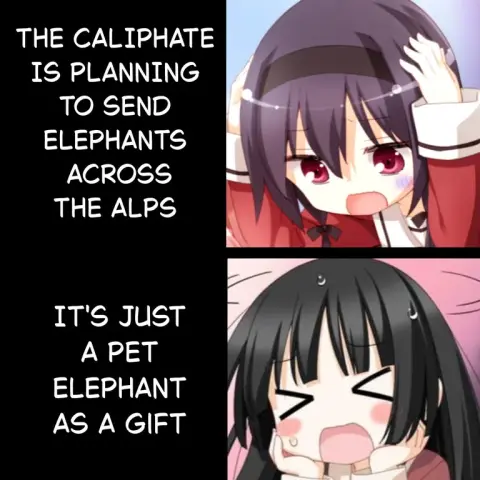
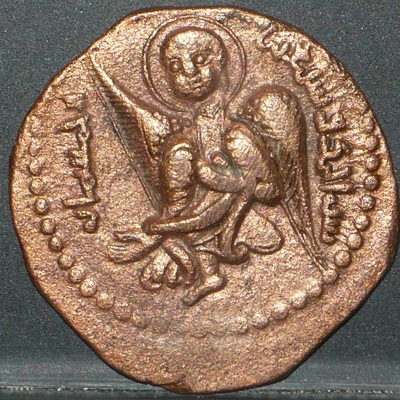
Cute lil' pachyderm present from the Caliph!
Abu Muslim: The Architect of the Abbasid Revolution - Medievalists.net

He lived an extraordinary life; he was a servant/slave, a partisan, a revolutionary, a soldier, and rose to be the most powerful man in the caliphate.

Medievalists.net

I'm playing around with the early-#Abbasid-era #Armenian history of Ghevond, and there's a few references to "the sons of Smbat."

The odd thing is that Smbat is usually a Bagratuni name at that period, but the editors conclude that here it must refer to some Mamikoneans, Grigor, Dawit', and Mushegh.

https://en.wikipedia.org/wiki/Bagratuni_family_tree#Arabic_Caliphate

There's a difficulty in the text in that p.214 says Grigor and Dawit' were imprisoned in Yemen for the rest of their lives, but p.254 says the "sons of Smbat" were freed by caliph al-Walid II, detained in Syria at hiss death, and then escaped in the chaos of the civil war.

One solution is to read "for the rest of their lives" as a sentence, later abrogated, but it doesn't read that way to me. Alternatively we might emend "their lives" to "his life," and the next caliph freed them.

(The source is now available #OpenAccess online here, the work of Alison Vacca and Sergio La Porta:
https://isac.uchicago.edu/sites/default/files/uploads/shared/docs/Publications/LAMINE/lamine4.pdf)

#medieval #MiddleEast #UmayyadCaliphate #IslamicHistory
Bagratuni family tree - Wikipedia

In the Great Khan’s Tent | Saif Beg

In the Great Khan’s Tent hosted by Saif Beg is a bi-weekly episodic narrative Podcast focusing on the History, Literature, and Folk Literature from the regions of the Middle East and North Africa, Central Asia including Mongolia and the Russian Far East, a...

@majnouna Joumana, your books arrived, delightfully wrapped 🎁
& the original book design seems perfect for accessibility & practical use. The contents will take longer to digest and I now look forward to years of pleasure: thank you for this inspiration!

#MedievalArt #dye #ink #foraging #DyePlants #NaturalDye
#Abbasid #books #BookDesign #bookstodon @bookstodon a.gup.pe
http://majnouna.com/publications/#wild

Publications - Majnouna

Inks & Paints of the Middle East A handbook of materials and art technology used in early Islamic manuscripts, for artists and art lovers alike. Available in print (EU folks: head here) or as an e-book. Reviews on Goodreads   Published in 2020, Inks & Paints is a concise and approachable, but thoroughly practical manual ...

Majnouna

In my β‰ˆ 2Β½ to 3ΒΎ careers so far, no doubt the hardest thing I've had to do is publish a peer-reviewed journal article. This one took just over 3 yrs from workshop paper to #publication (albeit w a pandemic in between). It's about the #agency of #silk cloth in the #Zanj Rebellion agains the #Abbasid #Caliphate (869-883AD) in #Iraq & #Iran, part of a great thematic dossier on #rebellions in the first Islamic centuries. Will try to summarise later!

https://journals.library.columbia.edu/index.php/alusur/article/view/uw30grant

https://journals.library.columbia.edu/index.php/alusur/index

Entangled Symbols | Al-ΚΏUsur al-Wusta