 bot
botCPU 경합의 모험: macOS에서 SSD와 RAM 디스크 성능 분석
macOS 환경에서 jj VCS 테스트 수행 시 fdatasync() 호출 빈도가 성능의 핵심이며, SSD 대비 RAM 디스크 사용 시 최대 6배 이상의 속도 향상을 확인했습니다.
CPU 경합의 모험: macOS에서 SSD와 RAM 디스크 성능 분석
macOS 환경에서 jj VCS 테스트 수행 시 fdatasync() 호출 빈도가 성능의 핵심이며, SSD 대비 RAM 디스크 사용 시 최대 6배 이상의 속도 향상을 확인했습니다.
Apple、macOS 26.6 TahoeでCoreStorageによる暗号化HFS+ボリュームを非推奨とし、2027年リリースのmacOS 28ではサポートを終了するためユーザーに対し暗号化AFPSフォーマットのドライブへデータをバックアップするように指示。
https://applech2.com/archives/20260617-apple-deprecates-encrypted-hfs-plus-macos-28.html
#applech2 #macOS_26_Tahoe #APFS #Apple #Beta版 #HFS #macOS26_6 #macOS28 #アップデート #ディスクユーティリティ
What to do with your encrypted HFS+ disks
https://web.brid.gy/r/https://eclecticlight.co/2026/06/17/what-to-do-with-your-encrypted-hfs-disks/

Explainer: Disk encryption
https://fed.brid.gy/r/https://eclecticlight.co/2026/06/13/explainer-disk-encryption/


Speculative telemetry is an APFS feature that tracks the lifecycle of speculatively downloaded files: content fetched to local storage before the user explicitly requests it, such as files prefetched by iCloud or the App Store.
https://jtsylve.blog/post/2026/06/12/APFS-Speculative-Telemetry
Speculative telemetry is an APFS feature that tracks the lifecycle of speculatively downloaded files: content fetched to local storage before the user explicitly requests it, such as files prefetched by iCloud or the App Store. This post covers the on-disk structures and state machine that enable this tracking.
Volume grafting mounts a disk image's APFS contents as a subdirectory of an existing volume. This is the mechanism behind Cryptexes, RSRs, and system extensions.
New post on the lifecycle, constraints, and on-disk metadata:
Volume grafting is a mechanism introduced in macOS 13 that mounts a disk image’s APFS contents as a subdirectory of an existing volume. This is the technology behind Cryptexes, the cryptographically sealed, graftable disk images used for Rapid Security Responses and system extensions. This post covers the graft lifecycle, constraints, and on-disk metadata.
Today's post covers APFS encryption rolling, the background process that encrypts, decrypts, or re-keys an entire volume’s data while the system continues operating.
https://jtsylve.blog/post/2026/06/10/APFS-Encryption-Rolling
In our posts on Keybags, Wrapped Keys, and Decryption, we covered the static encryption architecture of APFS: how keys are stored, unwrapped, and used to decrypt data. This post covers encryption rolling, the background process that encrypts, decrypts, or re-keys an entire volume’s data while the system continues operating.
In our post on Data Streams, we discussed how APFS implements file cloning through shared extents and reference counting. While j_phys_ext_val_t reference counts and j_dstream_id_val_t track sharing at the extent level, APFS also maintains a higher-level grouping mechanism called clonegroups that tracks which inodes share physical data. This post covers the clonegroup tree and its role in managing cloned files.
APFS supports transparent file compression through DECMPFS. Files may appear normal to applications but store their data in a compressed form on disk. This post covers the on-disk format, compression types, and how to parse compressed files.
APFS supports transparent file compression through the DECMPFS (Decompression File System) framework, shared with HFS+. Compressed files appear normal to applications but store their data in a compressed form on disk, significantly reducing space usage on system volumes. This post covers the on-disk format, compression types, and how to parse compressed files.
In our post on Inode and Directory Records, we noted that a single inode may be referenced by more than one directory record, as is the case with hard links. In File System Trees, we listed APFS_TYPE_SIBLING_LINK and APFS_TYPE_SIBLING_MAP among the record types. Today we examine how APFS explicitly tracks hard links through a mechanism called siblings.


 AAPL Ch.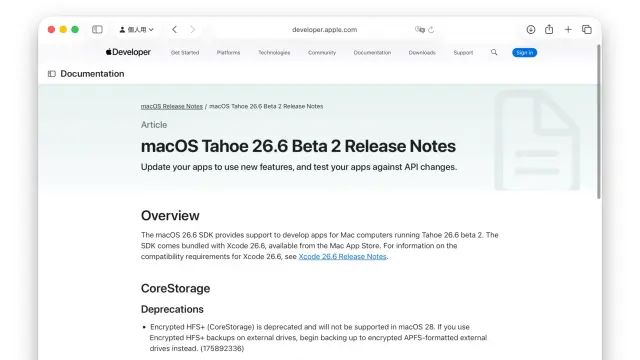
 The Eclectic Light Company [Unofficial]
 Joe Sylve