I’m still in the Introduction of “Moving Slowly And Building Bridges” by Robert Gehl. He writes: “As for software studies, as I discuss in a previous book, engaging with software is just as intense as interviewing people.”

For some hackers (which may or may not include me), intensely engaging with software can be far less problematic than engaging with people. <wink>

#Fediverse #aoir #Mastodon

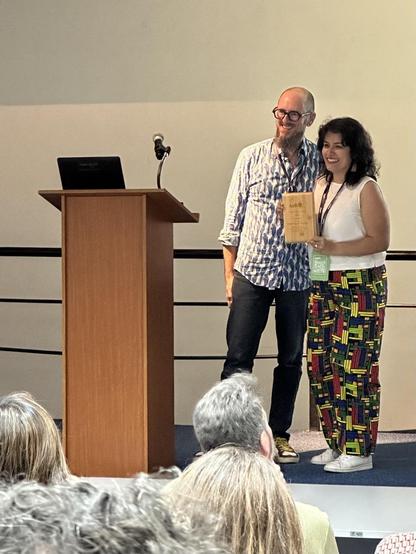
"O Sociologo brasileiro #OscarDAlva ganhou o #prêmio de melhor tese em língua portuguesa da Association of Internet Researchers, a #AoIR, um dos mais prestigiosos do mundo na área de pesquisa de internet. Mas ele nunca subiu ao palco do congresso da associação para recebê-lo.

D’Alva recusou o prêmio ao saber que a conferência tinha patrocínio de uma divisão de pesquisa da Microsoft – justamente uma das empresas sobre a qual sua tese de doutorado se debruçou."
https://www.intercept.com.br/2025/12/26/por-que-este-pesquisador-brasileiro-negou-um-prestigioso-premio-bancado-por-uma-big-tech/
Por que este pesquisador brasileiro negou um prestigioso prêmio bancado por uma big tech | Intercept Brasil

Sociólogo brasileiro investigou como a estatística do governo pode ser capturada por big techs. Então, um prêmio prestigioso provou o seu ponto.

Intercept Brasil

Continued: The best part about #AOIR for me wasnt the talks but the friends I made. But will I ever interact with these people again if I wont ever be able afford to go to a conference like that?

I guess I just wish I had more examples of what it looks like to participate in research and writing outside of academia.

Precisamos cada vez mais de galera braba e ética como esse pesquisador! O cara recusou o prêmio de melhor tese de Doutorado da maior instituição internacional de pesquisa da Internet porque a Microsoft financiou o evento. #aoir #soberaniadigital #bigtechs #internetresearchers
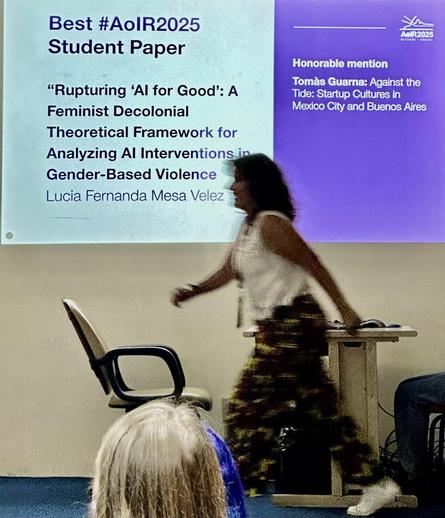
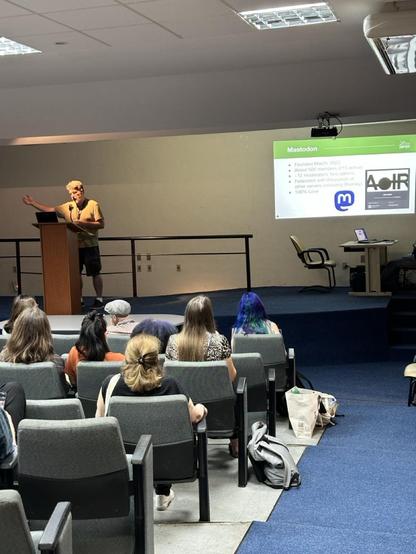
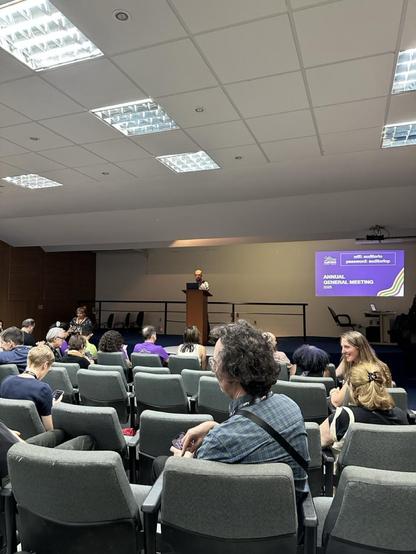
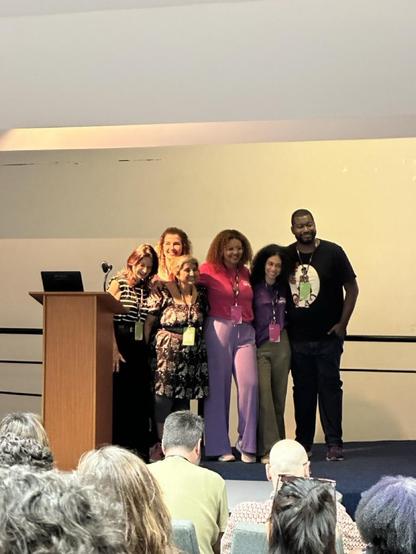
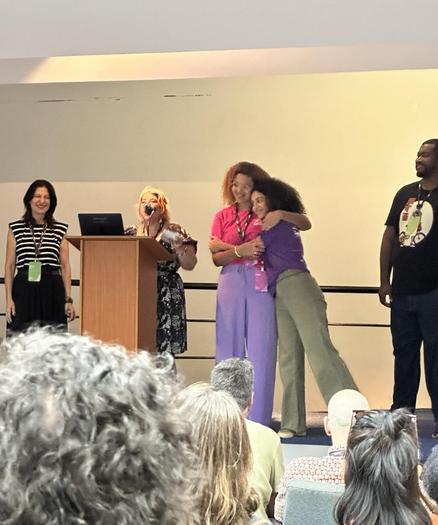
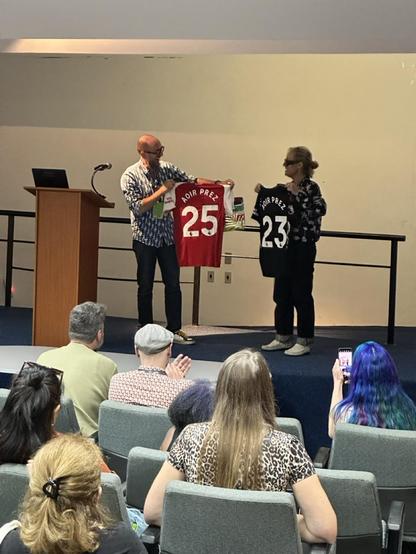
(2/2) Some snaps from #AoIR AGM #AoIR2025: best student paper (Lucia Fernanda Mesa Velez), @AoIR Mastodon
(1/2) Some snaps from #AoIR AGM #AoIR2025: the start, cheering the local organizing committee, past and new president #Niterói #UFF
Quick recap of what my #AoIR has been so far to follow. On the first day, I had the pleasure to attend the "Chronic Problems" workshop on temporality in internet studies by Ludmila Lupinacci, Christian Pentzold, and Tom Divon. 10 short presentations + discussions about time in theory, methods, and analysis = lots of "time" puns!
Book/Livre : Move Slowly and Build Bridges

> In his new book Move Slowly and Build Bridges, Robert W. Gehl tells the story of the activists, software developers, artists, and everyday people who have built the fediverse, a noncentralized alternative social media system. Unlike big tech corporations like Facebook, TikTok, or X, the fediverse is comprised of thousands of small, independent communities who use a Web protocol to communicate with one another.

> These small communities govern themselves and moderate content at the human scale — compare that to Facebook and X, which try to moderate global conversations. And the fediverse isn’t built in order to gather user data and sell attention to marketers — it’s a more privacy-respecting social media alternative.

> The most notable part of the fediverse is Mastodon. Founded in 2016, Mastodon was positioned as an alternative to Twitter. Like Twitter (or X), Mastodon members can post, like, share, and connect with one another across the world. Unlike Twitter/X, Mastodon can be completely under the control of its members, from how it’s run to its underlying software.

> Making a noncentralized, ethically run social media system isn’t easy. The people building the fediverse have faced long hours, burnout, angry debates, and, worst of all, bigotry, death threats, and discrimination. They face constant, nagging doubts: Can we really do this? Can noncentralized social media survive in a world that is used to corporate social media? Can we—all of us—have our own social media?

> As Move Slowly and Build Bridges shows us, the answer is yes, but it’s going to take a struggle.

Link : https://moveslowlybuildbridges.com/

#book #fediverse #aoir #en
Move Slowly and Build Bridges, by Robert W. Gehl

Apparently, even for the Big 4, auditing for DSA is hard 😒
@johnalbert
#AoIR
First collection of #DSA compliance audits results
@johnalbert
#AoIR