Three Lions on a font...

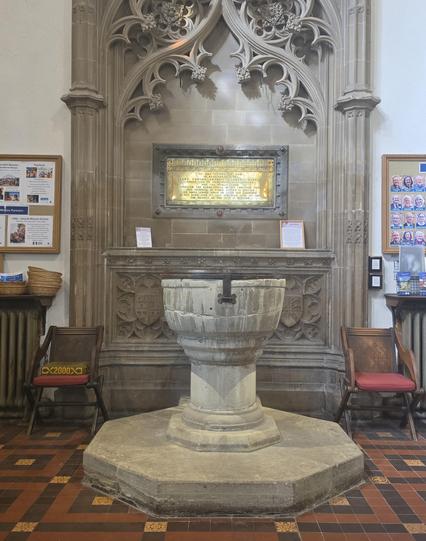
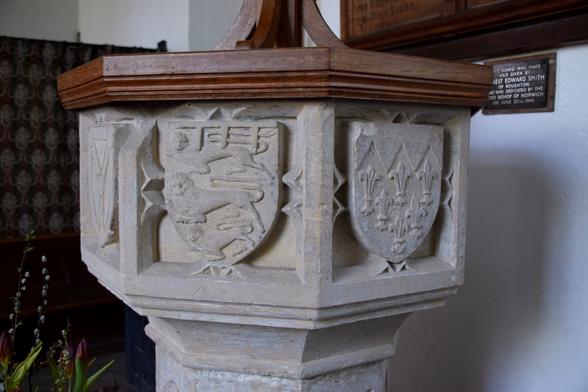
The Plantagenet arms of Norfolk on the 15th Century font at Sustead seem appropriate for #FontsOnFriday after Wednesday night's excitement. However, the six French fleurs-de-lys (actually the arms of the locally prominent Paston family) are waiting around the corner...
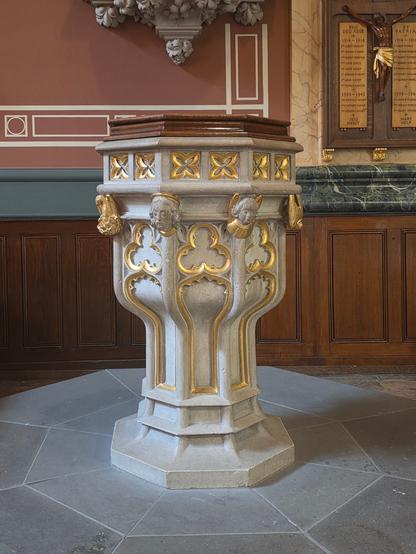
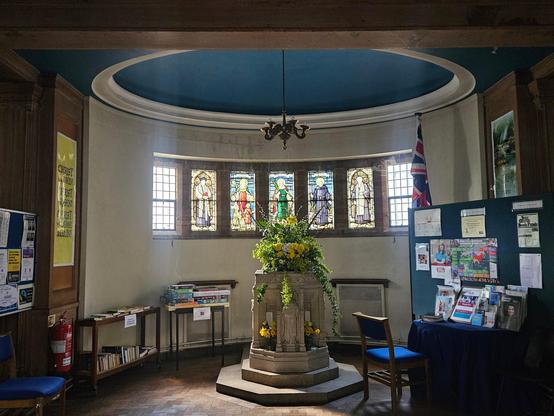
2/2 Up the road, the mid-19th Century font in St Francis Xavier, Hereford, providing just some of the sparks for the considerable fireworks of this building. Of the frontage, Pevsner said that it 'would have driven Pugin frantic had he known it'. #FontsOnFriday
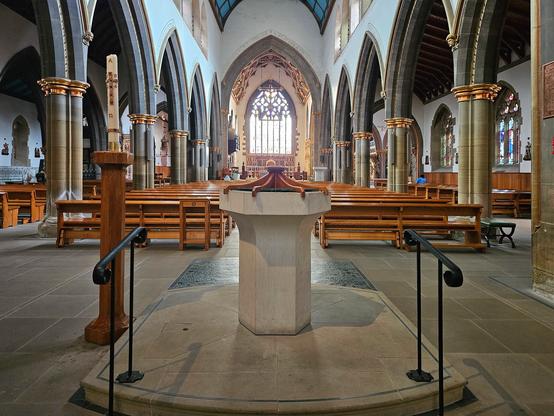
The font at St Peter, Hereford for #FontsOnFriday, presumably contemporary with Thomas Nicholson's considerable restoration of this big, slightly sad building in the 1880s. A major 2012 reordering makes a feature of it beside the south arcade, from where it surveys the great open space of the nave.
2/2 Things are a bit more traditional in Sheffield's Catholic Cathedral of St Marie, a simple stone font from Nicholas Rank's reordering of 2011-12. His also are the altar, ambo and cathedra. #FontsOnFriday
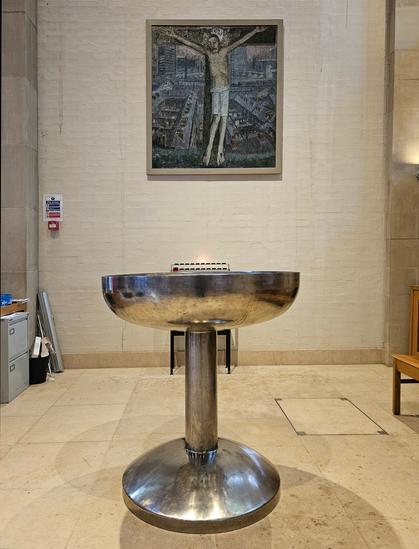
A steel font, appropriately enough, in the Anglican Cathedral of St Peter and St Paul, Sheffield, for #FontsOnFriday.
The recently reset 12th Century font in Hereford Cathedral for #FontsonFriday. The bowl has 12 figures and an unusual Greek key pattern above. Four lions against the columnar stem appear to be emerging from water! This stem cannot be part of the original font structure, so I wonder what it was?
The font at Malvern Abbey for ##FontsonFriday, a 12C bowl, modern shaft and base. At the Dissolution in 1540, wealthy sergeant-at-law John Knutsford closed the priory on behalf of Cromwell and promptly bought all the Priory lands. But he did allow the townspeople to buy the church, thus saving it.
Beam me up, Scotty. The 1930s font in the deliciously idiosyncratic church of St Catherine, Mile Cross, Norwich for #FontsonFriday.
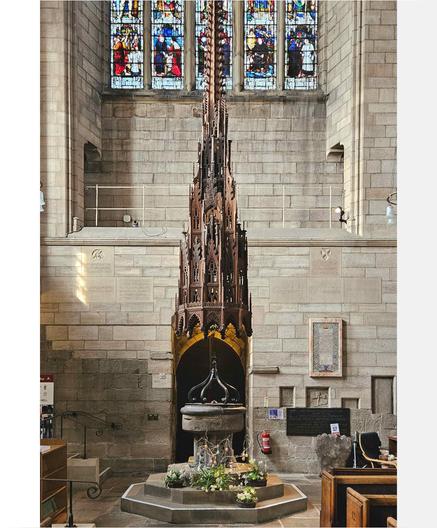
The font at Hexham Abbey for #FontsOnFriday. From the ground upwards, a C13 stem, a bowl that Pevsner thought 'perhaps of Roman origin', a simple C17 font cover and then the towering canopy, 'made by a Belgian refugee in 1916'. All in all, more exotic than first appearances suggest.
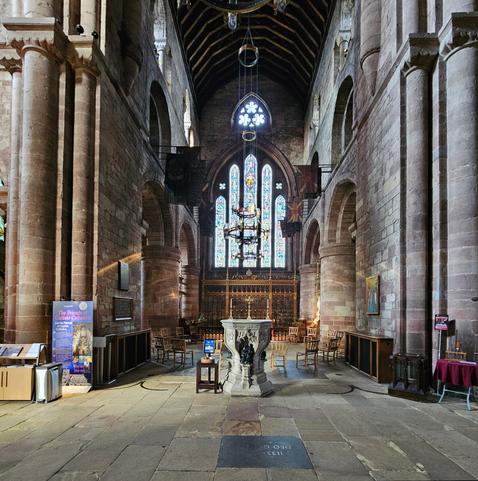
The hexagonal font in the truncated nave of Carlisle Cathedral, by Sir Arthur Blomfield, 1890, for #FontsOnFriday. 1/2