Tobias Plieninger

497 Followers
425 Following
422 Posts
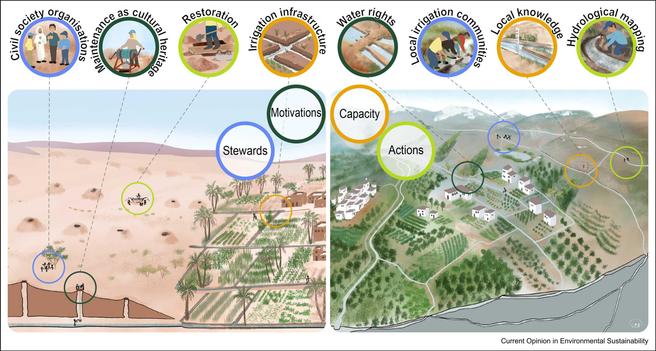
Traditional irrigation systems have shaped Mediterranean mountains, plains & oases - supporting agricultural production, biodiversity & cultural heritage. Their revitalisation may offer nature-based solutions to the water crisis of the Mediterranean region. We're happy to share our review of community-based stewardship of traditional irrigation systems, now out in "Current Opinion in Environmental Sustainability". With Claudia Heindorf, Thanasis Kizos & Chaima Mobarak. https://doi.org/10.1016/j.cosust.2026.101643
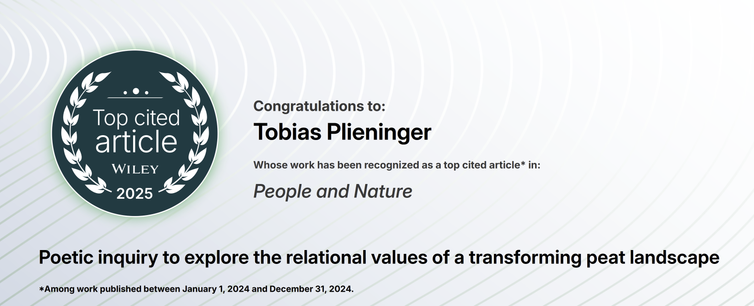
Using the opportunity to highlight our study on peatlands and people. Claudia Heindorf et al. elicited societal values of a peat landscape under transformation using an arts-based method. Amazing that this study of participant-voiced poems became one of the most cited papers in @BritishEcolSoc's "People & Nature". https://doi.org/10.1002/pan3.10629
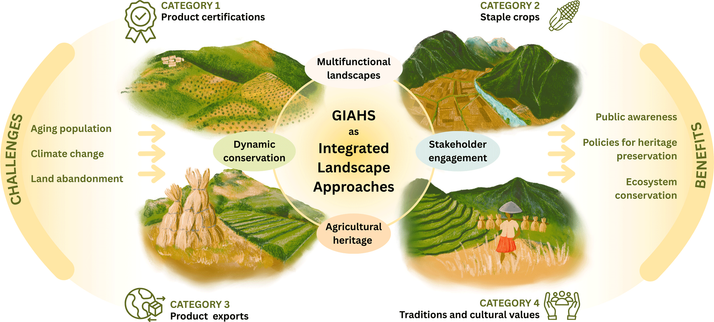
🧑‍🌾🐃🌾🐸 FAO-Globally Important Agricultural Heritage Systems introduce a cultural heritage perspective to #IntegratedLandscapeManagement. In this study, we identify 4 #GIAHS types, varying in how they harmonise food production & nature conservation. GIAHS - emphasising dynamic conservation, multifunctional land use & multi-stakeholder engagement - are effective to bridge conservation & production goals in agriculture. 1st PhD paper by M. C. Camporese, with M. Jay & M. Nishi. https://doi.org/10.5751/ES-17116-310203

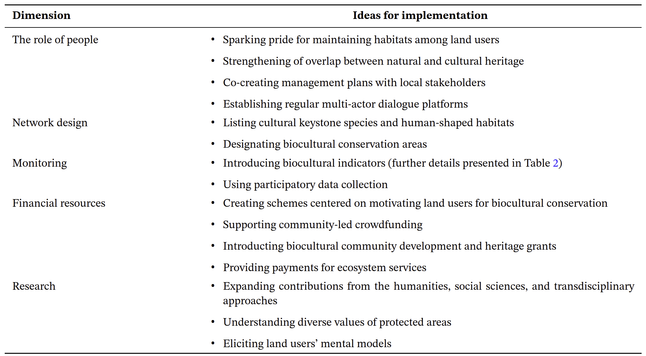
🥀 #Natura2000 protects the crown jewels of the European Union's rich natural heritage. How can this protected area network be future-proofed against the current environmental backlash? Here are some ideas about how a biocultural perspective could strengthen people-nature relations and thus open new pathways for conservation.

👉 Press release: https://www.uni-goettingen.de/en/3240.html?id=8116
🔗 Full paper: https://doi.org/10.1111/con4.70038

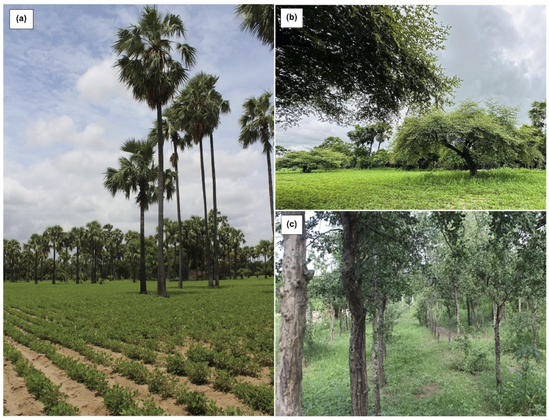
Reciprocity - the mutal care between humans & ecosystems - is a core value of a nature-positive society. In this recent study, out now in Ecosystems and People, we disentangle the multiple dimensions of reciprocity between farmers in Myanmar & 3 important farm tree species: toddy palm, jujube & thanakha. Great PhD paper by Khant Sandar Htet, with @LauraKmoch. https://doi.org/10.1080/26395916.2026.2640897
Repeat photography is a simple but effective method for visualising changes & assessing long-term developments of landscapes. Participatory research methods for sustainability Toolkit #16, now out in GAIA - Ecological Perspectives for Science and Society. By Matthias Bürgi, Elena Siegrist, Susan Lock & Tamara Estermann. #OpenAccess. https://doi.org/10.14512/gaia.35.1.8
🫎 🐸🌳Happy to share our Perspective on how a biocultural approach can strengthen the European Natura 2000 network. Such approach may help future-proof protected areas in times of populism, environmental backsliding & land-use conflicts. With M. Jay & @thartel.bsky.social.
🔗https://doi.org/10.1111/con4.70038
What motivates actors to collaborate in #IntegratedLandscapeManagement? The Programme on Ecosystem Change and Society (PECS) working group “Navigating trade-offs and synergies between biodiversity and society in protected multifunctional landscapes” is happy to present its first output in "Ecology & Society". Great writing collaboration with Francis Turkelboom, Mario Torralba and many co-authors. https://doi.org/10.5751/ES-17029-310129
Protected areas are boundary objects that facilitate multiple connections between people and nature. Marion Jay showcases narratives of nature experiences by visitors & users of Natura 2000 reserves in Germany in our #PeopleNatureLandscapesBlog. https://medium.com/people-nature-landscapes/reconnecting-people-and-nature-what-protected-areas-mean-to-us-59ee0290d1f6

🌿In its Values Assessment, @ipbes has defined archetypes of human-relationships, the "Life Frames" (living in, living as, living from & living with nature).

🏞️🌍How do these life frames define the perception of nature's values by residents around protected areas? And what are their implications for protected area management?

🗺️We're happy to present our new Public Participation GIS study, out now in "Biological Conservation", led by Marion Jay.

🔗 Open access: https://doi.org/10.1016/j.biocon.2026.111766