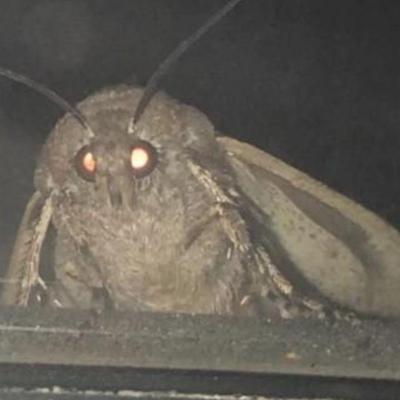
 💡 a problematic moth on fedi
renaming the main branch to 'canon' and side branches to 'heresy' (forking is renamed to schisms and pull requests/merges become ecumenical councils)
| Pronouns | he/they |
| Bluesky | https://bsky.app/profile/fenny.zone |
| Other links | https://fenny.zone |


| Pronouns | he/they |
| Bluesky | https://bsky.app/profile/fenny.zone |
| Other links | https://fenny.zone |
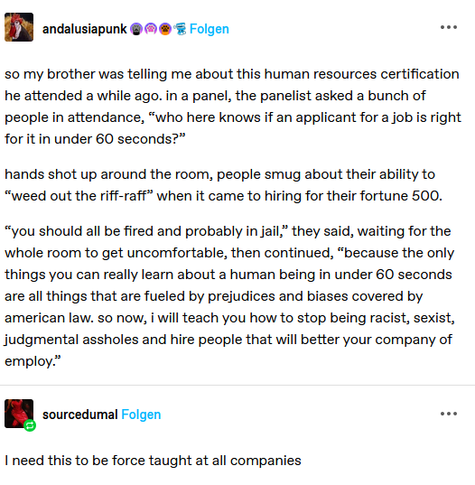
This is the kind of HR diversity training we need.
(From https://sourcedumal.tumblr.com/post/135594640141/guapet-so-my-brother-was-telling-me-about-this, HT @nev )
We went to the Renaissance Festival
I got TURKEY LEG
are we seriously having “buy a gun” discourse
look. even as a certified gun nut, there are a ton of reasons why it would be a bad idea for you to get into guns right now. yes, even if you are a minority worried about Current Events.
if, despite all of this, you still think it is a good idea for you to get into guns, then please do. no matter your stance on whether or not the 2nd amendment should be abolished, the fact of the matter is that guns are here to stay for a while, and it is better that the conservatives are not the only ones armed.
if you only have the resources for one firearm, i would recommend a 9mm pistol. if you have never shot a gun ever before, i would also recommend a full-size pistol like a glock 17, even if you intend to conceal carry or if you are a weak, limp-wristed queer like me. counterintuitively, larger pistols are easier to shoot than smaller ones due to Physics. i would further recommend getting handgun instruction, if not from a certified instructor, at least from a friend who knows what they’re doing.
on the topic of friends, i would highly, highly, highly recommend getting into guns with the support of like-minded friends. you probably know what the american gun community is like. you probably don’t want anything to do with these bastards.
if you don’t currently have non-shitty friends who are into guns, i would recommend joining a local group. and yes, lefty gun groups exist. for example, if you’re lucky enough to have an active socialist rifle association chapter in your area, they are probably a nice group to get into guns with. contrary to the rumors, they are not a militia or unironic larpers, it’s basically just a gun club but everyone there is making gay leftist jokes instead of transphobic and racist ones. hell, if you don’t or can’t own a gun, they’ll still let you in and hang out with them and let you shoot their guns! they’re very chill like that
look, we are most definitely in a pickle, and whether or not you decide you want to arm yourself after reading all of this, please know that there’s a way out of almost every bad situation, and there are many ways of mitigating risk. you have already survived every bad situation that you’ve encountered, this is merely another bad situation to add to your count. calm down, and take things one step at a time.
"Over the years, college students have often come to my office distraught, unable to think of what they might be able to do to stop the terrible losses caused by an industrial growth economy run amok. So much dying, so much destruction. I tell them about Mount Saint Helens, the volcano that blasted a hole in the Earth in 1980, only a decade before they were born.
Those scientists were so wrong back in 1980, I tell my students. When they first climbed from the helicopters, holding handkerchiefs over their faces to filter ash from the Mount Saint Helens eruption, they did not think they would live long enough to see life restored to the blast zone. Every tree was stripped gray, every ridgeline buried in cinders, every stream clogged with toppled trees and ash. If anything would grow here again, they thought, its spore and seed would have to drift in from the edges of the devastation, long dry miles across a plain of cinders and ash. The scientists could imagine that– spiders on silk parachutes drifting over rubble and plain, a single samara spinning into the shade of a pumice stone. It was harder to imagine the time required for flourishing to return to the mountains – all the dusty centuries.
But here they are today: On the mountain, only thirty-five years later, these same scientists are on their knees, running their hands over beds of moss below lupine in lavish purple bloom. Tracks of mice and fox wander along a stream, and here, beside a ten-foot silver fir, a coyote’s twisted scat grows mushrooms. What the scientists know now, but didn’t understand then, is that when the mountain blasted ash and rock across the landscape, the devastation passed over some small places hidden in the lee of rocks and trees. Here, a bed of moss and deer fern under a rotting log. There under a boulder, a patch of pearly everlasting and the tunnel to a vole’s musty nest. Between stones in a buried stream, a slick of algae and clustered dragonfly larvae. Refugia, they call them: places of safety where life endures. From the refugia, mice and toads emerged blinking onto the blasted plain. Grasses spread, strawberries sent out runners. From a thousand, ten thousand, maybe countless small places of enduring life, forests and meadows returned to the mountain.
I have seen this happen. I have wandered the edge of Mount Saint Helens vernal pools with ecologists brought to unscientific tears by the song of meadowlarks in this place.
My students have been taught, as they deserve to be, that the fossil-fueled industrial growth culture has brought the world to the edge of catastrophe. They don’t have to “believe in” climate change to accept this claim. They understand the decimation of plant and animal species, the poisons, the growing deserts and spreading famine, the rising oceans and melting ice. If it’s true that we can’t destroy our habitats without destroying our lives, as Rachel Carson said, and if it’s true that we are in the process of laying waste to the planet, then our ways of living will come to an end – some way or another, sooner or later, gradually or catastrophically – and some new way of life will begin. What are we supposed to do? What is there to hope for at the end of this time? Why brother trying to patch up the world while so many others seem intent on wrecking it?
These are terrifying questions for an old professor; thank god for the volcano’s lesson. I tell them about the rotted stump that sheltered spider eggs, about a cupped cliff that saved a fern, about all the other refugia that brought life back so quickly to the mountain. If destructive forces are building under our lives, then our work in this time and place, I tell them, is to create refugia of the imagination. Refugia, places where ideas are sheltered and encouraged to grow.
Even now, we can create small pockets of flourishing, and we can make ourselves into overhanging rock ledges to protect life so that the full measure of possibility can spread and reseed the world. Doesn’t matter what it is, I tell my students; if it’s generous to life, imagine it into existence. Create a bicycle cooperative, a seed-sharing community, a wildlife sanctuary on the hill below the church. Raise butterflies with children Sing duets to the dying. Tear out the irrigation system and plant native grass. Imagine water pumps. Imagine a community garden in the Kmart parking lot. Study ancient corn. Teach someone to sew. Learn to cook with the full power of the sun at noon.
We don’t have to start from scratch. We can restore pockets of flourishing life ways that have been damaged over time. Breach a dam. Plant a riverbank. Vote for schools. Introduce the neighbors to one another’s children. Celebrate the solstice. Slow a river course with a fallen log. Tell stories of how indigenous people live on the land. Clear the grocery carts out of the stream.
Maybe most effective of all, we can protect refugia that already exist. They are all around us. Protect the marshy ditch behind the mall. Work to ban poisons from the edges of the road. Save the hedges in your neighborhood. Boycott what you don’t believe in. Refuse to participate in what is wrong. There is hope in this: An attention that notices and celebrates thriving where it occurs; a conscience that refuses to destroy it.
From these sheltered pockets of moral imagining, and from the protected pockets of flourishing, new ways of living will spread across the land, across the salt plains and beetle killed forests. Here is how life will start anew. Not from the edges over centuries of invasion; rather from small pockets of good work, shaped by an understanding that all life is interdependent, and driven by the one gift humans have that belongs to no other: practical imagination – the ability to imagine that things can be different from what they are now."
— Kathleen Dean Moore: Great Tide Rising


"Even as seas rise against the shores, another great tide is beginning to rise - a tide of outrage against the pillage of the planet, a tide of commitment to justice and human rights, a swelling affirmation of moral responsibility to the future and to Earth's fullness of life. Philosopher and nature essayist Kathleen Dean Moore takes on the essential questions: Why is it wrong to wreck the world? What is our obligation to the future? What is the transformative power of moral resolve? How can clear thinking stand against the lies and illogic that batter the chances for positive change? What are useful answers to the recurring questions of a storm-threatened time - What can anyone do? Is there any hope? And always this: What stories and ideas will lift people who deeply care, inspiring them to move forward with clarity and moral courage? "--
 Niki Tonsky
 Larry Garfield


 Jules
Jules