Daniel Alves

@DanielAlvesFCSH@hcommons.social
44 Followers
63 Following
80 Posts
Associate Professor NOVA FCSH Lisbon 19th Century History Urban History Digital History Digital Humanities Editor IJHAC: A Journal of Digital Humanities

O Programming Historian está com uma chamada aberta para novas lições e traduções para 2026. Se quiserem colaborar neste projecto espectacular que oferece lições e tutoriais sobre tecnologias aplicadas às Humanidades cliquem no link e participem.

https://programminghistorian.org/posts/chamada-aberta-para-propostas

Chamada Aberta para Propostas (edição em português) | Programming Historian

ROSSIO infrastructure (https://rossio.pt), Portuguese node of @dariaheu, is the biggest aggregator of Portuguese language cultural heritage, and is almost reaching the wonderful number of 9 million records. 🥳🥳
Available volume 19.2 of IJHAC: A Journal of Digital Humanities, dedicated to AI and Digital Humanities. Guest editors Miguel Escobar Varela and Javier Cha. Amazing work from them and from all the authors. With 3 articles in open access😍!
https://www.euppublishing.com/toc/ijhac/19/2

Você já leu e valorizou uma lição do @proghist?

Já pensou em escrever uma também?

Compartilhe um método ou ferramenta que você conhece bem e ajude outras pessoas a aprenderem.

A edição em português está com chamada aberta: https://tinyurl.com/ph-chamada-aberta

#CFP #HumanidadesDigitais

Procurando uma oportunidade para aprimorar suas habilidades de escrita técnica?

Considere enviar uma proposta para o @proghist!

Nossa edição em português busca propostas de lições originais ou traduções.

Saiba mais: https://tinyurl.com/ph-chamada-aberta

#CFP #HumanidadesDigitais

Quer compartilhar os métodos da sua pesquisa em #HumanidadesDigitais?

Considere escrever uma lição para o @proghist.

Tudo o que publicamos é #AcessoAbertoDiamante

A edição em português está recebendo novas propostas: https://tinyurl.com/ph-chamada-aberta

#CFP

Chamada Aberta para Propostas (edição em português) | Programming Historian

Gostaria de ajudar leitores a desenvolver conhecimento prático sobre um método computacional ou ferramenta digital?

Escreva uma lição para o @proghist !

Nossa edição em português recebe propostas de lições originais.

Saiba mais: https://tinyurl.com/ph-chamada-aberta

#CFP #HumanidadesDigitais

Chamada Aberta para Propostas (edição em português) | Programming Historian

My slides on The Paradoxes of Open Data in Libraries, Archives and Museums https://doi.org/10.5281/zenodo.16149688 from our #DH2025 panel on Openness in GLAM: Analysing, Reflecting, and Discussing Global Case Studies

Thanks again to all the speakers for your fantastic contributions! And to the audience for questions and 'truth bombs'...

#OpenGLAM

The Paradoxes of Open Data in Libraries, Archives and Museums

The Paradoxes of Open Data in Libraries, Archives and Museums Museums, libraries and archives have been releasing digital collections records and media as open data for decades. 'Open GLAM' images, metadata and other media have been used for a range of creative, research, commercial and teaching purposes. So why aren't more GLAM collections openly available? This talk discusses some of the paradoxes of open data in GLAM in the UK, including: The lack of robust, sector-wide shared infrastructure providing long-term access to GLAM collections, despite decades of evidence for its value and the difficulties many institutions have in maintaining individual repositories The tension between making data open for exploration and re-use (including, inevitable, generative AI), while respecting copyright and the right of creators to receive income from their writing, art, music, etc. Balancing the FAIR principles - making open collections Findable, Accessible, Interoperable and Reusable - with the CARE principles for Indigenous Data Governance, to support Indigenous people in 'asserting greater control over the application and use of Indigenous data and Indigenous Knowledge for collective benefit'. Operationalizing the CARE principles might require an investment of time in building relationships and trust with Indigenous communities before releasing open data - or perhaps choosing to keep data closed in some ways - that counters the urge for speed. The need for financial models to fund collections digitisation that don't rely on individual users paying for access to collections and the overhead required to provide evidence for the use and impact of open data   While issues like infrastructure and interoperability are technical, the more difficult issues are those linked to organisational culture. In particular, the CARE Principles require an investment in relationships - and true openness to the changes that Indigenous Data Governance might require. The case for open data must be continually remade as financial and intellectual arguments for limiting open data re-emerge. Panel abstract The panel, 'Openness in GLAM: Analysing, Reflecting, and Discussing Global Case Studies' explores diverse dimensions of openness within the galleries, libraries, archives and museums (GLAM) sector globally, shaping discussions about accessibility, inclusivity, participation, and knowledge democratisation. Cultural heritage institutions are responsible “to all citizens”. Yet there are gaps relating to collections, knowledge, policy, technology, engagement, IP, ethics, infrastructure and AI.
Zenodo

After five inspiring days at #DH2025, we're heading back to #Trier.
Thank you to everyone who contributed their work, their questions, and their energy! We had a great time! ✨ 🚀

#DigitalHumanities

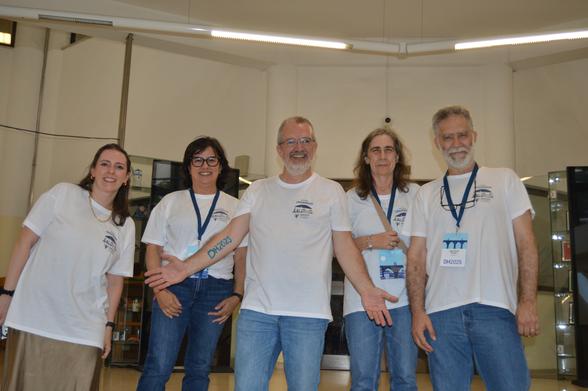
DH2025 was a great adventure! Thank you all for this wonderful experience! #dh2025 #fcsh #digitalhumanities #accessibility #cirizenship