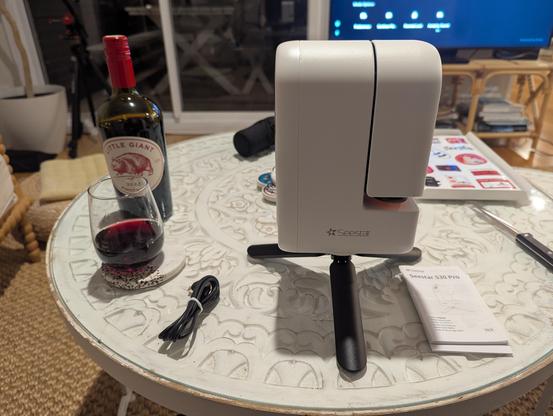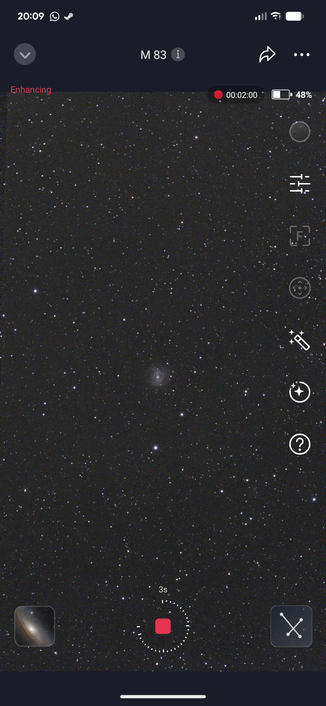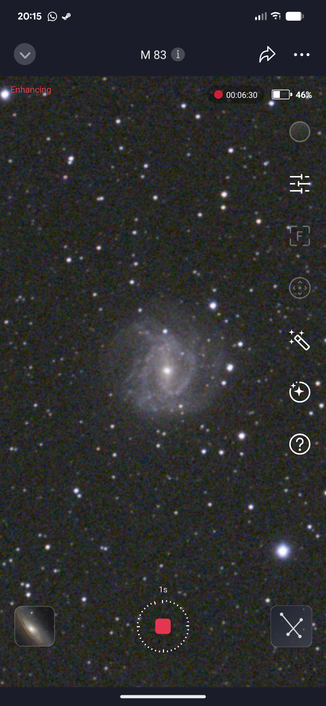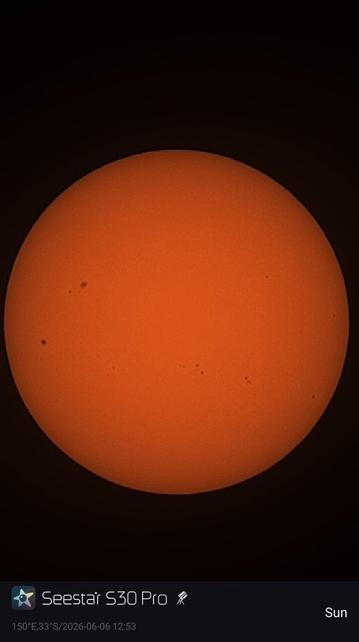
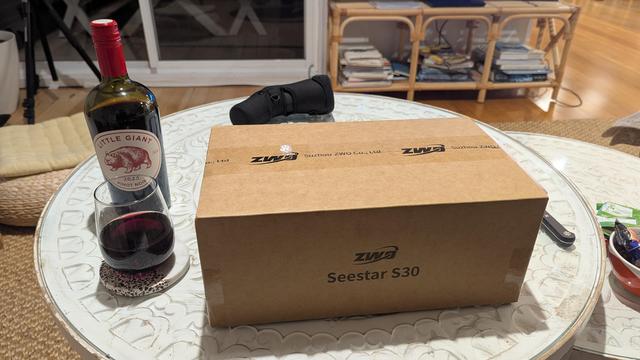
We are installed in Kurrajong for the long weekend, just outside the worst of Sydney's light pollution, which means I get to open my birthday present a little early.

I plonked the little astromech on the balcony table, spent literally a couple of minutes setting it up,, and told it to start imaging the Southern Pinwheel Galaxy. For now I've just left all the settings in their default fully automatic modes and it was even easier than I expected to get it working.

I'll let it run for a bit, and then start tinkering.

#Astrophotography #SeestarS30Pro #Seestar #Astronomy #Astrodon
A couple of quick galaxy snaps with the in-telescope automatic image processing. Not a bad start.

#Seestar #SeestarS30Pro #Astrophotography #Astronomy

The Moon is now up so I got out my tripod & wedge, switched to equatorial mode, and picked an emission nebula as my next target so I could use the internal light pollution filter. I think I'll leave this running for a couple of hours and see what I get.

#SeestarS30Pro #Seestar #Astrophotography #Astronomy

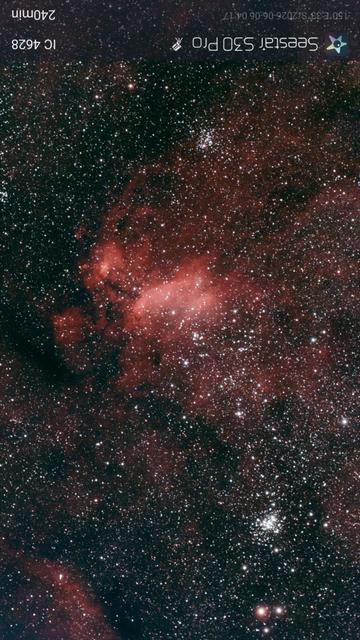
OK, there we go, the result of pointing the little robotic telescope at the Prawn Nebula for four hours.

It's kept all the data so I can try reprocessing this in Siril, but the automatic image processing has done a decent job.

#SeestarS30Pro #Seestar #Astrophotography #Astronomy

And now I've tried solar observing mode with the included solar filter. The tiny scope isn't the ideal instrument for this kind of thing, but it does OK. Sunspots are clearly visible, and you can distinguish the umbra and penumbra of the larger ones.

#SeestarS30Pro #Seestar #Astrophotography #Astronomy

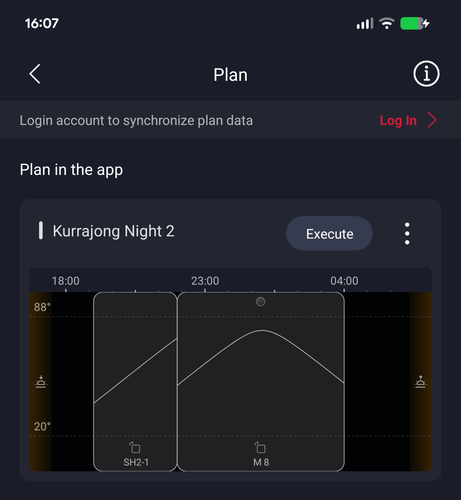
I've been using the Seestar app's planning feature to set up some imaging sessions for tonight. I'm thinking Sharpless 1 to begin with, taking advantage of the dark skies before moonrise to try to pick up the reflection nebulosity, then once the Moon is up go for emission nebulosity with the light pollution filter again, this time the Lagoon Nebula.

The robotic telescope's output from night two: the Lagoon & Triffid nebulae, the Swan & Eagle nebulae, and the Moon.

I did get an image of Sharpless 1 as well, but it's clear that would need a lot more time than the couple of hours I gave it to get a good image.

#Seestar #SeestarS30Pro #Astronomy #Astrophotography

My improvised power bank on a piece of string setup worked well last night, and provided more than enough juice to run the telescope all night long. With the internal battery alone the Seestar is supposedly good for 6-7 hours, a bit less if you're using the dew heater (which I will do), so having external power is handy.

I've set up a plan for tonight in the app, and put the telescope and power bank outside on the tripod ready. Again I'll be starting with a reflection nebula until the Moon comes up, then will switch to emission nebulae using the light pollution filter, then finish up with a planetary nebula, again using the light pollution filter.

We should be back from dinner about 7 pm, at which point I'll turn on the telescope, check the polar alignment, and tell it to execute the plan.

#Seestar #SeestarS30Pro #Astronomy #Astrophotography

Looks like 3 nights in a row of clear skies was too much to ask for. It was clear at dusk but there's a lot of broken cloud out there now, and the app thinks it's only going to get worse as the night goes on.

The smart telescope is smart enough to discard bad exposures, whether they're caused by cloud, obstructions, or tracking problems, so I can just leave it running and it'll do its best with whatever breaks in the clouds that it does get, but I'm not expecting great results from tonight.

The Seestar only ended up with a total of 112 minutes on IC 4592 despite being on that target for almost four hours, so it must have discarded about 50% of the exposures due to clouds. In accordance with the plan it's now moved on to the Cat's Paw and Lobster nebulae, but it's discarding about half of the exposures there too.

#Seestar #SeestarS30Pro #Astrophotography #Astronomy

Huh, the Seestar continued to discard about half of the exposures it took through to the end of the night but despite the less than ideal conditions it still managed to get something out of it.

Again these images have been done using the telescope's fully automatic image processing and better results would be possible with reprocessing on a computer. I did tweak the brightness and contrast settings a bit this time, though.

#Seestar #SeestarS30Pro #Astronomy #Astrophotography

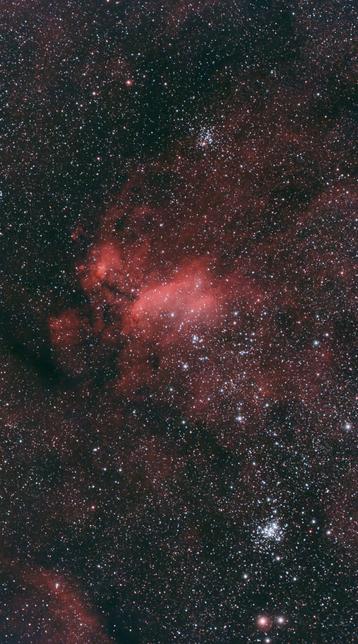
First attempt at reprocessing images from the Seestar S30 Pro smart telescope, using my Prawn Nebula data from Friday night.

The first image is processed fully automatically, by the Seestar itself, and the second is my manual reprocessing using the Siril software on my computer.

I'm still impressed with how good a job the smart telescope is able to do in real time. The results make for a great live preview and are honestly just fine for viewing on small screens. If you have the option it is definitely worth the effort to reprocess the data on a computer, though.

#Astrophotograph #Astronomy #SeestarS30Pro #Seestar #Siril #PrawnNebula

@spacelizard oh wow makes me want to get teh scope out. how far were you from city light pollution?

@Unixbigot Only about 70 km as the crow flies from the Sydney CBD, far enough to avoid the worst of the light pollution but not far enough to escape it all.

The Seestar has an internal dual band light pollution filter which I was using for both of the above images because the Moon was up and the targets were emission nebulae. That filter is really very effective, I reckon I'll still be able to get decent pics of H II regions and planetary nebulae when I'm back home in suburban Sydney. Reflection nebulae not so much.

@spacelizard So do we fare well down here with less of male deer secretion’s star links?
@pmoeser There'd be just as many visible here as anywhere else, but I'm not going to see any until I start looking at individual exposures from the little astro droid. The automatic image stacking would be removing satellite trails the same way it removes other types of bad data.