Alternative Marine Fuels : LNG vs Methanol vs Ammonia vs Hydrogen – Complete Guide for Marine Engineers

Alternative Marine Fuels: LNG vs Methanol vs Ammonia vs Hydrogen – Complete Guide for Marine Engineers Explore the complete guide to alternative marine fuels — LNG, Methanol, Ammonia, and Hydrogen. Learn working principles, formulas, applications, pros & cons, and future trends for marine engineers. The global shipping industry is one of the largest contributors to greenhouse gas (GHG) emissions, accounting for approximately 2.89% of the world's total CO₂ output. With the […]
https://marineinsightspro.wordpress.com/2026/06/06/alternative-marine-fuels-lng-vs-methanol-vs-ammonia-vs-hydrogen-complete-guide-for-marine-engineers/

@marineinsightspro.wordpress.com
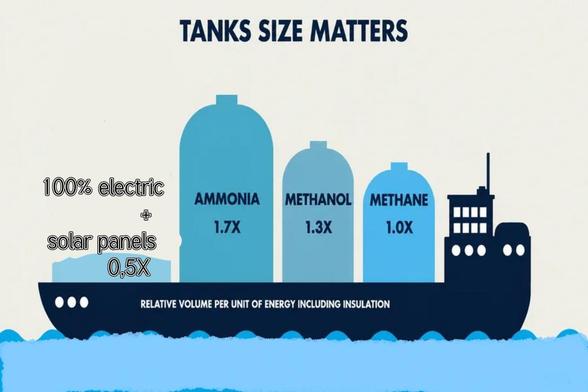
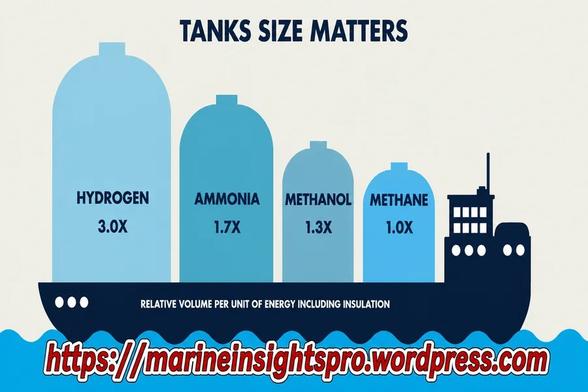
Checked the article: this image with a 3x H2 tank is wrong because fuel cells + electric motors are 3x more efficient than endothermal engines so IN PRINCIPLE methane and H2 need the same storage tank. But considering that ships will be covered by solar panels, the reality will HIGHLY be pro H2 or anyway pro 100% electric. The final H2 thank will be an half that for methane
#climatechange #EcoClimateEmergency #democracy
@____ Thank you for your detailed feedback. You are right that fuel cells combined with electric motors can achieve significantly higher efficiency compared to endothermal engines. This efficiency indeed reduces the relative storage requirements for hydrogen compared to methane.In our article, the 3x H₂ tank image was meant as a simplified illustration, but I appreciate your clarification regarding real-world efficiency factors and the role of solar integration. Your point about hydrogen and electric propulsion being more favorable in the long term is very valuable, and I will consider updating the visual reference to better reflect this.Thanks again for engaging with the topic and sharing your perspective.
@marineinsightspro.wordpress.com
Thanks, notable your communication capacity about complex arguments like those in object .
Ideally a 100% electric solution could be the best solution: simple and cheap.
Foldable solar panels. A new "commercial speed" in a low-cost solar transport mode.
Have a good work👍
@____ Thank you for your thoughtful comment and kind words. I agree that a fully electric solution supported by innovations such as foldable solar panels could represent a promising pathway for sustainable marine transport. While current marine fuel technologies are still evolving, your perspective highlights the importance of exploring low-cost and efficient alternatives.I truly appreciate your engagement and encouragement. Wishing you the best as well, and I look forward to continuing this exchange of ideas on sustainable shipping.