🎉 Great news! The paper ‘Extrafloral nectaries influence lepidopteran herbivore communities and network structure in the Brazilian Cerrado’ in @AnnBot by Iasmim De-Freitas and co-authors is now #free for 2 weeks 🧵(1/9)
👉 https://doi.org/q8kq
#Ecology #Biodiversity #PlantInsectInteractions #Cerrado #PlantScience #Ecology
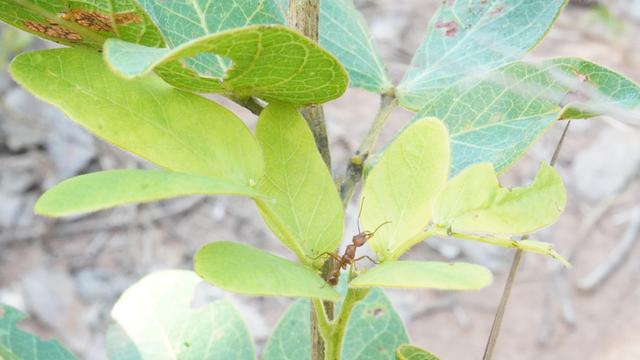
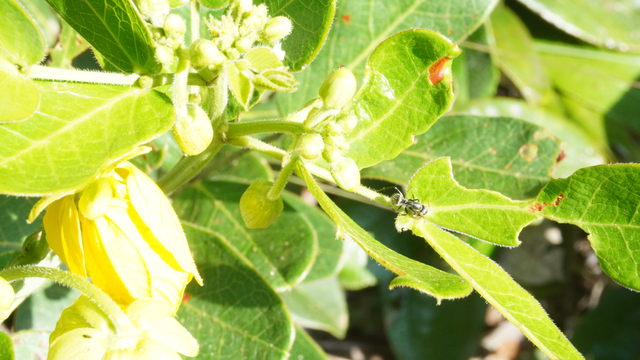
🌿 Some plants produce nectar outside their flowers and it may do much more than attract ants. This new study explored how these “extrafloral nectaries” (EFNs) shape insect communities and ecological networks in the Brazilian Cerrado. 🐜🦋 (2/9)
EFNs are small glands that secrete sugary nectar on leaves or stems. They often attract ants and predatory insects that can defend plants against herbivores. But how do these structures affect entire insect communities? 🤔 (3/9)
Researchers studied 56 Cerrado plant species over 2 years:
• 30 species with EFNs
• 26 species without EFNs (4/9)
They focused on caterpillars and butterflies/moths (Lepidoptera) and analysed both community patterns and ecological networks. 🌱🦋 (5/9)
The results 👀
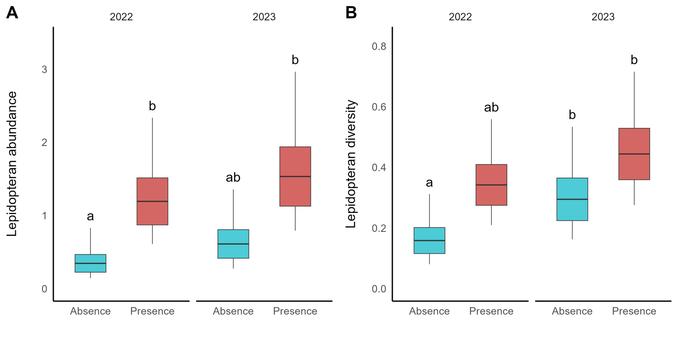
Plants with EFNs hosted:
✅ More lepidopteran individuals
✅ Greater diversity of species
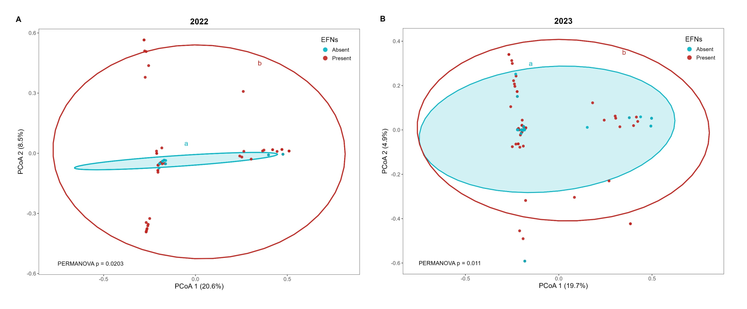
✅ Distinct insect assemblages compared with plants lacking EFNs (6/9)
EFN-bearing plants also played a bigger role in ecological networks.
They acted as “interaction hubs,” connecting with many insect species and increasing the modularity of the network, meaning interactions became more structured into groups. 🌐 (7/9)
Interestingly, EFNs did not change how specialized the insects were, nor the overall nestedness of the networks. Instead, they mainly influenced which species interacted with each other. (8/9)
 Annals of Botany