 Ewen Bell 📸
Oh this is some next level bullshit from Capture One. Shoving ads into my app when I open it up. They just really really really fkn piss me off this mob.
No means no.
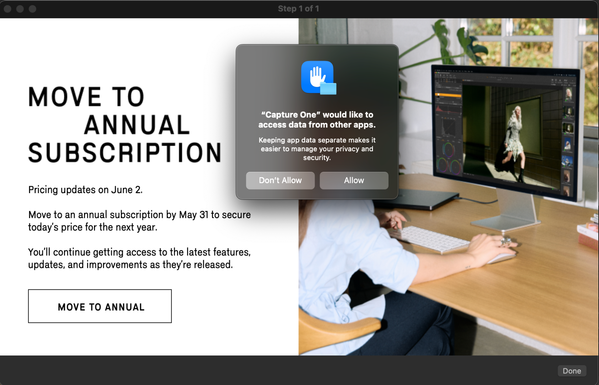
Oh this is some next level bullshit from Capture One. Shoving ads into my app when I open it up. They just really really really fkn piss me off this mob.
No means no.
I think their business model is to leave bugs rife through the app in the hope you'll pay for future fixes.
Keeping in mind they have been dragging support for most Lumix cameras for years now. Took them sooooo long to get around to switching on RAW file support for the GH6. Still no tethering for S9, S5II, S5IIX, S1, S1R, S1H. Or remember that time they retroactively cancelled all those Fuji licenses?
They saw Adobe getting away with treating their customers like trash so thought they'd try to behave even worse.
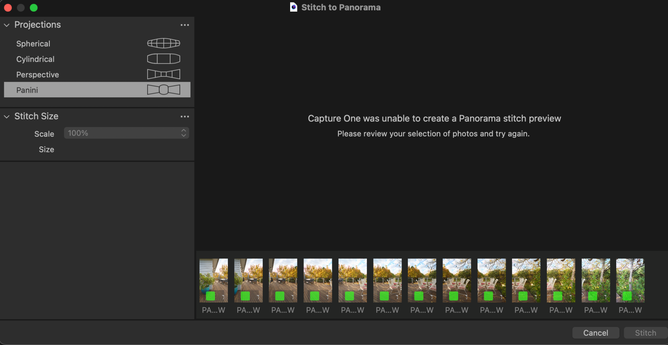
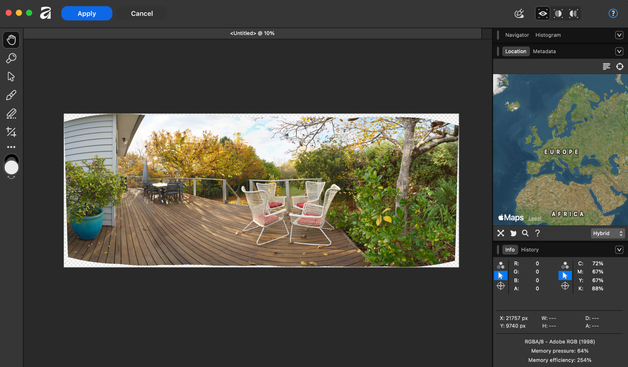
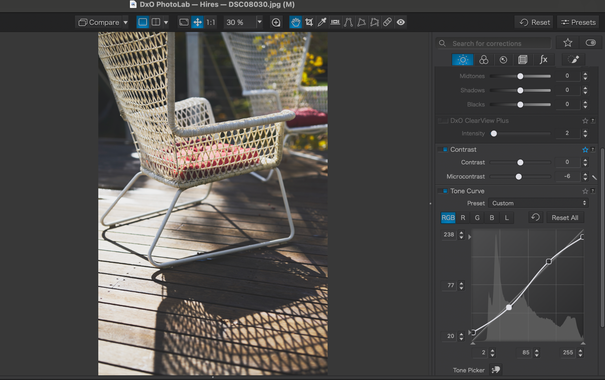
OK, gonna stop being grumpy in public for a bit. Sorry. Last post here is because someone just asked me about how to do something in DxO and I need to share a photo with them.
DxO is great stuff and it's made in France and they keep giving you updates and fixes and support for new lenses and new cameras and you get great value for money.
@ewen I really struggled to find an alternative to Lightroom. One of the biggest points of difficulty I found is that so many other pieces of software either have a library/organization function, or an individual photo editing function - not both. I didn’t want to have to use one piece of software to see all my photos and another to edit one at a time, for instance. I also have no need for tethered shooting…even when scanning film with my digital camera I sit at my desk and run the roll through and then pop the SD card into the reader and import after I cut/sleeve/notate the negatives. (My preference for film requiring a decent way to invert negatives was also a factor, but not by as wide a margin.)
I really like to use FOSS stuff when I can, but I’m not opposed to paying a developer for proprietary software if it’s good and if they treat customers well…that’s one of the reasons I had zero issues paying for Negative Lab Pro.
But I finally settled on darktable as my alternative and went all-in. It runs on Windows Mac and Linux, and while my main PC runs Linux, darktable actually runs fastest on my MacBook because it easily utilizes the GPU capability in the M4 chip. (It’s really fast!) The negadoctor module is very capable, and I’ve gotten pretty decent with it for my black and white work. Color is another story - but I rarely shoot color film and even with my digital pictures I haven’t learned enough about adjusting color to feel confident in it. But many others have great experience with it.
It does have a bit of a learning curve and has made some…interesting…UX choices, but it’s very powerful and worth giving a go, IMO. Things like parametric masks and the different modes of color adjustment are loved by many, and I’m just starting to scratch the surface on those. There’s a great series of videos by Bruce Williams Photography on YouTube that show how to get started using it and what the workflow looks like.
Not trying to evangelize, just wanted to offer up my (non-professional, so take it with a grain of salt) experience with a tool that I dismissed several times before finally opening up and spending a bit of time re-learning things and now use as my main tool. The fact that it’s FOSS is an added bonus!
Darktable is okay.
For quick image source file edits, I use Pinta.
It’s got a few imperfect features and suboptimal equalization and tone correction, but for cropping and clone-stamp stuff, it’s a nice low-overhead option & equal to anything else out there.
(I'm on Linux - not sure if Pinta's available on other platforms.)
 Jill ☁️
 Kaiser
 📷 🎞️ 💿
 Kyle Memoir 🍉🐧
 Gustav Lindqvist
 Tobsen
 S★m V★rm★