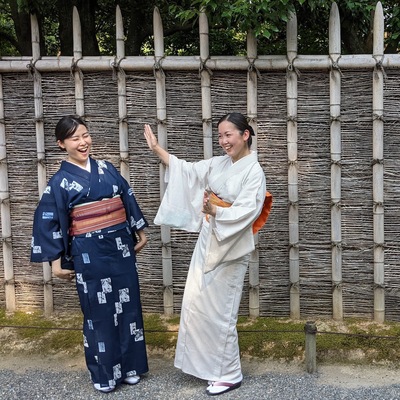
 Camellia Tea Ceremony
🐉THE 7 WONDERS OF EIKAN-DŌ🪹
Like many holy sites in Kyōto, Eikan-dō (永観堂) once proudly boasted of its '7 Wonders' (七不思議). This list of miraculous spots and objects acted as an early form of promotion to attract pilgrims (and their money).
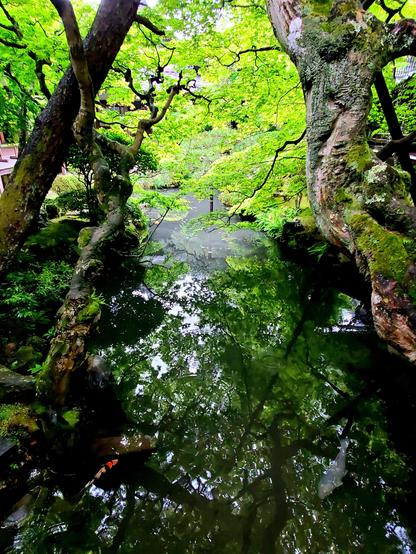
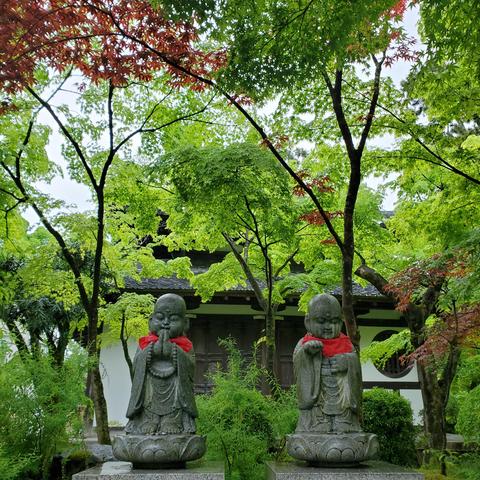
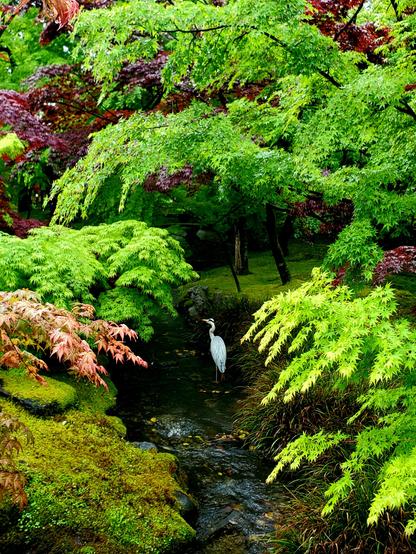
🐉THE 7 WONDERS OF EIKAN-DŌ🪹
Like many holy sites in Kyōto, Eikan-dō (永観堂) once proudly boasted of its '7 Wonders' (七不思議). This list of miraculous spots and objects acted as an early form of promotion to attract pilgrims (and their money).
1) THE LOOKING BACK AMIDA🤨
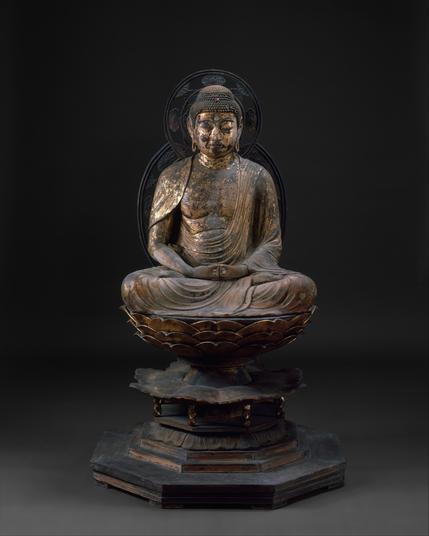
Eikan-dō is perhaps best known for its 77cm tall statue of Amida looking back over his shoulder ('Mikaeri-Amida' 見返り阿弥陀).
Having been locked away from the public in Tōdai-ji's treasure house, when he left the temple Yōkan took the image with him.
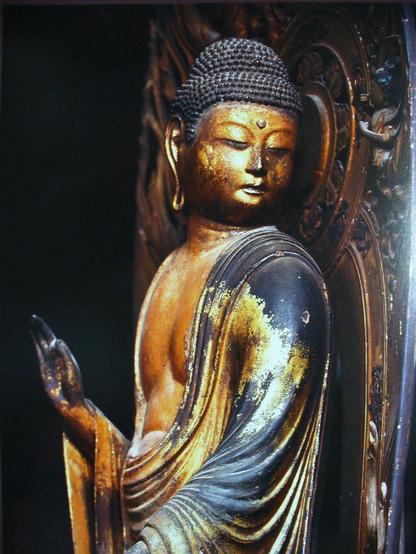
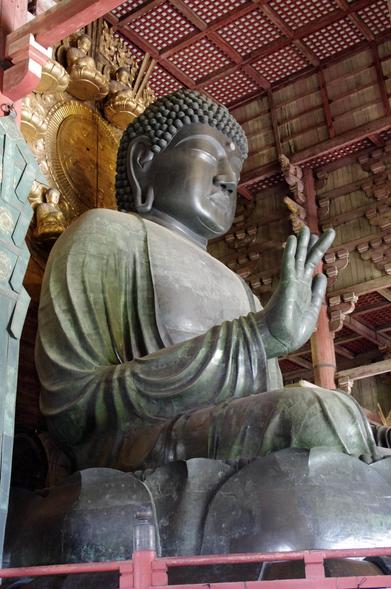
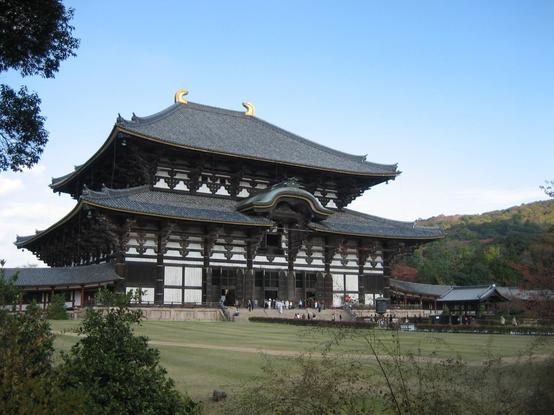
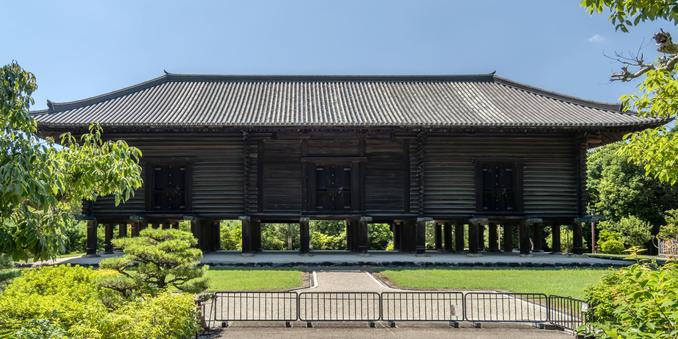
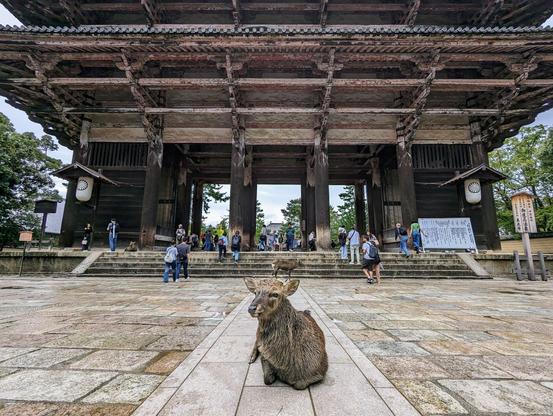
At this time the statue was like most images of Amida, depicted facing forward. This changed on a freezing February 15th 1082.
As was his routine, Yōkan (then 50) was circling the statue whilst chanting the nenbutsu (calling out Amida's name).
Cold and tired, his pace grew slow.
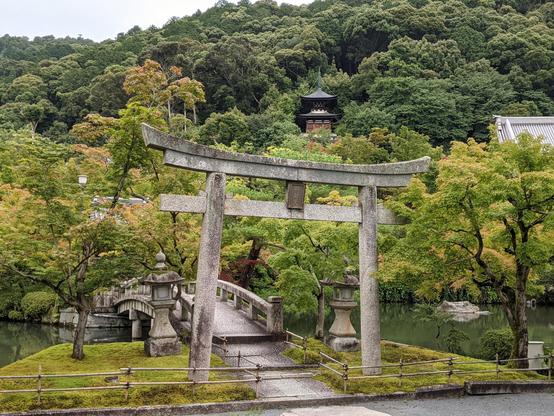
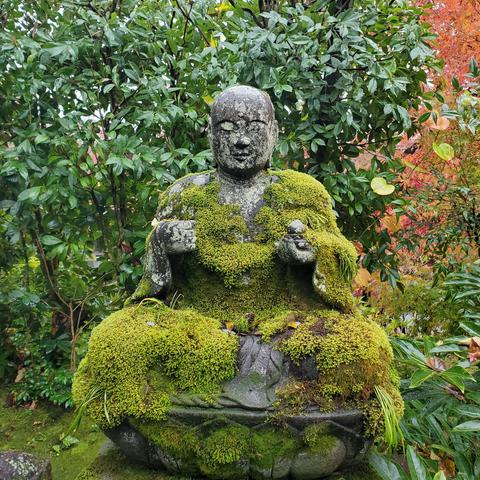
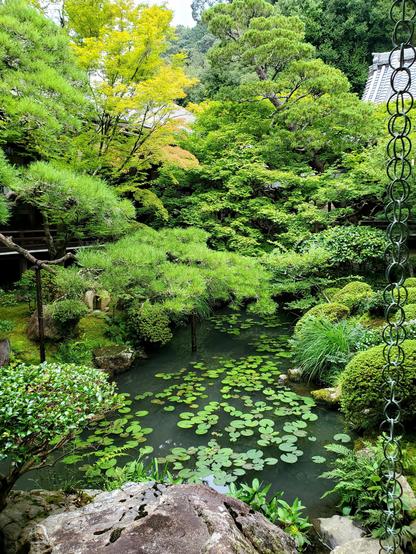
After prayer Amida returned to statue form, but with his head forever glancing over his shoulder.
To Yōkan the looking back gesture confirmed that Amida would take care of everyone that called upon him, regardless of their faith, circumstance, or status in life.
#Kyoto #永観堂
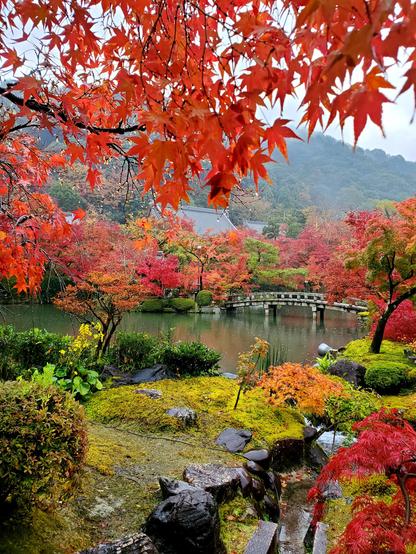
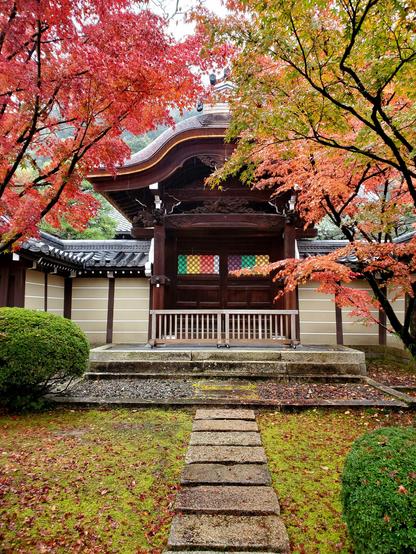
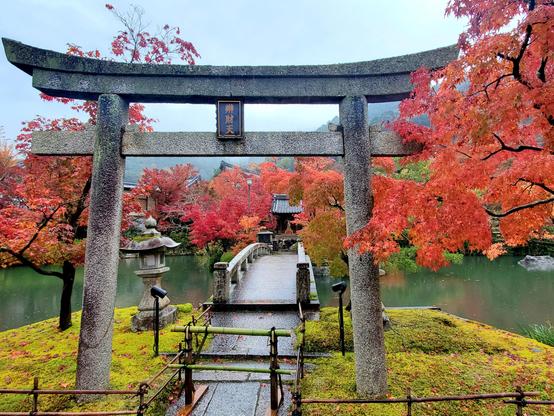
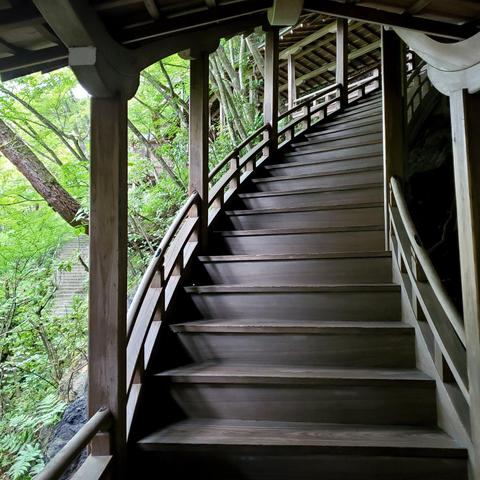
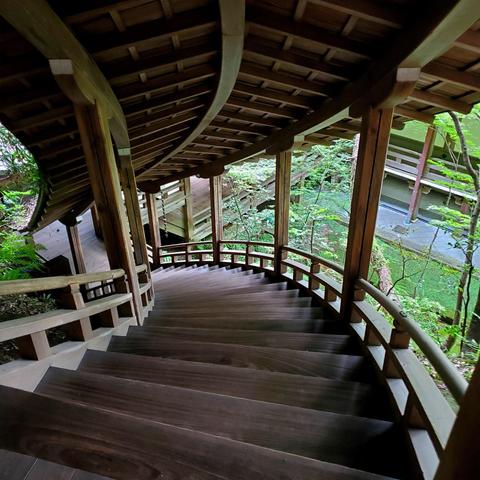
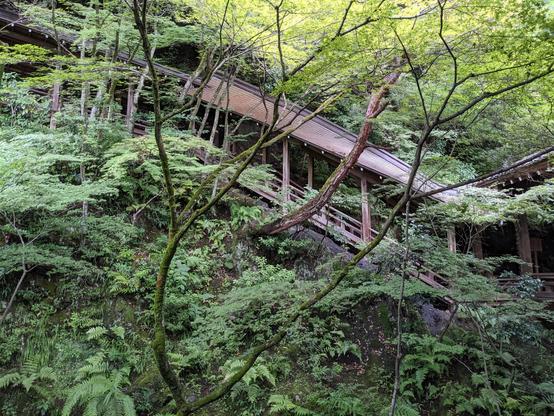
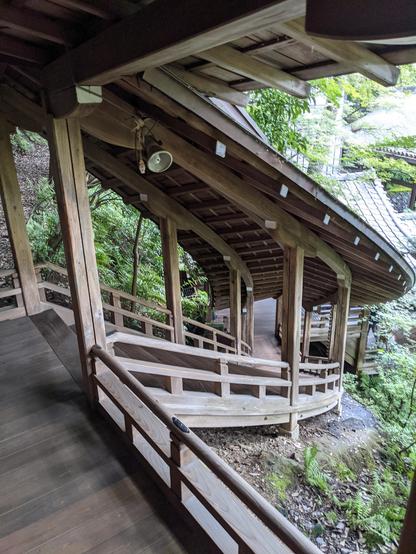
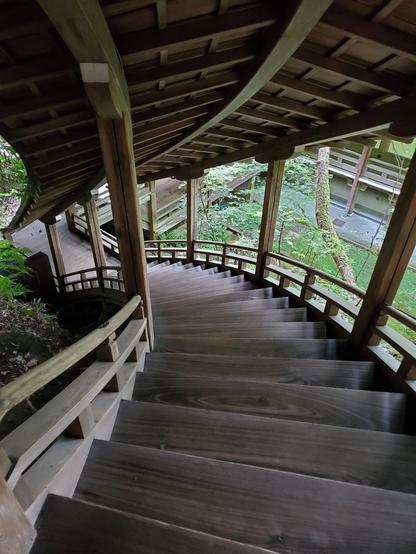
At the base of the Garyū-rō (臥龍廊) is a basin known as a 'suikin-kutsu' (水琴窟 lit. 'water koto grotto').
When water is poured into the small opening the sound of trickling echoes melodiously within.
The design is simple...an upside pot sits above a basin of water.
#Kyoto
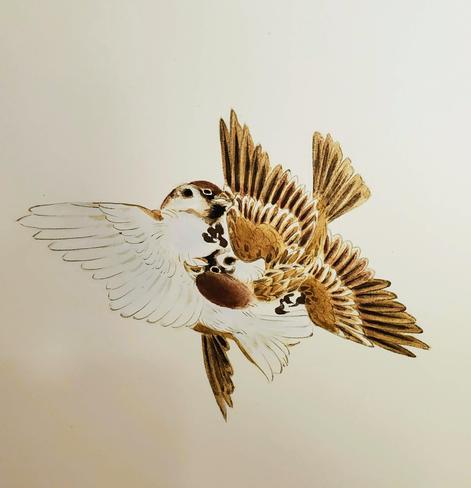
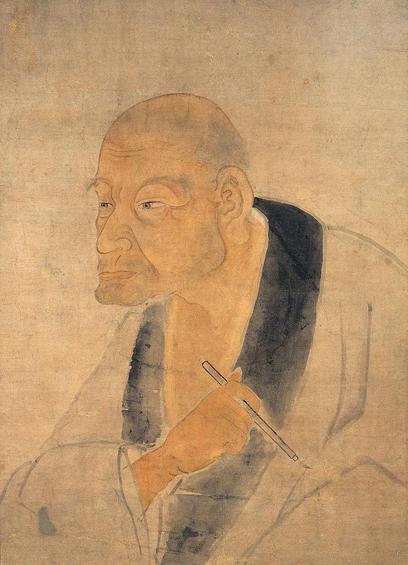
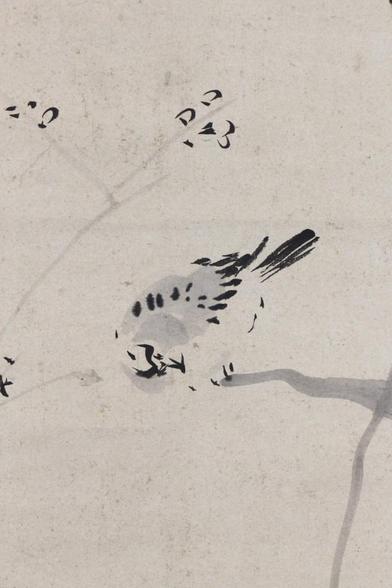
4) THE WOOD BLOCK FROGS (木魚蛙)🐸
Mokugyo are wooden blocks, often vaguely fish-shaped, struck whilst chanting sutras (to help keep a steady rhythm or to emphasize the Bodhisattva being hailed).
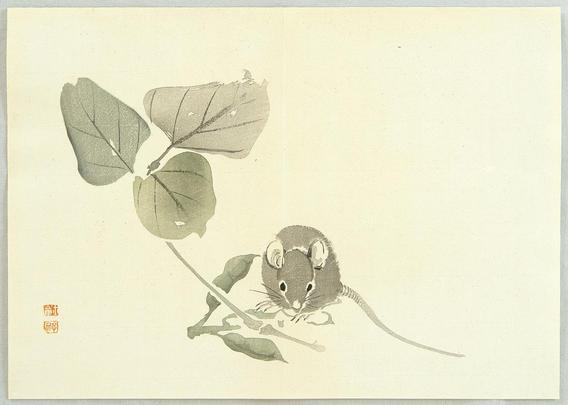
It is said the frogs, never seen, that live behind the Miei-dō sound like mokugyo.
6) AMIDA IN THE PINE (来迎の松)🙏
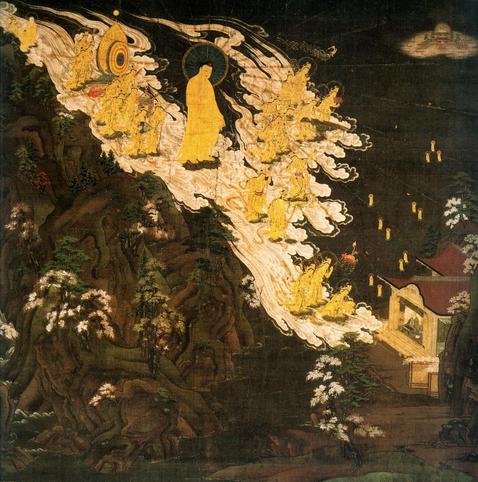
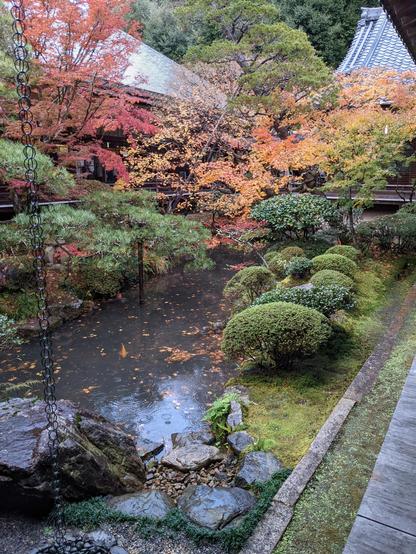
Legend has it that Amida was a common visitor to Eikan-dō as he enjoyed listening to Yōkan's (永観) beautiful chanting (see the 1st wonder). He would rest on a tree known as the 'Coming of Amida Bodhisattva Pine' (来迎の松 'Raigō-no-matsu').
7) TRIDENT VAJRA PINE (三鈷の松)🔱
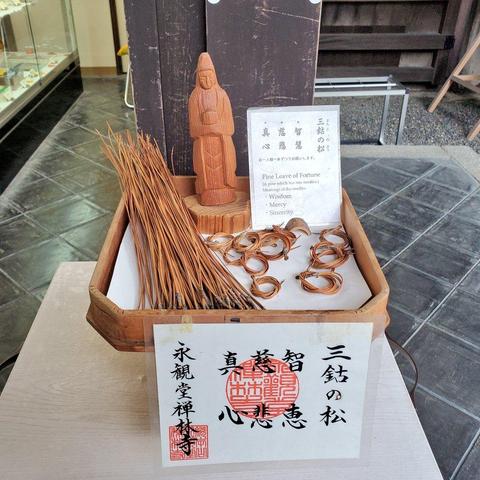
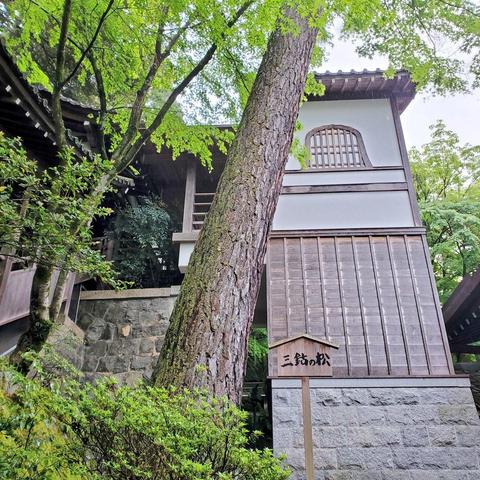
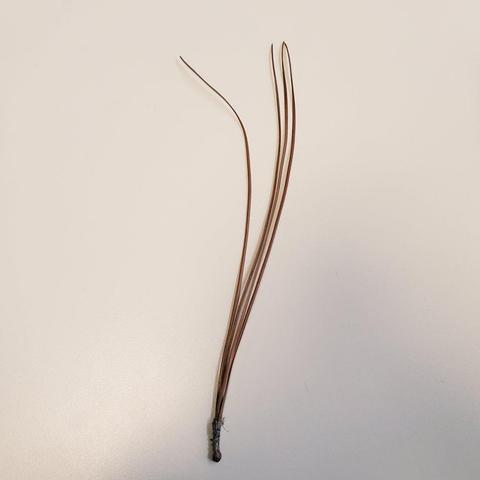
Growing beside the Garyū-rō is a rare pine ('Sanko-no-matsu' 三鈷の松) that produces needles in groups of 3 (up to 30cm long). Likened to the ritual Buddhist vajra, the 3 needles (representing wisdom, compassion & devotion) are gifted for luck.
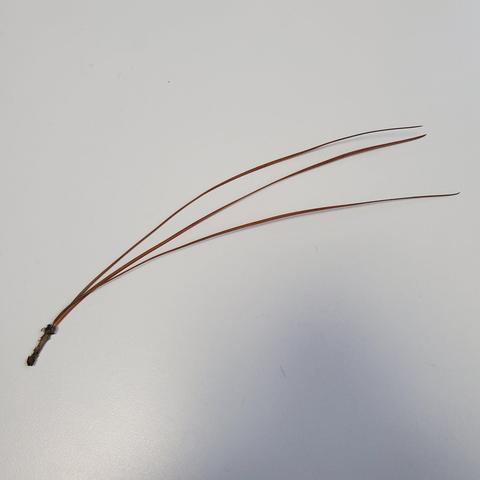
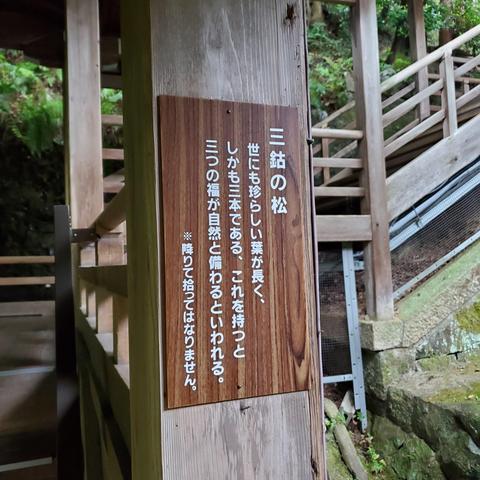
As she was leaving, one of the staff at Eikan-dō ran up to Nao-san and handed her a rare grouping of 4 needles😲
Just like 4-leaf clovers, these are very lucky indeed!🍀
I wonder what good fortune will befall Nao-san🙏🤲
9) THE LUMINOUS SAND (勅使門前の光る砂)🌝
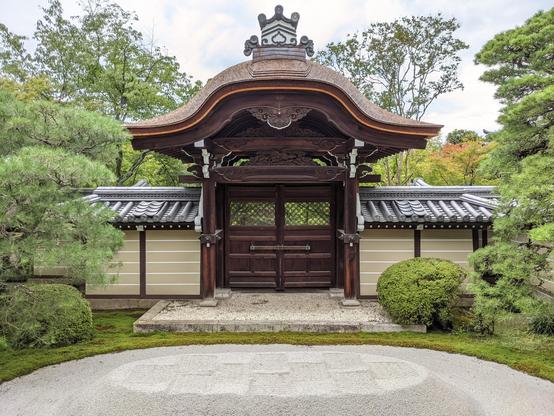
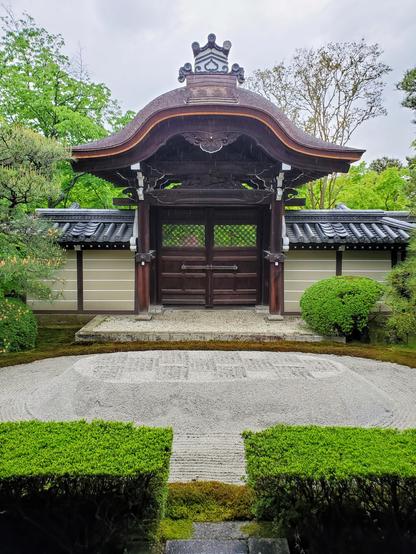
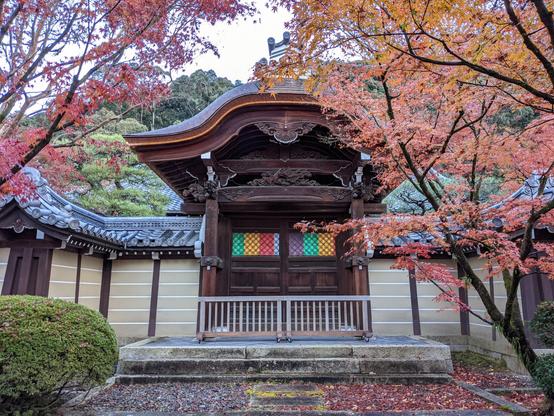
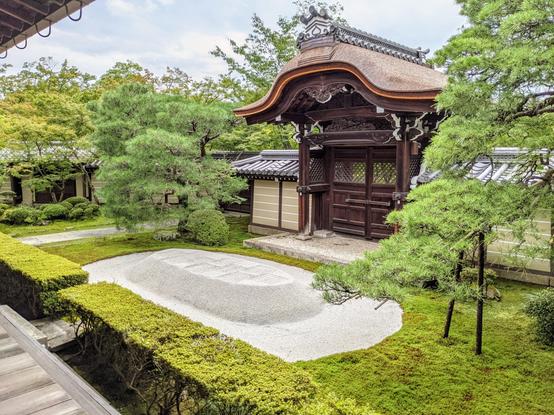
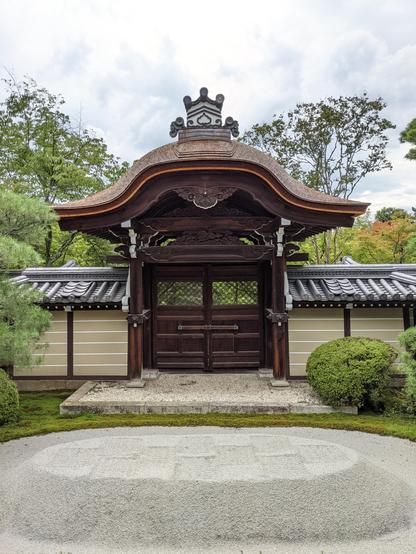
Behind the 'kara-mon' (唐門) is a moulded pile of sand. Symbolically, imperial messengers would step through the sand to purify their feet, but additionally the white sand cleverly reflected light from full moons to illuminate the garden.
10) PLUM MEDICINE🏥
In 1097 Yōkan established Yakuō-in (薬王院), an early form of hospital that cared for the ill and gave to the needy.
He also planted orchards of plum for use in medicine (the trees were thus known as 'Hidenbai' 悲田梅, 'plums from the field of compassion').