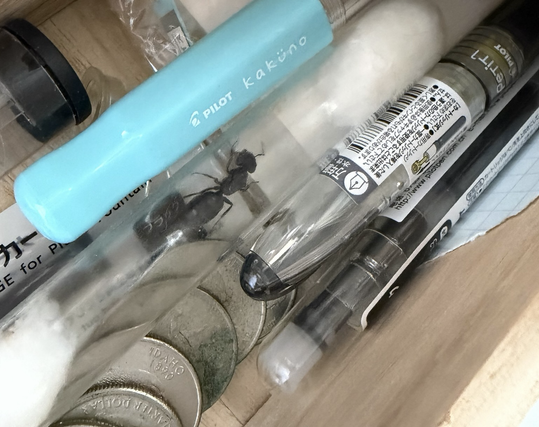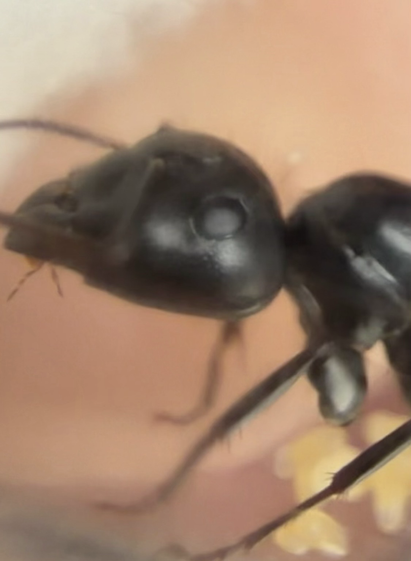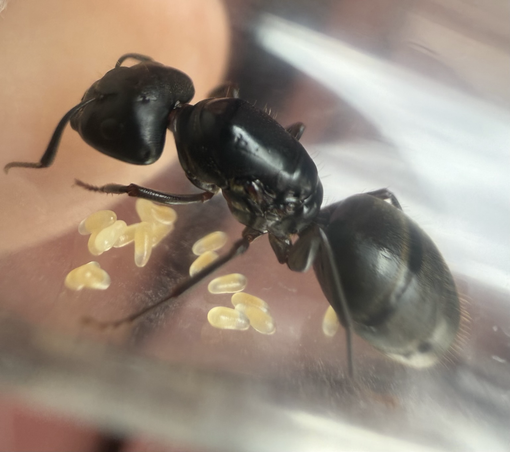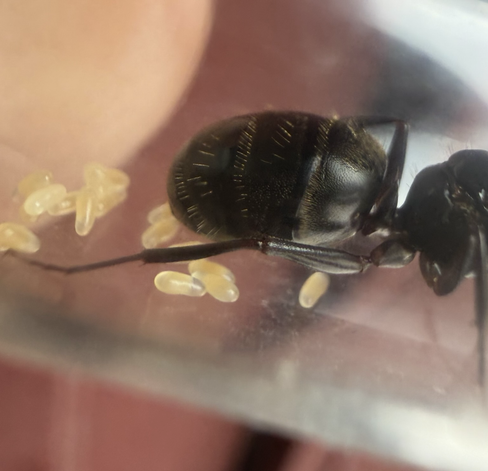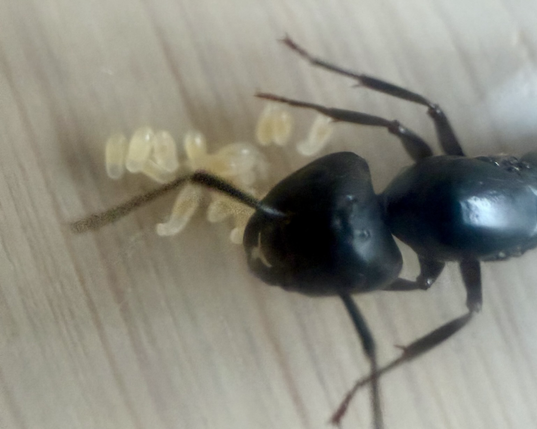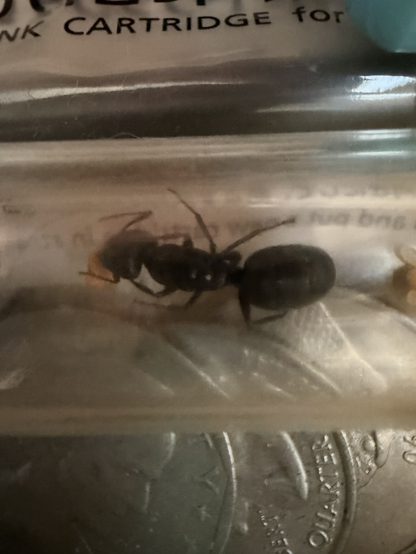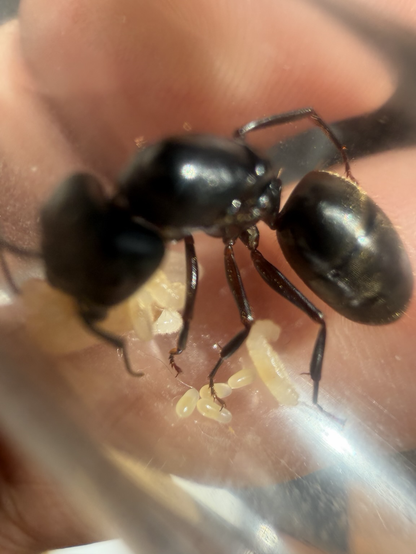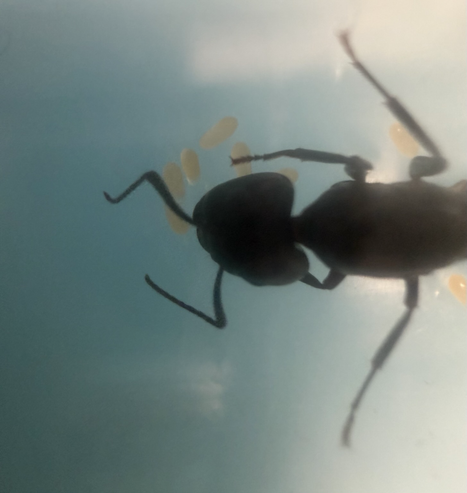
She is such a good mother. I’m still in shock that she was going to try and live under my keyboard.

When I found her she was “hiding” but like most queens she wasn’t aware of how big she is and her gaster was visible giving her away.

She is now in a luxury NYC ant condo. #antqueen
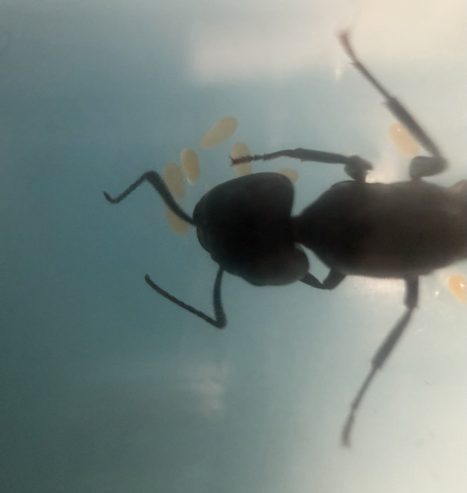
Quick update on my new queen carpenter ant: she seems to be doing well living in her glass test tube inside of my pen drawer. I checked on her today and gave her a drop of water which she accepted and drank. Her eggs are slowly developing.

(How to keep people from taking your fancy pens.) #antqueen

Queen update! Her eggs have hatched and are now larvae. She will feed them “trophic eggs” which are special eggs that cannot hatch. This is an ant food storage hack. Young ants need protein but she cannot leave the nest to raise this first generation.

While I was bugging her with a photo today I also gave her a drink of water which she seemed to like. #antqueen

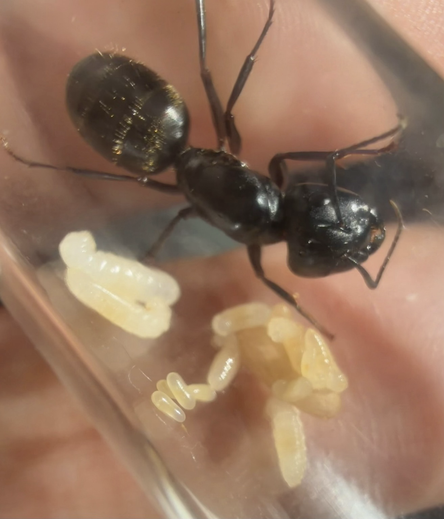
If you look carefully at the eggs and larvae you can tell the ones that have hatched because they have a mouth. That is the little bit that curls over.

The eggs without mouths are probably trophic and will be food.

There is a hit resource management mobile game in this I swear!

There is some reason to believe that ants could have memories from their time as larvae. They are exposed to the food and other ants in their colony. They have a sense if it's a time of plenty or a time of precarious survival and this may shape their size and personality.

Though they really become "real ants" after they emerge from their silk pupae.

In weaver ants the larvae are used like silk guns to hold leaves together.

People imagine the adult ants squeezing them like little tubes of glue, but this *isn't* how it works.

In fact, the larvae is an active participant in the weaving. She will lean out and attach new silk anchor when tapped on the head by her older sister, then spool out silk as she moved until she is tapped again... this makes her make another attachment.

They are both aware and working together.

So, weaver ant larvae can respond to signals and help with colony work even as larvae.

All while their older sisters drum on their head with their antennae.

@futurebird Man, I wish we could've gotten *our* children to help like that when they were little.
@futurebird
Thanks as always for your ant posts. I always learn something and appreciate them even more.🐜 ♥️
@futurebird for some moths, and some beetles, taste test memory experiments have been done, which show that if a larvae is exposed to a nasty flavor enough times, they recall it as an adult. Have such experiments been done for ants?

@llewelly

No, but there has to be some interesting questions here.

(Pupation is a less violent and extreme process for ants than it is for caterpillars. So I'd bet on ants remembering more)

@futurebird out of curiosity, how do the hatching larvae know to only eat the trophic eggs? Is it a scent/pheremone thing?

Seems like a free for all, "whoever hatches first wins" would be inefficent.

@notthatdelta

Unlike more mobile larvae, eg. caterpillars young ants and bees can't move unless they are carried.
The queen will put an egg near them so they can eat and break it open.

They do not seem to nibble on anything "alive" how they know? I don't know.

@futurebird super cool! So it's basically up to the queen, but we don't know how she knows?

The important thing is that she's got it figured out, I guess!

@futurebird I miss the time when games like SimAnt were a thing.

Queen update!

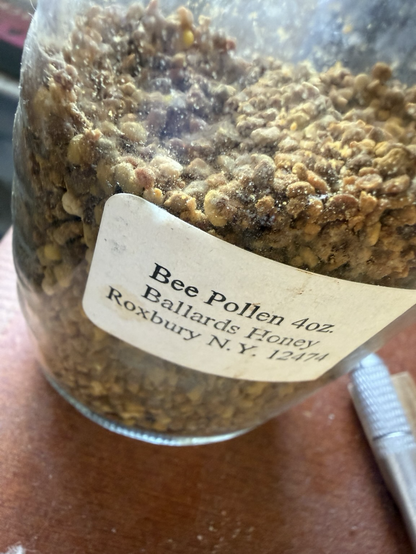
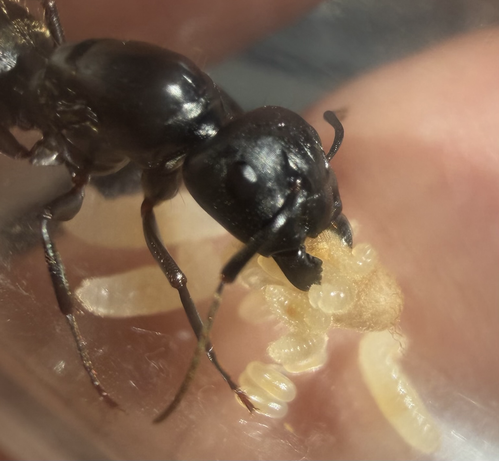
She has two larvae ready to spin their silk cocoons, and one that has already cocooned itself and started to pupate and mature. As a treat, I soaked a grain of bee pollen in a bit of sugar water and fed it to her. She seemed delighted with it, and I hope it made up for the bright lights of the photo session. Here she is eating her treat. (Better photos of the cocoon in the next post. ) #antkeeping #petant #ants #antqueen

It is unreasonable that any bug could be this cute! when I open the drawer she always carefully picks up her eggs. She’s holding the most mature larva and it’s silk cocoon in the first photo. I guess she’s ready to run and start over if needed. What an incredible mother.

If you look back through this thread you can see how far she's come!

#ants #antqueen #antkeeping #carpenterAnts #camponotus #camponotusPennsylvanicus

You don't need to feed queen ants during this stage in development. But, if I disturb her for a photo, it seems fair to give her a little sugar.

The tricky thing is not doing anything that causes mold or makes her nest sticky. A ball of bee pollen moistened is a proper "serving size" for an insect this big. It's easy to put too much food in a tube and make it unpleasant or dangerous.

If you aren't certain it's best to do nothing! She knows what she's doing.

@futurebird This time of year we have these giant queens running all over the place. So it's cool to see what they're trying to do!
@futurebird I love these posts! I learn so much!

@futurebird

Or maybe she just wants to show them off to you, because she's so proud of them. :3

Realistic? No. Wholesome? Yes!

@futurebird what will you move her into once there are daughters?

@Florapis

I have a glass outworld with sand and some moss that I will bury the tube in. I will block it lightly with some debris so when they are ready they can dig their way out and explore and forage.

There will be a second test tube with water, a sugar feeder and some dead fruit flies from time to time.

It may take until the end of summer for them to be ready for their first wooden nest.

@futurebird coo! Thanks for sharing, its so interesting
@futurebird when does she get to move out of the tube?

@waitworry

In the coming weeks the larvae will grow and in about 3 weeks they will spin silk cocoons. Then after maybe 3 more weeks they will emerge and be ready to forage outside the tube.

As the queen she will not leave until they outgrow this test tube and that could take over a year since dozens and dozens of ants will live in there (with an area connected for them to explore)

So maybe next year if she's doing well she will make a run for a larger nest protected by daughters.

@futurebird aw, cute critter. this the mystery ant queen, I take it?
myrmepropagandist (@[email protected])

Attached: 1 image She is such a good mother. I’m still in shock that she was going to try and live under my keyboard. When I found her she was “hiding” but like most queens she wasn’t aware of how big she is and her gaster was visible giving her away. She is now in a luxury NYC ant condo.

Sauropods.win
@futurebird long live queen ants!

@futurebird That’s a very cool way to feed larvae!

What is the queen eating? Are you feeding her nectar of some kind?

@michaelgemar

She is able to fast for half a year during this stage in development. When I first found her I gave her a cricket leg and some sugar water.

Now I just give her a drop of water so she stays hydrated.

In a month I may offer some sugar or insect again.

Right now I think she'd reject it. She is using her fat to do all of this, and dissolving her wing muscles which are not needed now.

Can you make a person to help you with your fat? Amazing isn't it!

@michaelgemar

It's very tempting to try feeding her again, but from experience unless she eats the food the residue can cause problems with the eggs.

So better to just let her fast, as that's how it works in the wild.

@futurebird It’s wild that she can do all this with stored energy.

And yeah, I’d love to be able to produce trophic eggs as a way to lose weight.

@futurebird @michaelgemar
I turned fat into babies twice! Unfortunately babies are stressful and I gained back more ...

@michaelgemar

There is a good reason she is called a "cloistered queen" she is like a nun fasting in her cell!

@futurebird learnin’ so much following you.
@futurebird oh there are several very cool things about that