If you want Cherry MX keyswitches for future use, you might want to stock up. Cherry announced last year that production was moving to China, but today Mouser Electronics sent me an obsolescence notice for Cherry MX Blue.
:-(
#MechanicalKeyboard #CherryMX #CherryMXBlue

EDIT: sorry if I caused any alarm. As several people have informed me, just replace the MX1A prefix with MX2A.

@brouhaha Is there any remaining justification to buy real Cherry MX switches instead of one of the many less expensive knockoffs? For that matter, was there ever a justification?

@NF6X @brouhaha

Personally, I prefer any of the Outemu silent tactiles.

@resuna @brouhaha I had not heard of that brand before. I'm planning to use some Gateron silent brown tactile switches in a Color Computer 3 keyboard upgrade.
@NF6X @resuna
If you make a keyboard PCB for the CC3, I'd like to buy one.
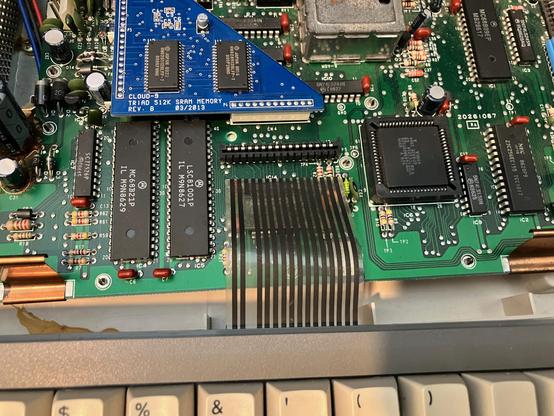
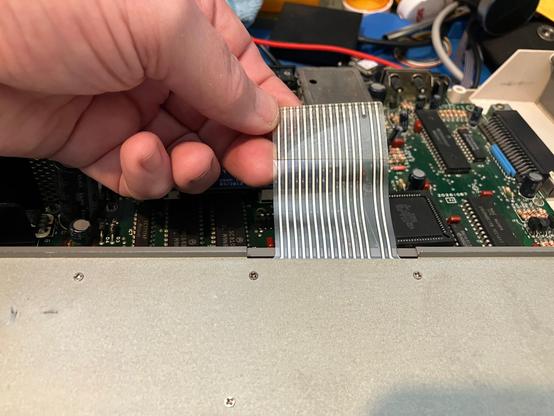
@brouhaha @resuna Cool! I’m still debating how to tackle connecting it to the computer. I don’t find any suitable pre-made flex cables available that would fit. How would you feel about desoldering the flex receptacle on the main board to replace it with a pin header?
@NF6X @resuna
Well, I'd prefer to be easily reversible, but it wouldn't be a disaster.
Do the cheap PCB companies in China not do cheap flex circuit? I haven't had occasion to look.
@brouhaha Apparently JLC do those and they're about the same price as standard PCBs. @NF6X @resuna
@colin_mcmillen @NF6X @resuna
Do they offer lamination of a stiffener for the connection end(s)? I know, I'm being lazy. I should just look it up myself.
@brouhaha @colin_mcmillen @resuna I took a lazy peek at PCBway this morning, and it looks like it might be practical to make the flex cables in small quantity. They do appear to offer stiffeners. I am not familiar with JLC's offerings, but I assume they're pretty similar.
@brouhaha @colin_mcmillen @resuna I'm not sure if a stiffener will be necessary on the end. If I recall correctly, the mylar tails of the CoCo 2/3 membrane keyboards do not have stiffeners. I'll take measurements when I have a chance.
@NF6X @colin_mcmillen @resuna
Remember that when you remove the FFC from the socket, insert a very thin shim on the contact side, to protect the exposed cable conductors, so that the socket contacts don't scrape them.
You're likely already fully aware of that, but I learned it the hard way back in the late 1980s with a very expensive to replace flex circuit.
@brouhaha @colin_mcmillen @resuna My memory was incorrect. There is a stiffener for the final inch of the mylar tail. The mylar thickness is 3 mils, and the stiffener increases the thickness of the mating end to just under 16 mils. The tail has top side contacts, which face the rear of the CoCo when plugged in.
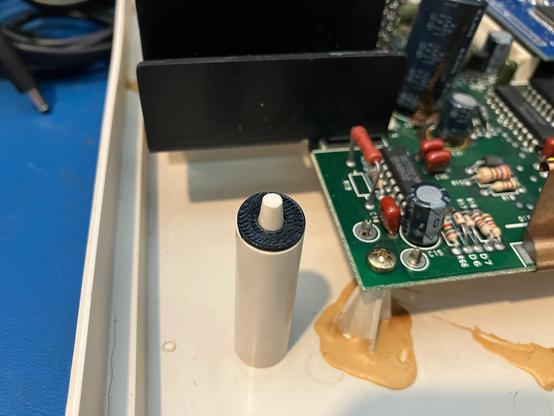
@brouhaha @colin_mcmillen @resuna Incidentally, this weekend I finally tried printing with TPU filament for the first time. One of the rubber washers on the rear keyboard mounting posts had crumbled, so I printed replacements for both of the washers. Everything worked out well. The only complications were me fumbling about because it was my first time using the AMS bypass path in my Bambu X1C, so I fumbled a bit with both the printer and the slicer.
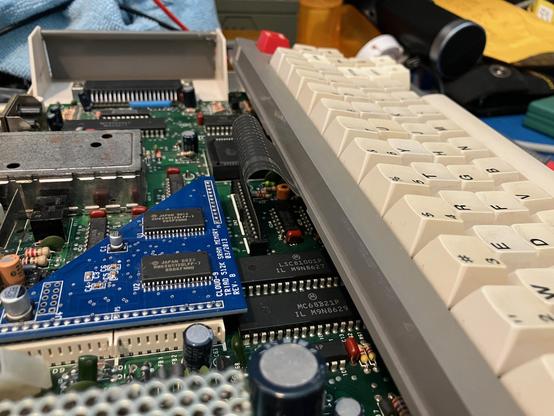
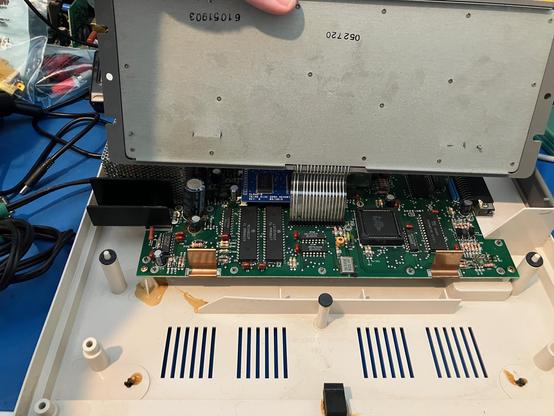
@brouhaha @colin_mcmillen @resuna I assume that I may find that the grounding fingers which normally contact the keyboard's bottom plate may interfere with the sockets on the bottom of a hot swap mechanical keyboard PCB. The fingers are just clipped onto the main PCB, and they will pop right off if necessary. It's interesting that they glued the base of the lower left main PCB mounting post preemptively. Maybe they were discovered to be a weak point that broke in shipping?