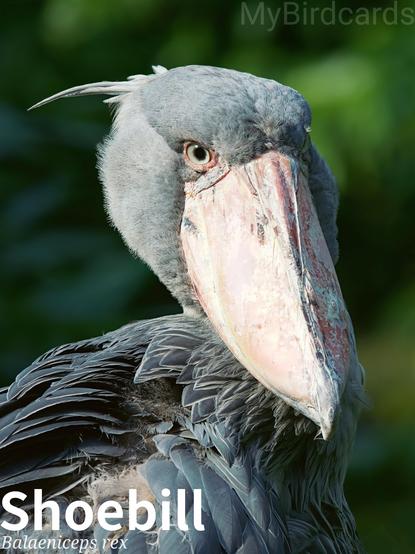
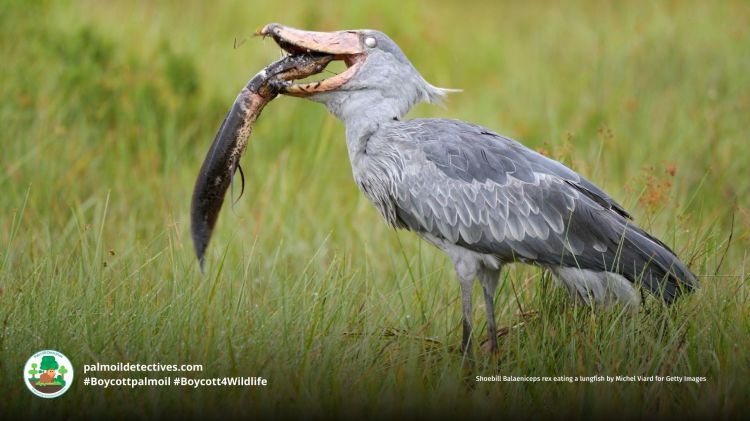
Shoebill Balaeniceps rex
Shoebill Balaeniceps rex
Vulnerable
Extant (resident)
Central African Republic; Democratic Republic of the Congo; Rwanda; South Sudan; Sudan; Tanzania; Uganda; Zambia
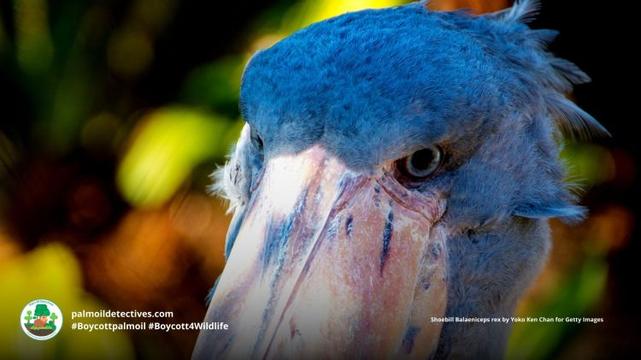
Known for their unnerving and intense stare and imposing, prehistoric appearance – shoebills are magnificent birds. There are less than 8000 individual birds left alive. They are vulnerable from #palmoil, #cocoa and #meat #deforestation, agricultural run-off, #pollution, #mining, #hunting and human persecution. Help them every time you shop and be #vegan, #Boycottpalmoil #Boycott4Wildlife
The #Shoebill is a magnificent and gentle big bird 🕊️🦤 with an unnerving stare 👀 There are only 8000 left alive in #DRC, #Uganda #Africa. Vulnerable from #palmoil #deforestation, #hunting and more. Fight for them! #Boycottpalmoil 🌴🚫 #Boycott4Wildlife https://palmoildetectives.com/2023/09/10/shoebill-balaeniceps-rex/
Share to BlueSky Share to Twitter Known for their menacing stare 👀😸 gentle #shoebills are iconic in #Uganda 🇺🇬 #Congo 🇨🇩 #Tanzania 🇹🇿 They are vulnerable from #hunting, #palmoil #deforestation. Help them and be #vegan 🥕🍆 and #Boycottpalmoil 🌴🪔☠️🔥⛔️ #Boycott4Wildlife @palmoildetect https://palmoildetectives.com/2023/09/10/shoebill-balaeniceps-rex/
Share to BlueSky Share to Twitter There are less than 8,000 birds left alive and they are increasingly threatened by agricultural run-off from palm oil and cocoa deforestation across their range.
https://www.youtube.com/watch?v=8V7t28Fim34
The shoebill Balaeniceps rex is also known by the common names: the whale-headed stork, shoebill stork and whalehead. Their eponymous feature is their enormous bill They have the third largest bills after pelicans and large storks.
Fast Facts
- When shoebills soar they make around 150 flaps per minute which makes them one of the slowest of any bird, with the exception of the larger stork species.
- They stand stock-still and waiting, all alone giving them an eerie and unnerving appearance. Once they notice fish appearing on the surface of swamps they quickly snap them up into their large bills.
- The shoebill’s chattering large bill makes a sound akin to machine gun fire. This combined with their silent creeping gait can make them seem rather menacing!
https://www.reddit.com/r/interestingasfuck/comments/11bnvkd/the_unexpected_sound_of_a_shoebill_stork/?utm_source=embedv2&utm_medium=post_embed&utm_content=action_bar
- Shoebills are attracted to poorly oxygenated waters, as this means fish must come to the surface to breathe – where they are efficiently captured.
- They are mostly silent except for elaborate bill-clattering communication that happens during their breeding. Chicks make a human-like hiccup sound when signalling hunger.
- Although they have a similar appearance to storks, shoebills are more closely related to pelicans and herons in the order Pelecaniformes.
Appearance & Behaviour
They possess extraordinarily large feet with their middle toe extending up to 18.5 cm in length. This helps them with balance while standing on uneven swamps and on aquatic vegetation while they hunt.
Adults have feathers that range from blue-grey to slate-grey. Juveniles possess similar plumage but in a tawny blue-brown hue.
Shoebills have a modestly sized bill at birth, which grows much larger once chicks reach between 23-43 days old.
Their unusual beauty makes them a must-see for birdwatchers in Africa. Despite their slightly unnerving appearance, these birds are placid and will allow birdwatchers to snap their photo at a range of two metres.
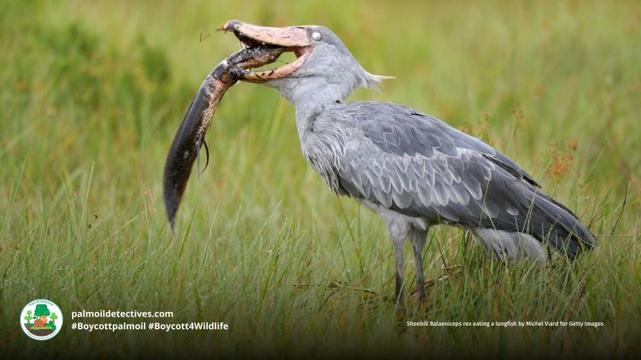
Shoebills are known for staying statue-still and silent in the muddy waters while hunting. These birds stalk their prey in a solitary way, patiently lurking and hunting entirely with their vision. Once prey is spotted they launch a rapid strike. They will sometimes use their big beaks to pry deep into the pond mud and extirpate lung fish with a violent strike.
They are normally silent but will get noisy during nesting season with elaborate bill clattering displays. Adults birds will make a ‘moo’ sound and high pitched whine while clattering their bills in order to communicate with each other. Chicks call out to their mothers with a ‘hiccup’ sound.
Shoebills typically hunt for lungfish and other fish in poorly oxygenated marshlands, bogs, peatland and swamps. Fish frequently break to the surface to breathe – it is then that shoebills rapidly strike. Their large feet enable them to balance on floating vegetation. The movement of hippos can aid the hunting of shoebills, as they rustle up fish from bottom of swamps, pushing them to surface for the shoebills’ easy capture.
Threats
There is estimated to be below 8,000 individual shoebills left and they are classified as vulnerable. Shoebills face a range of anthropogenic threats:
- Palm oil and cocoa deforestation: The mass removal of virgin rainforest for palm oil and cocoa results in mass deaths of shoebills.
- Infrastructure building: roads, dams and powerlines pose a risk to shoebills.
- Meat deforestation: cattle and other animals are known to trample shoebill nests.
- Pollution run-off: from palm oil agrochemicals and mining effluent.
- Hunting: In some cultures shoebills are thought of as a bad omen, in others they are hunted for food.
- Capture for the pet trade: Shoebill eggs and chicks are captured for consumption or sold to zoos.
- Armed human conflict: Armed groups moving through the rainforest has facilitated hunting of shoebills.
- Climate change: Increased extreme weather events like fires and droughts brought on by climate change lowers their numbers.
Habitat
Shoebills are found in central tropical Africa. Including South Sudan, eastern Congo, Rwanda, Uganda, western Tanzania, and northern Zambia. They are non-migratory birds who make limited seasonal movements.
They live in dense freshwater swamps and marshes including undisturbed papyrus and reed beds. They are attracted to areas of mixed vegetation and have been seen on occasion in rice fields and flooded plantations.
Diet
Shoebills mainly consume fish but will also eat a range of wetland vertebrates. Their preferred food is marbled lungfish, tilapia and catfish. When this is not available they are known to consume frogs, nile monitors, baby crocodiles, water snakes, turtles, snails, rodents and other small waterfowl.
Mating and breeding
Shoebills form monogamous pair bonds for the breeding season. They fiercely defend their nests from other birds during their nesting period, which begins either during the monsoon season or after this ends.
Both parents build the nest on a floating and flat platform made up of swamp vegetation and around three metres wide and three metres deep.
Typically the female will lay between one to three eggs, with only one being reared and cared for until maturity. The other eggs are back-ups in case the eldest chick is weak or dies.
In the hot weather, shoebill parents will fill their bills with water to shower their nests to cool their eggs.
Chicks take about 105 days to fledge and juveniles typically fly well by 112 days. Juvenile birds will continue to feed with their mother for another month after this and reach sexual maturity at about three years old.
Support Shoebills by going vegan and boycotting palm oil in the supermarket, it’s the #Boycott4Wildlife
Support the conservation of this species
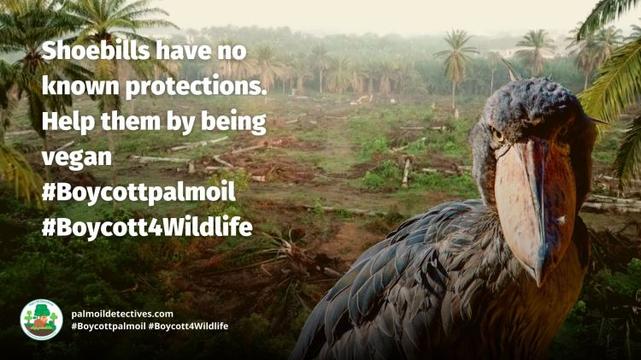
This animal has no protections in place. Read about other forgotten species here. Create art to support this forgotten animal or raise awareness about them by sharing this post and using the #Boycottpalmoil #Boycott4Wildlife hashtags on social media. Also you can boycott palm oil in the supermarket.
Further Information
BirdLife International. 2018. Balaeniceps rex. The IUCN Red List of Threatened Species 2018: e.T22697583A133840708. https://dx.doi.org/10.2305/IUCN.UK.2018-2.RLTS.T22697583A133840708.en. Accessed on 16 February 2023.
Shoebill on Wikipedia – https://en.wikipedia.org/wiki/Shoebill
Shoebill on Animalia.bio – https://animalia.bio/shoebill
How can I help the #Boycott4Wildlife?
Take Action in Five Ways
1. Join the #Boycott4Wildlife on social media and subscribe to stay in the loop: Share posts from this website to your own network on Twitter, Mastadon, Instagram, Facebook and Youtube using the hashtags #Boycottpalmoil #Boycott4Wildlife.
✓ Subscribed
2. Contribute stories: Academics, conservationists, scientists, indigenous rights advocates and animal rights advocates working to expose the corruption of the palm oil industry or to save animals can contribute stories to the website.
Wildlife Artist Juanchi Pérez
Read more
Mel Lumby: Dedicated Devotee to Borneo’s Living Beings
Read more
Anthropologist and Author Dr Sophie Chao
Read more
Health Physician Dr Evan Allen
Read more
The World’s Most Loved Cup: A Social, Ethical & Environmental History of Coffee by Aviary Doert
Read more
How do we stop the world’s ecosystems from going into a death spiral? A #SteadyState Economy
Read more
3. Supermarket sleuthing: Next time you’re in the supermarket, take photos of products containing palm oil. Share these to social media along with the hashtags to call out the greenwashing and ecocide of the brands who use palm oil. You can also take photos of palm oil free products and congratulate brands when they go palm oil free.
https://twitter.com/CuriousApe4/status/1526136783557529600?s=20
https://twitter.com/PhillDixon1/status/1749010345555788144?s=20
https://twitter.com/mugabe139/status/1678027567977078784?s=20
4. Take to the streets: Get in touch with Palm Oil Detectives to find out more.
5. Donate: Make a one-off or monthly donation to Palm Oil Detectives as a way of saying thank you and to help pay for ongoing running costs of the website and social media campaigns. Donate here
Pledge your support #Africa #animals #Bird #birds #Boycott4wildlife #BoycottPalmOil #CentralAfricanRepublic #cocoa #Congo #deforestation #DemocracticRepublicOfCongo #DRC #hunting #meat #mining #PalmOil #palmOilDeforestation #palmoil #poaching #pollution #Rwanda #Shoebill #ShoebillBalaenicepsRex #shoebills #SouthSudan #stork #Tanzania #Uganda #vegan #VulnerableSpecies #Zambia
 Palm Oil Detectives
 Rkristuf
 Paul
Paul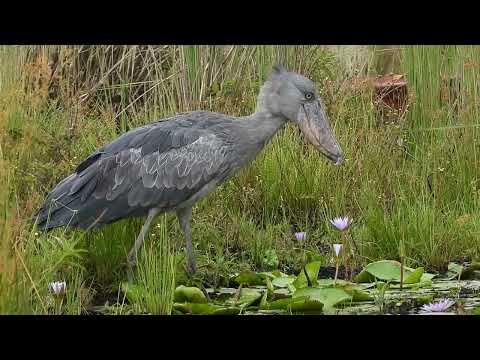
 DragonArtist15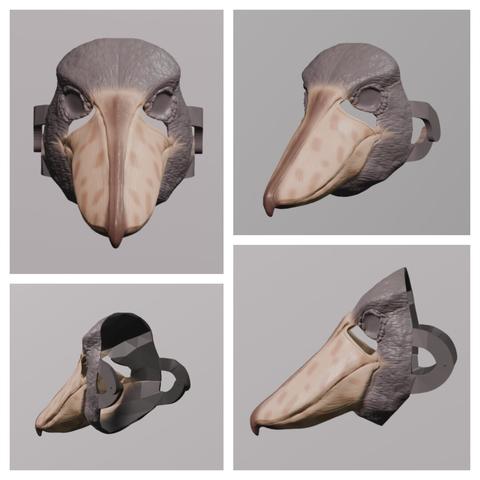
 Palm Oil Detectives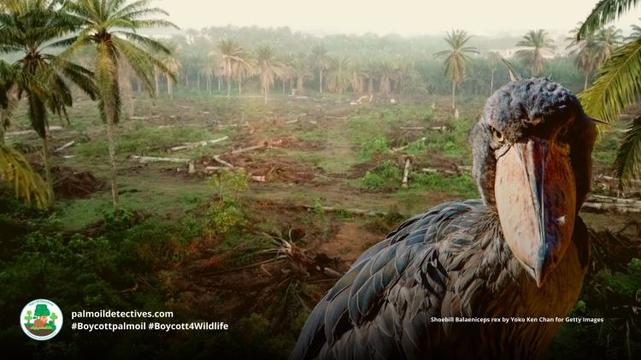
 silasagnostos
 Joy
Joy
 Birds Of The World 🌍🦜