 Ajitniz
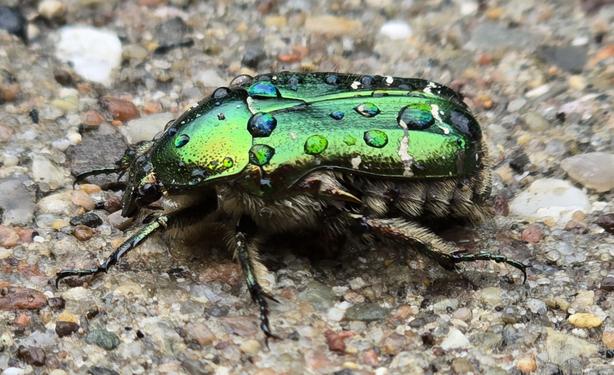
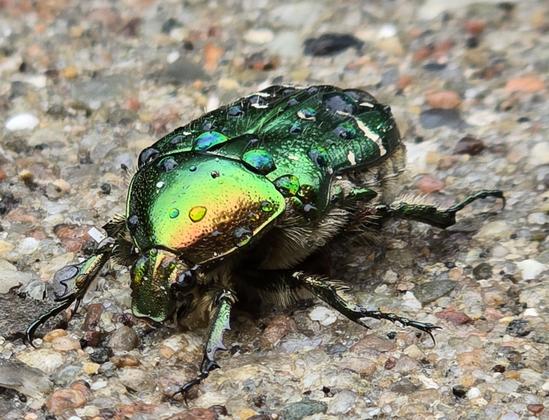
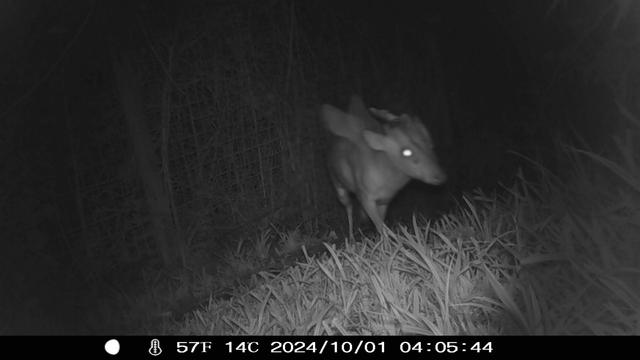
• Sunday morning, rain and a ... Mystery not solved. What is it? •
:
#photography #mysteryanimal #forceofnature #lovely #bugpower #live
:
#photography #mysteryanimal #forceofnature #lovely #bugpower #live
Originally posted 9-April-2026
A woman in a remote area of Oklahoma was attacked by an animal in the early morning hours of March 29. Originally thought to be a dog attack, by the time the story spread in the local news media, the dog scenario had clouded a bit and the attack was from an “unidentified animal”.
Scroll to see the UPDATE on this story below.
The source of the news was here, on April 3. Alicia Maxey became unconscious during the attack but from what she told her family, she remembered hearing a “deep growl” and then, “Something just pounced on her and knocked her to the ground,” said her sister-in-law. “She says it was dog-like is what she described, but she didn’t say it was certainly a dog.”
A cryptid mystery to solve
Almost a week later, it is the top trending article on the news site. Car seat cryptozoologists (I call them this because many of them are filming on their phone in their car and posting to social media) have elevated this story to a major cryptid mystery that they want to “solve”.
One TikTokker, who labeled herself as a “wife & mother, salon owner, dog lover, lake bum”, has been following the comments on the story. She provided a handy summary of the chatter about what the mystery animal might be. As you probably could guess, the speculation gets wild. People are logically suggesting it was indeed a large dog as the most obvious answer. A bear is also highly plausible since it can seem doglike, they are coming out of hibernation quite hungry, and a bear can inflict serious injury, even death. Other opinions as follows:
Mountain lion – There have been confirmed sightings of mountain lions in Oklahoma, but they are rare. The details of the attack do not seem to match well with that of an ambush predator since the woman said she heard growling. Mountain lion attacks are rare even in areas where they are prevalent. While this is a possibility, it’s not a sound conclusion to jump to until more evidence comes to light.
Wolf – There are no known populations of wolves in Oklahoma, but some claims have surfaced that a few individuals may be entering from the southwest. It’s a long shot option. A wolf-dog, coy-dog or coyote is also possible.
Big cat – Could a captive imported animal have escaped? There were no reports of this and no other corroborating evidence to suggest this. A very long long shot.
As with any mystery animal story, some rather unserious persons make guesses for things like skinwalkers, chimpanzees, alligators, wild boars, etc. Hyena is a frequent suggestion in the comments though I’m not sure why this is even proposed. These are African animals and an escaped imported animal is not plausible, especially a hyena.
Dogman – This pop cryptid is a large werewolf-like creature with dog features but walks upright. It’s an impossibility unless you creep into the supernatural realm. It is a cultural cryptid, not a new, undiscovered animal. To propose a dogman as a solution to a mysterious attack is to use a fictional story to account for a real trauma. It’s dramatic and attention-grabbing, but absurd.
For more on the dogman, see: We need to talk about Dogman and Dogman Leads the Pack.
Embellishing the story
The Maxey story first came to my attention from a video on TikTok a few days ago when a cryptid commentator (possibly in Oklahoma) floated the idea that this was a dogman attack. He noted that it took place during a full moon (it did not, see below), and that it corresponded with decades of stories about the dogman in this area. (That is highly exaggerated and possibly manufactured. Stories of a “dogman” were not prevalent until the late 1990s into the 2000s, partly based on a hoax story and film.) The dogman angle seems to be the key that resulted in this story reaching worldwide interest.
The dogman is inevitably associated with werewolf lore. Some cryptid content producer sloppily stated that the Maxey attack took place during a full moon. While this tidbit fits in with the fictional werewolf lore, it adds nothing but fake drama to this terrible incident. Also, it was not a full moon. The full moon was on the night of April 1st, 3 nights later. However, if it wasn’t cloudy, the waxing gibbous moon phase would have been bright.
Subsequent videos circulating about the incident added manufactured embellishments to the story saying Maxey heard a wolf howl and a gunshot (see update below) making it appear far more sensational and mysterious. (The percentage of faked news reports on social media is astounding.) The victim could not talk much and the official news reports are giving little information. She may never be able to provide more accurate details because it was dark, she was surprised, she fell unconscious, and memory is malleable. The latest word is that wildlife officials are involved and DNA has been taken from the victim’s torn clothes. We may never hear about the results. Even if we do, many following the story may reject the official conclusion and the incident will be incorporated into an exaggerated cryptid narrative. (Example: the Montauk Monster mystery was rapidly and definitively solved. But no one wants the tale of a dead raccoon. The dogman already has fake stories of attacks woven into its canonical accounts. See “LBL Beast”.)
The incorporation of sloppy “facts”, and the mass opinionation by non-expert commenters is typical of stories like this. Community effort to “solve” a mystery though internet research, or sometimes, personal efforts to interview people and track down other bits of evidence, is a sign of our times. The result of these amateur investigation efforts often involves incorporating conspiracy ideas. In this case, the conspiracy would be that the police or wildlife officials are hiding the true cause which could be anything from a dangerous wild animal to a magical or trans-dimensional monster “they” don’t want us to know about.
The conspiracy narrative
I’ve mentioned before that I lately am concerned that even talking about these extraordinary rumors are adding to the normalization of them. I can’t really stop that, though. Perhaps having an alternative view out there will be beneficial to some. However, the controversy and mystery mongering are the factors that cause the story to be discussed in the first place. All I can provide is a broader view to consider.
As with other socially-derived meta-narratives, with the penultimate being QAnon, online communities of Nancy Drews and Hardy Boys enjoy seeking out obscure “clues” to develop the overarching story, which evolves to fit with the values and beliefs of that community. It’s a 21st century pastime to “do your own research” and spin your own version to broadcast on your “socials”. I’m still trying to figure out the end game. It might just be attention. But it also seems to be the online version of peer groups gathered around in person sharing the local folklore and gossip. Perhaps it reflects our need to feel useful, to ponder puzzles, and to work through uncertainties to find meaning, resolution, or greater understanding. In the end, speculating about mystery animals online is another manifestation of pop cryptids.
Back to reality: My hope is that Alicia fully recovers from her real-life nightmare and her family receives the help they need. The public now feels entitled to know the conclusion to this horrific story.
Update: Sorry for this add-on just after publishing. The family GoFundMe link had some additional information including the mention of a gunshot. It also contains conflicting information about the dog still being present, but the wounds not being consistent with a dog, suggesting some other animal was involved and the dog was part of the reaction, not the cause. The details are all jumbled up and unclear.
UPDATE: DNA tests shows the animal was a domestic dog
On April 16, a local news source reported that the sheriff announced the DNA tests showed Maxey was attacked by a domestic dog. The testing was done at the College of Veterinary Medicine at the University of Florida. Also noted from Sheriff McClendon was that DNA was collected from “two or three dogs that belong to the owners of the residence where Maxey was found.” This was also sent to the same lab.
So, we have uneven and inconsistent information provided in the media for this story, which is the norm. Officials usually prepare just enough of the story to release to the press and, often, the rest is part of an investigation, or is unknown or unclear (such as how many dogs may have been at the scene). Obviously, certain breeds of dogs can inflict more powerful bites. The sheriff was key in this story by saying that the injuries were nothing like what he’d seen before. It’s not far-fetched to say he hadn’t seen serious dog bites before. This detail bolstered the public reaction and speculation that the attack was from some other mystery animal. However, unrestrained dogs pose a more common and dangerous hazard than wild (or fantastical) animals.
As with other effectively resolved claims tied to mystery animals, it is unlikely that this story will be closed. People who believe in a real dogman will insist it’s a cover-up. The original source of the article, the local Fox TV station, still has the original article up, unedited, where it remains one of the trending stories as of this update.
#animalAttack #cryptid #dogman #mysteryAnimal #Oklahoma https://sharonahill.com/?p=10919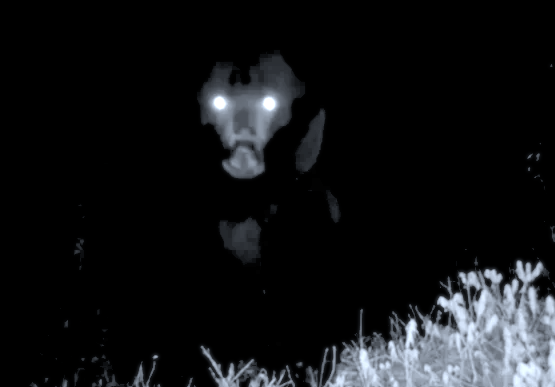
Mystery solved
... What is this, do you think?
Seems to be a house cat!
A very short sighting of this creature.
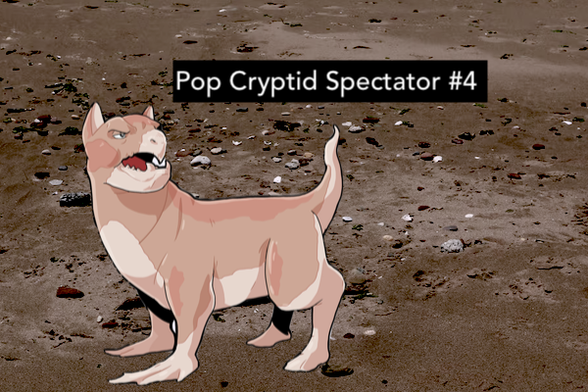
Pop Cryptid Spectator 4
Hello and welcome to the 4th Pop Cryptid Spectator – my chronicle of the changing appearance of and attitudes towards “cryptids” in popular culture. My interest is in exploring the crossover of cryptozoology into a mass cultural phenomenon featuring “cryptids”. This edition provides more examples of how cryptids are part of our everyday lives and how science and scholarly efforts can be unwanted intrusions into cryptid belief. Cryptids are a way of framing the world in terms of mystery and monsters and wonder about amazing creatures that may still be out there to find.
In this edition:
Google Underwater view of Loch Ness
Nessie is a top tier example of a cryptid that was very much a sci-cryptid (viewed with a zoological lens with minimal or no non-natural connotations). After all the effort to search the Loch, there has been no reasonable evidence that a mysterious monster lives in the lake. Nonetheless, Loch Ness remains a top cryptid tourist attraction because the idea of a monster in the lake is so alluring that it eclipses the facts. Nessie as a pop cryptid has no chance of disappearing soon. Nessie is Top of the Pops.
Back in PC Spectator #2, one of the items I shared was about the faked swimming Godzilla on Google Earth. I noted that it was clearly a hoax because Google Maps/Earth did not include ocean views. But, I was mistaken. It does, in some areas. People can post their own photos to Google Maps and some of these are, indeed, from underwater. And, Google includes some special feature projects including Underwater Earth. Google Maps includes a “street” view of the waters of Loch Ness. The photos were part of a 2015 campaign to explore the Loch. According to Jeb Card, who supplied this tip, this associated video was shown at the Loch Ness Investigation Centre for a while.
To try this yourself, zoom into the location where the little Google street “guy” turns into a green dinosaur with a jaunty golf hat. You can take a virtual tour on a boat down the lake. Some of the photos even show an underwater view.
Zoom into Urquhart Castle, turn on street view, and browse the Underwater Earth selections by selecting the little circles representing views.
Move up and down to see the murky, peat stained waters.
Loch Ness Data Set
A new journal article has been published by Charles Paxton, Adrian Shine, and Valentin Popov in the Journal of Statistics and Data Science Education examining anecdotal accounts of the Loch Ness Monster. The researchers compiled a data set of 1800+ reports of sightings. The database was used with the intent to instruct university-level students on how to think about anecdotes as data. The abstract says:
“The Loch Ness Monster reports database illustrates the importance of considering independence, inaccuracy and imprecision when considering data and how statisticians might handle anecdotes as data. Whilst the data is inappropriate for directly making inferences about Loch Ness Monsters, it may be appropriate for making inferences about the population of Loch Ness Monster reports.”
Dr. Paxton tells me that existing research shows “there is strong evidence that cultural expectations influence aquatic monster reports.” And he says more on this topic is to come! That’s right in the Pop Cryptid wheelhouse!
Cryptid Media
Frogman: The croaks are no hoax!
I am not a fan of horror, but pop cryptids most certainly excel in this film genre. Out in 2024 was “Frogman” which appears to blend the harmless legend from the real town of Loveland, Ohio into a found-footage carnage-fest. I will not be watching it, but I am interested in how this has not only incorporated the legend, but how it will modify and shape the legend going forward. It looks very much like a Blair Witch effect where people will legend trip to the area of a fictional story to scare themselves. Note that Loveland has two Frogman festivals as they continue to capitalize on the tale. Ribbit!
https://www.youtube.com/watch?v=vlXapURCpQA&t=107s
Project:Cryptid
Comics and illustrated cryptid fiction is key to popularizing cryptids to the public, particularly younger people. Project: Cryptid is a comic series featuring creative tales of half-seen, barely believable creatures. The second volume of collected content is out now.
Cryptid stuff – Bath bombs
How about a cryptid-themed gift that dissolves away leaving no trace it ever existed, just like a real cryptid experience! Try some cryptid bath bombs which are available on Amazon Japan, Ebay and Etsy.
Utah Yetis hit a trademark hurdle
Back in September, rumors swirled that the new National Hockey League team in Salt Lake City (previously the Arizona Coyotes franchise) would be named the Utah Yetis. The use of a cryptid name would reaffirm how cryptids continue to exert their large presence as sport team mascots, particularly in hockey. The NHL already has the New Jersey Devils and the Seattle Kraken (whose matchups are sometimes called the “battle of the cryptids”). But the plan to adopt the Yeti name is now on thin ice. While cryptids are notably copyright and trademark-free, the “Yeti” name is now synonymous with the cooler brand. The US Patent and Trademark Office has rejected the proposed name due to a “likelihood of confusion” with the existing brand. Strangely, the YETI cooler brand doesn’t use the Yeti creature in their branding. The hockey team still has a chance to make their case. Seems like a collaboration between the two entities would be a monstrously smart deal! Hoping for the best.
Solved! But ignored.
There is a strange internet phenomenon whereby people fixate on a photo or news story or, in this case, a favorite cryptid, without ever digging in deeper to find out more about it. Below are three cases where actual bodies of mysterious creatures were found. Legitimate, reasonable explanations are published which are well-supported by animal experts, testing, or even DNA in one case. Yet the creature maintains a “cryptid” label, suggesting it is unknown. The creatures are even depicted as exaggerated animals by those who speculate what they looked like in life, even though the bodies were discovered in less than prime condition.
Zuiyo Maru carcass. A carcass was hauled up by the Japanese fishing trawler, Zuiyo Maru, near New Zealand in 1977. Japanese scientists who saw the photos stated the creature was a dead plesiosaur, a marine reptile extinct for 66 million years. However, the greater scientific consensus was that the carcass was a decaying basking shark. This animal decays in a certain way where the lower jaw drops off, giving the impression of a small head and long neck remaining. The description, measurements, and tissue samples all supported the basking shark conclusion. The story of a plesiosaur continues to circulate in popular culture. See: http://www.paleo.cc/paluxy/plesios.htm
Basking sharkTexas chupacabra. The strange canid lurking around Phylis Canion’s ranch in Cuero, Texas surprised her by its hairlessness and odd proportions. When it ended up dead on a road in 2007, she saved the remains. What might have been the same kind of creature was also caught running on a police dashboard camera a year later. The hairless, weird-looking canid was dubbed a “chupacabra” (or “Texas blue dogs”) and inherited the legendary blood-sucking, livestock-murdering legend of the much more alien-type original creature from Puerto Rico. Canion had her animal DNA tested. The results, without question, showed it was a coyote. However, the animal clearly had genetic conditions and/or a disease that caused it to have additional unusual features. To this day, mammals suffering from mange (coyotes and foxes are the most common) are often called a “chupacabra” by the media.
CoyoteMontauk Monster. Summer 2008 gave us the Montauk Monster, another mostly hairless and bizarre-looking carcass from a Long Island beach. It was well-photographed and thus began the game of “mass opinionating” that is now standard on social media where everyone who knows nothing about nature insists they know what the thing is – a mutant, alien, or new species – or they make dumb jokes in the comments about it. Like the Zuiyo Maru carcass, the degree of decay fooled people who don’t know how decomposition works. The immersion in water rendered the carcass bloated and hairless, the soft face parts fell off exposing the bone which some saw as a beak. It wasn’t a beak. The animals was, without a doubt, a raccoon. But that explanation was unsatisfactory to those who really wanted it to be new and weird. They refused to accept the natural conclusion because it didn’t suit their wider, werider needs. The Montauk Monster, as a beaked, monstrous bloated beach marauder, still remains some people’s favorite cryptid. See: https://tetzoo.com/blog/2021/10/23/montauk-monster-a-look-back
RaccoonPop cryptids live on, seemingly in spite of expert, scientific analysis. These few examples strongly suggest that no amount of investigation or lab tests will ever truly “solve” the most famous cryptid mysteries. Perhaps because many people don’t want the answer. They will continue to believe in and promote what they wish it to be, and ignore the reasonable conclusion.
For more, click on Pop goes the Cryptid landing page. Make sure you subscribe to all the posts – it’s always free and I don’t send annoying spam.
You can email me with comments, suggestions or questions at Popcryptid(at)proton.me
Pop Cryptid Spectator is also available on Substack. Please share this with cryptid fans you know!
Pop Cryptid Spectator Pop Cryptid Spectator 19Pop Cryptid Spectator 18
Pop Cryptid Spectator 17
Pop Cryptid Spectator 16
Pop Cryptid Spectator 15
Pop Cryptid Spectator 14
#BigfootMuseum #cryptid #ElCuero #FresnoNightcrawler #GeorgiaBigfootHoax #hoax #lakeMonsters #Nahuelito #PuebloMysteryCreature
Made you look! Zoos create cryptids
Hoaxes propagated by zoos are not new. Chinese zoos have repeatedly passed off painted dogs as pandas. And, it’s become a gimmick now for zoos to publicize that they have a mystery creature sighting. The latest is from the Bristol Zoo in England. This week, they posted a trail cam pic of a “mystery animal” seen around the zoo. The photo is that of an edited muntjac deer with wings and a single swirled horn.
The aim is to get people sharing the post and to come to the zoo for a post-summer visit. That’s all great and I love it. Clearly, it’s for fun. Unfortunately, in today’s internet climate, there will be those people who take it seriously or out of context.
There are hundreds of photos circulated on social media showing real animals tagged with the wrong location (big cats like “black panthers” are possibly the most common). Photoshopped or AI images flood facebook, TikTok, etc. Sadly, some will willingly believe these creatures are real while the rest of us just chuckle, roll (eyes) and scroll.
The zoo cryptid ploy took off thanks to the Amarillo zoo mystery photo of May 2022.
The photo caused a social media stir by appealing to a favorite Internet pastime – speculating wildly over a blurry photo. According to what was stated by the zoo, a security photo along the perimeter fence line captured an unusual-looking figure at 1:25 AM. But that’s it – that’s all we got. The photo had no scale, no daytime photo to compare, no attempt to recreate the photo, just a news release two weeks later asking for people to opine on what it could be. And, boy, did they. The creature was suggested to be a chupacabra, a dogman, or a werewolf. Other ideas were Sonic the hedgehog, Anubis, Crash Bandicoot, a Furry trying to break into the zoo, a person in a cowboy hat, a jackrabbit jumping away from the camera, a person carrying a raccoon (or a were-raccoon).
I do hope they were just being silly but some people have a less than adequate grasp on reality. It seems like that it was something normal captured in an unusual way, such as a coyote blurred by movement due to the slow shutter speed. It is also likely that this was a real photo that was used out of context for attention. The zoo knew this would get attention. There was no effort to made to explain it, which was a shame, because it was all about going viral and getting outrageous comments. I’m all for fun news but it stinks when it’s delivered in such a dumb way.
Other zoos saw how great it was for business to say that a strange animal was seen and that none of the zoo staff could identify it (wink, wink). Shortly after the Amarillo media success, the San Antonio zoo tried the same by replacing the Amarillo creature with their hippo. Not many people seem to be falling for the reality of a winged, horned deer, but certain paranormal-themed sites, like Coast to Coast AM run their weird science stories right alongside the obviously ridiculous stuff. There will be some people…
If you see your local zoo promoting cryptids, particularly around Halloween time, send me a tip!
For more on cryptids, visit my other blog Modern Cryptozoology. There is a new post about the awesome and beloved (hoaxed) mascot of Rhinelander, Wisconsin, the Hodag.
#AmarilloZoo #BristolZoo #cryptids #deer #hoax #muntjac #mysteryAnimal #UnidentifiedAmarilloObject #wingedDeer #zoo
 Sharon A. Hill
 Ellie Kennard
 Paul Carpenter 👾