 livligkinkajou
moskitOS - A recumbent trike you can make mostly from wood
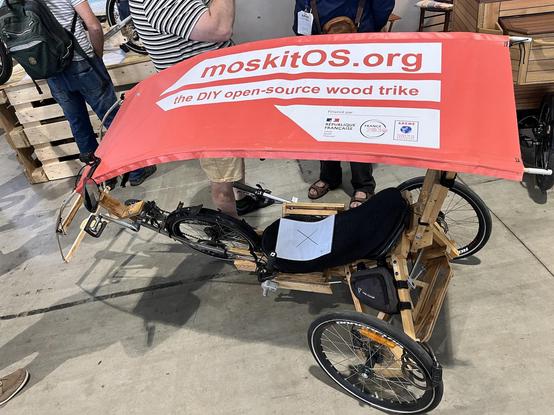
moskitOS - A recumbent trike you can make mostly from wood
Motorcycle Based Inter Row Cultivator for Small Farm Efficiency
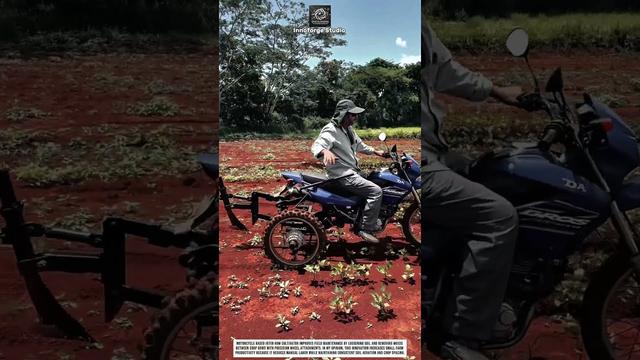
cross-posted from: https://slrpnk.net/post/36451816 [https://slrpnk.net/post/36451816] > non YT link: https://inv.nadeko.net/watch?v=7ktbVxsL2XI [https://inv.nadeko.net/watch?v=7ktbVxsL2XI] > > After some digging, the designs for this device are actually open source, albeit I could only find it in portuguese [here]( > https://www.embrapa.br/busca-de-publicacoes/-/publicacao/1143149/passos-para-a-construcao-de-cultivadores-acionados-por-motocicleta [https://www.embrapa.br/busca-de-publicacoes/-/publicacao/1143149/passos-para-a-construcao-de-cultivadores-acionados-por-motocicleta]) > > You can still use the motorcycle as usual, as it only takes 3 bolts to secure it to the cultivator > > Seen that tractors and their implements are still expensive, this seems like a good alternative for small farmers > > Even though I personally prefer syntropic farming systems, at least now other folks can make use of this open source hardware > > From the video description: > > How It Works: > The motorcycle is modified with cultivation wheels positioned to align between crop rows. As the rider drives forward, the rotating tines loosen compacted soil and uproot weeds without damaging the main crops. Adjustable spacing allows adaptation to different planting layouts, ensuring precise inter row cultivation. > > Advantages: > > Faster than manual hoeing > Reduces labor intensity > Improves soil aeration > Low fuel consumption compared to tractors > Suitable for small and medium farms > > > Disadvantages: > > Requires skilled handling to avoid crop damage > Not ideal for very narrow spacing > Limited to relatively flat terrain > Engine maintenance required > > > Impact on Productivity: > This innovation significantly boosts efficiency in crop maintenance. By mechanizing inter row cultivation, farmers can manage larger fields in less time, improve root oxygen supply, and reduce weed competition, ultimately supporting healthier crop growth and higher yields. > > Suitable For: > > Small scale farmers > Vegetable and row crop cultivation > Rural agricultural operations > Medium sized farms seeking cost efficient mechanization > ___
The long, long road to a FOSS printer
I don’t have to tell anyone that commercial printers suck (with the possible exception of Brother, but how long will that last?). I’ve read people on here talk about the viability of making a FOSS printer. I’d like to keep these thoughts going. From what I remember, there are four main challenges, listed descendingly by their apparent difficulty: 1. Handling ink 2. Meeting legal regulations 3. Moving the moving parts 4. Patents Patent difficulties indeed should be avoidable, since decent printers have been out there for way more than 20 years, the usual duration of a patent. Moving the moving parts with the high precision necessary at first glance seems daunting, but I’ve read people say that this is a problem many people know how to solve. Meeting the legal obligations may ne trickier: Printer fingerprints? Aerosols? Other health and environmental hazards? Handling ink: From what I remember, this would be the main difficulty (unfortunately I can’t find that post or comment anymore). One should avoid the problem of creating an own cartridge & nozzle production by designing the printer such that it can use an existing cartridge model (one for which there are good third-party offers). Still, one would have to solve the apparently very difficult problem that the ink/toner has to be handled under very precise conditions, regarding things like flow velocity, drying rate, and perhaps temperature. In view of these challenges, I’ve started to think that maybe the best approach would be to try our best to find ex-employees of printer companies and convince them that they would be doing humanity a huge service if they were to contribute with whatever they legally can towards developing a FOSS printer. Also, I’ve wondered whether the time to do this may be running out: If even Brother one day starts to crack down on third-party ink/toner, all the producers for third-party ink/toner could eventually go out of business; so that one may successfully develop a FOSS printer, only to have no other ink in the stores than the price-gouged one, which was the reason to do all this in the first place. Do you have any corrections, specifications, or further thoughts? I’d love to hear them.
Researchers launch open-source robotic exoskeleton to help people walk
Reviving the Spirit of Open Science Hardware: Highlights from the 2025 Open Hardware Summit
What does libre hardware technically mean ?
RISC-V Mainboard for Framework Laptop 13 is now available
Almost can't wait to put my hands on one of these.
Looking for a RISC-V single board computer for basic home server


 Curious Mind