Dandelion Review: Quota-Pushing Angels

I want to say that I came to Dandelion purely as a fan of Gintama who knew the creator’s history and had been curious about what he was up to before the samurai antics took over his career. That would make me sound very measured and intentional. The truth is, I found it on Netflix and clicked play. I had no plan to finish it that night. Then episode 1 happened, and I didn’t stop.

I watched the English dub and binged all seven episodes in one night. I love Gintama. I love Onizuka. There is something in the Dandelion DNA that carries the same energy as both, that sense that something ridiculous is about to happen, that the absurdity is deliberate, and that underneath all of it is something that actually means something. The anime didn’t try to announce this. It just got on with it, which is exactly the right move.

What I got was a weird, heartfelt, occasionally messy supernatural comedy about afterlife bureaucracy and a department that might get axed because some petty higher-up holds a grudge.

There’s something about a series that doesn’t take itself too seriously that just hits the spot for me.

Hop your way through the review

Tap any section below to jump straight there in the review.

Quick review

  • Humour: Random, fast, childish in the best possible way.
  • Tone: A balanced mix of lighthearted chaos and grounded, emotional beats.
  • Characters: Distinct enough to carry the show, but several are underdeveloped.
  • Predictability: The plot beats are not surprising, but the execution is. You will guess where it is going and still enjoy how it gets there.
  • Vibe: A quintessential binge that feels best watched alone.

What is Dandelion about?

  • Full genre list: Comedy, Supernatural, Fantasy
  • Key themes: Death and grief, corporate bureaucracy and quotas, empathy versus efficiency, found family
  • Type: ONA
  • Episodes: 7
  • Duration to watch in full: +/- 3 hours 30 minutes
  • Age restriction: PG-13
  • Trigger warnings: Brief depictions of past trauma, mild cartoon violence
  • Release date: April, 2026
  • Animation studio: NAZ
  • English dub: Yes
  • Source: Manga (one-shot originally published in Weekly Shonen Jump in 2002)
  • Kanji: だんでらいおん
  • Average rating: 7.4/10
  • Where to stream: Netflix
  • Official hashtags: だんでらいおん #dandelion
  • Does the story continue in the source material? No

Set within the Send-Off Department of the Japanese Angel Federation, Dandelion follows two “Angels,” Tetsuo Tanba and Misaki Kurogane. Their job is simple in theory: track down Earthbound spirits who can’t find peace and guide them to the afterlife. In practice, however, the federation is a bureaucratic mess, and most of their peers are only interested in hitting their quotas. Tetsuo and Misaki prefer a different, much slower approach, choosing to listen to the spirits’ regrets instead of rushing them. Their quiet routine is upended, however, when they encounter a particularly stubborn spirit on the run.

My thoughts on Dandelion

I binged all 7 episodes in one go. The story is a hybrid: episodic “spirit-of-the-week” cases layered over an overarching “save the department” plot. The constant “take down the department” plotline provided a nice, steady backbone to the chaos. The motivation behind it? Gloriously petty, the kind of corporate jealousy that feels frustratingly real, and I loved how grounded that conflict remained even when the show got weird.

What did not quite work was the two elder Kyoga sons. I understood the system, family loyalty, and fear of their father, but their willingness to go along with the plan felt underdeveloped. They just… did what they were told and eagerly. The youngest son, however, had the arc I wanted to see: desperate for approval, then finally telling his dad to stuff it. That moment was glorious.

Pacing and plot go hand in hand here. Seven episodes is short. I mean, really short. The anime knows it has limited time, so it moves fast. Sometimes that works; the episodic cases keep things fresh, and you are never bored. Other times, it left me wanting more. The final two episodes introduce Proto (an AI robot) and escalate to a vengeful spirit crisis. It works as a climax, but the transition from “quirky angel workplace comedy” to “full supernatural disaster” happens faster than I would have liked. Still, the fact that I want more is not a criticism. If we get a season two, I will be happy. If it remains a standalone, I will not mind. We got a full story arc. 

The humour and randomness are where this show truly shines. If you’re a fan of Gintama or Onizuka, you’ll likely feel right at home here. The wackiness is infectious, and you never really know what’s coming next. Episode 1 remains my favourite; it perfectly set the tone with a story about a spirit who just wanted to apologise to his wife. I’m with the characters; pudding really is an impossible treat to resist.

Animation

The animation style is clean and uncluttered. The character designs are simple, expressive, and consistent. It’s clean, functional, and lets the character expressions do the heavy lifting, especially when things get chaotic. The colour palette leans warm in the human realm and cooler in the Netherworld, which helped distinguish the two spaces.

Action sequences, particularly the chase scenes and the finale, ran smoothly enough. It never reaches “must-watch-for-the-visuals” territory, but it does not need to. This is a dialogue-driven comedy with occasional action beats, and the animation serves that purpose well enough.

The ending theme animation is a different conversation entirely and is worth watching properly at least once.

The animation is perfectly fine for what the show is. The English dub is solid, too. I rarely feel like seven episodes is enough, but in this case, we got a complete, self-contained story. I wouldn’t complain about a season 2, but I’m perfectly content with how it ended.

Sound

The English dub is genuinely well done. The script handles the comedy naturally, and the cast earns the emotional weight of the quieter moments without pushing too hard.

Characters

Misaki Kurogane is a lot of fun to watch. Her dynamic with Tetsuo is the engine of the whole show — they push against each other without ever tipping into actual hostility, and there’s a rhythm to how they argue and then just get on with things anyway.

I found myself really connecting with Tetsuo; he’s the type of character who says the important things without needing a grand speech. His approach to life is something I think I’ll be chewing on for a while.

Masaki Kyouga, the uptight new member assigned to monitor them, grew on me. His arc from rigid rule-follower to someone who understands why the Dandelion does things its way was handled well, given the limited runtime. My favourite scene featuring him is the joke scene: “Now you see me, now you don’t”, and then he just takes off his glasses. That moment made me laugh out loud. Someone in the writer‘s room missed the pun opportunity, though. “Now I see you, now I don’t” was right there.

Harukawa Jun, as a ghost with pretty privilege, was an inspired choice. The recurring bit where every angel present agrees she is too attractive to shoot had me cackling every single time. It never got old. The joke runs longer than you expect, and it is right to do so.

Pacing

The pacing is uneven in the middle stretch, specifically in episodes where the resolution of a spirit’s case takes longer to arrive than the build-up can sustain. It’s not a dealbreaker, and the show recovers, but there are moments where you’re waiting for a payoff that the episode isn’t quite ready to deliver. The final two episodes move quickly and purposefully, which actually works in their favour given the tonal shift they’re navigating.

Themes

The show is, at its core, about what it means to sit with someone in their regret rather than processing them through it efficiently. That has a practical application for the spirit cases, and it has a thematic application for how the Dandelion s operates in opposition to institutional pressure. The tension between productivity and genuine care, between closing cases fast and actually helping someone, runs under the entire series without ever becoming a lecture.

Still, for all its flaws, Dandelion made me laugh, think, and tell my dad to watch it. That counts for a lot.

Overall Enjoyment and Personal Reflections

I’m the target audience for this show, and I knew it approximately eight minutes into episode 1. The humour is my kind of humour, unpredictable, committed, and occasionally unhinged in exactly the right ways. The emotional beats landed because the show placed them carefully and didn’t use them too often.

In summary, this anime can be described as…

A chaotic, supernatural workplace comedy that surprises you with its emotional maturity and grounded perspective on the present. It is a refreshing, bite-sized watch that proves you don’t need 50 episodes to leave a lasting impression.

 It is its own weird, flawed, deeply watchable thing.

Strengths and weaknesses

Strengths:

  • Excellent chemistry between the two leads.
  • A well-paced story that feels complete in just seven episodes.
  • Sharp, witty dialogue that doesn’t rely on tropes.

Weaknesses:

  • Some character motivations—specifically the antagonists—felt a bit forced.
  • The jealousy-driven plot to fire a department felt slightly undercooked at times.
  • Not enough screen time for the supporting cast.

Bingeability, is it an easy watch?

Very much so. I watched all seven episodes in one sitting, and I would do it again. At only seven episodes, you can clear the whole thing in an evening and still be in bed at a reasonable hour. The pacing moves fast, and the cliffhangers between episodes are just compelling enough to keep you clicking “next.” This is not a show you stretch over a week. It is a show you tear through on a Friday night with snacks and zero regrets.

What hooked me was the wackiness and randomness, never knowing what comes next, in a fun way. It reminded me of Onizuka (Great Teacher Onizuka) and Gintama in that regard. Episode one is my favourite of the series. The pudding scene alone? Perfection. I loved the messaging in that episode, and Harukichi and his wife gave me genuine couple goals. They also showed a reality to married life that felt earned, not melodramatic.

What lost me, briefly: the motivation behind getting an entire department fired due to jealousy of one character felt a little stretched. I understood it, but I did not always feel it. Also, some of the younger supporting characters’ motivations felt weak or forced at times. The show has seven episodes, and you can tell which characters got the screen time and which got left behind.

Re-watch value

High, specifically episode 1. Not immediately, I just binged it, but in six months or a year, when I want something low-stakes and funny and warm? Absolutely. This is the kind of show you put on when you are sick, or when you need a laugh after a bad day, or when you just want to spend time with characters who feel like friends.

It is not a show you rewatch for hidden details or mind-blowing twists. It is a show you rewatch for comfort.

What will stay with me?

Misaki Kurogane telling Tetsuo Tanba to lead by example after he suggested she should smile. I have been told to smile for as long as I can remember, by strangers, by family, by people who genuinely thought they were being nice. I have never had a comeback for it. Now I have two. I might not call anyone creepy when they demonstrate a smile, but I will keep that line in my back pocket, too, just in case.

Also, Harukichi’s final conversation with his wife. The whole episode is about his refusal to pass on until he apologises to her and when the apology finally comes, it is not for anything grand. The wife’s exasperation, the husband’s genuine remorse, Tetsuo and Misaki watching from the sidelines, and then back to the office.

The old couple, having been together for fifty years and showing a more realistic view of marriage, which gave me couple goals. I have had thirteen years with my husband so far. I want a full lifetime more.

Favourite character: Tetsuo Tanba

He says a lot of important lines, and I like his approach to things. The man is tired, cynical, and deeply compassionate underneath all that resting grump face. He reminds me of characters I am always drawn to — the quietly capable ones who carry burdens without making a show of it.

Most endearing: Misaki Kurogane

Chaotic, empathetic, and absolutely lethal when she needs to be. Her dynamic with Tetsuo is the heart of the show, and her backstory in episode four made me see her in a completely new light.

A few quotes I liked

I transcribed these while watching, and I have been thinking about them ever since.

“It’s pointless trying to dwell on the past or depend on the future. It’s just a waste of time. Doing that will only make you miss the present.”
— Tetsuo Tanba, Episode 1

“You know, the world changes depending on what lens you see it through. If you have the courage to laugh, not only when things are fun, but when they’re tough, you know, really tough, then nothing will ever scare you.”
— Tetsuo Tanba, Episode 1

Quick questions and answers

Is Dandelion worth watching? Yes, especially if you’re in the mood for something fun, fast, and surprisingly grounded.

Is Dandelion suitable for beginners? Definitely. It doesn’t rely on deep lore or prior anime knowledge to make sense.  If you know someone who is curious about anime and comedy but intimidated by long series, Dandelion is a great entry point.

Does Dandelion have a satisfying ending? Yes and no. It resolves the main plot, but it leaves the door open for more.

Overall

Watching Dandelion felt like a breath of fresh air. It’s rare to find a show that balances slapstick humour with legitimate life lessons so well. I loved seeing the reality of the couple in episode 1; it reminded me that the “happily ever after” isn’t a destination, but a daily choice. I’ve already recommended it to a friend, and I’m definitely going to get my dad to watch it—he’ll appreciate the workplace dynamics as much as I did.

Would I recommend it?

Yes. If you enjoy character-driven comedies with a touch of the supernatural, this is a must-watch. I have already recommended Dandelion to several people, and I will be making my dad watch it.

Have you watched Dandelion, Earth?

Have you watched Dandelion? What did you think? Did the humour land for you, or did it miss more than it hit? Who was your favourite character?

My Rating: 8/10

StoryAnimationSoundCharactersPacing7.5677.58

A complete, well-structured story that knows when to be funny and when to be quiet. The lead characters are excellent, the humour lands more often than not, and the emotional core is genuine.

Date Watched: 7 May 2026

#afterlifeAnime #AnimeBlog #animeBlogger #animeBlogging #AnimeCharacters #animeComedyReview #animeCommunity #AnimeDiscussion #animeFantasyReview #animeHumour #animeLikeGintama #animeLikeGreatTeacherOnizuka #animeOtaku #animeOtakuBlog #AnimeRecommendations #animeRelated #AnimeReview #AnimeSupernaturalReview #bingeWorthyAnime #Comedy #comedyAnime #ComedyAnimeReview #comedySupernaturalAnime #dandelion #DandelionAnime #DandelionAnimeBingeWatch #DandelionAnimeCharacters #DandelionAnimeDiscussion #DandelionAnimeEndingExplained #DandelionAnimeEnglishDub #DandelionAnimeImpressions #DandelionAnimeNetflixReview #DandelionAnimeRecommendation #DandelionAnimeSeason2 #DandelionAnimeThoughts #DandelionAnimeWorthWatching #DandelionNetflixAnime #DandelionONAReview #DandelionReview #DandelionReview2026 #DandelionSupernaturalComedyAnime #emotionalAnime #Fantasy #fantasyAnime #FantasyAnimeReview #fantasyComedyAnime #heartfeltSupernaturalAnime #MisakiKurogane #NetflixAnimeReview #ONAAnime #otaku #otakuBlog #otakuBlogger #quirkyAnime #quirkyAnimeRecommendations #Supernatural #supernaturalAnime #SupernaturalAnimeReview #SupernaturalComedyAnime #supernaturalWorkplaceAnime #TetsuoTanba #workplaceAnime

Your Lie in April Violence: From Comedy Slaps to Serious Trauma

Your Lie in April is often remembered for its breathtaking animation, emotionally charged music, and soul-shattering finale. But on rewatch, I noticed something jarring amid the heartbreak and beauty: the frequent, often physical aggression displayed by the female characters, especially toward the gentle-hearted protagonist, Kōsei Arima, and other male characters. When viewed through the full emotional arc of the anime, the extent of Your Lie in April violence becomes surprisingly difficult to ignore.

At first, I brushed it off. I remembered Kaori as vibrant and free-spirited, and Tsubaki as the classic tomboy. Their teasing felt playful. However, as I continued watching, the pattern became increasingly hard to ignore. Slaps, kicks, punches, and scenes meant to be funny or cute were piling up. And it made me wonder: why was this kind of violence okay just because it was coming from the girls?

Tsubaki’s “Tough Love” and Kaori’s Outbursts

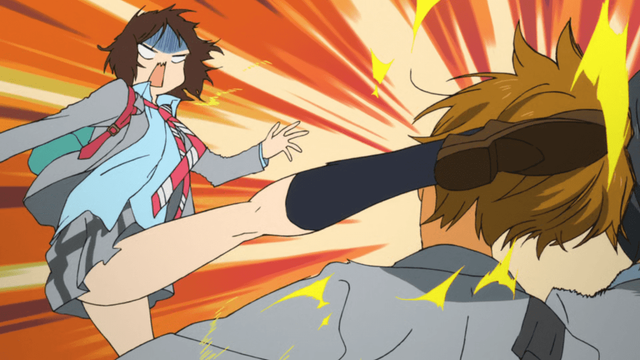
Tsubaki has always been positioned as the sporty, headstrong childhood friend. She yells, teases, and physically roughs up Kōsei more than once. I used to think of it as affectionate bickering. In one instance, she knocks both Kōsei and Kaori into a pool, and he nearly drowns. I found it funny because it was mostly unintentional. The moment is played for laughs, but when looking at a lot of the other interactions, I found myself pausing. Was all of this really supposed to be funny?

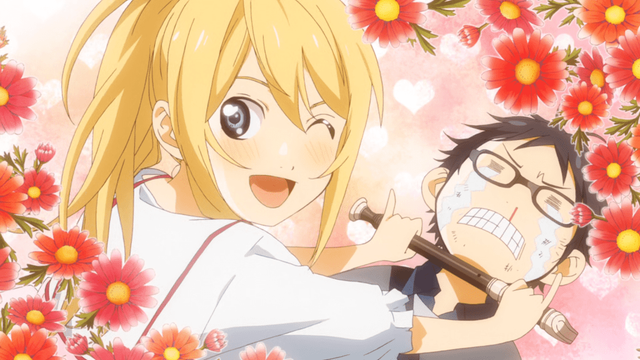
Then there’s Kaori. I adore her, her music, her fire, her defiance of fate. But rewatching the series, I couldn’t ignore how often she smacks Kōsei. With her fists. Her violin case. Her words. She also throws a lot of things at him. I know it’s meant to be energetic and passionate, but I found myself wincing more than once. Especially knowing what we learn about her condition later on.

These moments didn’t make me like them less, but they did make me reflect harder. And it’s not just these two. Hiroko Seto, Arima’s piano coach, is rough with her actions towards him, often holding him up by the ankles. Nagi Aizato also daydreams about physically harming him. Ryouta Watari gets slapped when he gets dumped and so on. These instances may seem minor or comedic, but they speak to a larger pattern of normalised violence woven throughout the story.

Is This a Trope? Or Just a Tired Pattern?

I’ve seen this in other anime too—Toradora!, Naruto, Fumoffu, One Piece—where the female lead’s punchlines are literal punches. I get it. It’s a comedy beat. A way to show that she’s feisty or passionate or “not like other girls.”

But after seeing how hard Your Lie in April leans into emotional nuance, grief, and personal healing, these moments felt, at times, out of place. Tonally jarring, especially when they interrupt scenes of tenderness with slapstick aggression.

Then There’s Saki… and That’s Not Played for Laughs

While Tsubaki and Kaori’s physicality is wrapped in comedy, Saki Arima’s violence is shown in full seriousness. And honestly, it’s brutal. Watching young Kōsei get beaten with a cane until his hands bled, knowing he still desperately wanted her love, it was painful. She’s not just strict, she’s abusive. I know the anime wants us to see her as a complex, tragic figure, but I can’t excuse the damage she caused. Especially when we see how long it takes Kōsei to even touch a piano again. I discuss this in more depth in my post, How Saki Arima’s Abuse Shaped Kousei in Your Lie in April

What really struck me is how the show never treats Saki’s violence lightly, but it does treat Kaori and Tsubaki’s physical moments as comedy. That contrast made me uneasy. Especially since abuse is part of Kōsei’s traumatic past and resulting trauma.

Cultural Comedy or Narrative Blind Spot?

I know Japanese humour often includes the boke/tsukkomi routine, where the “straight man” smacks the “fool” in response to something ridiculous. In that sense, Kaori and Tsubaki’s reactions are totally in line with cultural norms. Normally, I enjoy the gag for what it is.

But I also know how I reacted during Your Lie in April. I laughed at some of it. But I also flinched. Especially when just considering the undercurrent of the series.

Does the Violence Undermine the Drama?

Kaori’s eventual decline gave some of her earlier behaviour a heartbreaking new context. Maybe her outbursts weren’t just comedy, they were desperation. She was trying to live as loudly and freely as she could, while she still had the time.

And with Saki, the violence was the wound. The core hurt that the whole story had to move through.

But Tsubaki’s kicks? The show doesn’t reflect on them. It just moves on. Same with the other characters. At least Hiroko Seto took Nagi Aizato aside and told her not to act on her daydreams.

So… What Do I Think Now?

I still love Kaori. I still feel for Tsubaki. And I don’t think Your Lie in April was trying to glorify violence at all. However, I do think it’s worth noticing when these patterns emerge, especially when they become so normalised that we stop questioning them.

If the story goes out of its way to show us that Saki’s behaviour was unacceptable, maybe it should’ve looked a little harder at the way Kaor, Tsubaki and the other ladies were framed too.

What do you think?

Did this element of the story stand out to you on your first watch? Did it change how you saw the characters? I’d love to hear your thoughts, and I really mean that. Let’s talk about it honestly and gently, just like Kaori would’ve wanted.

#AnimeBlog #animeBlogger #animeBokeTsukkomi #animeCommunity #animeCriticalEssay #AnimeDiscussion #animeDramaAnalysis #animeEmotionalNuance #animeGenderViolence #animeGenderViolenceTrope #animeOtaku #animeOtakuBlog #animePhysicalComedy #animeRelated #animeTrauma #animeViolenceTrope #bokeTsukkomi #bokeTsukkomiAnime #Drama #dramaAnime #emotionalNuanceInAnime #genderRolesAnime #Kaori #KaoriSlaps #KaoriViolence #KōseiArima #KōseiTrauma #otaku #otakuBlog #otakuBlogger #SakiArima #SakiArimaAbuse #traumaInYourLieInApril #Tsubaki #TsubakiKicks #TsubakiToughLove #YourLieInApril

Kaori’s Lie in Your Lie in April

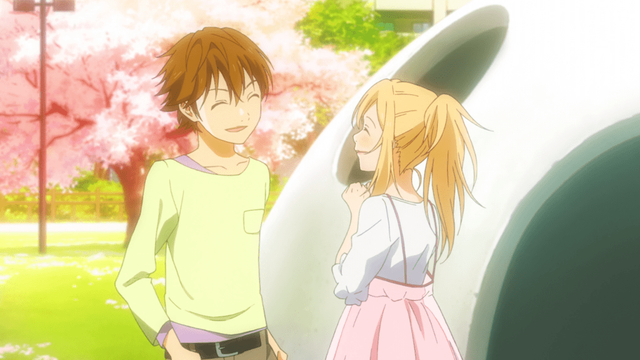
If you didn’t pick up Kaori’s lie while watching, it’s understandable, as the lie only really gets revealed at the end of the series, and if you weren’t paying super close attention, it can be overlooked. Why is the lie specifically told in April? April is cherry blossom season in Japan, regarded as a time of new beginnings. The lie sparks a rebirth for Kōsei’s stalled life, even as Kaori’s own time is running out. So what was the lie?

What is the lie in Your Lie in April?

The “lie” referenced in the title Your Lie in April is the central emotional twist of the story: Kaori Miyazono’s false claim that she is interested in Ryōta Watari, Kōsei Arima’s friend, rather than Kōsei himself. Throughout the series, Kaori pretends to have a crush on Watari as a way to get closer to Kōsei without making things complicated for their friend group, particularly for Tsubaki, who harbours feelings for Kōsei.

Why did Kaori lie?

Kaori’s deception was motivated by her desire to meet and play music with Kōsei, whom she had admired since childhood. She believed that by pretending to like Watari, she could enter Kōsei’s life more easily and avoid hurting Tsubaki’s feelings. In her final letter to Kōsei, revealed after her death, Kaori confesses that her true intention all along was to get close to him, and that she had loved him from the very beginning. This confession is the “lie” she refers to, and it was first told in April, the month when they met.

How her lie shaped the story

Kaori’s lie is not malicious but rather a bittersweet act of selflessness and longing. It encapsulates the themes of regret, unspoken feelings, and the fleeting nature of life and love that run throughout the series. The revelation of the lie in her letter is a pivotal moment, giving both Kōsei and the audience a deeper understanding of Kaori’s actions and the true nature of her feelings.

Viewers reflect on how Kaori’s lie shaped the relationships and emotional growth of the main characters, especially Kōsei, prompting him to rediscover music and confront his feelings.

Did Kaori lie only about Watari in April?

Mostly, yes. She also hid how serious her illness was, saying that she had not passed out before. However, the title points to the Watari crush because that was her conscious, pivotal “first domino.” Also, it is the lie she fully claims in her confession.

Did Kaori know that Kōsei loved her?

This is a frequent point of debate. Some believe Kaori realised Kōsei’s feelings partway through the story, especially after emotionally charged moments like the firefly scene and their performances together. Others argue she was unsure, as suggested by her final letter, where she questions whether her feelings reached him.

When was the lie told?

The specific date in April when Kaori tells her “first lie”, claiming she likes Watari instead of Kōsei, is not explicitly stated in the anime or manga. However, the story begins with the characters meeting and Kaori making this claim during their first interactions, which take place in early April, coinciding with the blooming of cherry blossoms. Therefore, while we know the lie is told in early April, the precise date remains unspecified.

When is the lie revealed?

The lie is finally and fully revealed in Episode 22, during Kaori’s posthumous letter to Kōsei. This scene is the emotional climax of the series, where Kaori’s feelings and motivations are laid bare, and her “lie” becomes an eternal truth. Her confession not only explains her actions but also cements the impact she had on Kōsei’s life, and vice versa.

Nobody said how sick I was exactly, but I knew it was bad. Then one night, I saw my mom and dad crying down in the lounge, when they thought I was asleep. That’s when I knew I didn’t have much time. I made a choice, I ran and I didn’t look back. I started living life exactly how I wanted, so I wouldn’t be all mopey in heaven. Contacts are weird, but I tried ’em. Tried eating a whole cake by myself too, because, why not? Music that used to boss me around, I played it my way. And then, I told one single lie. Are you ready for it? Here it comes, Kaori likes Watari. Shocking right? But I’m glad I told it. After all Kosei, that lie brought us together.

Kaori’s final letter

Kaori’s tiny, impulsive lie in that one spring month rewrote four teenagers’ lives and gave Kōsei the push he needed to hear—and play—music again. That’s why the story and the title both circle back to “Your Lie in April.”

#AnimeBlog #animeBlogger #animeCharacterAnalysis #animeCommunity #animeEmotionalMoments #animeEmotionalTwist #animeLoveStories #animeOtaku #animeOtakuBlog #animeRelated #animeRelationships #animeRomance #bittersweetAnime #cherryBlossomAnime #cherryBlossomSymbolism #DidKaoriLoveKōsei #DidKōseiKnowKaoriLovedHim #emotionalAnime #emotionalAnimeAnalysis #emotionalAnimeMoments #GeneralSliceOfLife #HowDoesKaoriSLieShapeTheAnimeSStory #IsYourLieInAprilASliceOfLife #IsYourLieInAprilBasedOnATrueStory #KaoriConfession #KaoriMiyazono #KaoriWatariLie #KaoriSLie #KōseiAndKaori #KōseiArima #loveAndRegretInAnime #musicalAnime #otaku #otakuBlog #otakuBlogger #romanticSliceOfLifeAnime #SliceOfLife #sliceOfLifeAnime #WasKaoriSLieSelfless #WhatAnimeHasATragicLie #WhatDoesKaoriSFinalLetterSay #WhatEpisodeDoesKaoriSLieGetRevealed #WhatImpactDidKaoriSLieHaveOnKōsei #WhatIsTheMeaningOfYourLieInAprilSTitle #WhatIsTheSignificanceOfCherryBlossomsInYourLieInApril #WhatWasKaoriSLieInYourLieInApril #WhenWasKaoriSLieTold #WhoDidKaoriReallyLove #WhyDidKaoriHideHerIllness #WhyDidKaoriPretendToLikeWatari #WhyIsAprilImportantInYourLieInApril #YourLieInApril #YourLieInAprilExplained

Photomerged Panshots: Knight’s & Magic Gallery

Hi there, my fellow anime fans!

Today, I’m sharing my latest collection of photomerged panshots from Knight’s & Magic.

These seamless images combine multiple screenshots into one complete scene, preserving the full moment exactly as it appeared in the anime. No awkward cropping or breaks, just the uninterrupted view.

This set currently includes 25 high-resolution photomerged panshots, featuring Ernesti and the Silhouette Knights in action, along with key environments, battles, and quieter character moments. I still have one more to complete, which will bring the total to 26.

I’ve been sharing these individually on my social platforms, but wanted to gather them here on AllAnimeMag so they can be enjoyed as a full collection. I use these photomerges for wallpapers and creative projects, and I’ll be making more for other anime in future. I also used quite a few of them in my Knight’s & Magic review if you wanna know what I thought of the anime.

If you enjoy this gallery, let me know which anime you’d like to see next!

Knight’s & Magic Gallery

What Anime Should I Feature Next?

#animeBackgroundImages #AnimeBlog #animeBlogger #animeCommunity #animeGallery #animeOtaku #animeOtakuBlog #animePanshots #animePhotomergeGallery #animeRelated #animeScreenshots #animeWallpapers #AreThereHighResolutionKnightSMagicWallpapers #AreTheseOfficialKnightSMagicScreenshots #CanIUseKnightSMagicImagesAsWallpapers #ErnestiEchevalier #ErnestiEchevalierScreenshots #Fantasy #fantasyAnime #highResolutionAnime #HowManyEpisodesDoesKnightSMagicHave #IsKnightSMagicGoodForMechaFans #IsekaiAnime #KnightSMagic #KnightSMagicGallery #KnightSMagicHighResolutionImages #KnightSMagicPanshots #KnightSMagicPhotomergedScreenshots #KnightSMagicWallpaperImages #mechaAnime #mechaAnimeGallery #otaku #otakuBlog #otakuBlogger #photomergedScreenshots #SilhouetteKnights #SilhouetteKnightsImages #Studio8bit #WhatAnimeShouldBeFeaturedNextForPhotomergedPanshots #WhatAreKnightSMagicPhotomergedPanshots #WhatAreSilhouetteKnights #WhereCanIFindKnightSMagicScreenshots #WhereCanIViewAKnightSMagicGallery #WhoIsErnestiEchevalierInKnightSMagic

Rating: 🌙🌙🌙.5

Not giving a 4 because some of my readers may not like bugs crawling over people

#clevatess #animeepisodereview #animecommunity #animeblog #scribbblethoughts

http://scribbbleanime.uk/2026/02/21/clevatess-episode-8-review/

Clevatess Episode 08 review

Clevatess Episode 8 delivers a bugtastic showdown as Alicia confronts Bolate’s wizard bug Meynard, while Klen drops shocking news that changes everything

Scribbble Anime

Exploring Mushi-Shi Episode 1: The Green Seat

A boy, a forest, and drawings that refuse to stay drawings.

This was a rewatch, but it was also the first time I watched Mushi-Shi Episode 1: The Green Seat without any distractions. No second screen. No multitasking. Pausing when something felt dense. Letting my full attention be on this episode.

It was…difficult.

I mainly watch anime while doing something else, working, scrolling, half-listening. Mushi-shi does not reward that kind of viewing. Honestly, it resists it. The episode moves slowly, speaks sparingly, and trusts me, as the viewer, to notice the small shifts, sounds, framing, and breath. Most of which, sadly, get missed while I am multitasking.

Pst, this reflection begins my Serial Reflections project with Mushi-Shi, a series that actively resists binge-watching and instead invites patience, attentiveness, and quiet contemplation.

What is Mushi-Shi episode 1, The Green Seat, about:

  • Series: Mushi-shi
  • Episode: 1
  • Focus: Creation, companionship, restraint
  • Stream on: BiliBili and Crunchyroll

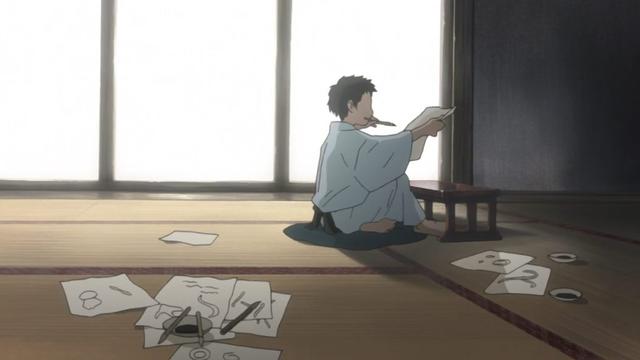
Ginko investigates a boy whose left-hand drawings take on a life of their own, soon realising that an unseen presence has been keeping the boy company.

My Quiet Reflection on Mushi-Shi Episode 1: The Green Seat

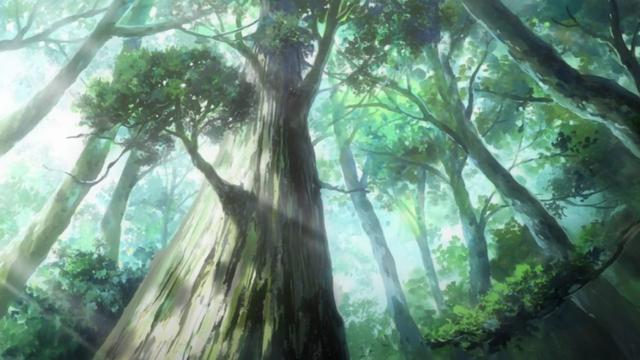
Mushi-Shi Episode 1: The Green Seat really sets the tone for the entire series with its deliberate slowness and emphasis on atmosphere over action. One of the first scenes features a long pan of the forest, capturing the way light filters through the canopy and the subtle rustle of leaves in the wind. Watching the English dub with full attention, pausing to absorb what I can, makes the episode hit differently. This initial scene immediately anchors the mood, inviting us to embrace the quiet and reflect on the deeper, almost meditative ambience that persists throughout the episode.

The English dub actors did a wonderful job this episode. Travis Willingham as Ginko carried an easy calm, a voice that never pushes or pressures. Luci Christian gave Shinra a fragile softness that makes his self-doubt feel all the more believable. Cherami Leigh’s Renzu was a gentle warmth that lingered even when she was barely on screen. The performances never strain for emotion; they let it surface naturally, which suits the series perfectly.

The scenery is tranquil, almost unreal. Long shots of the forest dominate the episode, leaves shifting in the wind, green stretching endlessly in every direction. The sound design does as much storytelling as the visuals. Wind through trees, distant birds, the subtle creak of the house, long stretches without dialogue. There’s nothing extra here, nothing competing for attention. The result is soothing, almost meditative, but also quietly suffocating.

Being that deep in the mountains, cut off from the rest of the world, would be incredibly lonely. Shinra’s life feels like a beautiful cage. Nature is always present, always surrounding him, yet there is no human connection beyond his grandmother’s lingering presence. The forest keeps him company, but it does not respond. It listens without answering.

One thing that stood out strongly on this rewatch was how rarely the anime shows full faces. We get close-ups instead—eyes, mouths, half-profiles, fragments of expression. Shinra’s hesitant eyes when he talks about beginning to doubt himself. Ginko’s steady, observant gaze as he takes everything in without rushing to judgment. Renzu appearing in soft, incomplete glimpses, never fully solid.

Those partial views create a strange mix of intimacy and distance. We’re close, but never fully allowed in. It mirrors the episode’s themes perfectly: things that are half-seen, half-felt, never fully grasped. This technique of fragmentary visuals reflects the series’ overall meditation on the unseen and the unknowable in life. Showing full faces would make emotions too explicit. Instead, we’re asked to read between expressions the way Ginko reads between events.

Ginko himself embodies that restraint. He doesn’t arrive to fix a problem so much as to understand its shape. He doesn’t condemn Shinra’s ability and doesn’t rush to suppress it, treating the unseen presence as something not inherently wrong. His solutions are subtle and understated. However, during his encounter, Ginko undergoes a subtle shift in perspective.

He moves from being merely an observer to embracing a more interactive role, recognising the nuances and potential of Shinra’s unique connection with the mushi. This realisation highlights his evolution from a passive traveller to someone who actively nurtures and respects the delicate balance of the world around him.

Even his final act, quietly pocketing the green wine cup as he slips away, that subtle, satisfied smile flashing in the forest light, feels somewhat cheeky rather than sinister. Ginko is lowkey a ‘thief‘, and somehow it fits. He doesn’t destroy or force. He repositions. He balances.

The episode’s explanation of mushi is another example of this approach. Ginko’s long analogy about the hand and the place of mushi “closest to the heart” is one of the clearest explanations we ever get, yet it never feels like exposition. It’s poetic, sensory, grounded in something physical and familiar. Rather than reducing mushi to a concept, it keeps them elusive.

Several lines from the English dub linger long after the episode ends. Shinra’s quiet admissions, how his grandmother never believed him, how he began to doubt himself, carry enormous weight without being dramatic. Luci Christian’s delivery makes those lines feel fragile, almost embarrassed to exist. And Ginko’s observation that “it’s not easy to communicate a sensory experience” lands especially hard in that context. When no one believes what you perceive, the damage isn’t loud. It’s internal. It teaches you not to trust yourself. (I will share my transcribed quotes from the series soon. I just want to build up enough to make a quote post worthwhile.)

What strikes me most about The Green Seat is that I never found it unsettling. There’s no sharp turn, no moment designed to frighten. The episode remains calm throughout. If there’s discomfort here, it comes not from danger, but from stillness. From how easily something gentle can settle into permanence.

Next comes Mushi-Shi Episode 2: The Light of the Eyelid, an episode about vulnerability, confinement, and the cost of adaptation. But The Green Seat lingers quietly, like something that never quite leaves.

What can you discover in the quiet moments of your own life? Perhaps the lingering echoes of this episode invite you to notice the subtleties around you, to find understanding in stillness, and to see the unseen in everyday experiences.

#animeAboutNatureAndStillness #animeAboutStillnessAndNature #animeAtmosphere #AnimeBlog #animeBlogger #animeCommunity #animeOtaku #animeOtakuBlog #AnimeReflection #animeRelated #atmosphericAnimeReview #episodicAnime #HowShouldYouWatchMushiShi #IsMushiShiEpisodic #IsMushiShiSlowPaced #LongTailSemanticKeywords #mindfulAnimeViewing #mindfulAnimeWatching #mindfulWatchingMushiShi #mushiExplainedMushiShi #MushiShi #MushiShiAnalysis #MushiShiAtmosphereAndThemes #MushiShiEpisode1Analysis #MushiShiEpisode1TheGreenSeat #MushiShiFirstEpisodeReflection #mushiShiReflection #MushiShiSlowAnimeReview #Mushishi #natureAnime #otaku #otakuBlog #otakuBlogger #philosophicalAnime #philosophicalAnimeReflection #quietAnimeEpisodeAnalysis #quietAnimeEpisodes #SecondaryKeywords #serialReflectionsAnime #slowAnime #slowAnimeAnalysis #TheGreenSeat #theGreenSeatExplained #TheGreenSeatMushiShiExplained #WhatAreMushiInMushiShi #WhatHappensInTheGreenSeatMushiShi #WhatIsMushiShiEpisode1About #WhatThemesAreInMushiShiEpisode1 #WhyIsMushiShiRelaxing

RE: https://urusai.social/@KhakiBlueSocks/115460267734170801

Interesting review of the streaming anime service OceanVeil from my friend @KhakiBlueSocks

Check it out.

#Anime #AnimeBlog #OceanVeil #AnimeStreaming #Streaming

Whoa, the first episode of #clevatess was one that I wasn't expecting. Did you guys see those fodder heroes, 😂 they didn't last longer than their name cards. Clevatess schooled them like they were lvl 1 noobs in a dungeon

why not can check out my episode 1 review ➤ https://wp.me/pen1zs-1Qn

#anime #animeblog #clevatessanime #summer2025anime #darkfantasy

Clevatess: Episode 01 review – the dark lord beast

Clevatess Episode 1 review – this dark fantasy premiere is loaded with rich world lore and brutal, high-octane moments between Alicia and the dark lord beast

Scribbble Anime