 🇨🇦🇩🇪🇨🇳张殿李🇨🇳🇩🇪🇨🇦
I have already described this tea's experience as part of a blog entry about milk and sugar in tea which I reproduce here in lightly edited and elided form:¹
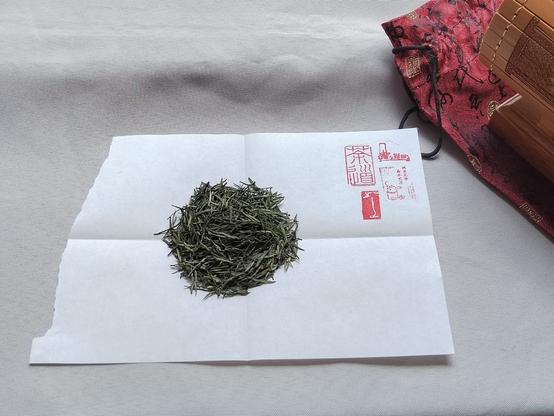
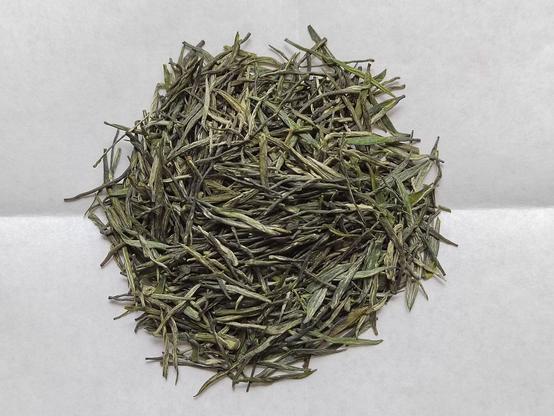
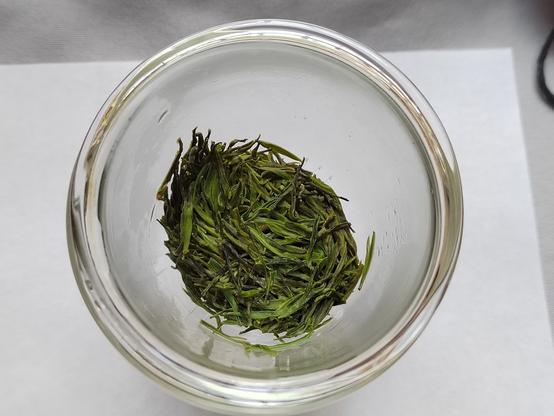
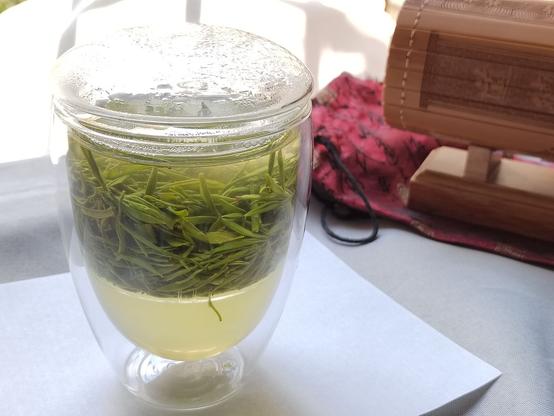
> 南京雨花茶 (Nánjīng Yǔhuā chá, Nanjing Yuhua tea) is a famously subtle tea that needs patience to fully appreciate. On the first sip it's almost a disappointment: thin, almost watery. A hint of sweetness, some nuttiness like chestnut, a ghost of toasted pine. It's clean, cool, vegetal, and vanishes almost immediately. You take a second sip and things change: the flavour is now clear; fattened up. The chestnut now has a foundation; a tingly basis on your tongue's middle. The pine has sharpened, showing ghosts of dill: brightly resinous. A strong umami note builds. As you sip, the sweetness transforms into a cool finish at the back of the throat. The nuttiness develops into something stronger like raw almonds. The umami strengthens into something like a delicate vegetable soup's broth. Every sip layers over the previous, changing the flavour with each exposure. It shows off the molecules it arranges on your palate sequentially, one after another. The finish stretches for an eternity: a faint, astringent dryness that makes you reach for more. It begins as nothing, but slowly, patiently, becomes everything. It is a true world-class green.
This is a tea with roots in antiquity, but the modern form dates to 1959. It is a tea that is highly dependent on skillful tea artisans. The technique is inscribed in the national list of Intangible Cultural Heritage. It's part of the UNESCO Representative List of the Intangible Cultural Heritage of Humanity. There are well-known masters who are celebrated nationally for their work, like Chen Shengfeng.
This is a special tea.
Mastodon users will have to click to see all pictures.
#茶 #中国茶 #南京茶 #雨花茶 #绿茶 #清明茶
#Tea #ChineseTea #NanjingTea #YuhuaTea #GreenTea #QingmingTea
---
¹ https://wordsmith.social/zhang-dianli/tea-snobbery-101-milk-and-sugar-are-evil
> 南京雨花茶 (Nánjīng Yǔhuā chá, Nanjing Yuhua tea) is a famously subtle tea that needs patience to fully appreciate. On the first sip it's almost a disappointment: thin, almost watery. A hint of sweetness, some nuttiness like chestnut, a ghost of toasted pine. It's clean, cool, vegetal, and vanishes almost immediately. You take a second sip and things change: the flavour is now clear; fattened up. The chestnut now has a foundation; a tingly basis on your tongue's middle. The pine has sharpened, showing ghosts of dill: brightly resinous. A strong umami note builds. As you sip, the sweetness transforms into a cool finish at the back of the throat. The nuttiness develops into something stronger like raw almonds. The umami strengthens into something like a delicate vegetable soup's broth. Every sip layers over the previous, changing the flavour with each exposure. It shows off the molecules it arranges on your palate sequentially, one after another. The finish stretches for an eternity: a faint, astringent dryness that makes you reach for more. It begins as nothing, but slowly, patiently, becomes everything. It is a true world-class green.
This is a tea with roots in antiquity, but the modern form dates to 1959. It is a tea that is highly dependent on skillful tea artisans. The technique is inscribed in the national list of Intangible Cultural Heritage. It's part of the UNESCO Representative List of the Intangible Cultural Heritage of Humanity. There are well-known masters who are celebrated nationally for their work, like Chen Shengfeng.
This is a special tea.
Mastodon users will have to click to see all pictures.
#茶 #中国茶 #南京茶 #雨花茶 #绿茶 #清明茶
#Tea #ChineseTea #NanjingTea #YuhuaTea #GreenTea #QingmingTea
---
¹ https://wordsmith.social/zhang-dianli/tea-snobbery-101-milk-and-sugar-are-evil