A quotation from Eleanor Roosevelt

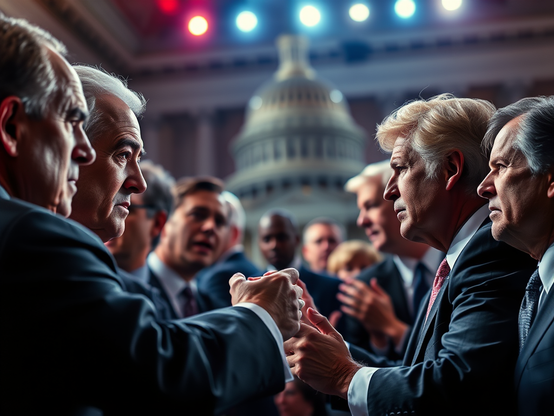
In political life I have never felt that anything really mattered but the satisfaction of knowing that you stood for the things in which you believed, and had done the very best you could.

Eleanor Roosevelt (1884-1962) First Lady of the US (1933-45), politician, diplomat, activist
Column (1944-11-08), “My Day”

More about this quote: wist.info/roosevelt-eleanor/61…

#quote #quotes #quotation #qotd #eleanorroosevelt #belief #effort #government #integrity #meaning #politics #satisfaction #standforth #standup #whatmatters

Column (1944-11-08), "My Day" - Roosevelt, Eleanor | WIST Quotations

In political life I have never felt that anything really mattered but the satisfaction of knowing that you stood for the things in which you believed, and had done the very best you could.

WIST Quotations

CNN – What Matters – November 10, 2025

Editor’s Note: Below is a re-formatted post from a CNN Newsletter. It will appear online soon. The newsletter is sent first, then it is published online in a later cycle. I’ve posted it here, because of my comments. This 8-member “deal” on the side is a huge mistake. Read more below. –DrWeb

11.10.25   Enjoying this newsletter? Forward to a friend! They can sign up here.
Questions? Comments? what.matters@cnn.com  by Zachary B. Wolf
CNN What Matters
 
by Zachary B. Wolf

: Democrats seethe over shutdown deal.
They might be celebrating in a year

The likely end to the longest-ever government shutdown has Democrats turning on each other in searing anger.
 
The prevailing opinion appears to be frustration that eight senators freelanced a deal with Republicans.
 
While it does not guarantee the extension of expiring enhanced subsidies for Obamacare health insurance plans, it does guarantee there will be a Senate vote on that subject.
  
Sen. Tim Kaine, who helped finalize the deal, defended it on CNN Monday. Kaine noted that the White House had pledged to rehire federal workers fired during the lapse in government funding and to bar further reductions in force at least until January 30.
 
That’s not good enough for many Democrats who were feeling powerful after victories in mostly blue-state elections last week. They wanted to hold out for more guarantees from the White House, even as the nation’s air travel system started to buckle under the strain of air traffic controllers not being paid and people who rely on the government for assistance buying food went without.
 
There’s no guarantee that House Speaker Mike Johnson will allow a House vote on extending the enhanced Affordable Care Act subsidies, but Kaine argued that if senators pass it with bipartisan support and Johnson ignores it, the GOP will pay a political price.
 
“Their midterm election next year would look a lot worse even than the shellacking they got last week in Virginia and elsewhere,” Kaine said.
 
The expiring enhanced subsidies, according to analysis by KFF, will be felt more in states that voted for Trump in 2024, and could result in millions of people opting not to have health insurance at all.
 
This shutdown, assuming it ends and is not repeated in January, won’t be top of mind for voters in midterm elections next year, but it’s still worth taking a look at what happens at the ballot box after a shutdown.

DrWeb’s Comment…

“While it does not guarantee the extension of expiring enhanced subsidies for Obamacare health insurance plans, it does guarantee there will be a Senate vote on that subject.” –article quote

I have highlighted in bold a quote from the article. It is embarassing to post the truth for these eight renegades. They got scammed, including Catherine Cortez Masto, one of my Senators I used to support in Nevada.

To believe that quote, is to believe or trust Trump. I don’t.

These 8 should have known better. I don’t believe or trust the Trump Senate. I don’t.

It won’t vote on the subject, or the votes will vote to remove Obamacare and/or the subsidies, surprise surprise.

All the damn signs point to Trump erasing Obamacare (ego thing to do), and replacing it –after many years of asking GOP for any national health plan, they will dump something out and call it National Health Care by Trump.

Watch, wait, Trust me. They are screwed, these 8, we are screwed by the failure to support the Democratic Party (outliers not welcomed). All those closed days –accomplished NOTHING. Because of these 8 fools. –DrWeb

#americans #cnn #democrats #eightSenators #federalGovernmentShutdown #governmentShutdown #healthCare #newsletter #republicans #shutdownDeal #subsidiesInJeopardy #timKaine #trump #uSHouseOfRepresentatives #uSSenate #voters #whatMatters #whiteHousePledges #zacharyBWolf

“If your best friends do not read books, they read you.”
― Ernest Agyemang Yeboah

#Bot #Quote #BestFriends #Companionship #Reading #ReadingBooks #UnderstandingPeople #WhatMatters #WhatPeopleThinkOfYou #Whatever

Add a glass of milk or calcium enriched milk alternative, apple or a banana slices and the child, the elderly, the ill, have all the nutrients needed. #WhatMatters

RE: https://bsky.app/profile/did:plc:gk6rmhqrprzk5zwmt46lbndk/post/3m3ynws5gh226

Fwd: Trump’s free speech back flip was 250 years in the making – CNN – What Matters

October 10, 2025

: Trump’s free speech back flip was 250 years in the making

“If we don’t have FREE SPEECH, then we just don’t have a FREE COUNTRY,” then-candidate Donald Trump said in a campaign video.

But less than nine months into his second term, he was explaining his administration’s stance this this way:

“We took the freedom of speech away,” he said at a White House event Wednesday as he tried to explain his call to put people who burn the American flag behind bars for years despite a very clear Supreme Court decision that lists flag burning as free speech.

Trump’s complete turnabout on speech is indicative of the contradictions and ironies in the bedrock principle of the American liberties in the Bill of Rights and the First Amendment.

While Trump came to office promising to restore free speech, particularly on college campuses and on social media, he’s now engaged in a multi-front war over what people can say in the US:

► A Ronald Reagan-appointed judge accused Trump’s administration of a “full-throated assault on the First Amendment” for targeting and deporting pro-Palestinian academics.

► Conservative Supreme Court justices were skeptical at oral arguments over a Colorado law that bans debunked LGBT conversion therapy, suggesting it may step on the free speech rights of therapists.

► Trump wants colleges and universities to clamp down on campus speech in exchange for federal funding.

► He applauded his FCC chairman, Brendan Carr, for trying to get Jimmy Kimmel’s show canceled by ABC, an effort that backfired.

► His lawsuits against media companies and law firms, none of which appear to stand on firm legal ground, have nonetheless been wildly successful in extracting settlement payments and sending a message to firms that would oppose him.

► Companies like YouTube have reinstated accounts or made plans to do so for members of his administration, such as FBI Deputy Director Dan Bongino, who were suspended for spreading misinformation during the pandemic.

► His attorney general, Pam Bondi, promised to go after “hate speech” by people who she perceived as celebrating the death of Charlie Kirk.

The hate speech element is particularly concerning to experts because in recent decades, it has become a tenet of Supreme Court cases and free speech advocates that “hate speech” is such a nebulous term that leaving it unprotected would invite exactly the type of selective viewpoint-policing that the administration now stands accused of.

The hate speech in question was not any obviously repugnant White supremacist or racist ideology, but rather comments related to Kirk’s death, potentially including those who celebrated it. But we don’t really know since Bondi has not been specific.

Congress undercut the First Amendment almost immediately

US history is full of pendulum swings back and forth between freedom and restriction of speech.

The First Amendment, adopted shortly after the Constitution, guarantees Congress shall make no law “abridging the freedom of speech, or of the press.”

But within a few years, Congress passed the Alien and Sedition Acts, which made it a crime to criticize the president, then John Adams, during the undeclared Quasi War between the US and France.

“The sad truth is, free speech has always been a weaponized slogan, right from the outset, when it’s first invented in the early 18th century,” according to Fara Dabhoiwala, a historian at Princeton University and author of the recent book “What is Free Speech? The History of a Dangerous Idea.”

Benjamin Franklin’s grandson Benjamin Franklin Bache was among those arrested for “libeling” Adams under the law. Federalists also threw a Vermont publisher and congressman, Matthew Lyon, in jail for criticizing Adams in print.

(Among other things, Lyon wrote that Adams had “an unbounded thirst for ridiculous pomp,” and, separately, started a fight on the House floor over Adams’ foreign policy. Lyon, attacked with a cane after he spat tobacco juice at a fellow lawmaker, defended himself with fire tongs.)

Far from silencing Lyon, however, the Sedition Act backfired. Lyon ran a successful campaign for Congress from jail. The unpopularity of the clampdown on speech helped lead to Adams’ defeat in the election of 1800.

Running for president from prison

Another wartime restriction on speech, the Sedition Act of 1918, led to the conviction and sentencing to 10 years in prison of the socialist Eugene Debs for his criticism of the draft during World War I.

The Supreme Court upheld his conviction, but Debs ran a presidential campaign from his jail cell in 1920 and got nearly 1 million votes. President Warren G. Harding later commuted Debs’ sentence.

Marketplace of ideas

Courts and people have complex and nuanced views on free speech. Justice Oliver Wendell Holmes wrote the unanimous majority opinion upholding Debs’ conviction, but he also wrote a key dissent in a case involving the conviction of Russian immigrants who distributed leaflets calling for a general strike in the US to interrupt the war effort.

In that 1919 dissent, he espoused what would become a more absolutist view of the benefits of free speech. “The best test of truth is the power of the thought to get itself accepted in the competition of the market,” he wrote.

Free speech and civil rights

In the US, the evolution of speech has also turned on issues of race.

“If you go to the 1830s you would see that abolitionism was brutally suppressed in many Southern states,” according to Jacob Mchangama, executive director at the Future of Free Speech, a think tank at Vanderbilt University and a Senior Fellow with the Foundation for Individual Rights and Expression.

“You would face jail if you spread abolitionist writings, so that was an attempt to try and contain abolitionists in the North from spreading their ideas to the South,” he told me in a phone interview.

Generations later, it was the civil rights movement that helped secure more and more protections for speech.

“The steady expansion of the First Amendment was to a very large extent accomplished by civil rights groups; you had the NAACP and Jewish organizations who were persuaded that adopting laws against group libel, as hate speech was often called, was detrimental to minorities,” Mchangama said.

Those protections have also helped protect the type of hateful speech that civil rights groups would abhor. Thurgood Marshall argued in favor of school desegregation at the Supreme Court as an NAACP lawyer in the Brown v. Board of Education case.

Later, as a Supreme Court justice, he ruled against an Ohio law in favor of KKK member Charles Brandenburg’s right to free speech.

It’s an important distinction between the US and much of the rest of the world, where laws are more likely to restrict speech. Mchangama points to people in European countries who have been jailed over Facebook posts, for instance.

Those cases are why Trump and Vice President JD Vance have both sought to lecture European countries about free speech — lectures that have not aged well as the Trump administration now tries to clamp down on dissent on college campuses and on television, among other places.

A third Red Scare

Dabhoiwala fears the US is entering a disturbing new period where speech is in danger.

Protections we enjoy today, he said, come out of the Red Scares of the late 1910s and the 1950s, “when government was trying to shut down socialist and communist speech and the speech of homosexuals and the speech of other kind of progressives.”

“And yet what we’re seeing is really a third Red Scare where once again, we have an authoritarian government trying to shut down political voices that it disagrees with,” Dabhoiwala said.

Flaw in the First Amendment?

The larger issue may be what Dabhoiwala sees as a major flaw in the First Amendment, which protects speech from the government but is narrowly drawn.

“The government may not censor you, but any private corporation can sack people for putting a bumper sticker on their car or for posting something online, and that’s that,” he said.

To that point, Kimmel was put back on the air not because of a definitive government action, but because ABC’s parent company, Disney, made a business decision.

ABC needs its broadcast licenses, although fewer and fewer people watch TV over the air. Tech companies jealously guard their exemption from liability for what’s posted on their platforms, a relic of telecommunications law that was passed in the 1990s before the Internet was much of a thing. If you’ve heard the term “section 230,” that’s what people are talking about.

“We’re in such a mess because these providers don’t have any legal responsibility to the truth or to the common good, and they are happily monetizing and making giant amounts of profit out of spreading lies and untruths alongside truth and deliberation of a serious kind,” Dabhoiwala said.

The problem of misinformation vs. the problem of misinformation correction

Mchangama agrees that untruths can spread quickly online, but he thinks the effects can be blown out of proportion and would be impossible to stop through content moderation.

“If you believe that everyone with an internet connection should be able to participate in the public sphere, then I think it’s impossible to try and combat mis- and disinformation through content moderation, because what constitutes mis- and disinformation is often very difficult to determine,” he said.

Dabhoiwala sees things differently. He wants more out of social media platforms because misinformation spreads quickly, but fact checking takes time.

“The moment we say this is all just the same and free speech, say what you like, you open the door to vast quantities of misinformation, to manipulation by hostile outside actors, by politicians just bullshitting their way to power,” he said.

Mchangama, on the other hand, hopes the American left will look at the Trump administration today and dial back on efforts to control speech.

“Power changes hands,” Mchangama said.

New leaders have new ideas about which groups are worthy of protection, and which should be targeted, which is what we’re seeing right now with Trump.

 Continue/Read Original Article Here: Trump’s free speech back flip was 250 years in the making.

#2025 #America #CNN #CNNWhatMatters #DonaldTrump #Education #FirstAmendment #FreeSpeech #Health #History #Libraries #Library #LibraryOfCongress #Opinion #Politics #Resistance #Science #Technology #Trump #TrumpAdministration #USConstitution #UnitedStates #WhatMatters

The US veers toward Christian nationalism – CNN What Matters


: The US veers toward Christian nationalismAmericans are used to hearing about the tradition of separating church and state, but the two are increasingly fused in President Donald Trump’s administration.

The First Amendment, after all, in addition to guaranteeing free speech, says that Congress shall “make no law respecting an establishment of religion, or prohibiting the free exercise thereof…”

US leaders talk about Jesus Christ at Kirk’s funeral

Never in recent memory have Americans seen more top government officials speak so openly about Jesus Christ as they did at Charlie Kirk’s memorial, which Trump described as “an old-time revival” rather than a funeral.  It makes sense that Kirk’s funeral would feature religious overtones: Conversion was at the core of Kirk’s conservatism, something praised by the country’s assembled top political leaders who attended his funeral, including the president, the vice president, the speaker of the House of Representatives and much of the president’s Cabinet.

Saying God is on their side

The podcaster Benny Johnson talked about the idea of “Godly government” and pointed down at Trump’s assembled Cabinet secretaries.  “God has given them power over our nation and our land,” he said, adding it was God who saved Trump from a different assassin’s bullet “for this moment.” Trump officials said God is on their side as they go after their political enemies.

“We are on the side of goodness. We are on the side of God,” White House adviser Stephen Miller said in a speech that, like Trump’s, promised retribution against an unnamed evil, though evidence release so far suggests Kirk’s alleged killer acted alone.

Secretary of State Marco Rubio delivered a sermon that concluded with discussion of the Second Coming.  Vice President JD Vance, who referred to Kirk as a “warrior for country, a warrior for Christ,” counseled Americans to “live worthy of Charlie’s sacrifice and put Christ at the center of your life.”
Where does religious belief veer into Christian nationalism?

Christian nationalism is the concept — rejected by many scholars — that the US was formed as a Christian nation and that Christianity should imbue its laws.  Many Trump administration actions have blurred the lines between church and state.

In the days before Kirk was assassinated at Utah Valley University, Trump delivered a speech at the privately funded Museum of the Bible in Washington, DC, where he promised to protect prayer in public schools through forthcoming guidance from the Department of Education. “To have a great nation, you have to have religion,” Trump said.

“I believe that so strongly. There has to be something after we go through all of this — and that something is God.”

Religion at the Department of Justice
After that September 8 speech, Trump met with the Religious Liberty Commission he created by executive action at the Department of Justice. Among the commission’s charges is “Exploring the foundations of religious liberty in America,” and “identifying current threats to domestic religious liberty.” Trump labeled previous Justice Department prosecutions of anti-abortion rights protesters outside clinics as a form of anti-Christian bias.

A pastor with pull on Christian nationalism

Last month, CNN’s Pamela Brown profiled self-described Christian nationalist pastor Douglas Wilson, who has ties to Secretary of Defense Pete Hegseth. Wilson is based in Idaho, but his organization has opened an outpost in the nation’s capital. Wilson, who appeared at Kirk’s “The Believer’s Summit” in 2024, told Brown he would like the US to be a Christian theocracy.

He would also like to make homosexuality illegal.

New IRS rules for pastors in politics

In July, Trump’s IRS declared that pastors who endorse political candidates should not lose their tax-exempt status.

Proselytizing in the federal workplace

That same month, the Office of Management and Budget said that federal workers can now bring religion into the federal workplace, including promoting their religious beliefs to colleagues. Hegseth has hosted working-hours prayer services at the Pentagon. One in May featured the pastor of his Tennessee church, which is affiliated with Wilson’s Communion of Reformed Evangelical Churches. 

Many Americans wouldn’t agree

The Public Religion Research Institute has tried in recent years to gauge Christian nationalism and how it is spreading in the US. In 2024, it estimated that about 30% of Americans would qualify as either adherents of or sympathizers to Christian nationalism, according to their definition, including a majority of Republicans.  But the portions vary widely across the US.

About half of the people in some Southern states like Mississippi, Louisiana, Oklahoma and Alabama are either adherents or sympathizers, compared to only about a third in red states like Florida and Texas. In many blue states, less than a quarter of residents either adhere to or sympathize with Christian nationalism, according to PRRI, which means a large portion of the country also does not share their philosophy about the role of Christianity in the government.

Continue/Read Original Article: https://view.newsletters.cnn.com/messages/1758579883240693bb2790a23/

#2025 #America #CharlieKirk #ChristianGovernment #ChristianNationalism #CNN #DonaldTrump #FederalGovernment #Health #History #Libraries #LibraryOfCongress #MemorialService #Opinion #Politics #Religion #Resistance #Science #Trump #TrumpAdministration #UnitedStates #WhatMatters

Trump doesn’t have to grab power; Republicans are giving it to him – What Matters – CNN

President Donald Trump speaks in the Oval Office at the White House in Washington DC, on June 27.
Ken Cedeno / Reuters

What MattersTrump doesn’t have to grab power; Republicans are giving it to him

Analysis by Zachary B. Wolf, CNN, 5 minute read, Published 2:00 PM EDT, Sat June 28, 2025

CNN — Republican majorities in the Congress and conservatives on the Supreme Court are ceding power instead of protecting it, giving President Donald Trump more and more control over what the Constitution separated in three.

Congress is supposed to declare war

But Republican lawmakers cheered when Trump launched an air offensive against Iran rather than balking that many were kept out of the loop.

House Speaker Mike Johnson didn’t seem to mind reports that the White House would be limiting its information-sharing with lawmakers. His response suggested concern about leaks than about guarding lawmakers’ duty to oversee the executive.

A similar story with tariffs

Regulating international trade is something the Constitution puts on lawmakers’ plates. A series of laws over the past hundred years slowly gave power over tariffs to the president, but Trump has taken that authority and weaponized it to make demands of other countries, as he did Friday when he cut off trade talks with Canada, the latest twist in a trade war he engineered and is scripting like a reality show.

Now, the Supreme Court has clipped the power of lower courts

Conservative justices limited the ability of district court justices to issue nationwide injunctions against executive policies.

“This really brings back the Constitution,” President Donald Trump said without a whiff of irony at the White House on Friday.

The decision also literally lets him ignore the plain language of the 14th Amendment, at least for now.

Source Links: Trump doesn’t have to grab power; Republicans are giving it to him | CNN Politics

#2025 #America #CNN #DonaldTrump #Health #History #Libraries #LibraryOfCongress #Politics #Resistance #Trump #TrumpAdministration #UnitedStates #WhatMatters

Charles Henry Parkhurst, NYC Presbyterian, looks at effect of Christianity upon the world. It is unnatural to care about others. He sees the increased effort here as kingdom of heaven getting a closer grip. Christianity is about wanting to relieve the distressed.

Today, the certainty of millions dying from an end to aid is no skin off of our backs.

How can you devote time to others’ interests?

#christian #remnant #charities #churchgirl #whatmatters

I took a walk in this beautiful weather and thinking of ways I will post about it. I am back and posting. Wait, I actually forgot how the weather and the surroundings felt.
#weather #screentime #attentionspan #whatmatters #priorities #firstthingsfirst
×

The US veers toward Christian nationalism – CNN What Matters


: The US veers toward Christian nationalismAmericans are used to hearing about the tradition of separating church and state, but the two are increasingly fused in President Donald Trump’s administration.

The First Amendment, after all, in addition to guaranteeing free speech, says that Congress shall “make no law respecting an establishment of religion, or prohibiting the free exercise thereof…”

US leaders talk about Jesus Christ at Kirk’s funeral

Never in recent memory have Americans seen more top government officials speak so openly about Jesus Christ as they did at Charlie Kirk’s memorial, which Trump described as “an old-time revival” rather than a funeral.  It makes sense that Kirk’s funeral would feature religious overtones: Conversion was at the core of Kirk’s conservatism, something praised by the country’s assembled top political leaders who attended his funeral, including the president, the vice president, the speaker of the House of Representatives and much of the president’s Cabinet.

Saying God is on their side

The podcaster Benny Johnson talked about the idea of “Godly government” and pointed down at Trump’s assembled Cabinet secretaries.  “God has given them power over our nation and our land,” he said, adding it was God who saved Trump from a different assassin’s bullet “for this moment.” Trump officials said God is on their side as they go after their political enemies.

“We are on the side of goodness. We are on the side of God,” White House adviser Stephen Miller said in a speech that, like Trump’s, promised retribution against an unnamed evil, though evidence release so far suggests Kirk’s alleged killer acted alone.

Secretary of State Marco Rubio delivered a sermon that concluded with discussion of the Second Coming.  Vice President JD Vance, who referred to Kirk as a “warrior for country, a warrior for Christ,” counseled Americans to “live worthy of Charlie’s sacrifice and put Christ at the center of your life.”
Where does religious belief veer into Christian nationalism?

Christian nationalism is the concept — rejected by many scholars — that the US was formed as a Christian nation and that Christianity should imbue its laws.  Many Trump administration actions have blurred the lines between church and state.

In the days before Kirk was assassinated at Utah Valley University, Trump delivered a speech at the privately funded Museum of the Bible in Washington, DC, where he promised to protect prayer in public schools through forthcoming guidance from the Department of Education. “To have a great nation, you have to have religion,” Trump said.

“I believe that so strongly. There has to be something after we go through all of this — and that something is God.”

Religion at the Department of Justice
After that September 8 speech, Trump met with the Religious Liberty Commission he created by executive action at the Department of Justice. Among the commission’s charges is “Exploring the foundations of religious liberty in America,” and “identifying current threats to domestic religious liberty.” Trump labeled previous Justice Department prosecutions of anti-abortion rights protesters outside clinics as a form of anti-Christian bias.

A pastor with pull on Christian nationalism

Last month, CNN’s Pamela Brown profiled self-described Christian nationalist pastor Douglas Wilson, who has ties to Secretary of Defense Pete Hegseth. Wilson is based in Idaho, but his organization has opened an outpost in the nation’s capital. Wilson, who appeared at Kirk’s “The Believer’s Summit” in 2024, told Brown he would like the US to be a Christian theocracy.

He would also like to make homosexuality illegal.

New IRS rules for pastors in politics

In July, Trump’s IRS declared that pastors who endorse political candidates should not lose their tax-exempt status.

Proselytizing in the federal workplace

That same month, the Office of Management and Budget said that federal workers can now bring religion into the federal workplace, including promoting their religious beliefs to colleagues. Hegseth has hosted working-hours prayer services at the Pentagon. One in May featured the pastor of his Tennessee church, which is affiliated with Wilson’s Communion of Reformed Evangelical Churches. 

Many Americans wouldn’t agree

The Public Religion Research Institute has tried in recent years to gauge Christian nationalism and how it is spreading in the US. In 2024, it estimated that about 30% of Americans would qualify as either adherents of or sympathizers to Christian nationalism, according to their definition, including a majority of Republicans.  But the portions vary widely across the US.

About half of the people in some Southern states like Mississippi, Louisiana, Oklahoma and Alabama are either adherents or sympathizers, compared to only about a third in red states like Florida and Texas. In many blue states, less than a quarter of residents either adhere to or sympathize with Christian nationalism, according to PRRI, which means a large portion of the country also does not share their philosophy about the role of Christianity in the government.

Continue/Read Original Article: https://view.newsletters.cnn.com/messages/1758579883240693bb2790a23/

#2025 #America #CharlieKirk #ChristianGovernment #ChristianNationalism #CNN #DonaldTrump #FederalGovernment #Health #History #Libraries #LibraryOfCongress #MemorialService #Opinion #Politics #Religion #Resistance #Science #Trump #TrumpAdministration #UnitedStates #WhatMatters