 Hacker News
A 4k-year-old spatial pattern of termite mounds
https://www.cell.com/current-biology/fulltext/S0960-9822(18)31287-9
#HackerNews #4kYearOldPattern #TermiteMounds #SpatialEcology #CurrentBiology #NatureScience
A 4k-year-old spatial pattern of termite mounds
https://www.cell.com/current-biology/fulltext/S0960-9822(18)31287-9
#HackerNews #4kYearOldPattern #TermiteMounds #SpatialEcology #CurrentBiology #NatureScience
Even more mind-blowing? These masterpieces aren’t built by a single architect. They emerge from thousands of termites following simple rules through collective intelligence! Scientists are studying these natural structures to inspire more sustainable human architecture. ⚡🌍
Nature’s engineering at its finest! #TermiteMounds #NatureSInspiration #Biomimicry #SustainableArchitecture #InsectGenius #WondersOfNature (3/3)
World’s oldest #TermiteMounds discovered in South Africa https://theconversation.com/worlds-oldest-termite-mounds-discovered-in-south-africa-and-theyve-been-storing-precious-carbon-for-thousands-of-years-230988
Calcareous termite mounds in #SouthAfrica are ancient carbon reservoirs https://www.sciencedirect.com/science/article/pii/S004896972401903X
"the mounds have been accumulating organic matter and nutrients, including #carbon, for tens of thousands of years. This enrichment is one of the reasons that #Namaqualand’s famous #wildflowers are so prominent on the mounds in spring."
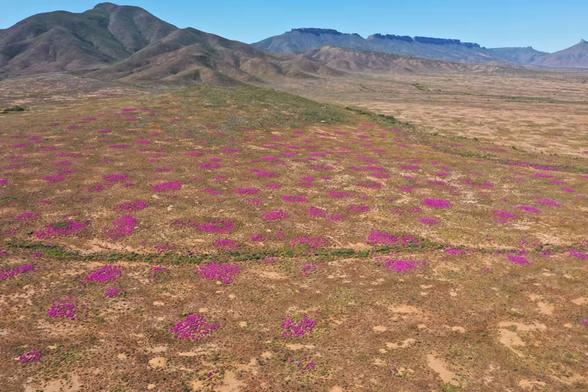
In an astonishing find, scientists have uncovered active termite mounds in South Africa that are 34,000 years old, making them the oldest ever discovered. These ancient mounds provide valuable insights into termite behaviour and ecosystem roles over millennia, revealing a remarkable continuity of termite activity through prehistoric times.
#Archaeology #TermiteMounds #AncientHistory #ScientificDiscovery #SouthAfrica
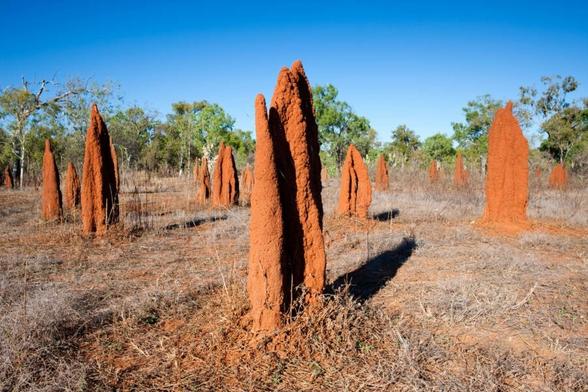
🐜 Incredible discovery! 🇿🇦 Researchers find termite mounds in South Africa that have been active for 34,000 years, making them the oldest known inhabited termite mounds in the world! 🌍🌱 These ancient structures play a crucial role in carbon capture and support diverse ecosystems. 🌳🌍 #TermiteMounds #ClimateChange #AncientEcosystems
🔗 https://apnews.com/article/oldest-termite-mounds-africa-climate-eb9b49dbbbb770c739398cef894a99a8

Scientists in South Africa have been stunned to discover that termite mounds that are still inhabited in an arid region of the country are 34,000 years old, meaning they are the oldest known active termite hills. The mounds existed while saber-toothed cats and woolly mammoths roamed other parts of the Earth and large swathes of Europe and Asia were covered in ice. They predate some of the earliest cave paintings in Europe. Evidence shows they have been consistently inhabited by termite colonies. The researchers urge more study of termite mounds for the lessons they offer on climate change, sustaining ecosystems and perhaps even for improving agricultural practices.

Among the approximately 2,000 known species of termites, some are ecosystem engineers. The mounds built by some genera—for example Amitermes, Macrotermes, Nasutitermes, and Odontotermes—reach up to eight meters high, making them some of the world's largest biological structures. Natural selection has been at work improving the 'design' of their mounds over tens of millions of years. What might human architects and engineers learn if they go to the termites and consider their ways?
Referenced link: https://techxplore.com/news/2023-05-termite-mounds-reveal-secret-energy.html
Discuss on https://discu.eu/q/https://techxplore.com/news/2023-05-termite-mounds-reveal-secret-energy.html
Originally posted by Phys.org / @physorg_com: http://nitter.platypush.tech/TechXplore_com/status/1661947786420531201#m
RT by @physorg_com: #Termitemounds reveal secret to creating 'living and breathing' buildings that use less energy @frontiersin https://techxplore.com/news/2023-05-termite-mounds-reveal-secret-energy.html
Among the approximately 2,000 known species of termites, some are ecosystem engineers. The mounds built by some genera—for example Amitermes, Macrotermes, Nasutitermes, and Odontotermes—reach up to eight meters high, making them some of the world's largest biological structures. Natural selection has been at work improving the 'design' of their mounds over tens of millions of years. What might human architects and engineers learn if they go to the termites and consider their ways?
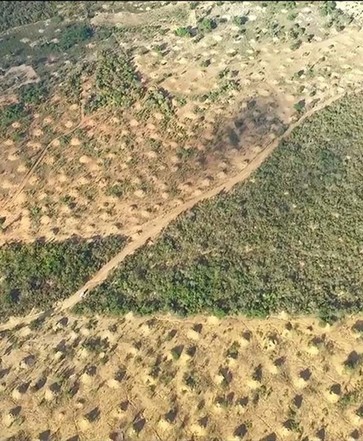
Researchers reporting in Current Biology on November 19 have found that a vast array of regularly spaced, still-inhabited ancient termite mounds in northeastern Brazil are up to about 4,000 years old and cover an area the size of Great Britain.
 Did You Know
 Lukas VFN 🇪🇺
 Hari Tulsidas

 🐦🔥nemo™🐦⬛ 🇺🇦🍉
 MarkR
MarkR Phys.org
 I Love Histoy