Feminist Solidarity and Resistance in a More-than-Human World

SPUI25, Thursday, July 2 at 05:00 PM GMT+2

Why is the current ecological and climate crisis a feminist issue? In what ways can feminist methodologies and concepts be mobilised to understand and act upon pressing more-than-human problems? During this event, Jasmijn Leeuwenkamp discusses these questions with four voices working in the environmental humanities and law: Astrida Neimanis, Rosi Braidotti, Emily Jones, and Jetske Brouwer. Nele Buyst will provide a poetic intermezzo.

Despite the tendency to objectify and quantify ecological and climatic disruptions, these do not happen in an abstract and external realm with respect to human bodies. As embodied beings, posthumanist and ecological feminists argue, we are materially entangled with various life forms for survival. Those relations are currently under threat from extreme weather events, pollution, loss in biodiversity, ocean acidification, and rising sea levels. How to reorient these vulnerable relations ethically, politically, and legally? How can we foster practices of solidarity and resistance?

In their new book How to Weather Together, Astrida Neimanis and Jennifer Mae Hamilton propose “weathering” as both an ecological feminist framework and a set of practical tools for responding to environmental catastrophe. In SPUI25, Neimanis will lay out their ideas, and is joined in conversation by Rosi Braidotti, Emily Jones, and Jetske Brouwer. They, too, will share conceptual tools for posthuman and feminist ethics, politics, and law. Nele Buyst, additionally, will read poetry. Following the public defence of her dissertation “Rethinking Human and Nonhuman Rights in the Anthropocene,” Jasmijn Leeuwenkamp will moderate the discussion.

Speakers

Astrida Neimanis is Canada Research Chair in Feminist Environmental Humanities at the University of British Columbia, Canada on unceded syilx territory. She is the (co-)author of various publications including Bodies of Water: Posthuman Feminist Phenomenology and How to Weather Together: Feminist Practice for Climate Change (with Jennifer Mae Hamilton).

Rosi Braidotti is a continental and feminist philosopher and an emeritus professor of Utrecht University. Her many publications include The Posthuman, Posthuman Knowledge, Posthuman Feminism, Nomadic Subjects, and Nomadic Theory.

Nele Buyst publishes poetry and essays. Her second collection CORPS, poreus (het balanseer, 2024) was shortlisted for de Grote Poëzieprijs. She is working on a PhD thesis on the potential of aesthetic practices for repair and is affiliated with the Centre for Ethics at the University of Antwerp. She is an editor at the magazine for culture and criticism rekto:verso.

Emily Jones is a Senior Research Fellow at Newcastle Law School, United Kingdom. Dr Jones’ interdisciplinary research applies critical theory including feminist, queer, posthuman, postcolonial and critical disability studies, to analyse and re-imagine international law.

Jetske Brouwer is a PhD candidate in Philosophy at the University of Amsterdam, affiliated with the Amsterdam School for Cultural Analysis (ASCA). Working at the intersection of feminist theory and ecological thought, she writes about earthly care, embodiment, and coalition-building.

Jasmijn Leeuwenkamp (moderator) is a philosopher and lecturer at the University of Amsterdam. She recently finished a PhD project on anthropocentrism in human and nonhuman rights discourse. Her work focuses on the interrelations between political philosophy, legal theory, posthumanism, and ecology.

https://offbeat.amsterdam/event/feminist-solidarity-and-resistance-in-a-more-than-human-world

Abolish Europe

SPUI25, Thursday, June 4 at 08:00 PM GMT+2

“Europe is indefensible”, writes the anticolonial thinker Aimé Césaire already in 1950. A civilization that has practiced, witnessed and justified colonialism and genocide, he argued, would inevitably develop forms of indifference, ignorance and coldness towards human life that allows the most extreme forms of violence and neglect to emerge and to flourish. The manifold forms of brutality we currently observe can thus be seen as the direct consequences of the very concept of “Europe“. What might abolition mean in, for and against Europe?

Abolitionism, as a distinct approach in critical theory and political activism, is often associated with the abolition of slavery in the Americas. Contemporary movements such as police and prison abolitionism are also marked by debates centered on the US. This event asks what abolition might mean in, for and against Europe; its own specific genealogies, articulations and conjunctures of legal and extralegal violence – border regime, militarism, ecological destruction, exploitation and super-exploitation – and its own histories, traditions and coalitions of resistance and living otherwise.

We have invited writers, scholars and activists to discuss the question of what abolition means, has meant and might mean in Europe.

Speakers

Deanna Dadusc is Senior Lecturer at the University of Brighton. She examines the criminalization of migration and solidarity by the European border regime.

Akwugo Emejulu is a professor of sociology at the University of Sheffield and the author of Fugitive Feminism (London 2022), amongst other books. She works on the history and presence of Black feminist organizing in Europe.

Simin Jawabreh is a political scientist and activist, living and organizing in Berlin. She explores how marginalized communities manage to create safety from below.

Safae el Khannoussi is a writer and a member of the “Abolition Democracies” research project. She will read from the English translation of her critically acclaimed novel Oroppa.

Oscar Talbot is a philosopher, activist, and a member of the “Abolition Democracies” research project. He will moderate the evening.

This conversation concludes the 4-year research project “Abolition Democracies – Transnational Perspectives” at the University of Amsterdam, funded by the Gerda Henkel Foundation.

https://offbeat.amsterdam/event/abolish-europe

Trauma and Affect

SPUI25, Tuesday, June 23 at 05:00 PM GMT+2

Given the many current wars and conflicts, it is crucial to understand how trauma works, how it is stored in our bodies, and how it manifests itself time and again. In this programme Ernst van Alphen, Ihab Saloul, Eugenie Brinkema, and Ronald Ophuis engage in a dialogue regarding Van Alphen’s latest book, ‘Trauma and Affect’, in which he explores the power of these concepts through art and literature.

Trauma and affect: both concepts have become increasingly important in the critique of art, literature, and culture since the 1990s. The concepts have been used in many different ways and disciplines, including queer studies, feminism, cultural analysis, art criticism, literary studies, and postcolonial studies, as well as sociology and economics. However, with the current tendency to easily use the concepts in relation to everyday events, they have suffered from inflation. This led to widespread confusion: the terms have been overused and exhausted, thereby losing their critical power.

Ernst van Alphen, Ihab Saloul, Eugenie Brinkema, and Ronald Ophuis will engage in a discussion, posing questions such as: what relevance and critical power do the concepts hold today? And how are they intertwined?

The guiding of this program is Van Alphen’s new book titled Trauma and Affect: (Mis)Understanding Pain Through Art and Culture (Valiz, 2026). Through the lens of visual artworks, literature, and cinema, Van Alphen explains how trauma originates in the past and what explains its re-enactment in the present. In addition, he discusses artists who develop strategies that process affect into critical making and thinking.

The work of visual artist Ronald Ophuis demonstrates how the ideas of trauma and affect are made productive, a proposition that will be explored in greater depth during the panel discussion.

Valiz’s founder and director Astrid Vorstermans will open the programme with a short introduction.

Speakers

Ernst van Alphen is professor emeritus of Literary Studies at Leiden University. Before that, he was Queen Beatrix Professor of Dutch Studies at UC Berkeley. His fields of research and expertise are cultural analysis, trauma and affect studies, and gender studies. He is particularly interested in issues that are central in modern and postmodern literature and in the relation between literature and the visual arts. His most recent publications include: Seven Logics of Sculpture (Valiz 2023), Productive Archiving (ed. Valiz 2023), Shame! and Masculinity (ed. Valiz 2021), among others.

Ihab Saloul is Founder and Research Director of the Amsterdam School for Heritage, Memory and Material Culture (AHM), and Professor of Memory and Narrative at the at the University of Amsterdam. Saloul is a founding editor of several book series: Global Heritage and Memory Studies in the Present (Amsterdam University Press), Heritage and Memory Studies (Routledge), Palgrave Studies of Cultural Heritage and Conflict (Palgrave Macmillan), and the forthcoming book series Palestine: Past, Present and Future Narratives (Central European University Press CEU).

Eugenie Brinkema is Professor of Contemporary Literature and Media at the Massachusetts Institute of Technology, status-only Professor of Cinema Studies at the University of Toronto, and affiliated faculty at the University of Amsterdam. Her work focuses on the relationship between aesthetic form and violence, affect, sexuality, and ethics. She is the author of numerous articles and two books: The Forms of the Affects (2014) and Life-Destroying Diagrams (2022), both with Duke University Press.

Ronald Ophuis lives and works in Amsterdam. He studied at the Gerrit Rietveld Academie and the AKI in Enschede. Ophuis’s practice interrogates the representation of interpersonal trauma and the pervasive inclination to avert one’s gaze. Drawing on sustained research, dialogues with involved subjects, and carefully staged scenes with actors, he constructs paintings that position the viewer as an implicated witness, mobilizing art as a site for affective engagement, critical reflection, and ethical judgment. He is also a member of SAAC (Sexually Abused Artists Collective).

Astrid Vorstermans is the publisher/founder of Valiz, with a background in art history and a long path in publishing. www.valiz.nl

https://offbeat.amsterdam/event/trauma-and-affect

Digital Infrastructure, the State and Digital Sovereignty

SPUI25, Tuesday, June 2 at 05:00 PM GMT+2

Digital Public Infrastructure – or Digital Public Infrastructures (DPIs) – is a popular new term in global policy and governance. It is promoted by organisations such as the United Nations, the World Bank, large philanthropic foundations, and governments in both the Global North and the Global South. DPI is closely linked to digital sovereignty (having control over your own digital systems) and to governance (how we make decisions together). How do they offer new ways of thinking about infrastructure, governance and the role of the state?

DPIs include Cloud Storage, Networks, Data Protocols and Standards, as well as Software and Tools. Building on the India Stack model, DPIs or DPI-like infrastructures are now being implemented in over 100 countries and even within the European Union (Eurostack).

DPIs offer new ways of thinking about infrastructure, governance and the role of the state. And they shed light on the safety of state data – think for example of the recent discussions on DigiD in the Netherlands. We invite you to a panel discussion to explore the possibilities and implications of these new ways of thinking about digital sovereignty and governance.

Speakers

Niels ten Oever Assistant Professor of European Studies and co-chair of the Critical Infrastructure Lab at the University of Amsterdam. Niels studies how invisible infrastructures shape the socio-technical ordering of information societies and how this affects the distribution of wealth, power, and opportunities.

Carolina Maurity Frossard Assistant Professor of Political & Economic Geography and co-director of the Centre for Urban Studies at the Amsterdam Institute of Social Science Research (AISSR) at the University of Amsterdam. Carolina investigates how digital devices and infrastructures shape socio-spatial politics and inequalities at different scales.

Nafis A. Hasan Assistant Professor of Anthropology at the University of Amsterdam. He studies the impacts of digital technology on humans and organizations in the realm of public governance in South Asia.

Bidisha Chaudhuri Assistant Professor of Government, Information Culture and Digital Citizenship in Media Studies at the University of Amsterdam. Bidisha conducts research on the political economy of digital infrastructures and governance in the Global South.

https://offbeat.amsterdam/event/digital-infrastructure-the-state-and-digital-sovereignty

​Psycho-Politics: Authoritarianism and the Return of the Repressed​

SPUI25, Thursday, June 18 at 05:00 PM GMT+2

To what extent can psychoanalysis and critical social psychology help us understand the current political conjuncture, where rising fascisms around the world increasingly appear as a kind of “return of the repressed”? This event brings together two leading theorists in psycho-political theory to reflect on psychic explanations of current authoritarian mobilisations.

How can psychoanalytic and critical psychological perspectives illuminate the contemporary resurgence of authoritarian and anti-democratic tendencies?

Alenka Zupančič: Adapting to a New Reality?

We often hear today that, as the old world order is collapsing, we must adapt to a new reality. But what exactly does this mean—and, more importantly, what does it entail? Jacques Lacan once wrote that we easily ‘adapt to reality. The truth we repress.’ What is the cost of this repression, and what does it imply for the so-called new reality, or new world order? These and other questions will be discussed from the perspective of what many perceive today as a new rise of fascism.

Hannah Proctor: Authoritarian Personalities Then and Now

Alberto Toscano’s Late Fascism (2023) opens with a section on the ‘spectre of analogy’: ‘Those who find themselves living in times of crisis and disorientation often seek shelter and guidance in analogies’. But the present, he argues, should not be mistaken for the past. Following Trump’s first election victory in 2016 there was a flurry of interest in historical attempts to understand the psychological appeal of fascism from Wilhelm Reich’s Mass Psychology of Fascism to Adorno et al’s The Authoritarian Personality. In this lecture Proctor will return to debates about right and left authoritarianism from the early years of the Cold War that raged following the publication of The Authoritarian Personality in 1950, arguing that while the ideological discussions and methodological approach taken by social scientists at that time are not analogous to the present, that some of the questions they were asking about the relationship between politics and the psyche are nonetheless worth revisiting in the context of our current conjuncture.

Speakers

Alenka Zupančič is a Slovene philosopher and social theorist, one of the prominent members of the ‘Ljubljana school of psychoanalysis’. She works as Research Councilor at the Institute of Philosophy, Scientific Research Center of the Slovene Academy of Sciences, Ljubljana. She is also professor at the European Graduate School in Switzerland, and is guest lecturer to numerous universities worldwide. Notable for her work on the intersection of philosophy and psychoanalysis, she is the author of numerous articles and many books, including Ethics of the Real: Kant and Lacan; The Shortest Shadow: Nietzsche’s Philosophy of the Two; The Odd One In: On Comedy; What is Sex?; Let Them Rot: Antigone’s Parallax; and Disavowal.

Hannah Proctor holds a Wellcome University Award at the University of Strathclyde in Glasgow. Her second book Burnout: The Emotional Experience of Political Defeat was published by Verso in 2024. She is a member of the Radical Philosophy editorial collective and is a contributing editor at Parapraxis. She is currently working on two new book projects: Communist Cases, an academic monograph on Cold War era social science in the US for OUP, and a history of the long 1990s for Verso. She is also interested in revenge.

Jana Cattien is Assistant Professor in Social and Political Philosophy at the University of Amsterdam, in the capacity group Philosophy and Public Affairs. Her research and teaching is situated in continental philosophy (phenomenology, psychoanalysis, poststructuralism), feminist theory, critical race theory and postcolonial theory. Her work has been published in journals like Feminist Theory, New German Critique, Hypatia, Signs, and Radical Philosophy.

Veerle van Wijngaarden is a PhD candidate in philosophy at the Amsterdam School for Cultural Analysis, University of Amsterdam. Her research lies at the intersection of sexual ethics, feminist philosophy, and critical theory, and focuses on the problem of sexual subjectivity. In her PhD dissertation, Change What You Want? Sexual Subjectivity and the Politics of Desire, she examines how sexual subjects are constituted through relations of recognition, vulnerability, and objecthood, and how these dynamics complicate dominant frameworks of consent and autonomy.

https://offbeat.amsterdam/event/psycho-politics-authoritarianism-and-the-return-of-the-repressed

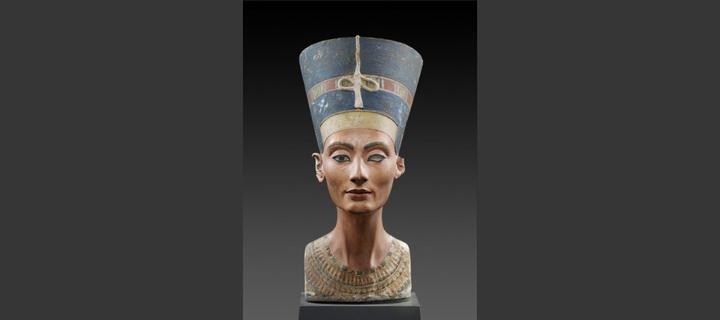
The Making of a Global Icon: Nefertiti’s Growing Fame in the 20th Century

SPUI25, Thursday, June 4 at 05:00 PM GMT+2

​When the bust of Nefertiti, queen of Egypt’s 18th dynasty, was discovered in 1912, it marked the beginning of her global career as an iconic image. She has been admired by many; from National Socialists and nationalists in Egypt and Bengal, to prominent figures such as Beyoncé. Being on display in a Berlin museum, the bust has never been returned to Egypt. In this lecture, historian Sebastian Conrad will show how Nefertiti’s journey illuminates the changing forms of globalization, from the age of imperialism to the present.

Nefertiti was the great royal wife of pharaoh Akhenaten. The discovery of her stucco coated limestone bust in 1912 was the beginning of a career as a global icon, used for a wide variety of purposes. The silhouette alone of this powerful Ancient Egyptian queen was recognized and admired around the world, from National Socialists and nationalists in Egypt and Bengal, to prominent Black figures such as Elijah Muhammad and Beyoncé.

​Immediately after its first exhibition in Berlin in 1924, Egypt unsuccessfully demanded its restitution. Still today, the bust is the must-see museum piece of the New Museum in Berlin. Against a global backdrop, historian Sebastian Conrad showcases the stunning object’s fame and the often-controversial issues and debates in which it has been embroiled. He argues that the story of Nefertiti’s trajectory offers insights into the changing shape of globalization from the era of imperialism until now.

​Speakers

Sebastian Conrad is a leading scholar in global history. He holds the Chair of Modern History at Freie Universität Berlin and taught, among others, at the European University Institute in Florence. Conrad has been on the editorial board of prominent peer reviewed journals such as Geschichte und Gesellschaft and Contributions to the History of Concepts. Among his many books, he published What Is Global History? (2016), German Colonialism, A Short History (2012), and Globalisation and the Nation in Imperial Germany (2010). The English version of his German-language book on Nefertiti will be published this year.

Hanco Jürgens is a member of the academic staff of the Duitsland Instituut and a fellow at the Montesquieu Institute. He teaches German and European history at the University of Amsterdam. Jürgens’ research focuses on the history of modern Germany in both European and global contexts. Currently, he is researching the transformation of German society since the 1970s as a result of globalization, digitalization, and social changes. He has published on a wide range of topics, such as the colonial and religious history of the eighteenth century, Dutch German relations in the twentieth century, memory culture, and German EU policy.

Marieke Bloembergen is senior researcher at the Royal Netherlands Institute of Southeast Asian and Caribbean Studies (KITLV), and professor in Heritage and Postcolonial Studies in Indonesian History at Leiden University. Her research interests concern the politics of cultural knowledge and heritage formation in colonial and postcolonial Indonesia in transnational and global contexts, through the prism of sites, objects and non-human species, in relation to religion, violence, and practices of (environmental) care. Her most recent monograph, co-authored with Martijn Eickhoff, is The Politics of Heritage in Indonesia: A Cultural History (Cambridge: Cambridge University Press, 2020).

Natalie Scholz is Senior Lecturer of modern and contemporary history at the University of Amsterdam. In her work she tries to understand the culturally and emotionally mediated intersection between modern political regimes and national, ethnic and gender identities. She has published on the popular imaginations of the 19th century French Restoration monarchy and more recently on the political meanings of commodities and modernism in postwar Germany. Her latest publication is Redeeming Objects: A West German Mythology (University of Wisconsin Press 2023).

https://offbeat.amsterdam/event/the-making-of-a-global-icon-nefertitis-growing-fame-in-the-20th-century

De eik en de lariks. Een avond over de Russische bossen met Sophie Pinkham

SPUI25, Thursday, June 25 at 05:00 PM GMT+2

De bossen van Rusland reiken van de Oostzee tot de Stille Oceaan en van het Noordpoolgebied tot de steppen van Centraal-Azië. Ze beslaan bijna een vijfde van alle beboste gebieden ter wereld. In De eik en de lariks onderzoekt journalist en literatuurwetenschapper Sophie Pinkham dit immense gebied, bewoond door voorchristelijke bosgeesten, mysterieuze Siberische heremieten, beren, wolven en allerhande volk dat tussen taaie Siberische lariksen en majestueuze eiken een schuilplaats vond vanwege een conflict met het regime. Simone Peek gaat hierover met haar in gesprek.

Voertaal: Engels

Van de Mongoolse invasies tot de oorlog die vandaag in Oekraïne plaatsvindt: Pinkham zet het ondoordringbare en eindeloze woud in als lens om Ruslands lange geschiedenis van imperialistische oorlogen te duiden. Ook laat Pinkham zien hoezeer het de Russische cultuur heeft gevormd, waarbij ze rijkelijk put uit sprookjes en de grote literaire werken. De eik en de lariks is een wervelende geschiedenis van de rol die het bos heeft gespeeld in de Russische cultuur, geschiedenis en politiek.

Sprekers

Sophie Pinkham is hoogleraar aan Cornell University. Haar essays en artikelen verschenen onder meer in The New York Review of Books, The New Yorker, The Guardian en Harper’s. Eerder publiceerde ze Black Square. Adventures in Post-Soviet Ukraine (2016), een portret van Oekraïne waarin ze memoires, reportage en cultuurgeschiedenis combineert.

Simone Peek is journalist en eindredacteur bij de buitenlandredactie van NRC. Ze doet verslag van de Russische oorlog tegen Oekraïne.

https://offbeat.amsterdam/event/de-eik-en-de-lariks-een-avond-over-de-russische-bossen-met-sophie-pinkham

Het gaat goed met Afrika

SPUI25, Wednesday, June 3 at 08:00 PM GMT+2

Ter gelegenheid van het afscheid van correspondent Koert Lindijer organiseert NRC een discussieavond over Afrika en journalistiek. Koert Lindijer versloeg alle grote Afrikaanse gebeurtenissen in de afgelopen veertig jaar – van oorlogen en coups tot epidemieën en natuurrampen. Met: Koert Lindijer, Dalilla Hermans, Habtom Yohannes, Naïm Derbali en Stéphane Alonso.

Op zijn vele reizen over het continent zag Koert de kracht van de Afrikanen en hoe goed het gaat met de landen. Maar die verhalen vinden veel minder snel hun weg naar Nederlandse media. Hoe komt dit? Wat kan daaraan gedaan worden? En moet de huidige blik op het Afrikaanse continent niet gedekolonialiseerd worden? Hierover gaat Koert in discussie met Afrika-kenner Habtom Yohannes, journalist Dalilla Hermans en redacteur Naïm Derbali.

Voertaal van deze avond is Engels.

Sprekers

Koert Lindijer deed meer dan 40 jaar verslag uit Afrika voor NRC en NOS. Hij schreef onder meer het veelgeprezen boek Een wolkenkrabber op de savanne (2023).

Dalilla Hermans schrijft, schildert en maakt theater met een sterke focus op identiteit en verbondenheid. Geboren in Rwanda, getogen in Turnhout is Hermans een prominente stem in het Vlaamse maatschappelijke debat.

Habtom Yohannes is decennialang journalist vooral in het Hilversumse voor onder meer de IKON en de EO (De Ochtenden Radio 1 en Netwerk), en hij is nog altijd actief betrokken bij onder andere het Afrika Studiecentrum van de Universiteit van Leiden, waar hij ook heeft gewerkt, en bij de Radboud Universiteit (oa PhD-project).

Naïm Derbali is Afrika-redacteur bij NRC. In 2021 was Derbali Martin van Amerongen-fellow bij De Groene Amsterdammer.

Stéphane Alonso is chef van de buitenlandredactie van NRC en was correspondent in Brussel en Warschau.

https://offbeat.amsterdam/event/het-gaat-goed-met-afrika

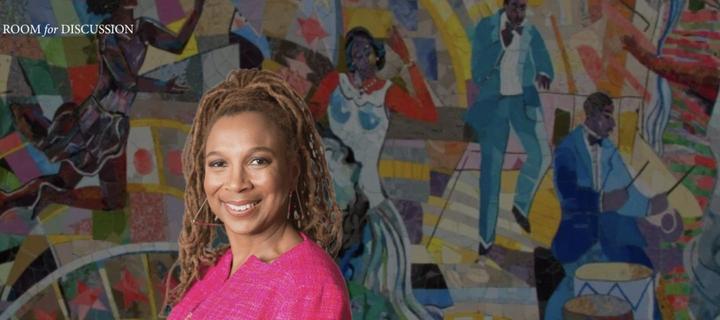
Talking Back and Looking Forward: Prof. Kimberlé Crenshaw on Intersectionality

SPUI25, Friday, June 5 at 03:00 PM GMT+2

Debates around DEI, education, and collective memory are becoming increasingly contested. At this urgent moment, we are honored to welcome Professor Kimberlé Crenshaw, a pioneering scholar whose work has given us the language to understand these dynamics.

As one of the founders of Critical Race Theory and the scholar who coined the term intersectionality in 1989, Doctor Crenshaw has spent decades working at the intersection of civil rights, legal theory, and social justice.

On Friday, June 5th, the influential legal scholar and author will join Room for Discussion to discuss her new book, Backtalker: An American Memoir, and the enduring relevance of her work on intersectionality.

Following the interview, there will be a book sale, with an opportunity to have your copy of Backtalker signed by Professor Crenshaw herself. Don’t miss this unique opportunity to meet one of the most influential scholars and activists of our time!

Location: Roeterseiland, REC C1.04

The register link will be published soon on the website of Room for Discussion.

https://offbeat.amsterdam/event/talking-back-and-looking-forward-prof-kimberle-crenshaw-on-intersectionality

Nabuurschap onder druk. Nederland en Duitsland in een turbulente wereld

SPUI25, Monday, June 8 at 08:00 PM GMT+2

​De relatie tussen Duitsland en Nederland is steeds meer onder druk komen te staan. De vanzelfsprekendheid die onder Angela Merkel en Mark Rutte de toon zette, is verdwenen. Zal de samenwerking onder Friedrich Merz en Rob Jetten weer verbeteren en zorgen voor een sterke positie van Nederland in Europa? Op de vooravond van het staatsbezoek van de Duitse bondspresident Steinmeier aan Nederland spreken wij hierover, met Jacco Pekelder, Marja Verburg en Michiel Mulder, auteurs van het nieuwe boek Nabuurschap onder druk.

​De betrekkingen tussen Nederland en Duitsland hebben de afgelopen jaren geleden onder de slecht functionerende kabinetten in beide landen. Met de nieuwe kanselier Friedrich Merz heeft Duitsland een regeringsleider die zich internationaal weer laat gelden. Het nieuwe kabinet-Jetten kiest voor ‘een sterk Nederland in een sterk Europa’. Beide regeringen tonen zich bovendien bewust van de geopolitieke uitdagingen, die tot eensgezindheid en intensieve samenwerking dwingen. Deze omstandigheden bieden een kans om de bilaterale betrekkingen te verbeteren en de Nederlandse stem in Europa weer sterker te laten horen.

​In het boek Nabuurschap onder druk, een vervolg op het in 2014 verschenen Nieuw nabuurschap, houden de auteurs de relatie tussen beide landen opnieuw tegen het licht. Duidelijk wordt dat premier Rob Jetten er goed aan doet om met zijn kabinet weer levendige bilaterale contacten met Duitsland op te bouwen. De bloeiende samenwerking in de grensregio biedt daarvoor veel inspiratie.

Sprekers

Jacco Pekelder is historicus en hoogleraar-directeur van het Zentrum für Niederlande-Studien van de Universiteit Münster. Bij Boom Uitgevers Amsterdam is van zijn hand eerder onder meer Nieuw nabuurschap (2014) verschenen.

Marja Verburg is historicus en als redacteur van de journalistieke website Duitslandweb en podcastmaker verbonden aan het Duitsland Instituut bij de Universiteit van Amsterdam.

Michiel Mulder is historicus met masters in internationale betrekkingen en journalistiek. Sinds 2026 is hij werkzaam als trainee bij de Europese Commissie.

Ulrike Nagel(moderator) is journalist en Duitslandkenner. Ze is opgegroeid in het oosten van Berlijn, studeerde aan de Rijksuniversiteit Groningen en heeft in beide landen gewoond en gewerkt.

https://offbeat.amsterdam/event/nabuurschap-onder-druk-nederland-en-duitsland-in-een-turbulente-wereld