Aliro is a vendor-agnostic standard for digital access control working over NFC, Bluetooth LE, or UWB
Managed by the Connectivity Standards Alliance, Aliro is a smart lock/access control standard that works over NFC, Bluetooth LE, or UWB and is designed to be vendor-agnostic. While Matter is designed for Smart Home applications, Aliro specifically targets access control, and both aim to address market fragmentation. It was brought to my attention when we wrote about the Nordic nRF54L15 Tag, but we had already mentioned it for chips from other vendors such as STMicro (ST64UWB) and Qualcomm (FastConnect 8800), as well as earlier wireless MCUs from Nordic Semi such as the nRF54LM20A and nRF54LM20B. It appears to be adopted across the industry, so let's have a closer look. Aliro 1.0 was first released in February 2026 with the following highlights: Leverages existing smartphones and wearables Framework utilizes asymmetric cryptography to ensure secure and trusted interactions between user devices and readers Integration with digital wallets from Apple, Google, Samsung, etc...

UTFS is a lightweight, zero-allocation file system for embedded devices
CLI Systems has introduced UTFS (μTFS), a simple, lightweight embedded storage system designed for small MCUs. Unlike traditional file systems like FAT32 or EXT4, or even lighter options like LittleFS and SPIFFS used on boards like the ESP32, UTFS is much simpler. It does not use dynamic memory and avoids complex features like wear leveling, making it easier to use on low-resource devices. Designed for flat, byte-addressable memory like raw EEPROM, CPU flash pages, or external SPI/I²C flash, UTFS allows bare-metal firmware to store named data blobs ("files") back-to-back. Each file is appended with a fixed 24-byte header containing metadata like identifiers, sizes, and application-defined signatures. UTFS specifications and features Footprint – Fixed 24-byte header per file; zero heap usage (no malloc) Format – TAR-inspired sequential layout; forward-compatible so files can be added later without breaking existing memory layouts Storage Agnostic – Requires porting only two functions to interface with
Matter 1.6 specification adds NFC-based commissioning, thermostat suggestions, various core enhancements
Connectivity Standards Alliance (CSA) has recently released the Matter 1.6 specification with new features such as NFC-based commissioning, Thermostat Suggestions for smarter climate control, and a range of core enhancements designed to improve device communication, safety devices visibility, and ecosystem security. The last time we wrote about a Matter release was for Matter 1.4.2, which added Wi-Fi-only provisioning and improved security, and we somehow missed the Matter 1.5 release that introduced cameras, closures (window shades, drapes, awnings, gates, garage doors...), and enhanced energy management capabilities. Let's have a closer look at the new Matter 1.6 release. Matter 1.6 highlights: NFC-based commissioning - Commissioning can be challenging for devices like ceiling fixtures and in-wall switches, since they may need to be configured before they are installed. Matter 1.6 addresses this issue by allowing a Matter device to be commissioned through bi-directional NFC communication before the device is fully powered on. That's

Qualcomm promises a major reset with upstream-first, Qualcomm Linux 2.0 for Dragonwing IoT platforms
Linux on Qualcomm SoCs has been a roller coaster, with hope often followed by disappointment, at least for the Snapdragon family. The company aims to change that with Qualcomm Linux 2.0 for Dragonwing IoT platforms, as announced on LinkedIn: With Qualcomm Linux 2.0, we’re shifting to an upstream-first, open development model that is unified and scalable across all Qualcomm Dragonwing IoT platforms. This means an upstream‑first model with a BSP that tracks mainline to minimize friction and enables you to make more predictable builds. Tune in to see our first-ever live demo, along with a lifecycle and release strategy, core architecture and Yocto changes, and practical migration paths from previous versions The video is embedded below, but will only be live on June 30. In the meantime, the description provides a few more details: If you’ve dealt with fragmented BSPs, platform-specific kernel forks, or painful bring‑up across Qualcomm SoCs, this
Linux 7.1 Release – Main changes, Arm, RISC-V, and MIPS architectures
Linus Torvalds has just released Linux 7.1 on LKML: So it's only Sunday morning back home, but it's Sunday afternoon where I am right now, so I'm doing the 7.1 release at the regular time - just not in the regular timezone. This obviously means that the merge window opens tomorrow, but I'll be in yet another timezone by then, so timing will all be a bit irregular. Normally I try to front-load the merge window and do as much as possible the first few days - this time I'm not sure that will work out with my laptop and a couple of long flights without internet, but I've made sure that I have fetched the early pull requests (thank you - you know who you are), so I will be able to do some of it off-line. Anyway, possible slight hiccups in the merge window aside, the news today
OpenCV 5 release – New DNN engine with enhanced ONNX and LLM/VLM support, Intel, Arm, and RISC-V hardware optimizations
OpenCV 5 open-source computer vision library has recently been released with a brand-new DNN (Deep Neural Network) engine that provides better ONNX coverage and enables LLM/VLM support. The fifth version of the popular CV library also adds support for Intel, Arm, Qualcomm, and RISC-V hardware acceleration, improved 3D vision, and various new core features such as new data types, real N-dimensional and scalar support, and performance improvements. OpenCV 5's DNN Engine OpenCV 4.x supports about 22% of ONNX operators, and the new DNN engine in OpenCV 5 brings coverage to over 80%. That means models with dynamic shapes that used to fail on OpenCV 4.x, should now work, as the 5.x engine was rebuilt around a typed operation graph with proper shape inference, constant folding, and operator fusion. The table below shows the main difference between OpenCV 4.x and OpenCV 5 Since it's quite a big change, to make sure

Nordic adds AI-assisted development to the nRF Connect SDK and nRF Cloud
Nordic Semiconductor has added AI-assisted development to its wireless IoT microcontroller, with workflows covering the full life cycle from the first prototype to a deployed fleet. Many developers copy/paste information from LLMs trained on generic data. However, Nordic's AI solution is specifically trained on the nRF Connect SDK documentation and nRF Cloud data and integrates with a developer's favorite IDE. It also connects to Claude Code, Cursor, GitHub Copilot, or any other LLM at a much lower token cost thanks to the specialized model. The company says it's based on an implementation of the Model Context Protocol (MCP), where the Nordic MCP servers give AI assistants access to validated sources from Nordic, including SDK documentation, API references, device configurations, and the customer's field data from nRF Cloud. Highlights of Nordic's AI-assisted development Connected to nRF Connect SDK documentation and nRF Cloud data Integrates with AI assistants such as Claude Code,
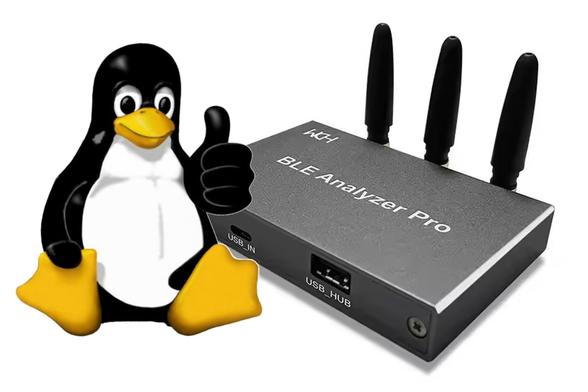
WCH BLE Analyzer Pro USB Bluetooth LE sniffer gains Linux software with Wireshark (pcap) support
Last November, we wrote about the WCH BLE Analyzer Pro, an inexpensive (~$20) USB Bluetooth LE sniffer and analyzer, which looked useful and good value for reverse engineering and debugging. One downside is that the WCH BLE Analyzer software was only made for Windows 7 to 11, but Xecaz decided to look into it and reverse-engineered the USB protocol to write Linux software using libusb that outputs a standard pcap compatible with popular tools such as Wireshark, or as he puts it: "WinChipHead forgot to ship a Linux driver. We forgot to ask permission." As a reminder, the BLE Analyzer Pro features three CH582F Bluetooth LE RISC-V microcontrollers and a CH334 USB hub, supports Bluetooth Low Energy (BLE) 4.0/4.2/5.0, and connects to the host through its USB-C port. The Linux "driver" for the BLE Analyzer Pro tool can be found on GitHub. Building and installing the software is quick and
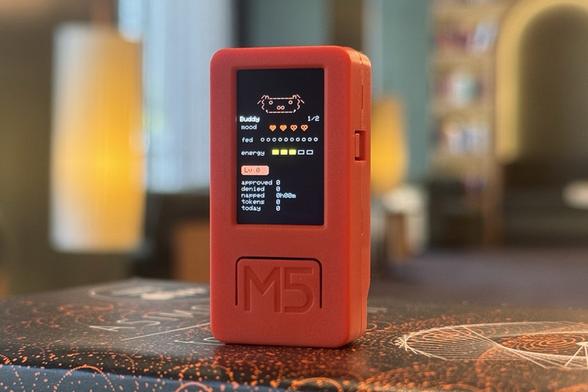
Anthropic’s open-source Claude Desktop Buddy turns ESP32-S3 devices into interactive AI desk companions
Anthropic has opened its Claude Hardware Interface (Bluetooth API) to developers, enabling an ESP32-S3-based desk companion to connect directly to the Claude desktop app over Bluetooth Low Energy (BLE). To demonstrate this new feature, the company released an open-source reference project called Claude Desktop Buddy. It currently runs on the M5StickC Plus (an ESP32-based board from M5Stack) and works as a small interactive hardware companion for Claude. Also, during the recent “Build with Claude” event, the company recommended the ESP32-S3-based M5Stack Cardputer as one of the best hardware options for developers who want to build physical devices that interact with AI agents. Designed as a physical companion device for Claude Cowork and Claude Code on macOS and Windows, it stays on your desk and provides real-time updates on the AI agent's activity. It also lets you respond to permission requests directly using its buttons, so you can approve or deny actions

Yocto Project 6.0 “Wrynose” released with Linux 6.18 LTS
The Yocto Project 6.0, codenamed "Wrynose", has just been released with Linux 6.18 LTS, about two years after Yocto Project 5.0 “Scarthgap” release with Linux 6.6 LTS. Over 240 contributors submitted over 4000 commits since the previous Yocto 5.3 “Whinlatter” minor release of the popular framework used to create custom embedded Linux distributions. Yocto Wrynose is a Long Term Support (LTS) release, which will be supported until at least April 2030. The project's developers especially highlight these 4 years of support, improved SBOM and CVE tracking features, and more secure defaults to ease compliance with the upcoming EU Cyber Resilience Act (CRA). Yocto Project 6.0 highlights: Linux kernel 6.18 LTS Toolchain updates: GCC 15.2, glibc 2.43, LLVM 22.1, Go 1.26, and Rust 1.94. New bitbake-setup tool to fetch layers and setup build directories. Support for BitBake configuration fragments, which can be managed with the new bitbake-config-build command. This enables better
 cnx-software.com [Unofficial]