 Editor
COAL TIP SAFETY: Welsh Government to revise tip boundary above demolished Godre’rgraig school this autumn — as council launches new public information hub
The tip boundary above the former Godre’rgraig school — evacuated in 2019 and later demolished after a geotechnical report identified landslide risk — is to be officially revised by the Welsh Government this autumn, Neath Port Talbot Council has confirmed.
The disclosure was made in a press release announcing the launch of a new public information hub bringing together technical reports on every known coal and quarry tip across the county borough.
For the first time, residents can read the specific technical reports relating to the tips above the former Godre’rgraig school — a site at the centre of one of the most contested coal tip safety decisions in recent Welsh history.
Pupils at Godre’rgraig Primary School have been taught in temporary portakabins in Pontardawe since the original building was closed in July 2019. The Cilmaengwyn tip above the school had been identified as posing a medium risk of landslide. The school building was eventually demolished.
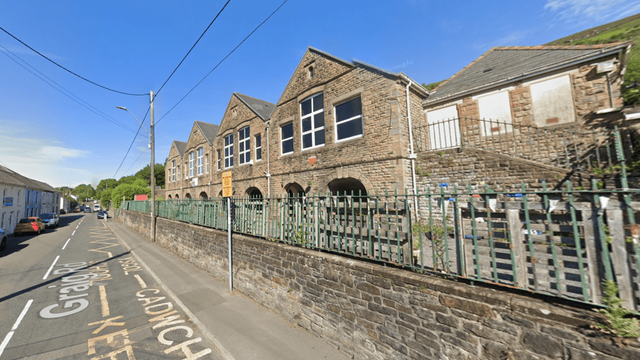
The former Godre’rgraig Primary School (Image: Google Maps)A subsequent proposal to merge Godre’rgraig with Alltwen and Llangiwg primary schools into a single ‘super school’ at Parc Ynysderw, Pontardawe, was scrapped in 2022 after community opposition and a High Court ruling that found the council had failed to properly assess the impact on Welsh-medium education.
Godre’rgraig pupils have remained in portakabins ever since. The council has applied to the Welsh Government for funding to build a replacement school — but the bid has run into difficulties, with officials reportedly assessing it as if it were for a brand new school rather than a replacement.
In September 2025, then-opposition Plaid Cymru MS Sioned Williams — now Deputy First Minister in the new Plaid Cymru-led Welsh Government — accused the then-Labour First Minister Eluned Morgan of giving a “shameful” answer in response to questions about the delay. Welsh Labour’s then-Education Secretary Lynne Neagle later agreed to visit the school.
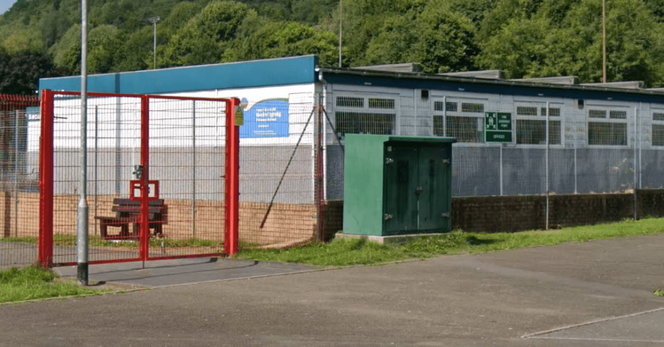
Temporary portacabins housing Godre’r Graig Primary School pupils on land beside Cwmtawe School in Pontardawe — over three miles from their home community.(Image: Google Maps)
Councillor Wyndham Griffiths, Neath Port Talbot Council’s Cabinet Member for Strategic Planning, Transport and Connectivity, said the technical reports being published on the new website set out the basis for the original decision.
He said: “The reports set out the risks of movement on the hillside next to the former Godre’rgraig school building had it remained open for children or other users.”
He added: “Following the agreed recommendations of the Council, consulting engineers, and the Mining Remediation Authority, the Welsh Government will revise the tip boundary shown on its national register in its next update in autumn 2026.”
The boundary revision now falls to the new Plaid Cymru Welsh Government, which took office on 13 May following the Senedd election. First Minister Rhun ap Iorwerth leads a minority administration after Plaid won 43 of 96 seats. Sioned Williams — who represents Brycheiniog Tawe Nedd, the constituency that includes Godre’rgraig — has championed the school’s cause from opposition for years, and as Deputy First Minister now sits in the cabinet that will sign off the boundary revision.
Community campaigners have raised questions about how the Godre’rgraig case has been handled. A group calling itself Save Our Schools has been publishing a detailed investigation series on social media, which it says raises concerns about how the tip boundary has been recorded and how that information has been used in subsequent decisions about the site.
Swansea Bay News has asked Neath Port Talbot Council for a response to the specific points raised by the campaign group.
The launch of the new web hub comes against a backdrop of significant change in how coal tips are regulated in Wales. Landmark coal tip safety legislation came into force requiring modern monitoring and inspection, and the Welsh Government has confirmed plans to establish a new Disused Tips Authority for Wales.
From April 2027, that new body will take on responsibility for inspecting disused tips across the country — a role currently handled through a combination of the Welsh Government’s National Coal Tip Register, the Mining Remediation Authority (formerly the Coal Authority) and local councils.
Neath Port Talbot has one of the highest concentrations of disused coal tips in Wales, many of them close to homes, roads and rivers. Earlier this year the council secured £3.6 million in Welsh Government funding — part of a wider £80 million programme — to inspect and maintain more than 620 former coal tip sites across the county borough.
The funding is supporting a dedicated Tip Management Team, ongoing collaboration with the Mining Remediation Authority, and targeted mitigation works.
Cllr Griffiths said: “Safeguarding communities from unsafe coal tips is vital. This new online resource is part of our commitment to keeping residents informed about the work being undertaken.”
He added: “Combined with the funding we have secured, it demonstrates our proactive approach to managing coal tip safety and addressing the challenges posed by the sites. We hope this provides reassurance to residents that their safety remains a priority.”
The new resource is at www.npt.gov.uk/coal-tips.
Related stories from Swansea Bay News
Minister agrees to visit Godre’r Graig school after six years in portacabins
Education Secretary Lynne Neagle agrees to visit after Plaid Cymru MS Sioned Williams raises the issue in the Senedd.
‘Shameful’ answer from First Minister on replacement for demolished Swansea Valley school
Sioned Williams MS accuses the First Minister of playing politics with the future of Godre’r Graig Primary School.
£3.6m secured to make more than 620 coal tips safe in Neath Port Talbot
Welsh Government funding supports a new Tip Management Team and targeted mitigation works.
New data reveals rising coal tip risk in Bridgend and Neath Port Talbot
Three Godre’rgraig coal tips reclassified to Category D — the highest risk level requiring the most frequent inspections.