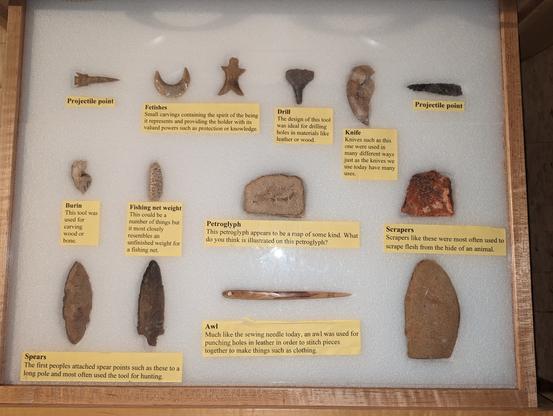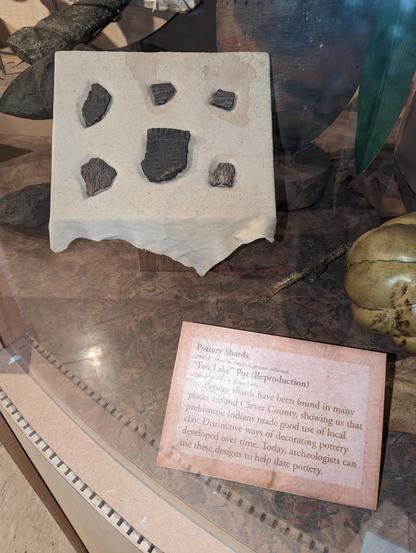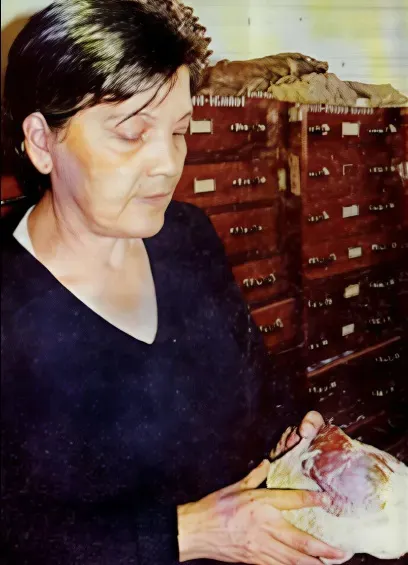
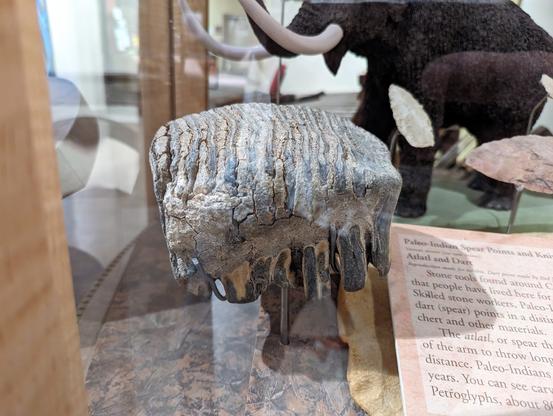
#FossilFriday #MnMuseum highlight: Carver County Historical Society. Carver County’s past is on display, anchored by a mammoth molar amid exhibits on Indigenous history, agriculture, and military service.

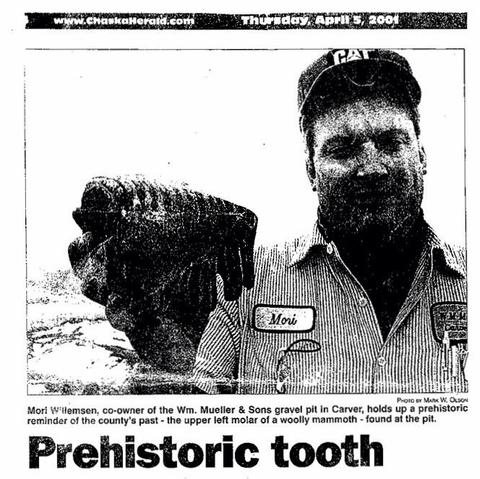
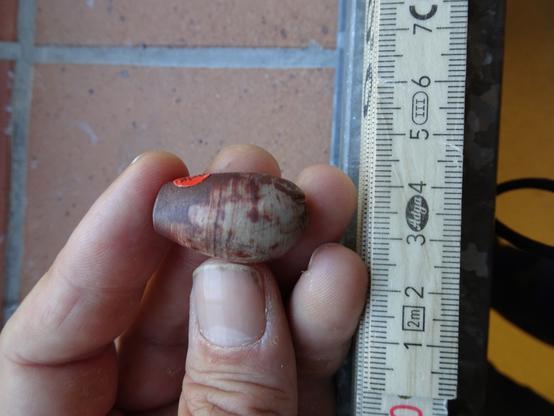
The molar was found in 2000 at the W. Mueller & Sons gravel pit in Chaska, when Mori Willemsen’s clamshell dredge—dropping through 100 feet of water—hauled up a proboscidean tooth.

https://www.carvercountyhistoricalsociety.org/

#pleistocene #palaeontology #CitizenScience
Source: Chaska Herald, April 5, 2001, p. 1.
Here one of my favorite fossil #cephalopods for #FossilFriday:

Pentameroceras mirum from the #Silurian of #Gotland! Those narrow slits of the shell were likely where arms or eyes would stick out!

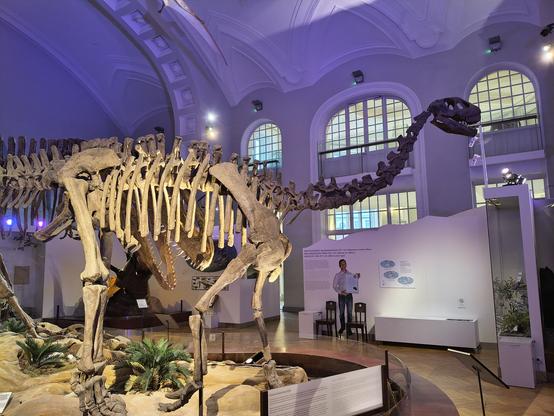
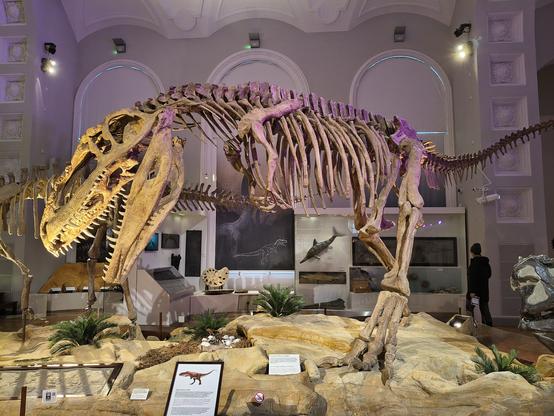
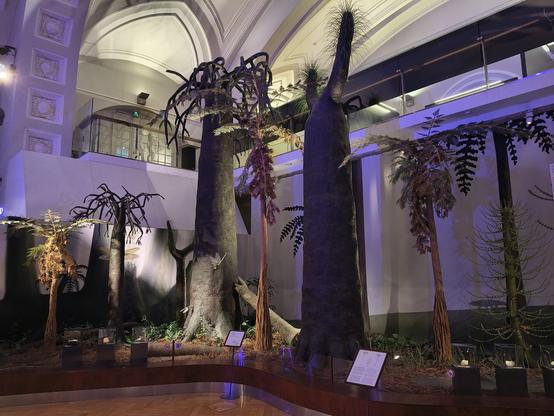
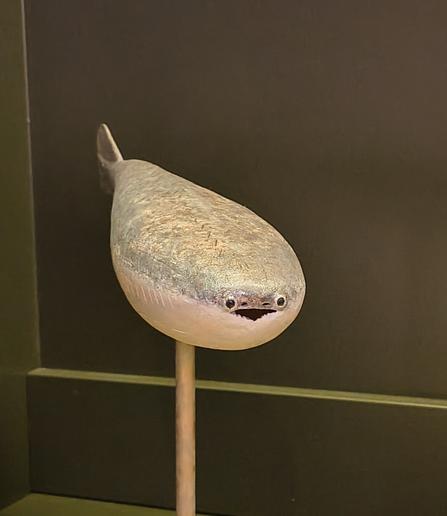
#FossilFriday The fossil room didn't disappoint either, with skeletons of Shunosaurus and Giganotosaurus, a reconstructed Carboniferous forest, and the original model of Sacabambaspis from the meme!
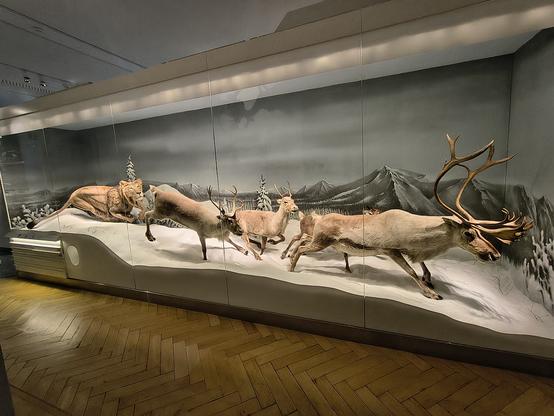
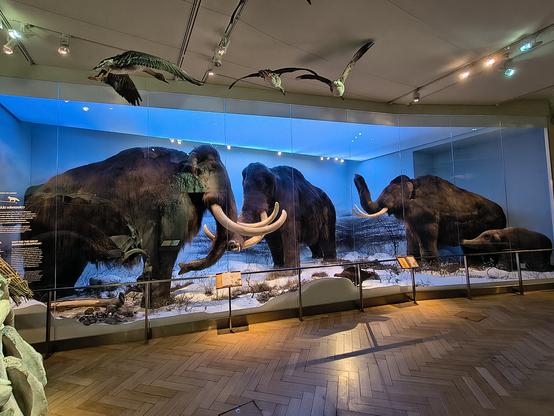
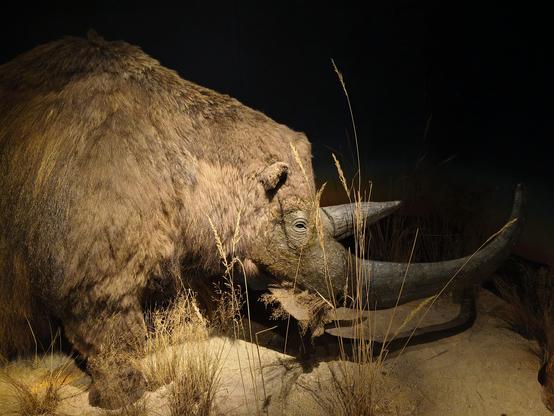
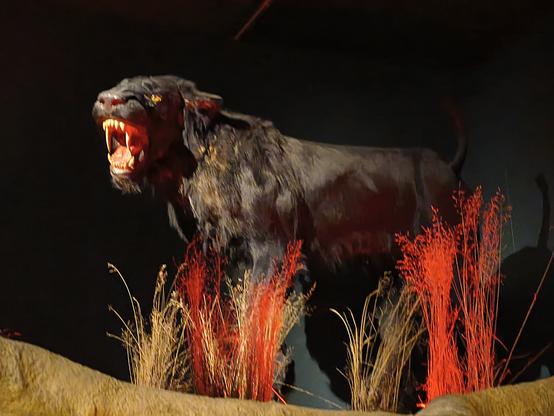
#FossilFriday As well as the ones of modern animals there were amazing dioramas of Pleistocene animals, including a cave lion chasing reindeer, a family of woolly mammoth, a woolly rhino and a rather menacing melanistic sabre-tooth.

Watching Netflix's The Dinosaurs.

Dinosaurs will never not be cool!

🦕 #FossilFriday #TheDinosaurs #Dinosaurs

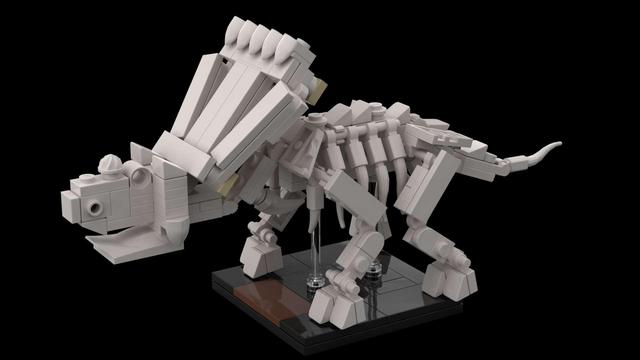
The weeks #Lego #FossilFriday is #Vagaceratops

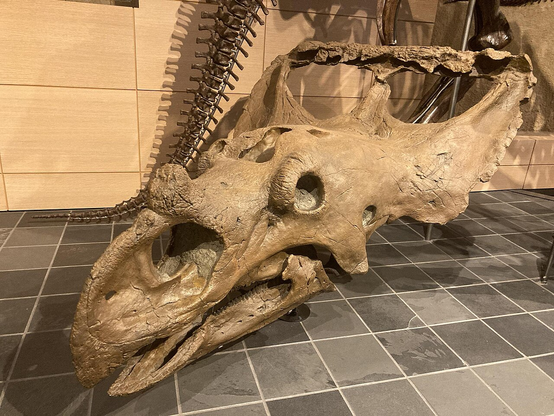
In the early 21st century a number of odd looking ceratopsian were found in the Dinosaur Park Formation.

In 2001, some of these fossils were named Chasmosaurus irvinensis.

In 2010, they were reexamined and renamed Vagaceratops irvinensis.

Vagaceratops was a medium sized ceratopsian. The frill has ten epoccipitals, eight of which were flattened and curved forwards, causing a jagged margin along the back of the frill.

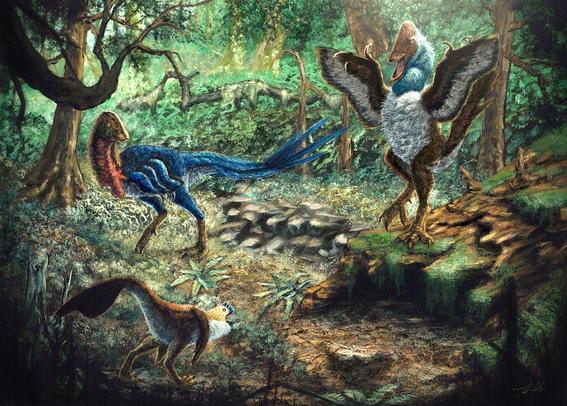
Stepping back from The Daily Horrors for a moment of #FossilFriday with the birdlike dinosaur Eoneophron infernalis—Pharaoh's dawn chicken from Hell—described in 2024 What's extra cool about this fossil is how it offers clues about dinosaur diversity prior to the KT asteroid & mass extinction 🧪☄️

New 'Chicken from Hell' Discov...
New 'Chicken from Hell' Discovered

A newly identified “chicken from hell” species suggests dinosaurs weren’t sliding toward extinction before the fateful asteroid hit

Scientific American
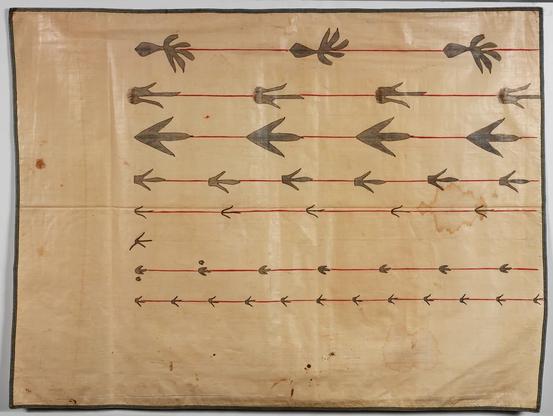
Orra White Hitchcock drawing, fossil footprints. Archives & Special Collections, Amherst College, Massachusetts. #FossilFriday
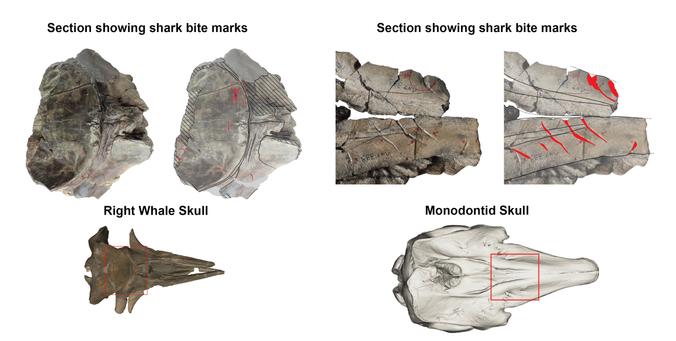
Fossilized whale skulls reveal feeding secrets of sharks 5 million years ago

A new study analyzing two fossilized whale skulls from around 5 million years ago has revealed fragments of sharks' teeth lodged inside them. This provides rare evidence of how sharks fed on whales in north European waters in prehistoric times.

Phys.org