Réunion is an island located in the Indian Ocean, east of Madagascar, colonized by France.

The island's new arrivals terminal at La Réunion Roland Garros Airport (RUN) is considered the world's first bioclimatic airport terminal in a tropical zone.

Designed by AIA Life Designers, the terminal uses trade winds for cooling, and achieves a temperature reduction of 5 to 7 degrees Celsius compared to conventional construction methods.
#Architecture #Bioclimate #Ventilation
https://www.euronews.com/my-europe/2026/05/11/reunion-airport-gets-a-bioclimatic-terminal-the-first-in-the-tropics

Reunion airport gets a bioclimatic terminal, the first in the tropics

The airport on the island of Reunion has been equipped with the world's first bioclimatic terminal in a tropical zone. The arrivals and baggage reclaim terminal operates without air-conditioning: the ventilation system is all-natural. #SmartRegions

euronews
Climate change and ecosystem shifts in the southwestern United States - Scientific Reports

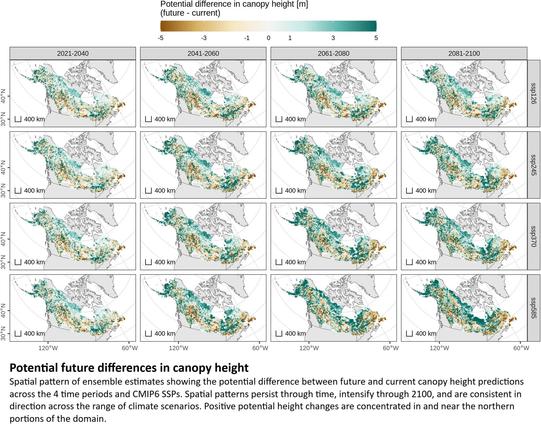
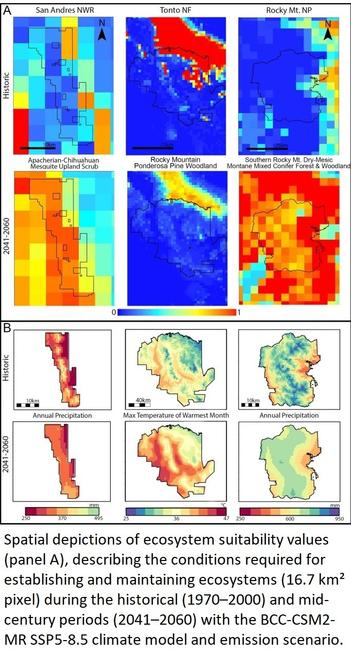
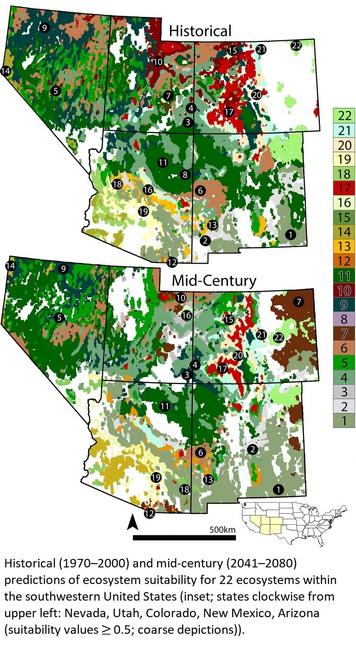
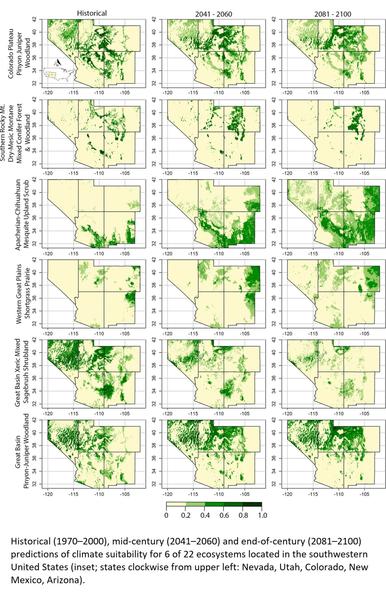
Climate change shifts ecosystems, altering their compositions and instigating transitions, making climate change the predominant driver of ecosystem instability. Land management agencies experience these climatic effects on ecosystems they administer yet lack applied information to inform mitigation. We address this gap, explaining ecosystem shifts by building relationships between the historical locations of 22 ecosystems (c. 2000) and abiotic data (1970–2000; bioclimate, terrain) within the southwestern United States using ‘ensemble’ machine learning models. These relationships identify the conditions required for establishing and maintaining southwestern ecosystems (i.e., ecosystem suitability). We projected these historical relationships to mid (2041–2060) and end-of-century (2081–2100) periods using CMIP6 generation BCC-CSM2-MR and GFDL-ESM4 climate models with SSP3-7.0 and SSP5-8.5 emission scenarios. This procedure reveals how ecosystems shift, as suitability typically increases in area (~ 50% (~ 40% SD)), elevation (12–15%) and northing (4–6%) by mid-century. We illustrate where and when ecosystems shift, by mapping suitability predictions temporally and within 52,565 properties (e.g., Federal, State, Tribal). All properties had ≥ 50% changes in suitability for ≥ 1 ecosystem within them, irrespective of size (≥ 16.7 km2). We integrated 9 climate models to quantify predictive uncertainty and exemplify its relevance. Agencies must manage ecosystem shifts transcending jurisdictions. Effective mitigation requires collective action heretofore rarely instituted. Our procedure supplies the climatic context to inform their decisions.

Nature